
Occupation posters
Propaganda and resistance from the war years, side by side.
Leif Jørgensen — CC BY-SA 4.0 · Leif Jørgensen — CC BY-SA 4.0 · Leif Jørgensen — CC BY-SA 4.0 · Leif Jørgensen — CC BY-SA 4.0
Denmark's only museum devoted to the poster, inside **Den Gamle By** — the open-air old town in Aarhus. The collection runs to over **250,000 posters** from about 1880 to the present, of which a small selection is shown at a time in changing exhibitions. What makes it better than it sounds is that a poster is a social document rather than decorative art: advertisements for soap, cigarettes and theatres at the turn of the century, then **war and occupation posters**, then the consumer advertising of the fifties, then protest movements and concert bills. Seeing them in sequence shows what changes about what persuades people, and how hope and fear looked in each decade. The design itself is the lesson: how to make a message readable in two seconds from a passing tram window. Type, colour and reduction — the same skill that made Danish design known. Note: **it is inside Den Gamle By**, so entry requires that open-air museum's ticket.
Propaganda and resistance from the war years, side by side.
Soap, cigarettes and theatres in printed stone colour.
How a message gets read in two seconds from a tram window.
Inside Den Gamle By, Viborgvej 2, Aarhus
 Den Gamle By — the Living Old TownDen Gamle By is the world's first open-air town museum (1914): seventy-five hist2 minutes walk4.5
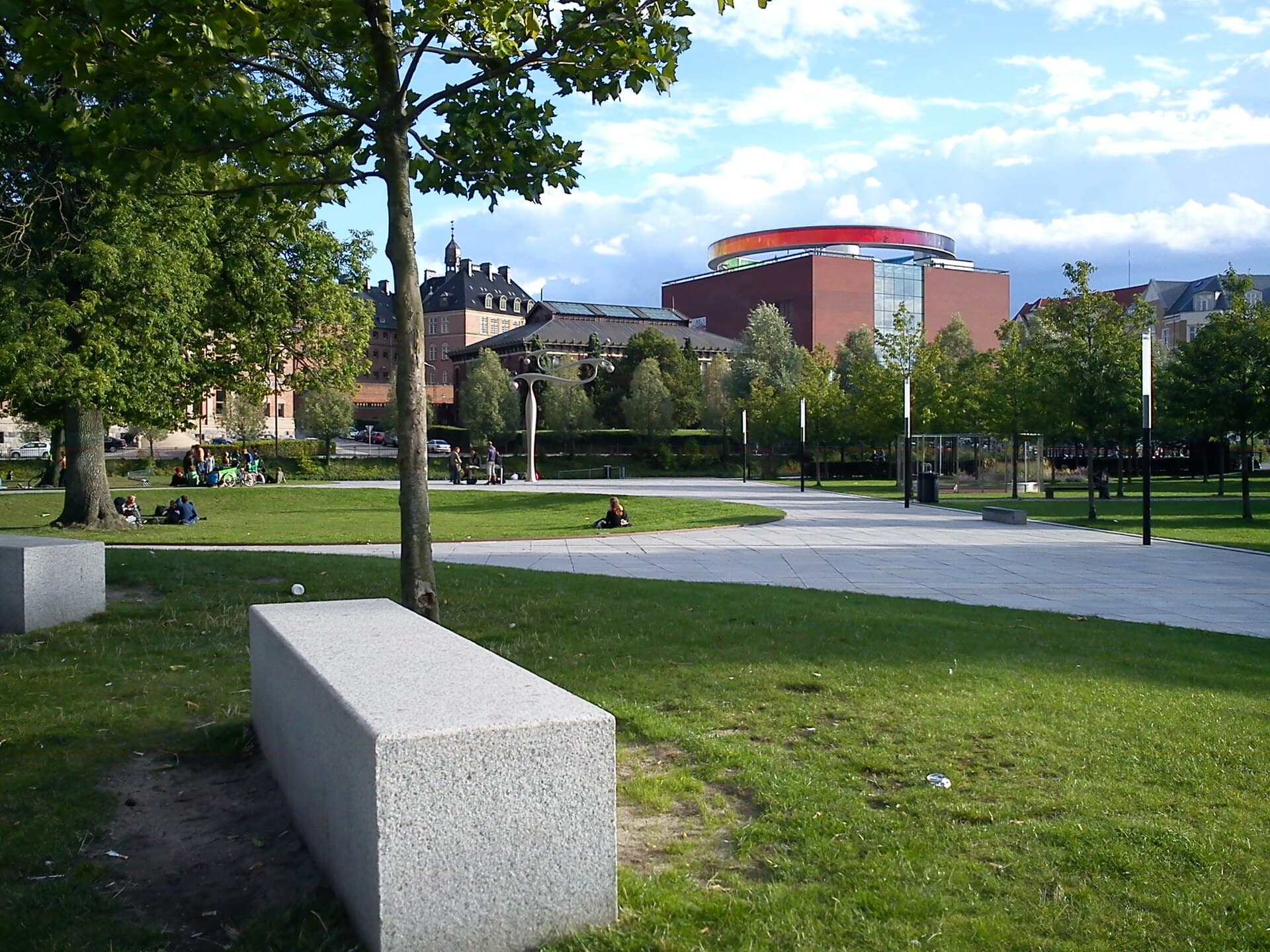 MølleparkenThe oldest public park in Aarhus, and its smallest and most used — on the river 6 minutes walk4.5
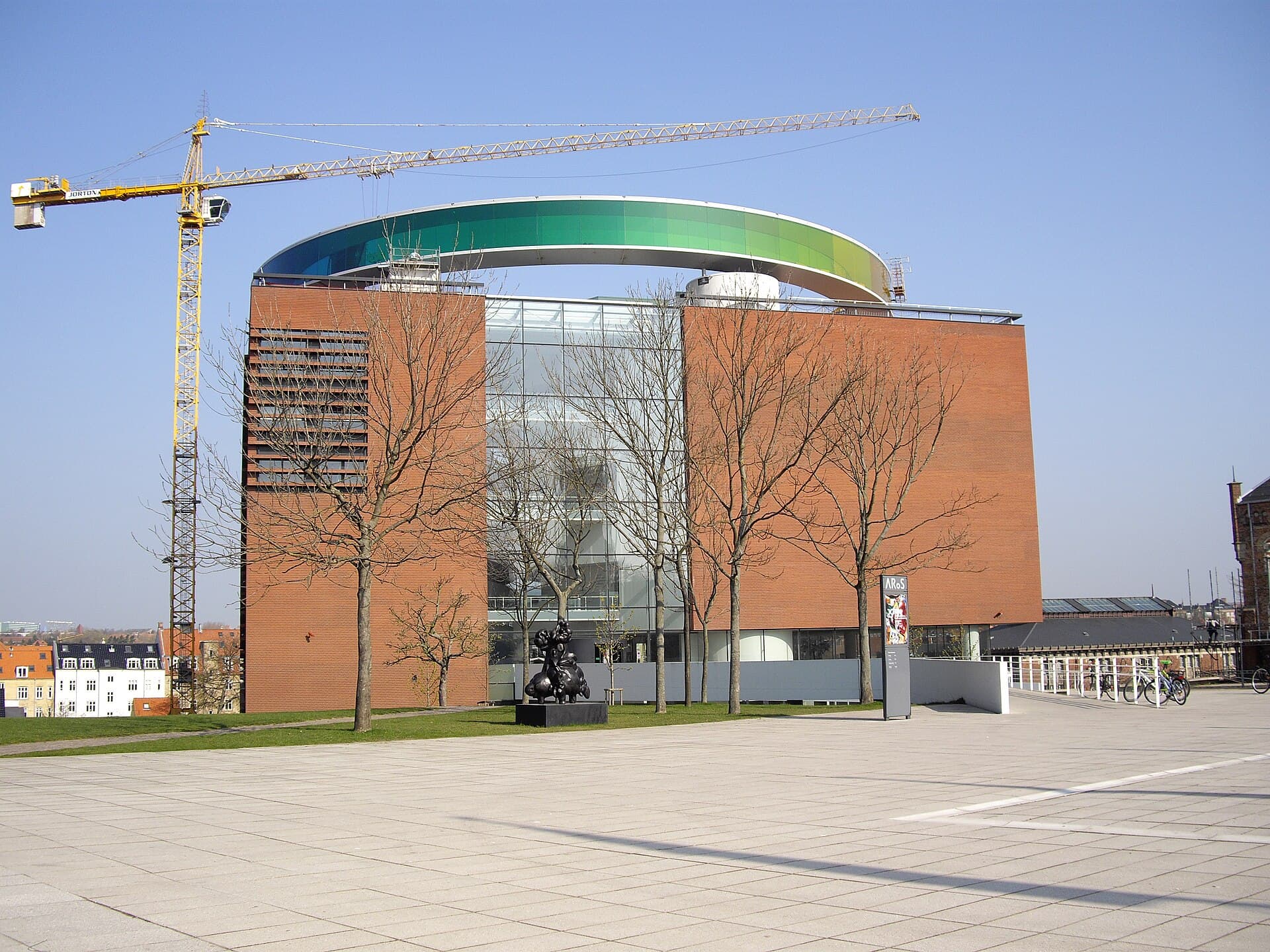 ARoS & its Rainbow PanoramaARoS is the museum known for its roof before its collection: Your Rainbow Panora8 minutes walk4.6
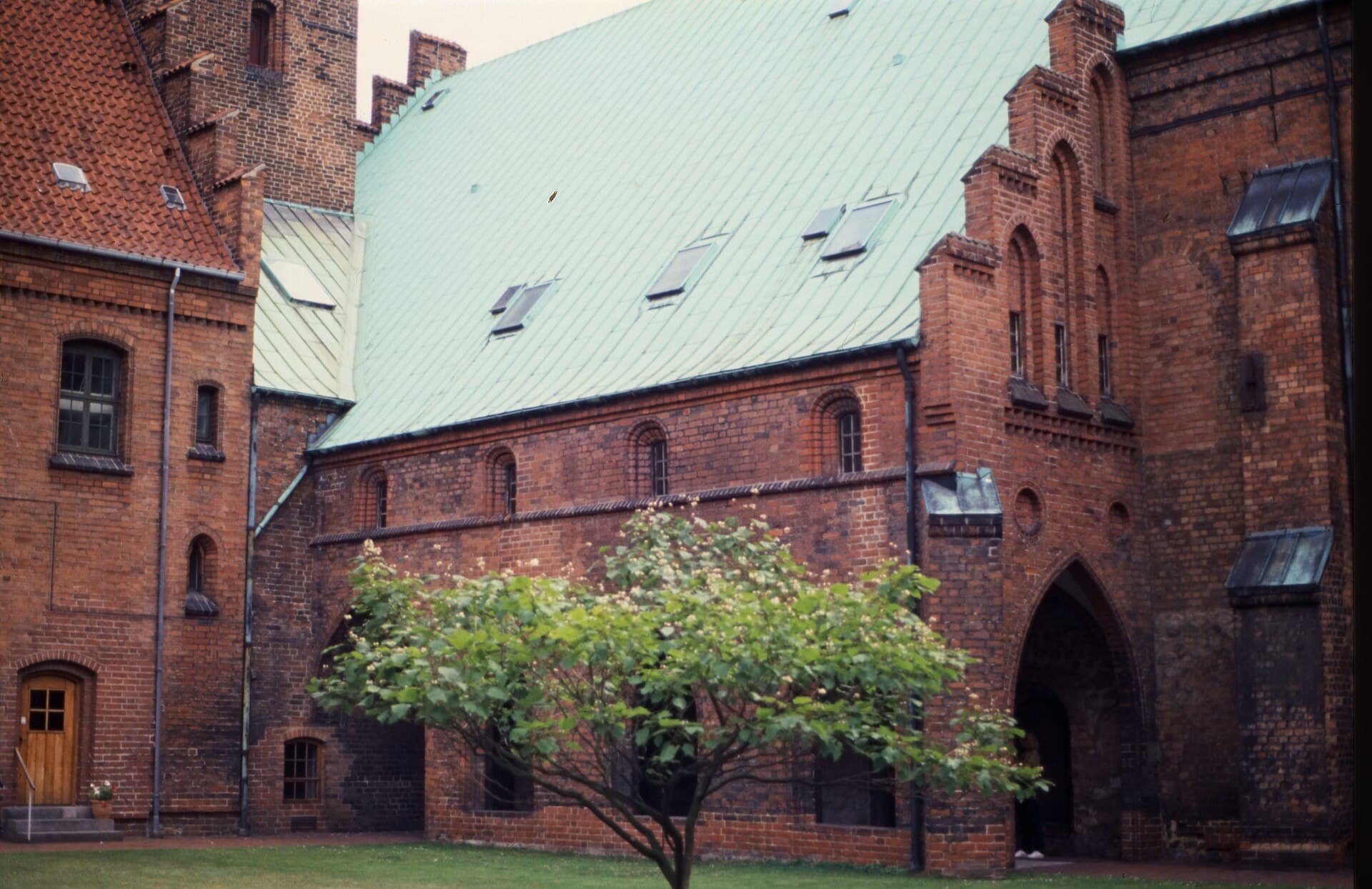 Church of Our Lady, AarhusAn ordinary-looking church from outside, hiding beneath it the oldest standing s9 minutes walk4.6
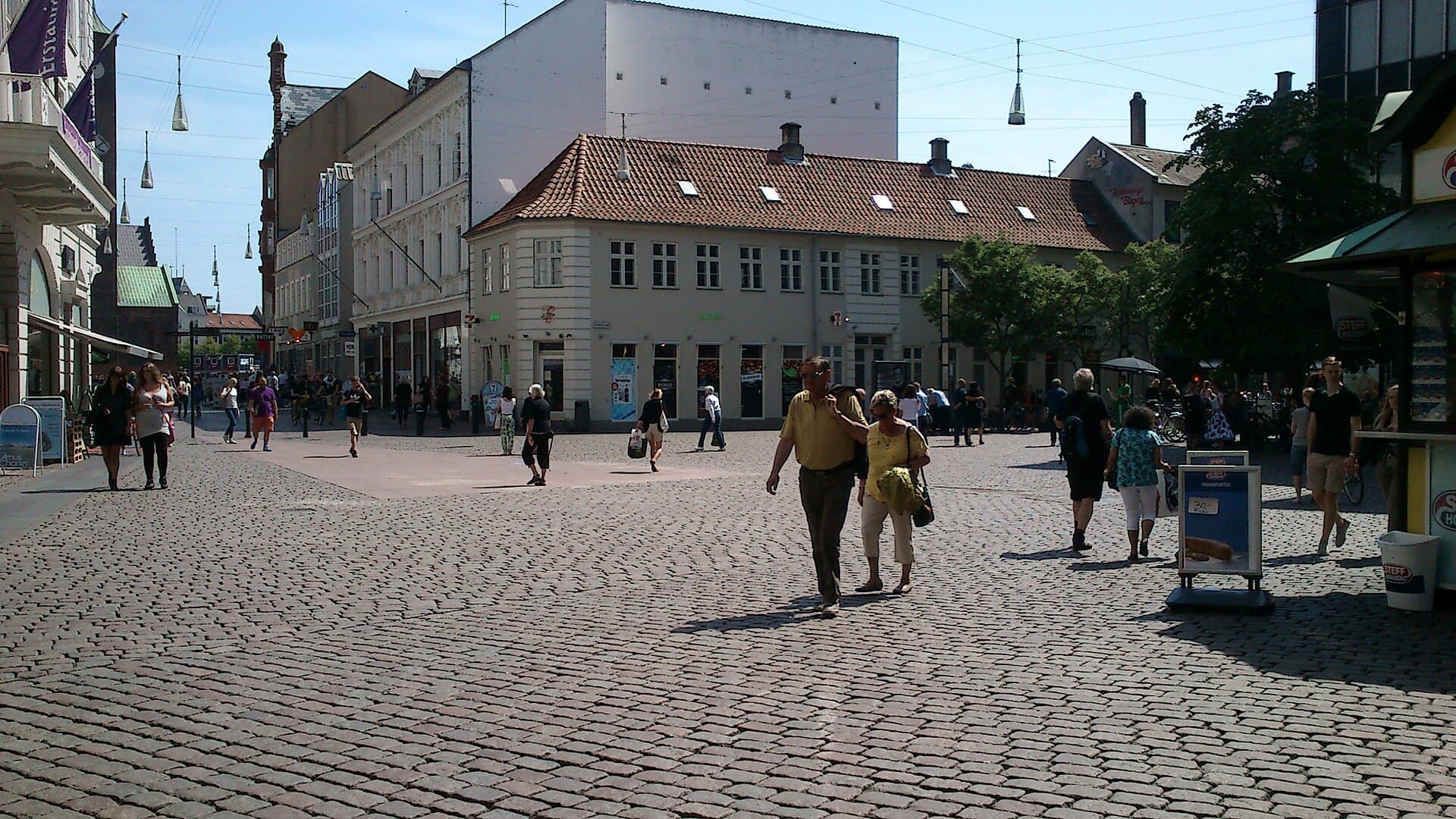 Lille TorvA small square in the heart of old Aarhus, its name meaning the little square, d11 minutes walk4.4
It is an **open-air town** rather than an ordinary museum: about 75 genuine historic buildings moved stone by stone from across Denmark and rebuilt to form a complete settlement. What sets it apart is that it is divided **by period**: one district represents 1864, another 1927, another 1974 — with their shops, flats, cars and even advertising. You can walk into a 1970s apartment with its original furniture and a working radio. Costumed staff explain and work in the workshops, and the poster museum and other small museums sit inside it. Half a day is the minimum, and a full day is not excessive with children.