
The Sacred Way
A climbing path between the Greek cities' treasuries to the temple.
Skyring — CC BY-SA 4.0 · Helen Simonsson — CC BY-SA 3.0 · Holger Uwe Schmitt — CC BY-SA 4.0 · Holger Uwe Schmitt — CC BY-SA 4.0
**The place the Greeks held to be the centre of the world** — literally. The legend has Zeus release two eagles from opposite ends of the earth, and they met here, so a stone called the **omphalos**, the "navel", was set on the spot to mark the midpoint. The site itself explains why: stone terraces climbing the flank of **Mount Parnassus** beneath two enormous cliffs called the Phaedriades, with the Pleistos valley falling away in front into a **sea of olive trees** that runs all the way to the Gulf of Corinth. No other archaeological site in Greece has this setting. This was the seat of the **oracle** — the Pythia, Apollo's priestess, consulted by kings and cities before they went to war or founded a colony. She sat in the temple of Apollo and spoke words the priests interpreted, and decisions that changed the course of Greek history were taken on them. You climb the **Sacred Way** past the foundations of **treasuries** that Greek cities built to display their wealth — the reconstructed **Treasury of the Athenians** the finest — up to the **Temple of Apollo** with its six standing columns, then the **theatre**, then the **stadium** at the top. Carved at the entrance were the words: **"Know thyself."**
A climbing path between the Greek cities' treasuries to the temple.
Six standing columns where the oracle gave her answers.
Tiers at the top looking over the valley and the olive sea.
Delphi, 33054 Fokida, Greece
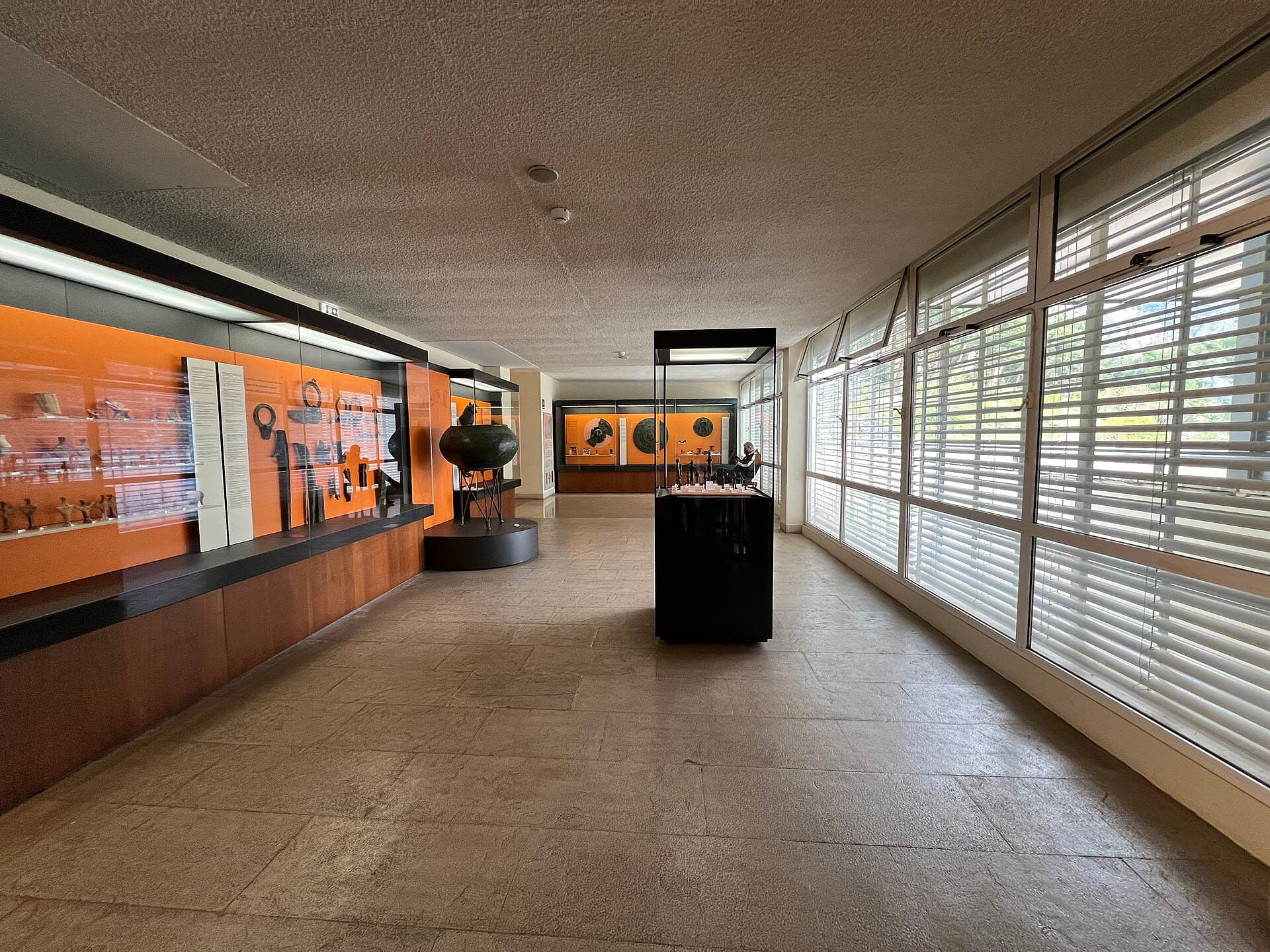 Delphi Archaeological Museum**One of the most important museums in Greece, standing right at the site's gate4 minutes walk4.8
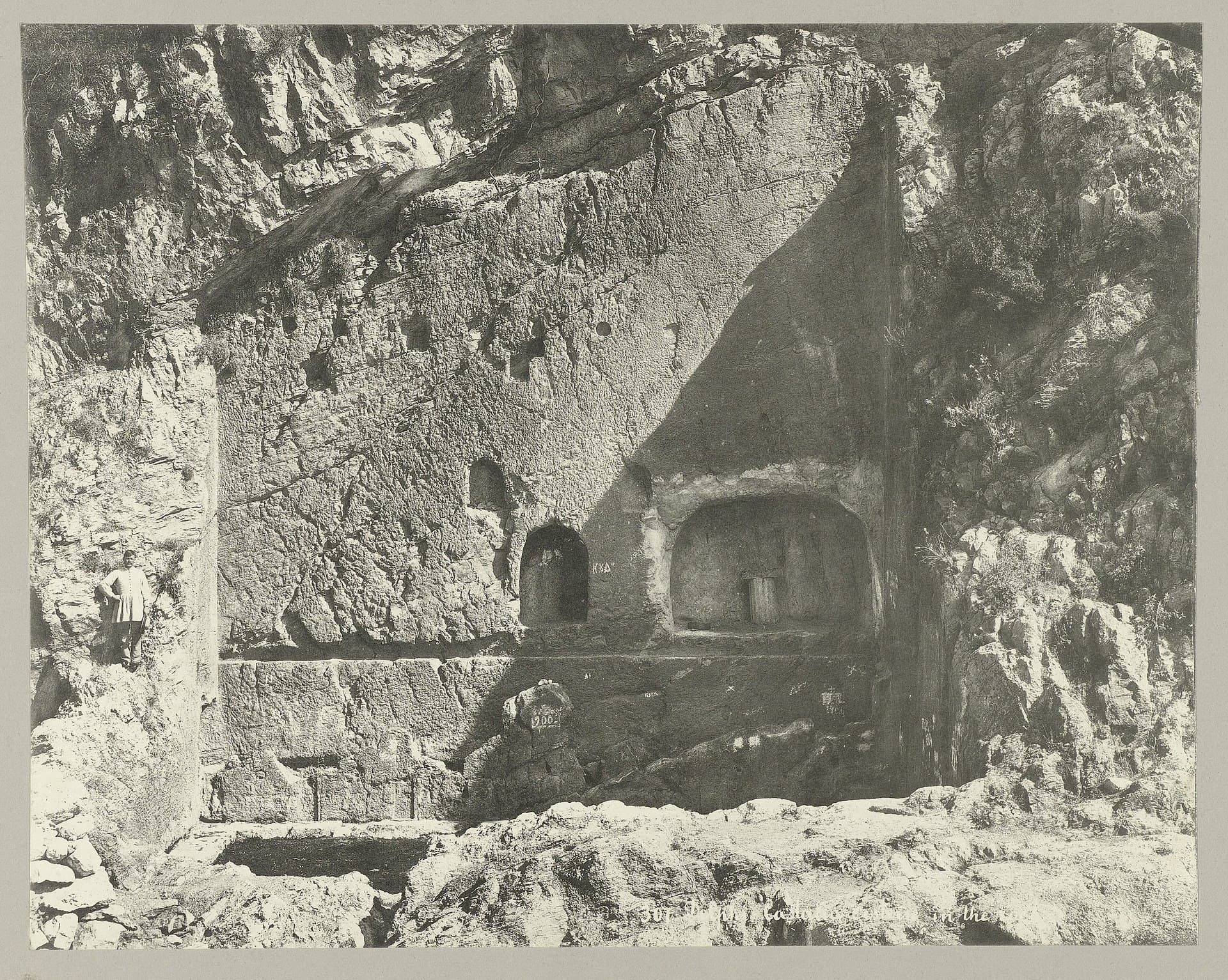 Castalian Spring**The spring you had to wash in before you could ask the oracle** — in a narrow 6 minutes walk4.9
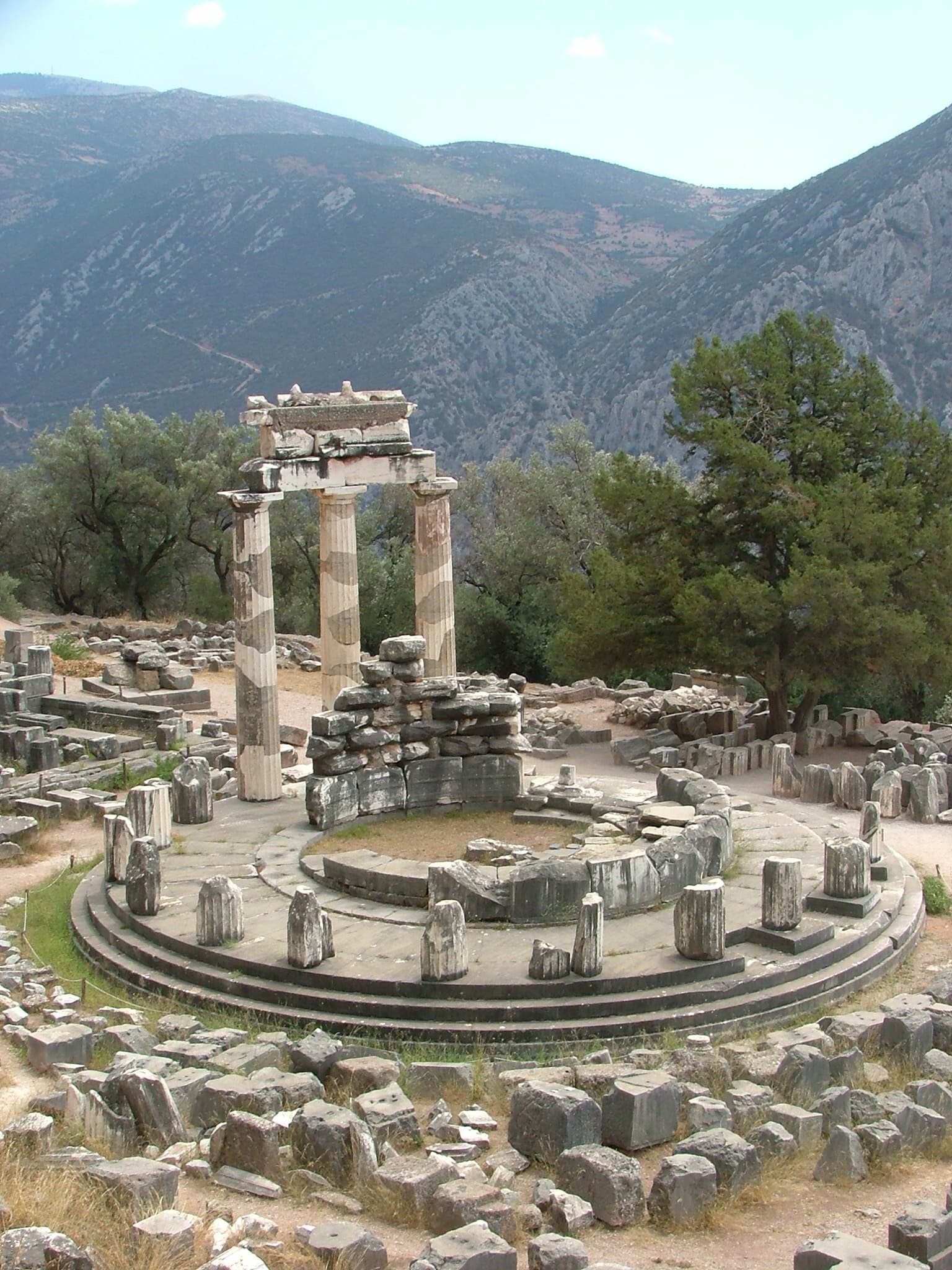 Tholos of Athena Pronaia**The round building that became the face of Delphi in every photograph** — thre10 minutes walk4.8
**The ritual is known; the scientific explanation is still argued — and the distinction matters.** ✅ **What is historically certain**: the enquirer paid a fee and made a sacrifice, then the **Pythia** — a priestess drawn from local women — sat on a three-legged stool in a chamber of Apollo's temple and spoke words the priests recorded and shaped into an answer. The answers were often **deliberately ambiguous**, famous for admitting two readings — the best-known case being Croesus of Lydia, told that if he crossed the river he would "destroy a great empire"; he crossed, and the empire destroyed was his own. ⚠ **What is argued**: ancient sources describe "vapours" rising from a cleft in the ground. Modern geological studies have proposed that gases such as **ethylene** seeped from faults beneath the site, but this is **a contested hypothesis rather than settled fact**, and some scholars doubt the cleft existed at all.
**Stay a night if you can — the difference is very large.** ⚠ **The day trip**: about **two and a half to three hours each way** (180 km through mountains), so the coaches and tours all arrive in the same window — **between 10:30 and 2** — which is the hottest and most crowded part of the day on a shadeless slope. You see the site, but you see it at its worst. ✅ **A night in the modern village of Delphi** (or in prettier **Arachova**, 10 km away) changes everything: you enter **at opening**, when it is nearly empty and cool, spend the afternoon in the museum, and watch sunset over the olive valley from a village terrace — and you can add a day for **Hosios Loukas** or **Galaxidi**. ✅ The village is small and moderately priced, and most of its rooms look out over the valley.