
The Charioteer
A life-size bronze whose coloured-stone eyes are still in place.
Chabe01 — CC BY-SA 4.0 · Holger Uwe Schmitt — CC BY-SA 4.0 · Holger Uwe Schmitt — CC BY-SA 4.0 · Holger Uwe Schmitt — CC BY-SA 4.0
**One of the most important museums in Greece, standing right at the site's gate** — and it holds the single object that justifies the journey on its own. The **Charioteer** is a life-size bronze of around **470 BC** that survived almost intact because an earthquake buried it. It is among the rarest survivals of classical Greek bronze — most of it was melted down over the centuries — and his eyes are still in place: **coloured stone and onyx**, so that he genuinely looks back at you. Around him is a sequence that lays out the whole history of Greek art: the massive 6th-century **kouroi Kleobis and Biton**; the **Naxian Sphinx** on its tall column; the **frieze of the Siphnian Treasury**, with the battle of gods and giants carved in astonishing depth; the **omphalos stone**; and the Roman statue of **Antinous**. ✅ The arrangement is **chronological and clear**, the English labelling is good, and the building is fully air-conditioned. ⚠ Which makes it **the natural refuge at midday**, when staying on the slope becomes impossible.
A life-size bronze whose coloured-stone eyes are still in place.
Gods against giants, carved almost in the round.
A huge figure that once stood on a tall column over the site.
Delphi, 33054 Fokida, Greece
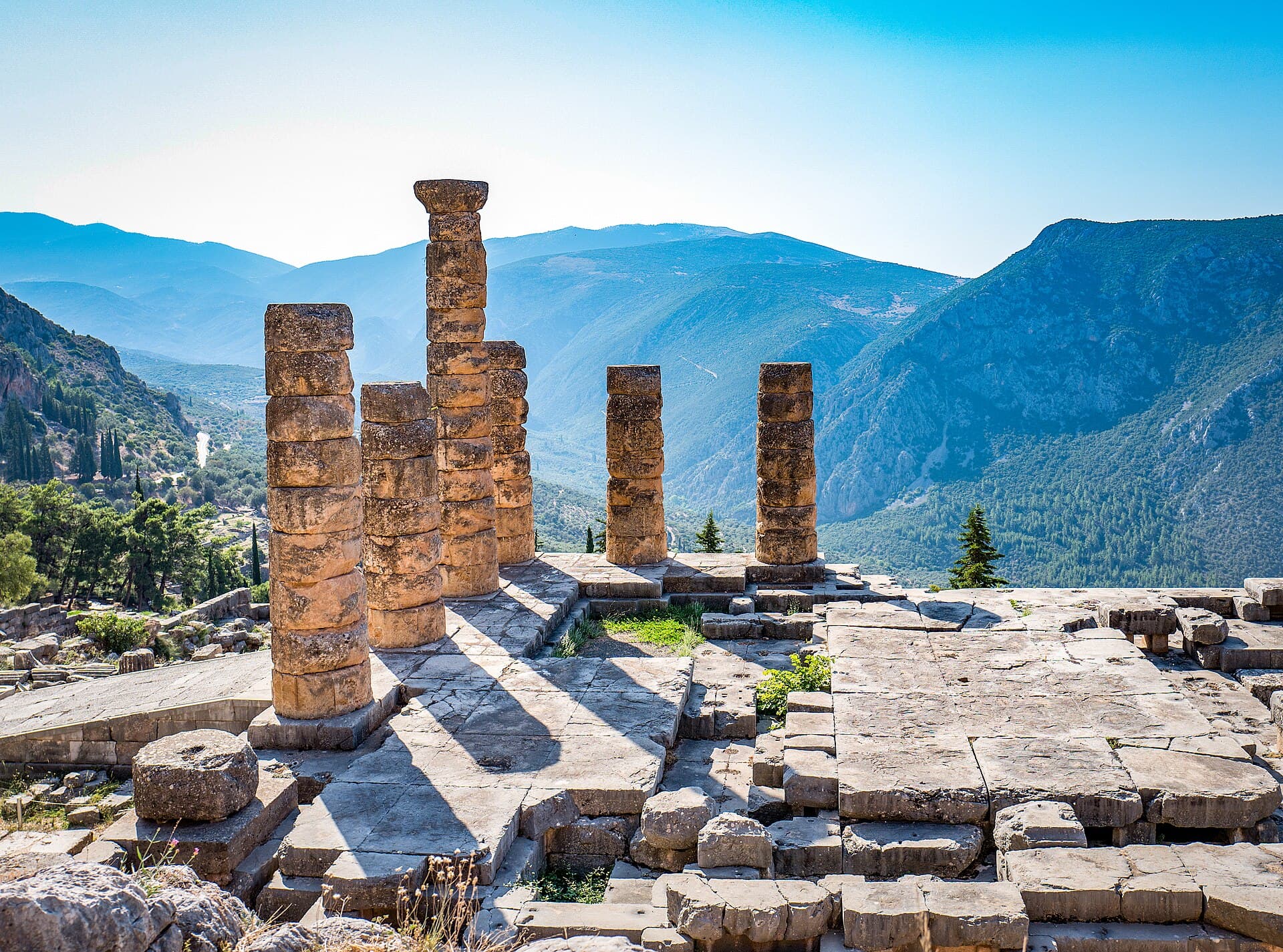 Delphi**The place the Greeks held to be the centre of the world** — literally. The leg4 minutes walk4.9
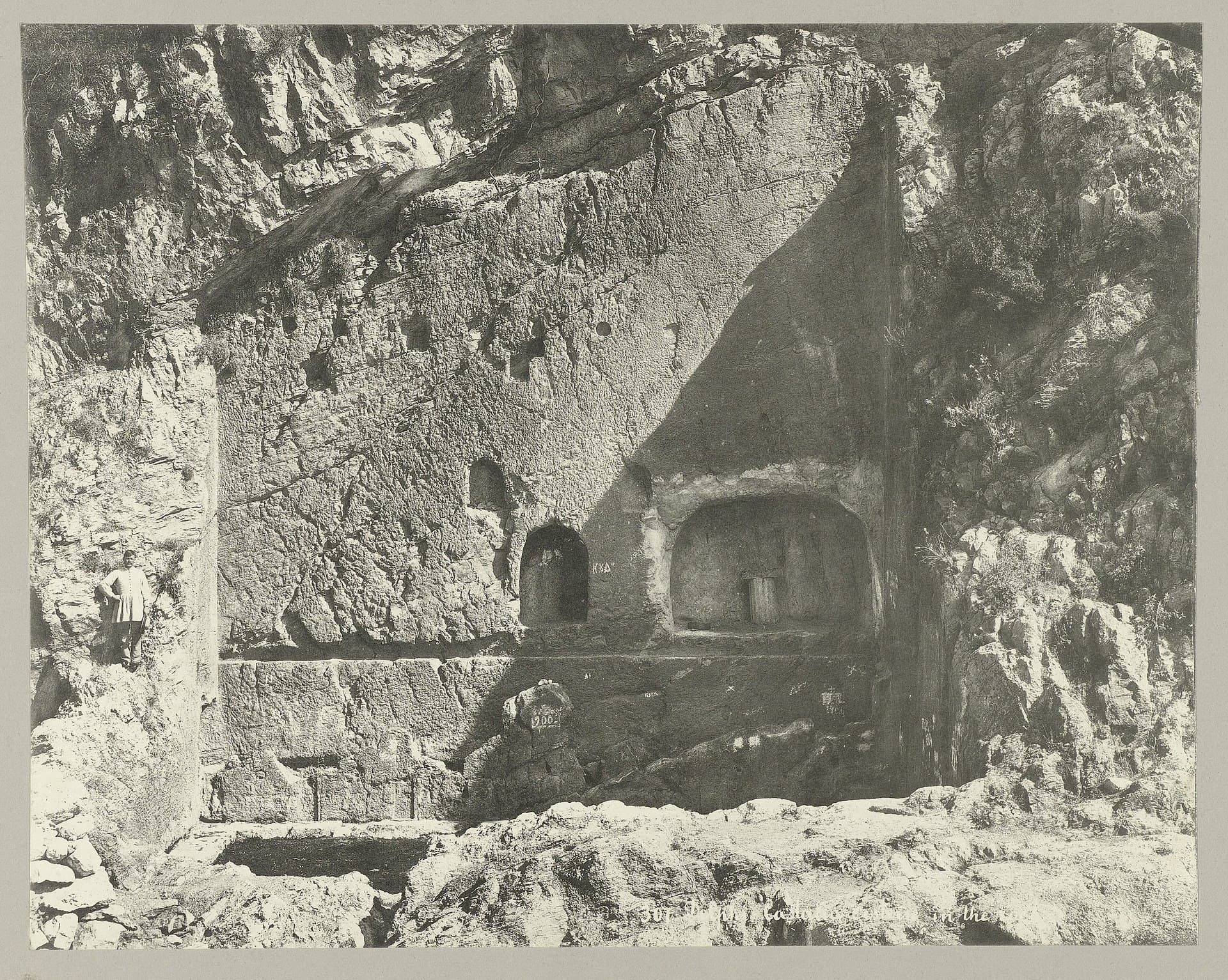 Castalian Spring**The spring you had to wash in before you could ask the oracle** — in a narrow 7 minutes walk4.9
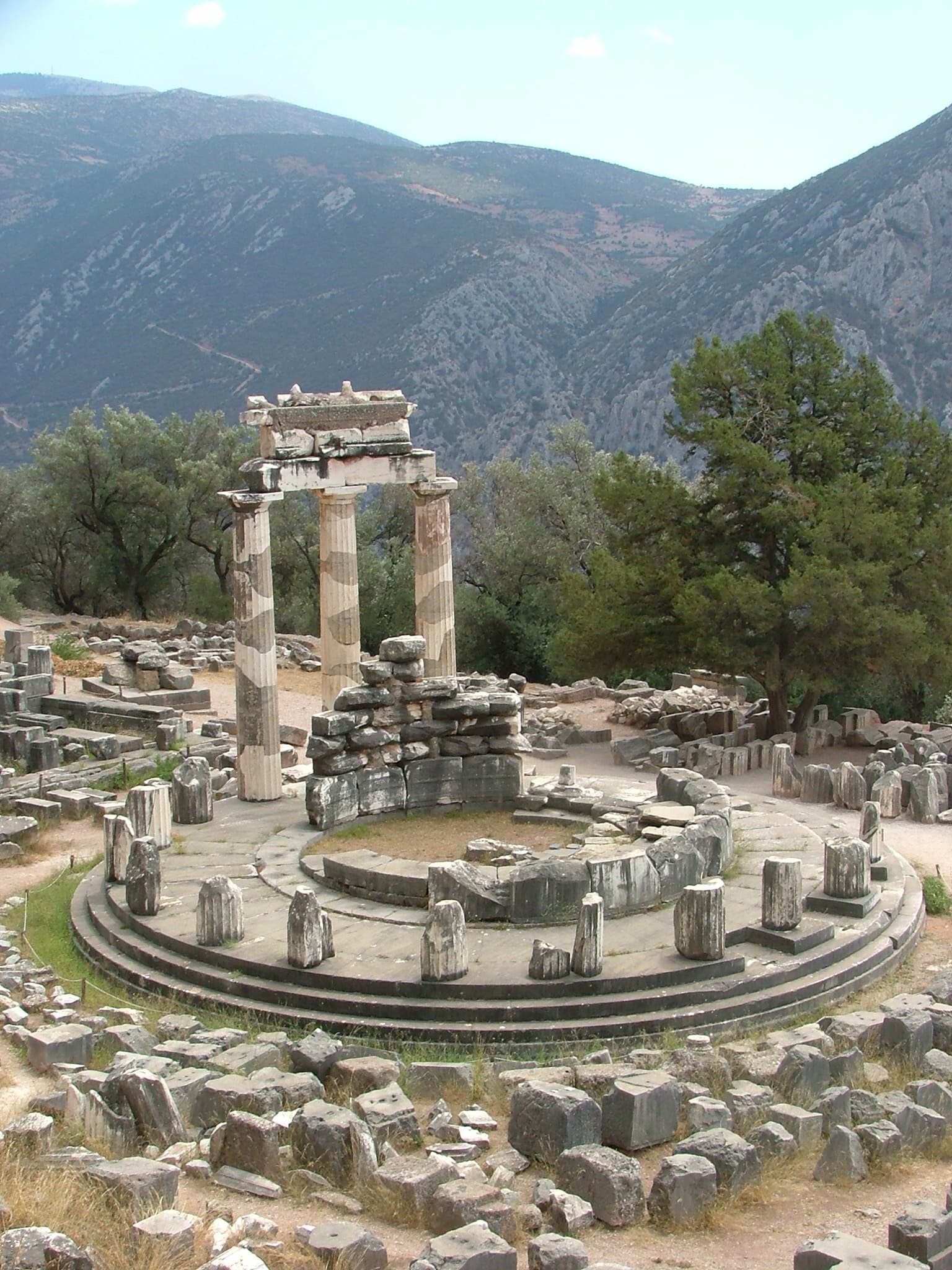 Tholos of Athena Pronaia**The round building that became the face of Delphi in every photograph** — thre9 minutes walk4.8
**Its rarity first, then its artistic moment.** ✅ **The rarity**: the Greeks worked more in bronze than in marble, but bronze is **a metal that gets melted down** — thousands of statues were recycled over the centuries into weapons, coinage and bells. That is why we know most Greek sculpture from **Roman marble copies** of lost bronze originals. The Charioteer is **a surviving Greek original**, which alone puts him in a category you can count on your fingers. ✅ **The artistic moment**: he was made around 470 BC, in the transition from the stiff Archaic manner to the Classical — his face is calm and unsmiling, his robe falls like the flutes of a temple column, but his head is **turned slightly** and his feet are not symmetrical: natural and ideal at once. ⚠ **And notice what is missing**: he was part of a group with **a chariot and four horses**, all lost — what you see is the sole survivor of a complete scene.
**It depends on the heat, not on logic.** ✅ **In summer (June–September)**: **the site first, at opening**, while it is still bearable and the slope is partly shaded, then the museum at midday to escape the sun. That order is not a preference but **a safety matter** — the open slope at 1 pm in August is not to be taken lightly. ✅ **In spring, autumn and winter**: **the museum first** is intellectually better — you see the Charioteer, the Siphnian frieze and the Sphinx, **then climb the site knowing where those pieces came from**, so the empty foundations turn into buildings in your head. ⚠ **Either way**: avoid the **10:30–14:00** window in both if you can, because that is coach time at each.