
The great dome
About 24 m high, on pendentives.
Lamine Bensaou — CC BY-SA 3.0 · habib kaki — CC BY 3.0 · Credits to Reda Kerbush / Wikimedia Commons — CC BY-SA 3.0 · Chettouh Nabil — CC BY-SA 4.0 · Credits to Reda Kerbush / Wikimedia Commons — CC BY-SA 3.0
Djamaa El Djedid, the New Mosque, stands on the eastern edge of Place des Martyrs, at the foot of the Casbah of Algiers. An inscription dates it to 1070 AH (1660) and credits al-Hajj Habib with its building. Whitewashed throughout, it has a central dome about 24 m high and a square minaret with a clock. The French named it the Fishery Mosque (Mosquée de la Pêcherie), after the fish market below. Under Ottoman rule it became a leading Hanafi mosque, the school of the Ottoman Turks, while most Algerians were Maliki. Its dome on pendentives recalls Istanbul, while the mihrab arch is Andalusian. The long vault before the qibla wall crosses the others in a Latin cross, which fed a legend of a Christian captive architect; historians point to Ottoman models. Octagonal cupolas and barrel vaults frame the main dome, in a building about 48 m by 27 m. The octagonal mihrab is tiled below, and the Italian marble minbar came from the Sayyida mosque, destroyed in the early 1830s. The Maghrebi-style minaret, once about 30 m tall, now rises about 25 m above the raised street; its clock is said to come from the Jenina, the rulers' palace opposite. A working mosque, it is best visited outside prayer times; allow 20 to 40 minutes. Place des Martyrs metro station displays remains found during its construction. Djamaa El Kebir is about 100 m east, Ketchaoua Mosque about 200 m west, where the Casbah's lanes start to climb, and the Palace of the Raïs about 400 m north.
About 24 m high, on pendentives.
Said to come from the Jenina palace.
Italian marble from the Sayyida mosque.
Place des Martyrs, lower Casbah, Algiers
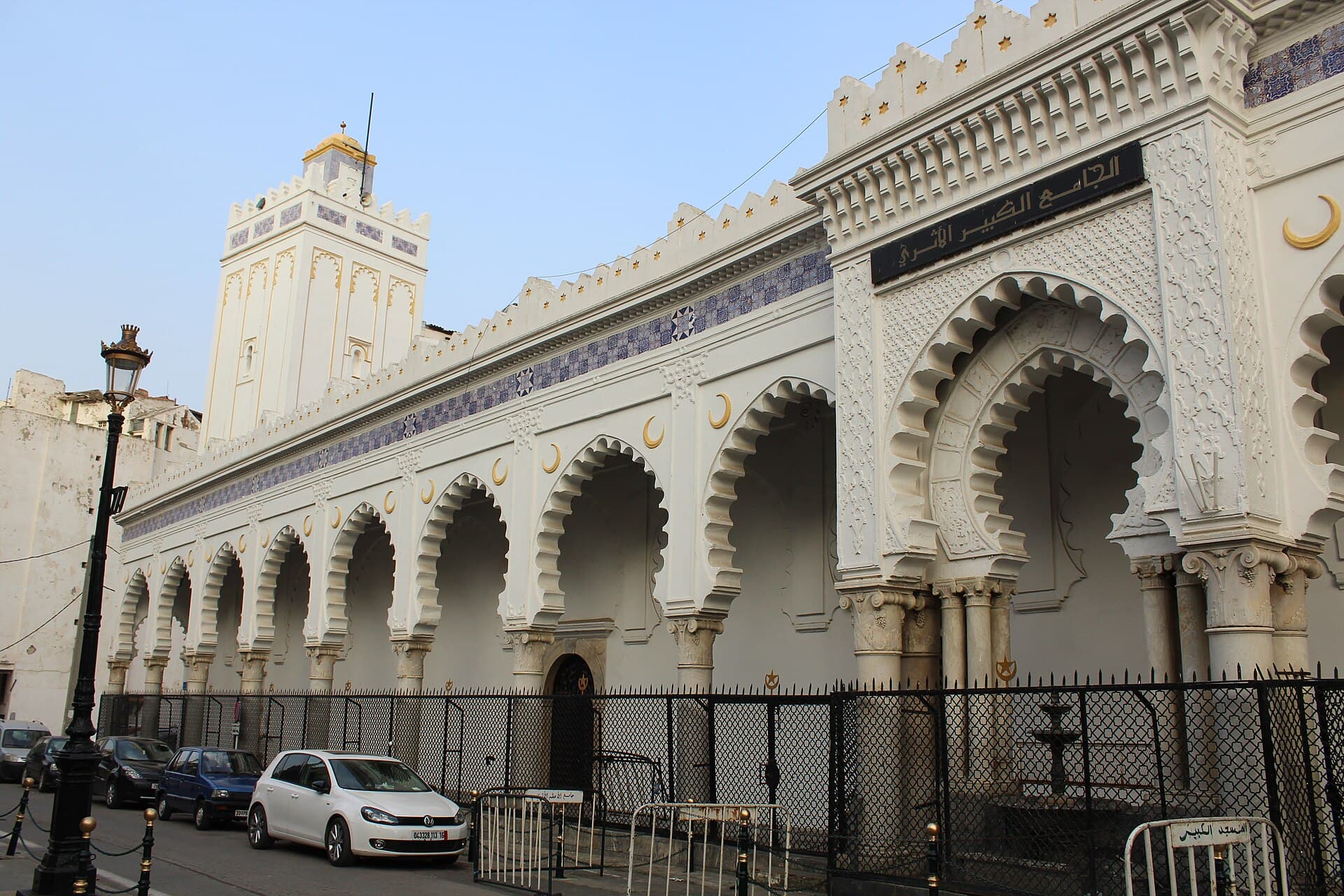 Djamaa El Kebir (Algiers)Djamaa El Kebir, whose name means the Great Mosque, is generally regarded as the1 minute walk
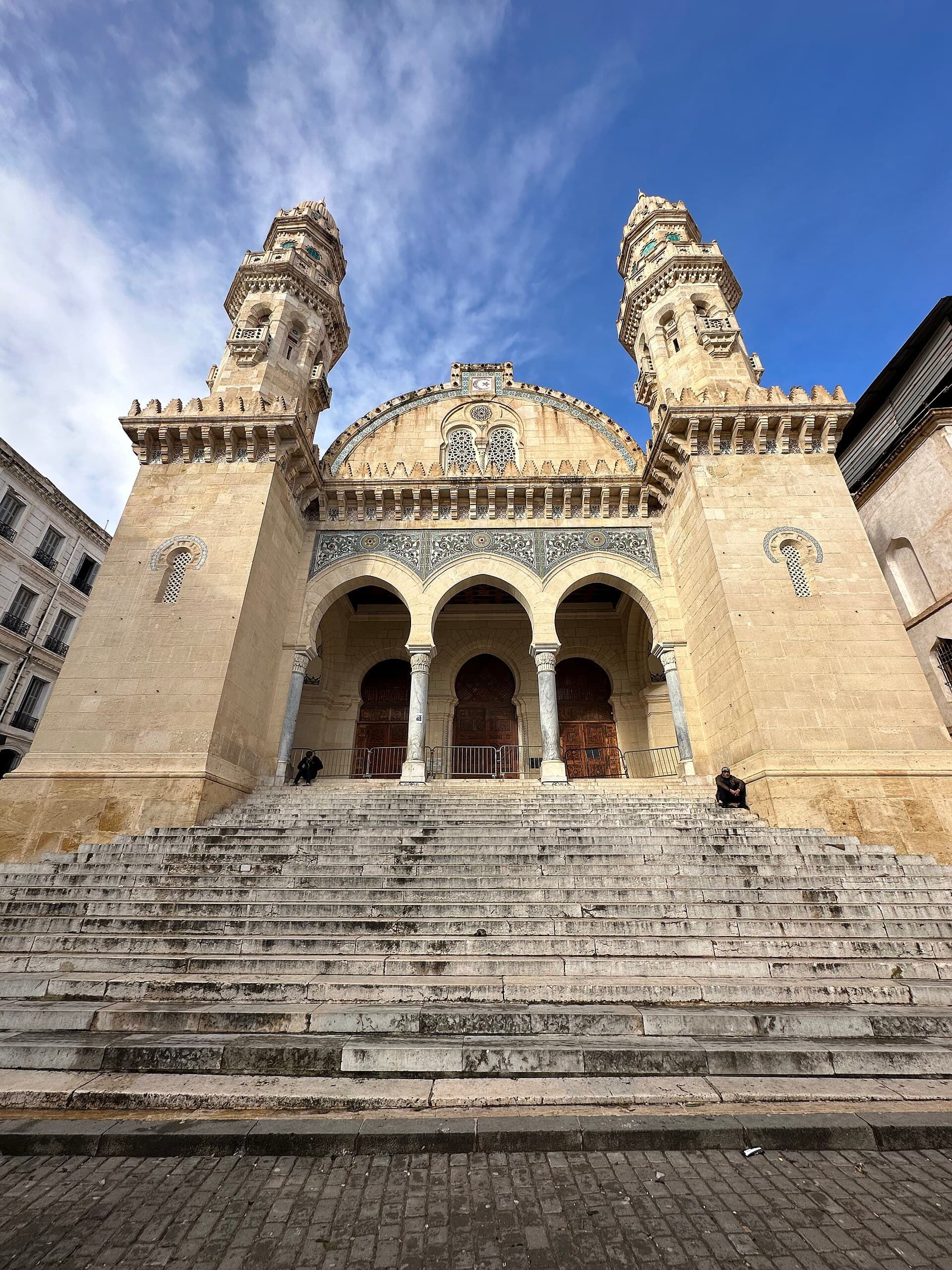 Ketchaoua MosqueOne of Algeria's best-known and most symbolic mosques, at the foot of the Casbah3 minutes walk4.8
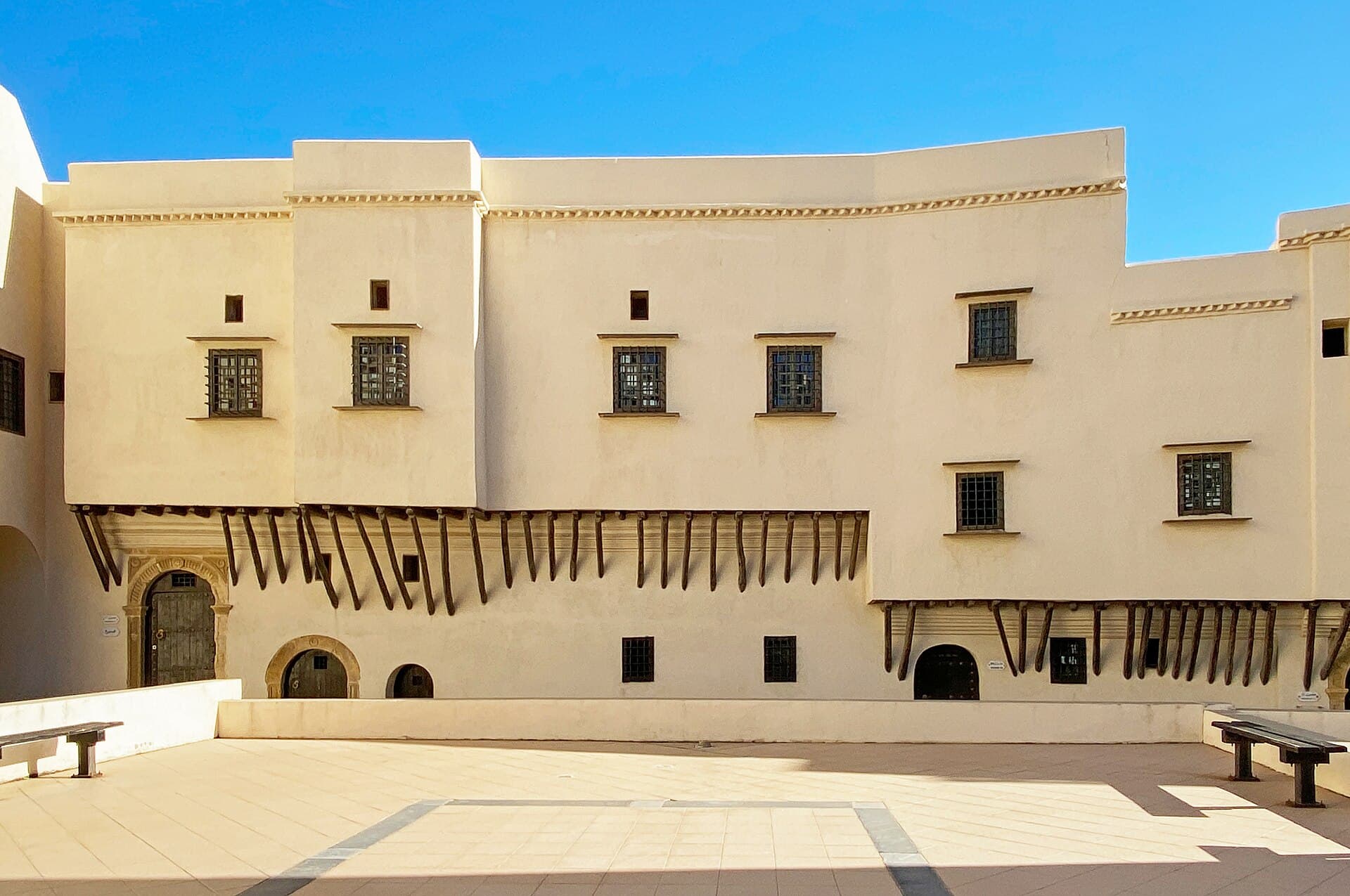 Palace of the Raïs (Bastion 23)The Palace of the Raïs, also called Bastion 23, is a seafront group of three Ott5 minutes walk
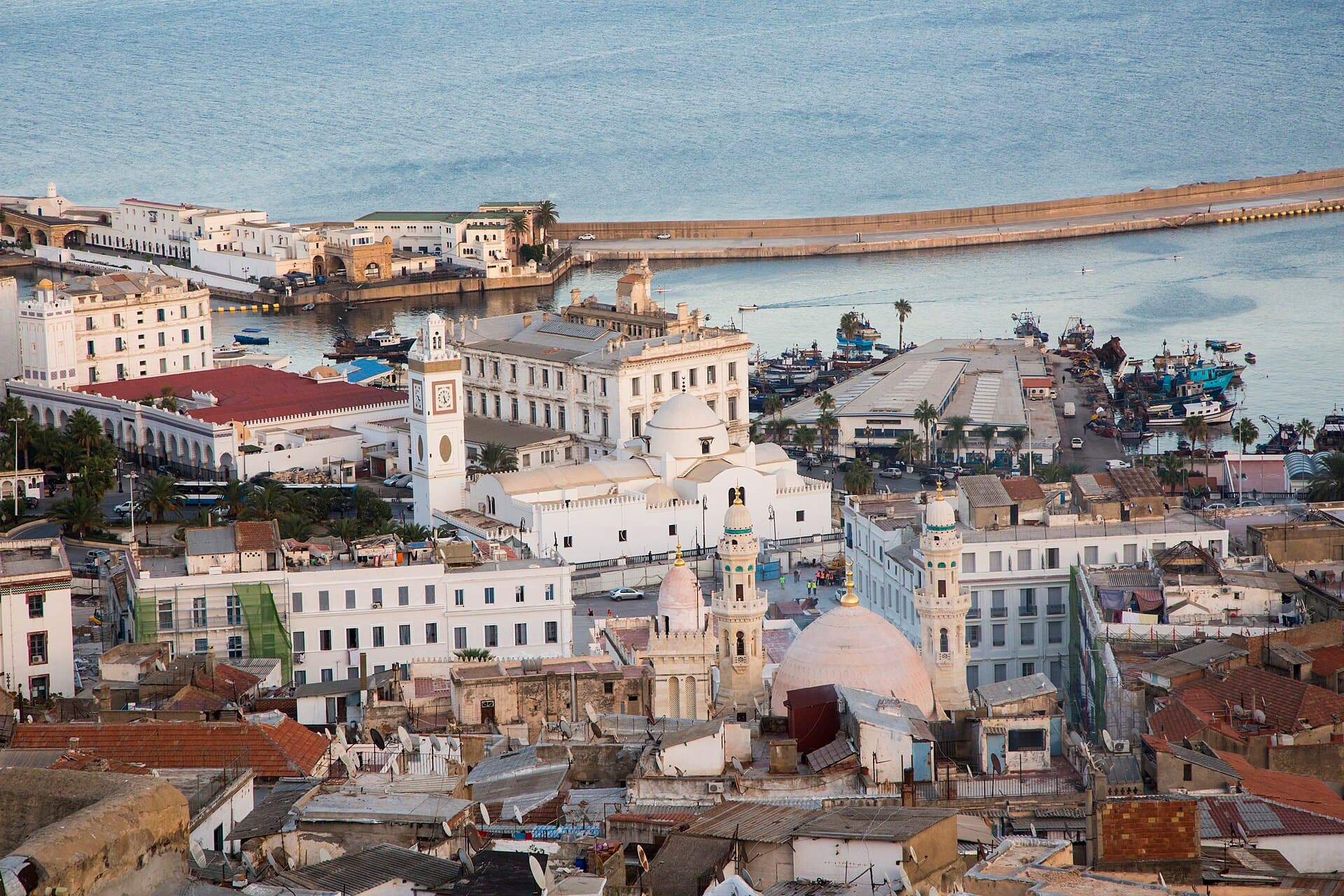 The CasbahThe old city of Algiers and its historic heart, its tightly packed white houses 5 minutes walk4.6
Visitor guides say non-Muslims are usually admitted outside prayer times, though the doors are sometimes closed to them. Going with a local guide helps, and ask before taking photos inside.
Excavations in 2013 for the metro works uncovered remains spanning some 2,000 years of the city's history, from Roman to Byzantine and Ottoman times. Some are shown in place inside Place des Martyrs station.