
Palace 18
Marble-columned patio, tiles and a hammam.
Bernard Gagnon — CC BY 4.0 · Bernard Gagnon — CC BY 4.0 · Bernard Gagnon — CC BY 4.0 · Bernard Gagnon — CC BY 4.0 · Bernard Gagnon — CC BY 4.0
The Palace of the Raïs, also called Bastion 23, is a seafront group of three Ottoman palaces, numbered 17, 18 and 23, and six fishermen's houses built between the 16th and 18th centuries. It is the last surviving quarter of the lower Casbah of Algiers, where the old city still meets the sea, and lies within the Casbah's 1992 UNESCO listing. It grew from Bordj Ez-Zoubia, a fort built in 1576 under Ramdan Pasha to guard the lower town. Palace 18, the finest, dates from around 1750; after 1830 it served as a girls' boarding school, the United States consulate and the municipal library. French-era rebuilding cleared the rest of the marine quarter, and that period's ramparts gave the name Bastion 23. Restored by an Italian firm from 1987 to 1993, the complex opened as an arts and culture centre on 1 November 1994. Inside are patios ringed by marble and sandstone columns, faience-lined walls, carved wooden ceilings, a kitchen and a hammam. Covered passages link the buildings, among them Sabbat el Hout, named after a fish carved at its entrance; one house, once a prayer room, keeps its mihrab. The terraces and old gun battery look over the bay, and the rooms host exhibitions and concerts. It stands about 300 m north of Place des Martyrs metro station as the crow flies, with Djamaa El Kebir and Djamaa El Djedid some 350 to 400 m to the south. Allow an hour or two, then climb into the Casbah lanes behind it, ideally with a local guide.
Marble-columned patio, tiles and a hammam.
Views over the Bay of Algiers.
A covered passage named after a carved fish.
Boulevard Amara Rachid, lower Casbah seafront
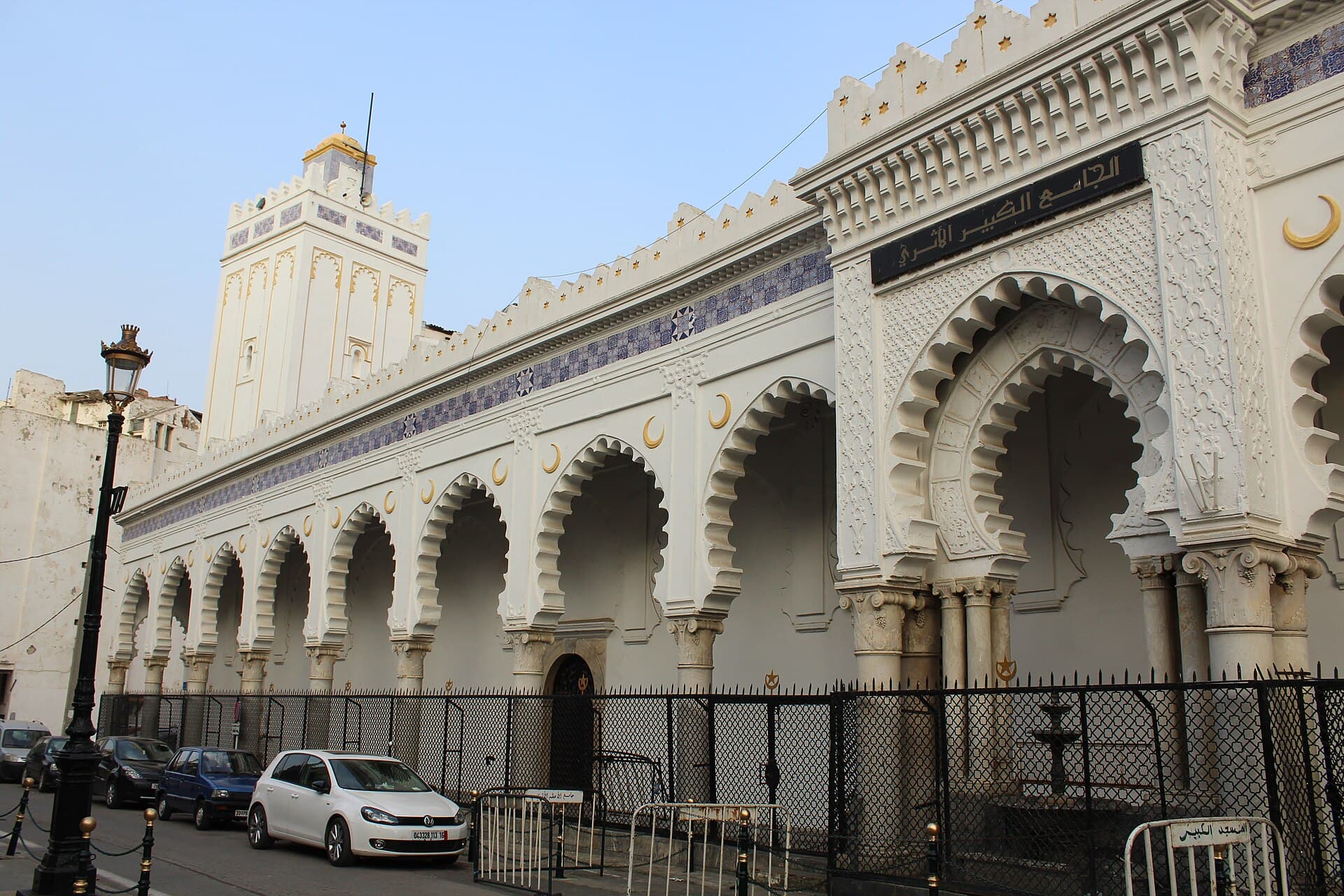 Djamaa El Kebir (Algiers)Djamaa El Kebir, whose name means the Great Mosque, is generally regarded as the4 minutes walk
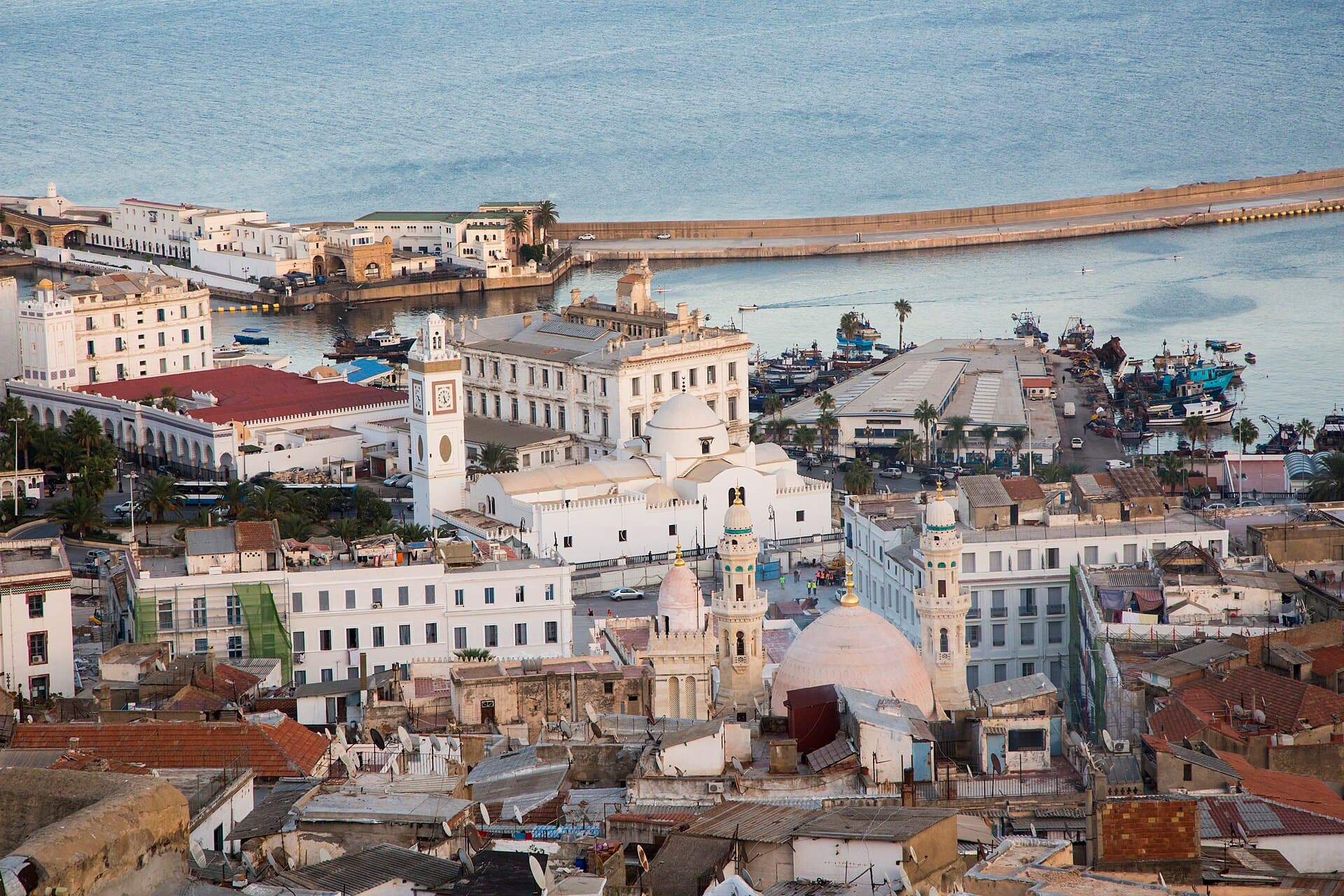 The CasbahThe old city of Algiers and its historic heart, its tightly packed white houses 5 minutes walk4.6
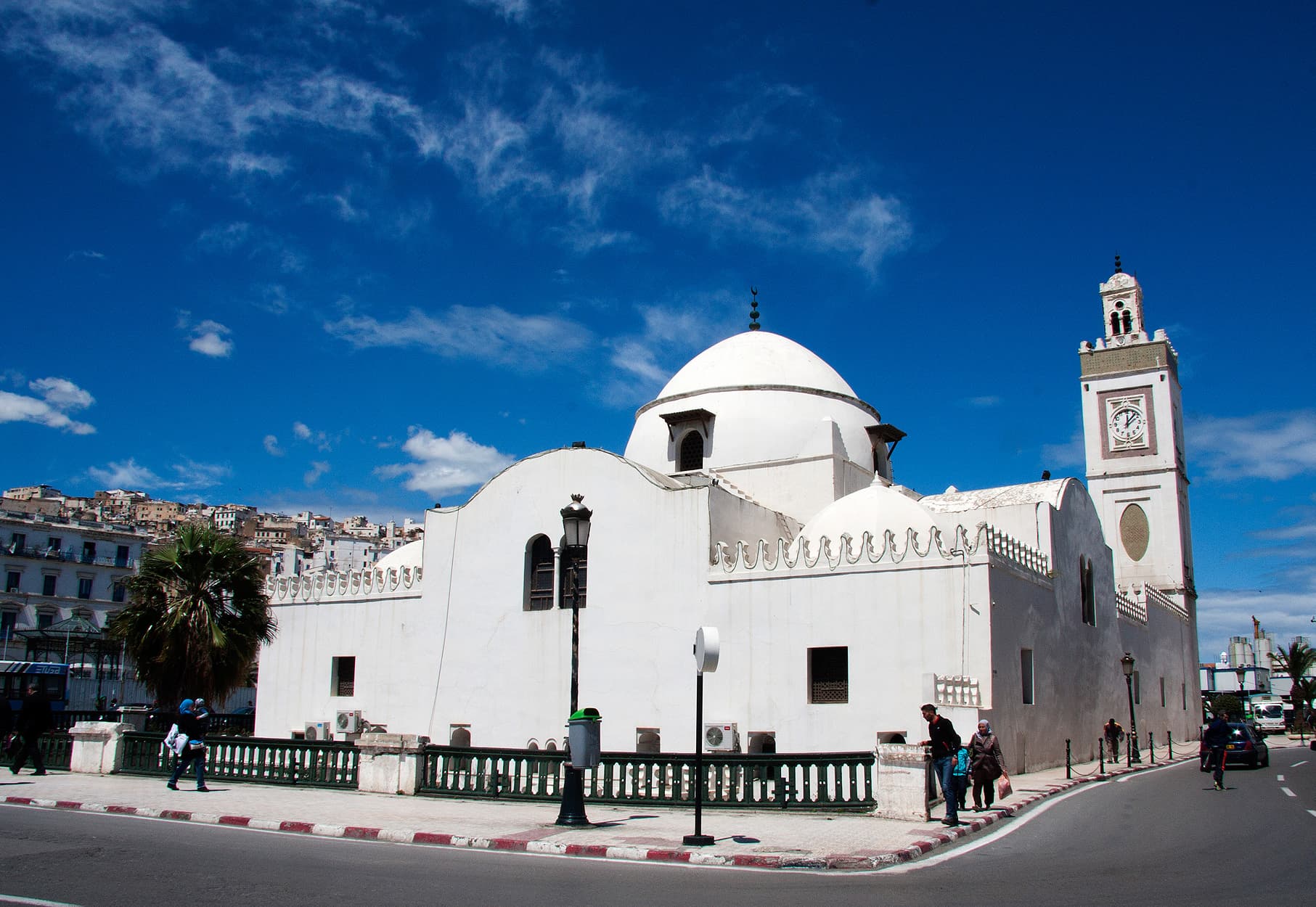 Djamaa El Djedid (Algiers)Djamaa El Djedid, the New Mosque, stands on the eastern edge of Place des Martyr5 minutes walk
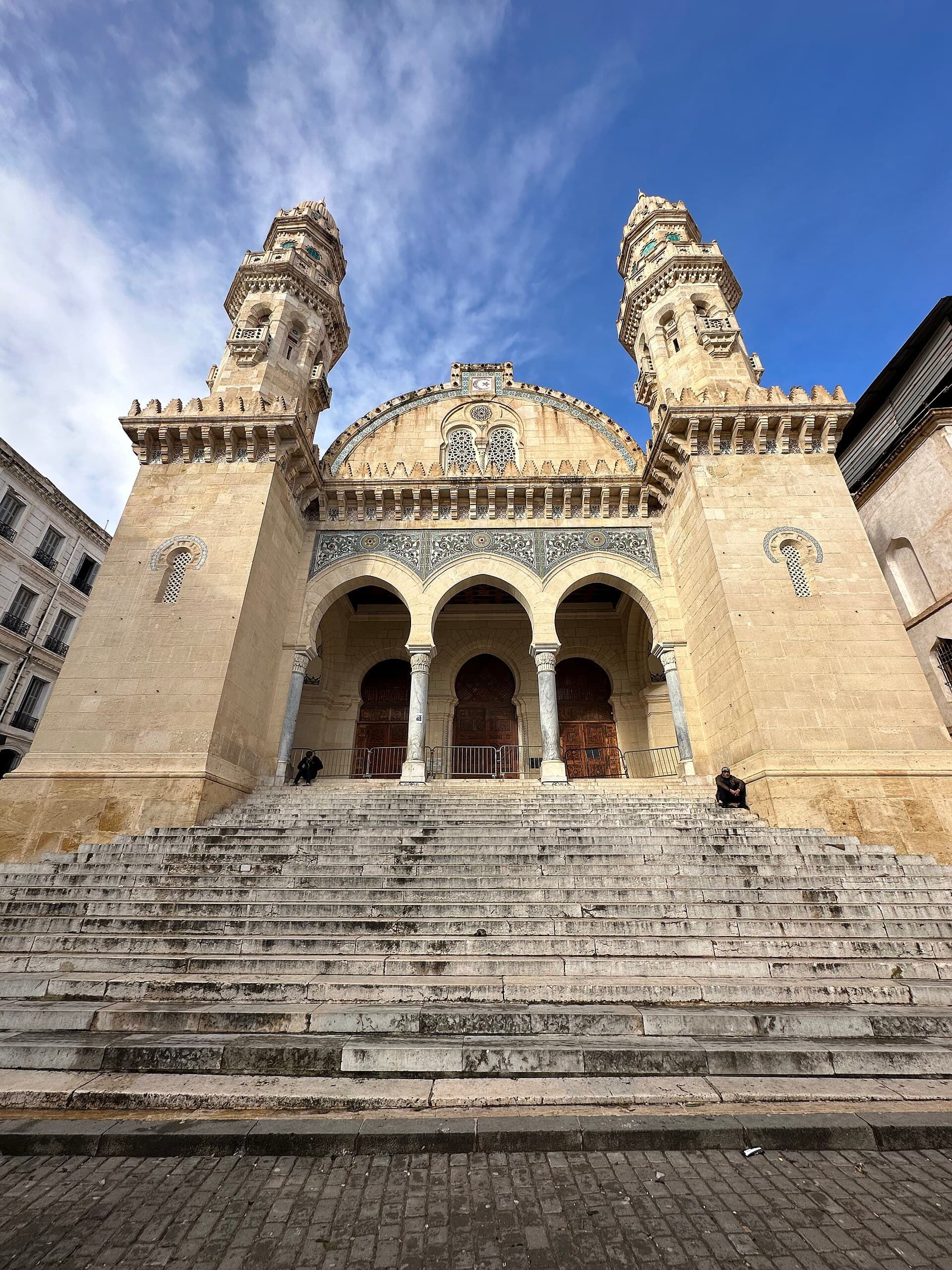 Ketchaoua MosqueOne of Algeria's best-known and most symbolic mosques, at the foot of the Casbah6 minutes walk4.8
Raïs was the title of the sea captains of Ottoman Algiers. One old name of the site, Topanet Arnaout, recalls guns attributed to the Albanian-born corsair Mami Arnaout, who in 1575 captured the galley carrying Miguel de Cervantes.
Families who lived in the buildings after 1962 whitewashed the ceilings with lime, which unwittingly shielded the carved wood beneath. Sea air still damaged the structure, and in the 1980s the Ministry of Culture rehoused the families before studies and restoration began.