
The rooftop statues
Seventy-eight saints along the roofline, clearly seen from the square in front.
X-Weinzar — CC BY-SA 3.0 · Bybbisch94 — CC BY-SA 4.0 · Bybbisch94 — CC BY-SA 4.0 · Bybbisch94 — CC BY-SA 4.0
Dresden Cathedral, also known as the Court Church, is the largest church in Saxony. It was built in the mid-eighteenth century when the ruler of Saxony converted to Catholicism in order to become king of Poland, while his people remained Protestant — which is why it was built joined directly to the palace by a private passage. The church is large, quiet and free to enter, and its façade carries seventy-eight statues of saints on the roofline. It was destroyed in the bombing of 1945 and restored. Inside are a large organ and a crypt holding the hearts of Saxony's rulers preserved in vessels — a strange but genuine tradition. It stands directly beside the Residenzschloss and Brühl's Terrace.
Seventy-eight saints along the roofline, clearly seen from the square in front.
A private corridor the ruler used to cross from his palace to the church unseen.
A crypt where the hearts of Saxony's rulers are kept in vessels apart from their bodies — a strange but genuine custom.
Schloßplatz, 01067 Dresden
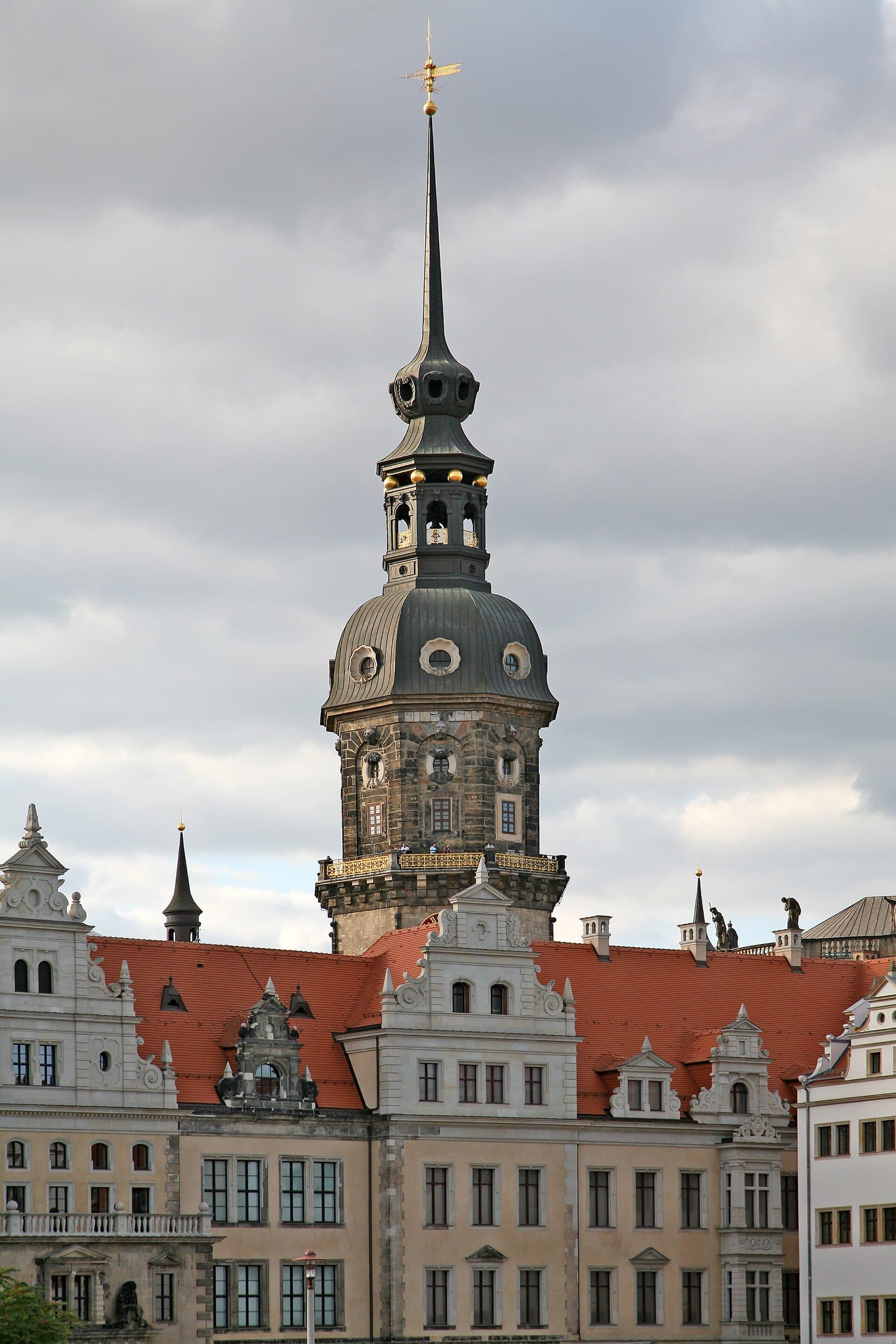 HausmannsturmThe Hausmannsturm is the tallest tower of Dresden's Residenzschloss, its oldest 1 minute walk4.8
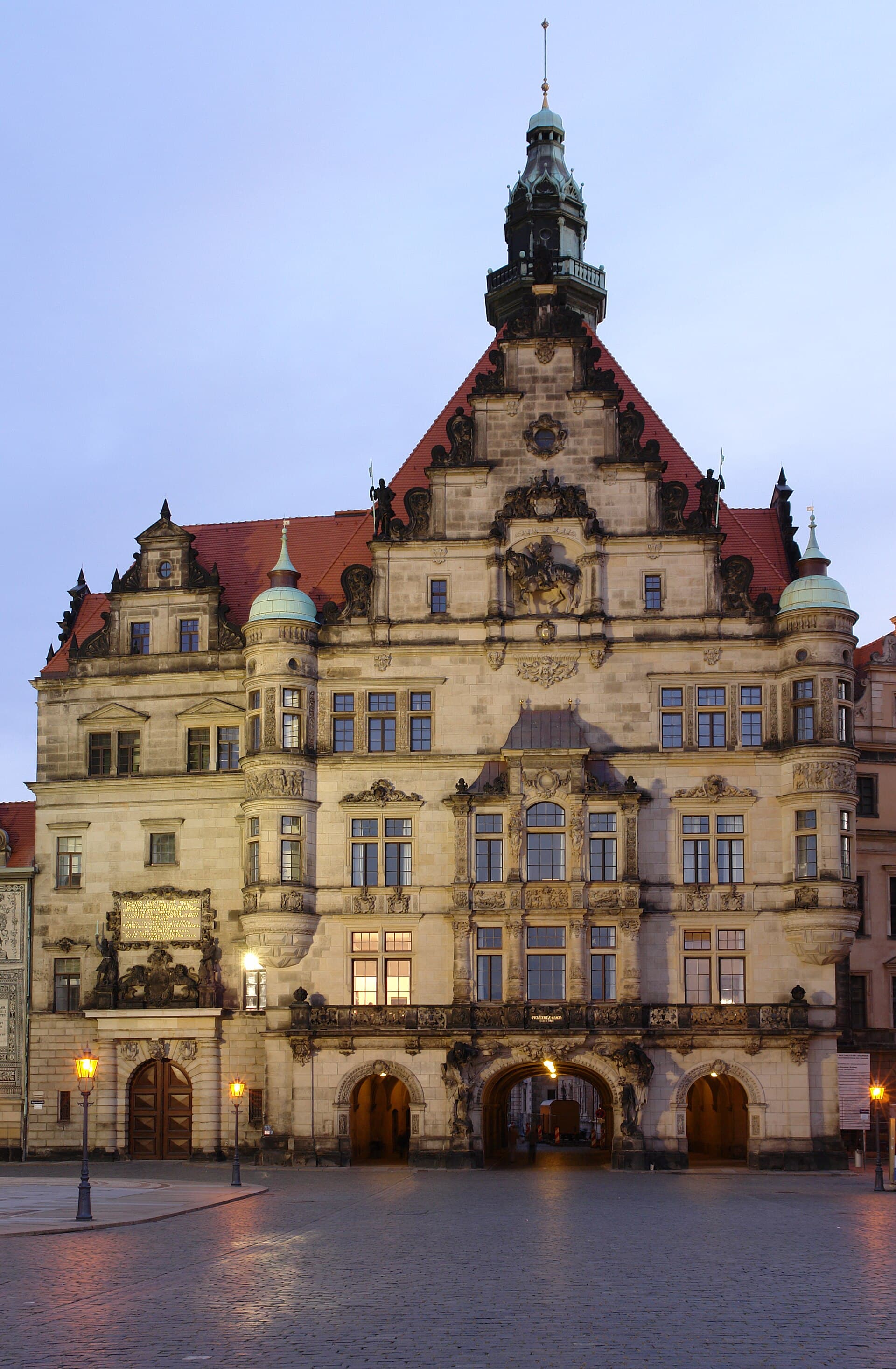 GeorgentorThe Georgentor was built between fifteen thirty and fifteen thirty-five for Duke1 minute walk4.7
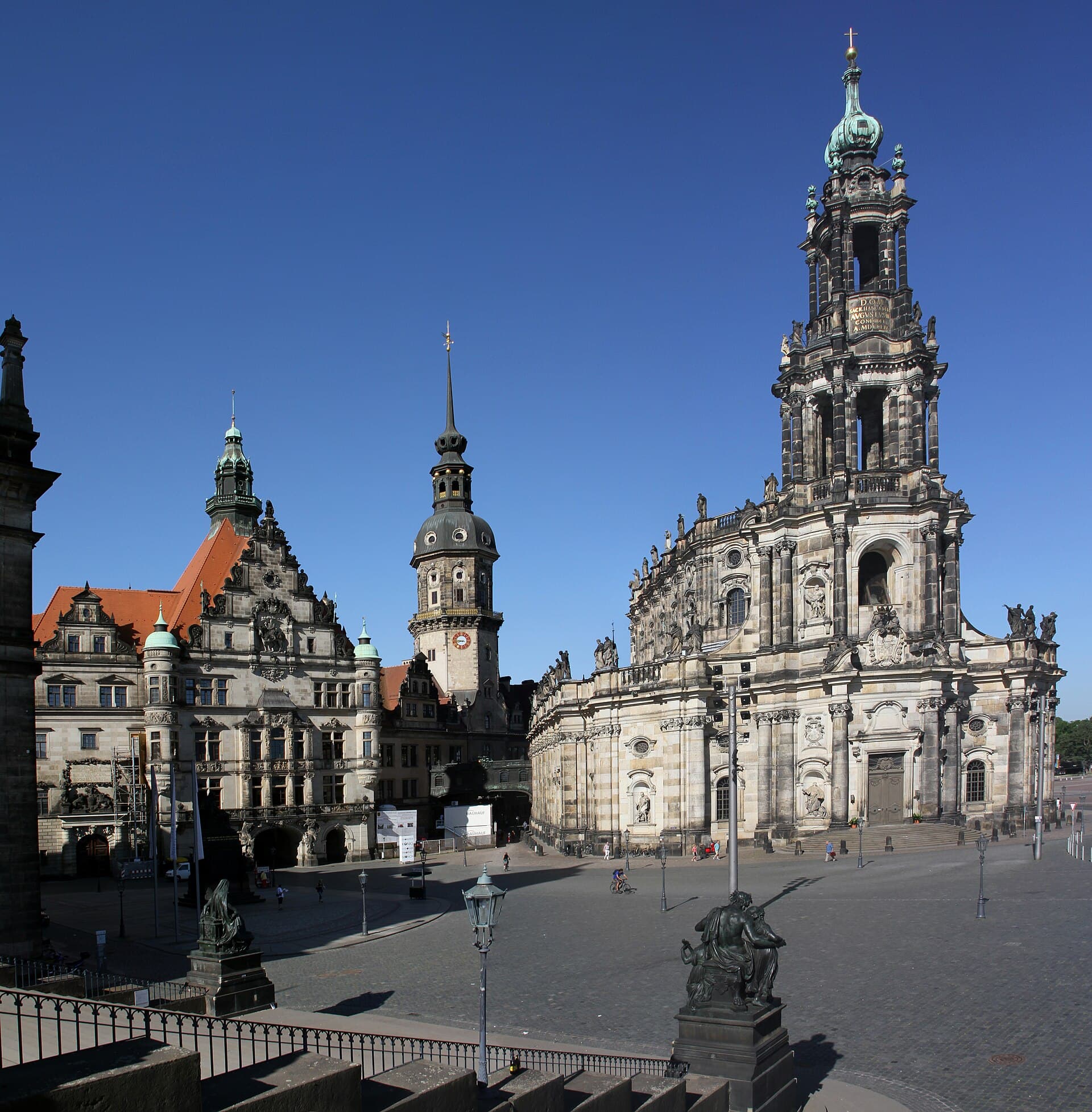 SchlossplatzSchlossplatz is an open square in the heart of Dresden's old town, ringed by the1 minute walk4.9
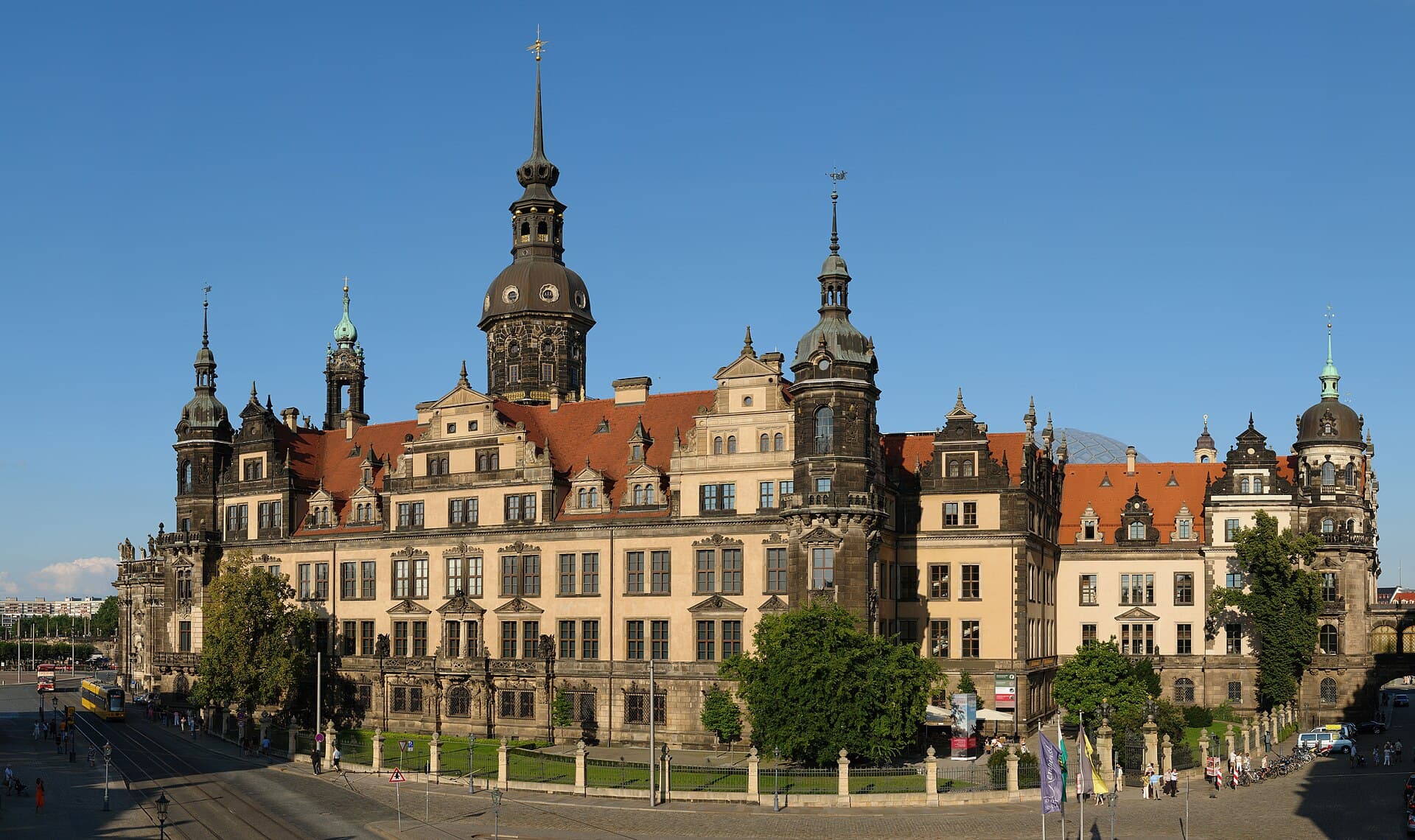 Dresden CastleDresden Castle was the seat of the rulers of Saxony for more than four hundred y1 minute walk4.6
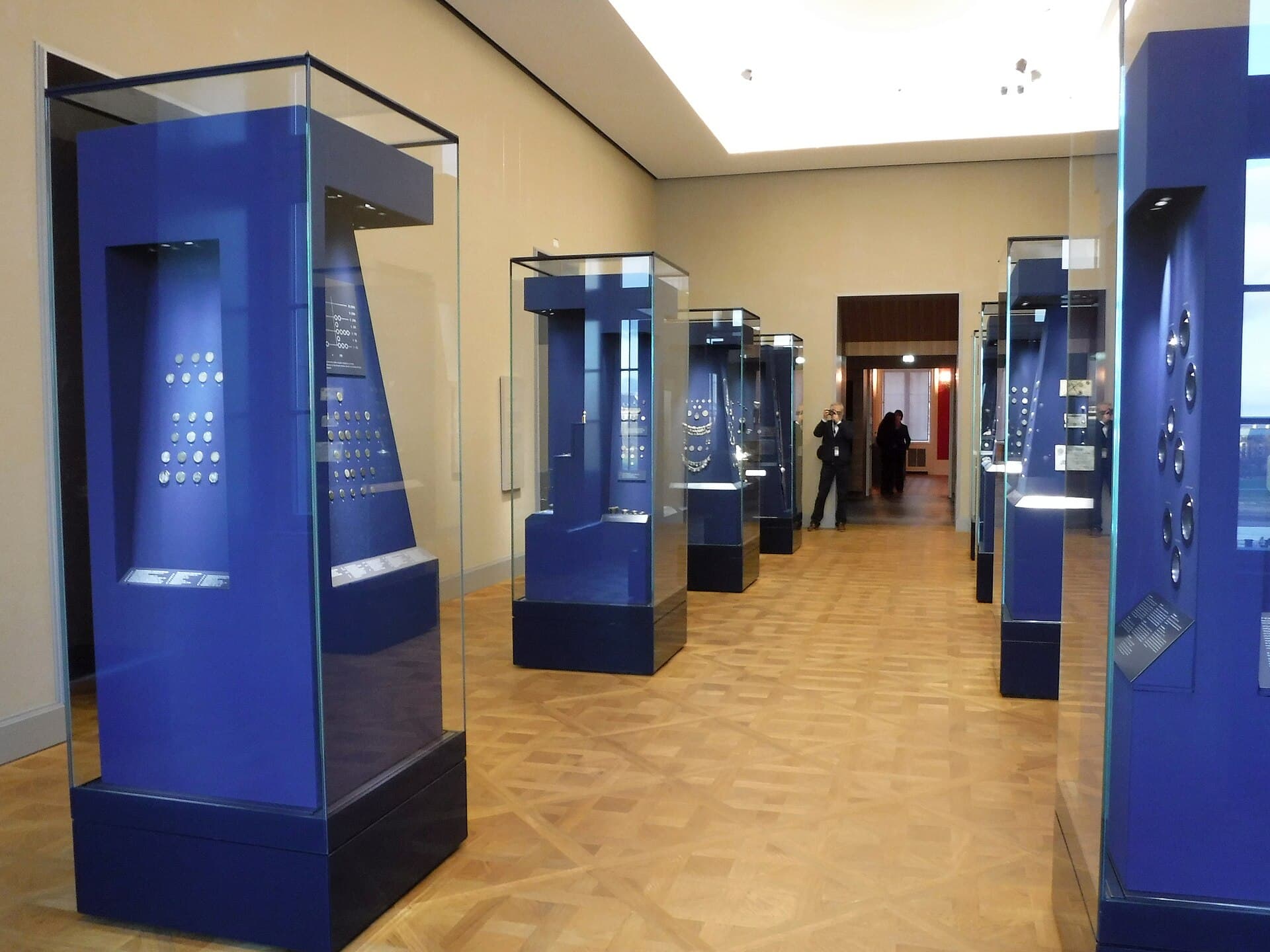 The Coin CabinetThe Münzkabinett in the Residenzschloss is one of the oldest coin collections in1 minute walk4.5
This is Catholic and was built for the ruler; the Frauenkirche is Protestant and was built for the townspeople. The Frauenkirche is better known because of its destruction and rebuilding with the original stones. The two are five minutes apart and both free, so see both.
Yes — it is open to all visitors and entry is free. What is asked is respect: quiet, modest dress and no photography during services. Most visitors today come for the architecture and history.
Half an hour is enough. It belongs to a cluster of adjoining sights in old Dresden — the Residenzschloss, the Green Vault, the Fürstenzug and Brühl's Terrace — all within a five-minute walk.