
The Procession of Princes
A mural of some 25,000 porcelain tiles showing the Saxon rulers. It survived the 1945 bombing.
Gerd Eichmann — CC BY-SA 4.0 · Diverse — CC BY-SA 4.0 · Maksym Kozlenko — CC BY-SA 4.0 · Bybbisch94, Christian Gebhardt — CC BY-SA 4.0
Schlossplatz is an open square in the heart of Dresden's old town, ringed by the city's most important buildings: the royal castle, Dresden Cathedral, the Brühl Terrace overlooking the river, and just beyond, the opera house and the Zwinger complex. The square is the natural starting point for any visit to Dresden, because almost everything you want to see lies minutes from it. Along one adjoining wall runs the Procession of Princes: a mural about a hundred metres long, made from some twenty-five thousand porcelain tiles, showing the rulers of Saxony on horseback across the centuries. It survived the bombing of 1945 almost intact, and it is free and open in the street. The square itself is free and always open. It looks best after dark, when the dark stone buildings around it are lit.
A mural of some 25,000 porcelain tiles showing the Saxon rulers. It survived the 1945 bombing.
A raised riverside walk known as the Balcony of Europe, looking out over the Elbe.
A baroque cathedral with a curving front and rooftop statues, adjoining the square.
Schloßplatz, 01067 Dresden
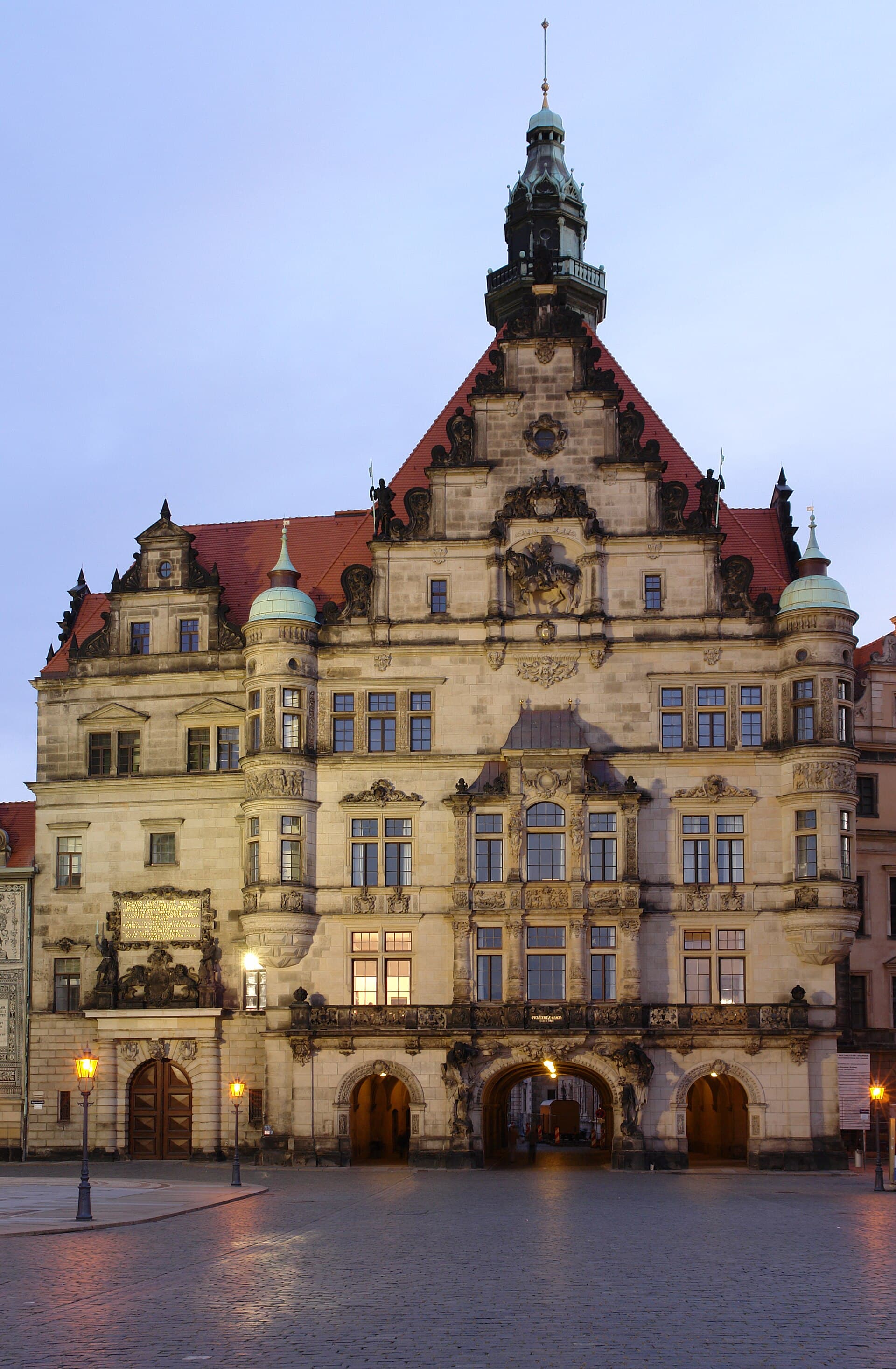 GeorgentorThe Georgentor was built between fifteen thirty and fifteen thirty-five for Duke1 minute walk4.7
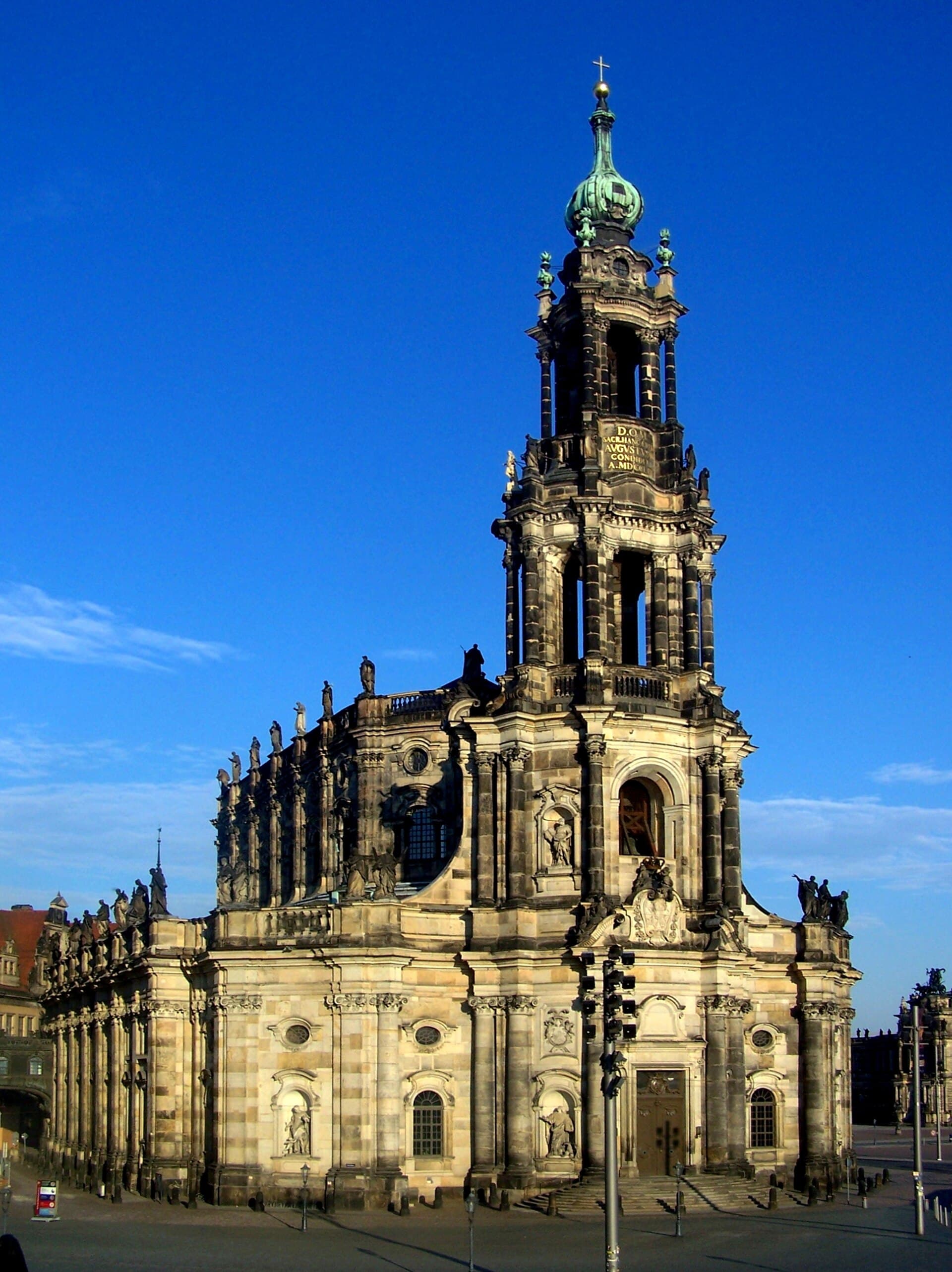 Dresden CathedralDresden Cathedral, also known as the Court Church, is the largest church in Saxo1 minute walk4.9
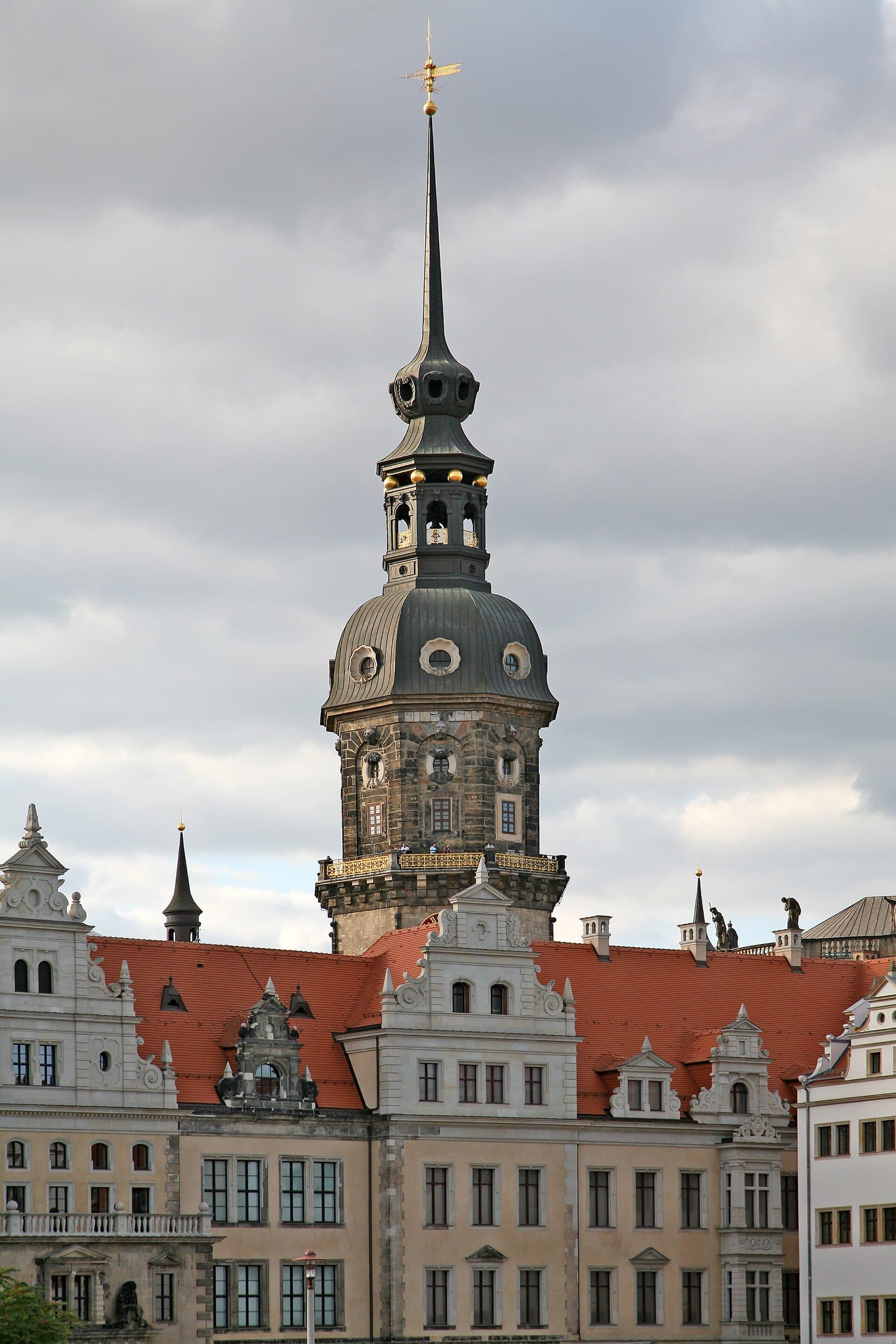 HausmannsturmThe Hausmannsturm is the tallest tower of Dresden's Residenzschloss, its oldest 2 minutes walk4.8
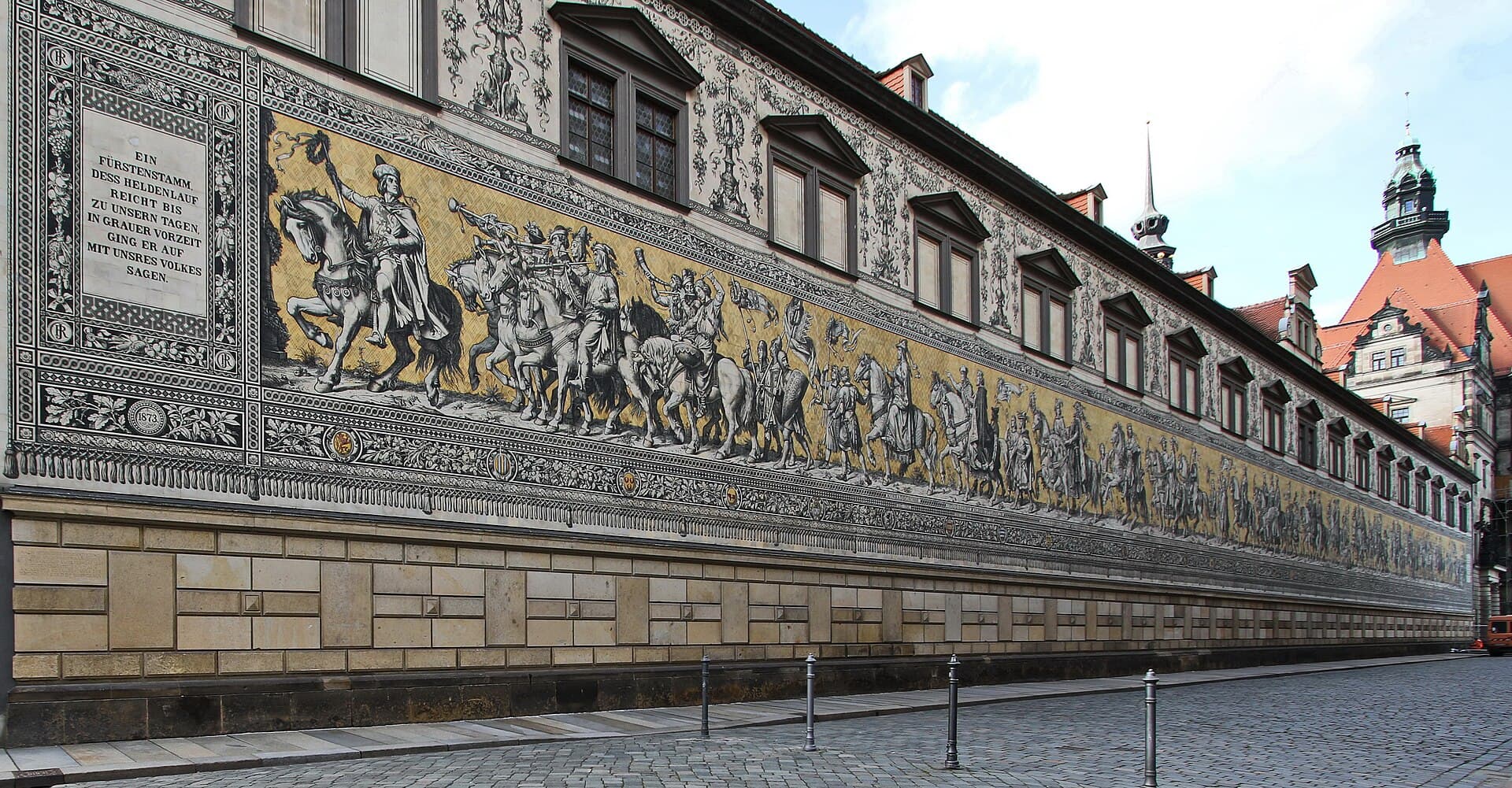 FürstenzugThe Fürstenzug is a huge mural on a wall along Augustusstraße, one hundred and t2 minutes walk4.7
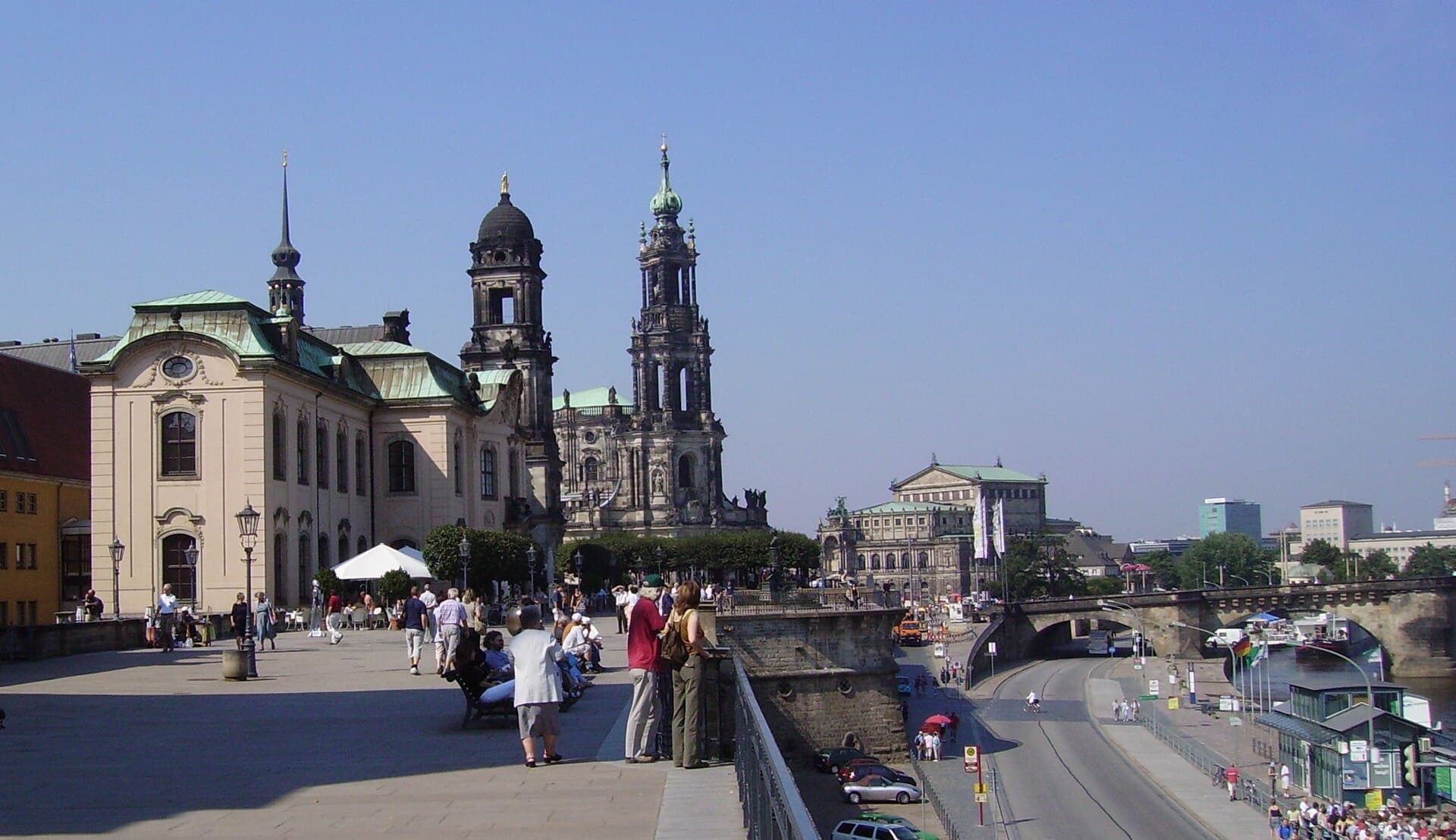 Brühl's TerraceBrühl's Terrace is a raised promenade above the river Elbe in the heart of old D2 minutes walk4.8
Less a destination than a centre. Everything you want in old Dresden surrounds it: the castle, cathedral, opera house, Zwinger and Brühl Terrace. Start your day here.
A mural about a hundred metres long showing the Saxon rulers on horseback, made from Meissen porcelain tiles in the early twentieth century. Remarkably it survived the 1945 bombing that destroyed the city around it almost intact, and it is free and open in the street.