
A 1950s facade
Red brick over a stone base, stepping back as it rises, in a classical idiom that has more in common with older Spanish buildings than with the modern towers around it.
Fernando — CC BY-SA 4.0 · Javier Perez Montes — CC BY-SA 4.0 · Javier Perez Montes — CC BY-SA 4.0 · Javier Perez Montes — CC BY-SA 4.0
A heavy brick tower on a stone base dominates Plaza de España, built between 1948 and 1953 by the Otamendi brothers, its detail closer to old Spanish building than to a skyscraper. It held flats, offices and a hotel, was sold in 2005 and cleared out by 2007, then sat empty for years while owners argued over demolition. It was restored and reopened as a hotel, which is what to know first: a working hotel, not a monument you tour. The lobby and shops on the lower floors are open to anyone, the hotel floors above are for guests, and the exception is the bar and terrace at the top, on a separate ticket. The view up there wraps the tower: the square, the run of Gran Vía, the Casa de Campo side. Part of the terrace has a glass floor. If you want one rooftop, Círculo de Bellas Artes is more central, while this is higher, further out, and more of a bar at night. It does not earn a trip for the facade alone, but it stands at the western end of Gran Vía, a short walk from the Temple of Debod, so you pass it on a walk you are already making. Nearest Metro: Plaza de España, Lines 3 and 10.
Red brick over a stone base, stepping back as it rises, in a classical idiom that has more in common with older Spanish buildings than with the modern towers around it.
A bar and terrace at the top of the tower, entered on a ticket, wrapping round for a view over the square and along Gran Vía, with a glass-floored section that draws photographers.
The square was rebuilt recently with lawns and pedestrian paths, and holds the Cervantes monument with its Don Quixote and Sancho statues, a reasonable place to sit for a few minutes.
Gran Vía 84, 28013 Madrid
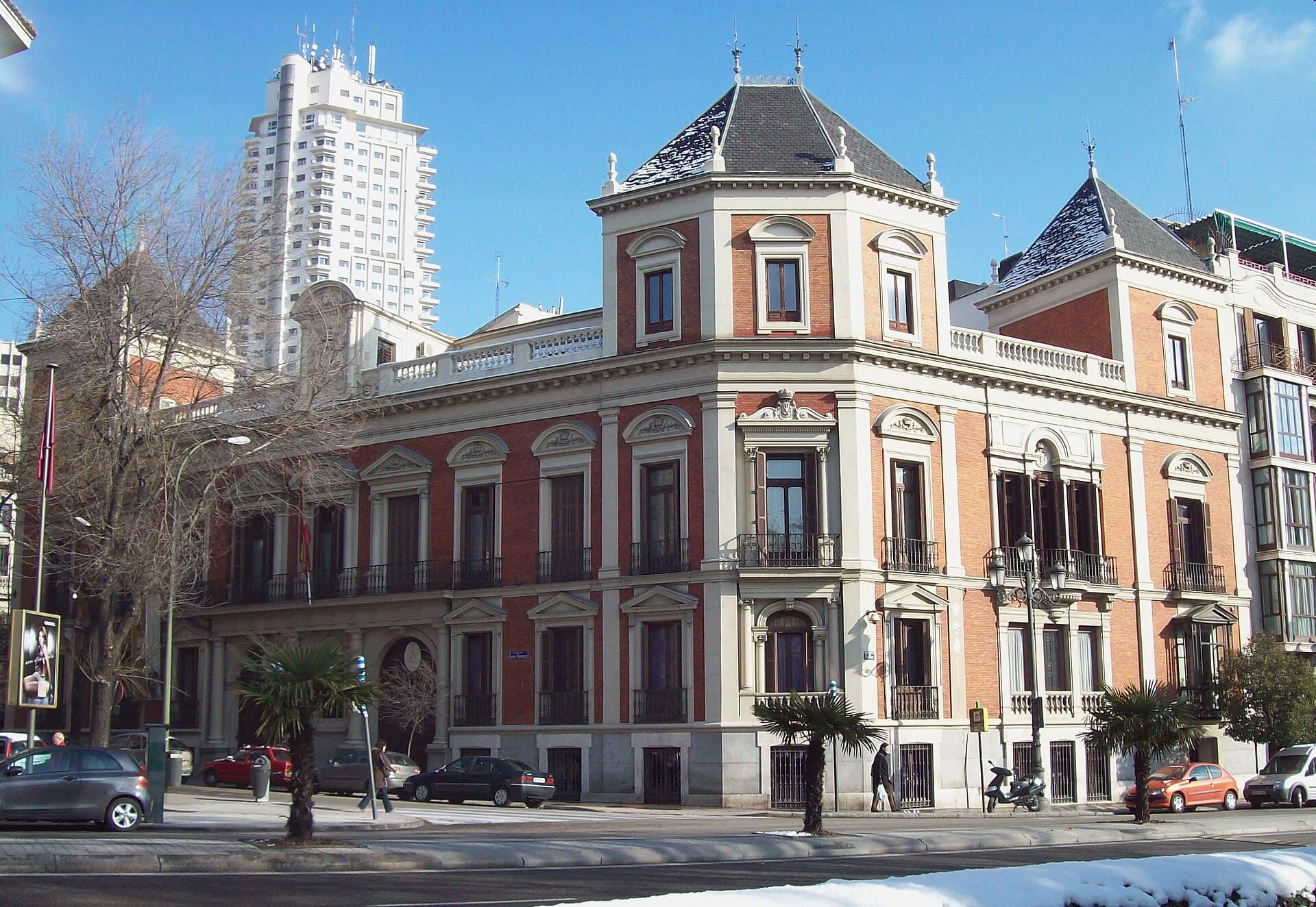 Cerralbo MuseumCerralbo is an aristocratic house near Plaza de España. The marquis built it to 4 minutes walk4.6
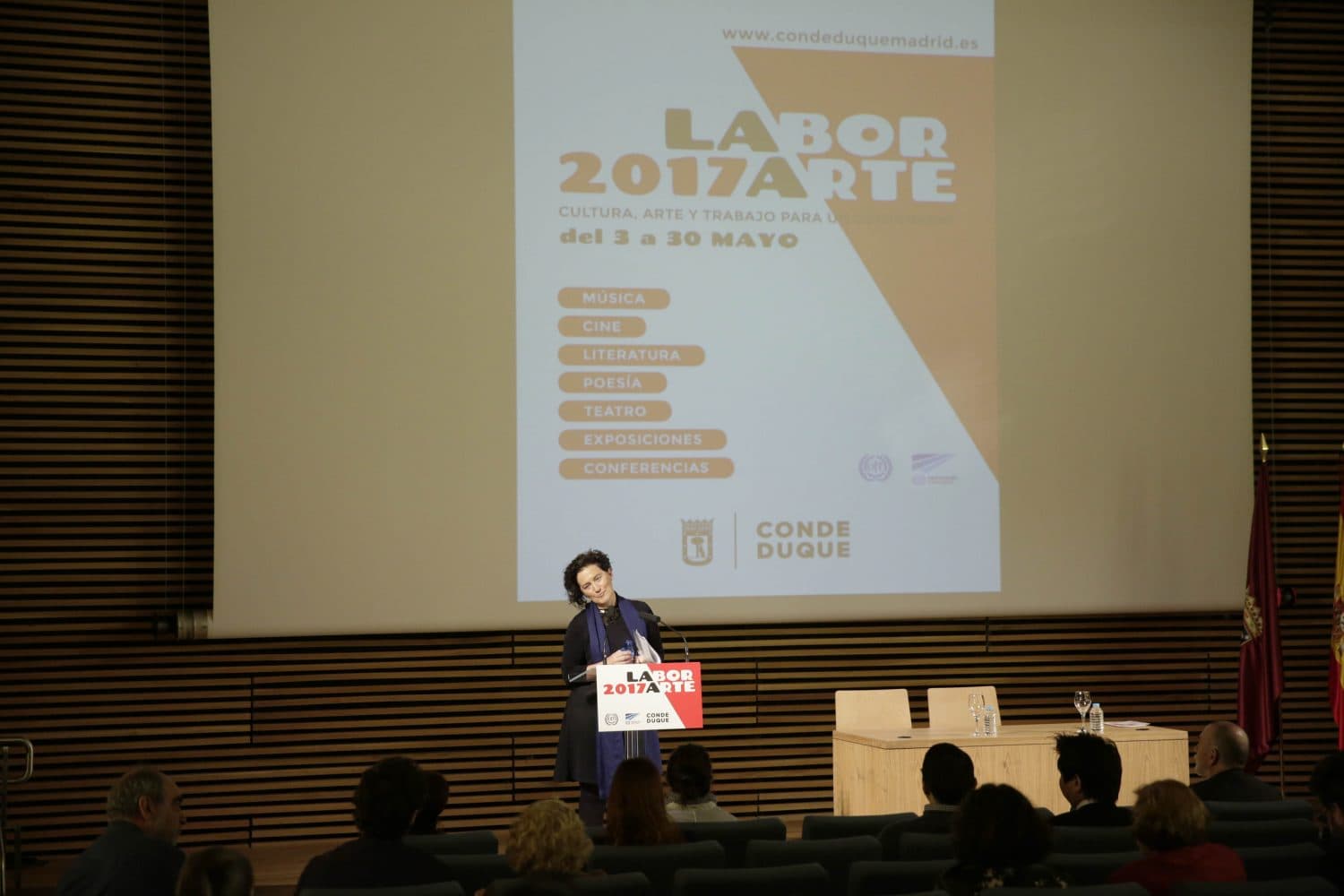 Centro Cultural Conde DuqueConde Duque was built in the 18th century as a royal guard barracks, behind a ba5 minutes walk4.4
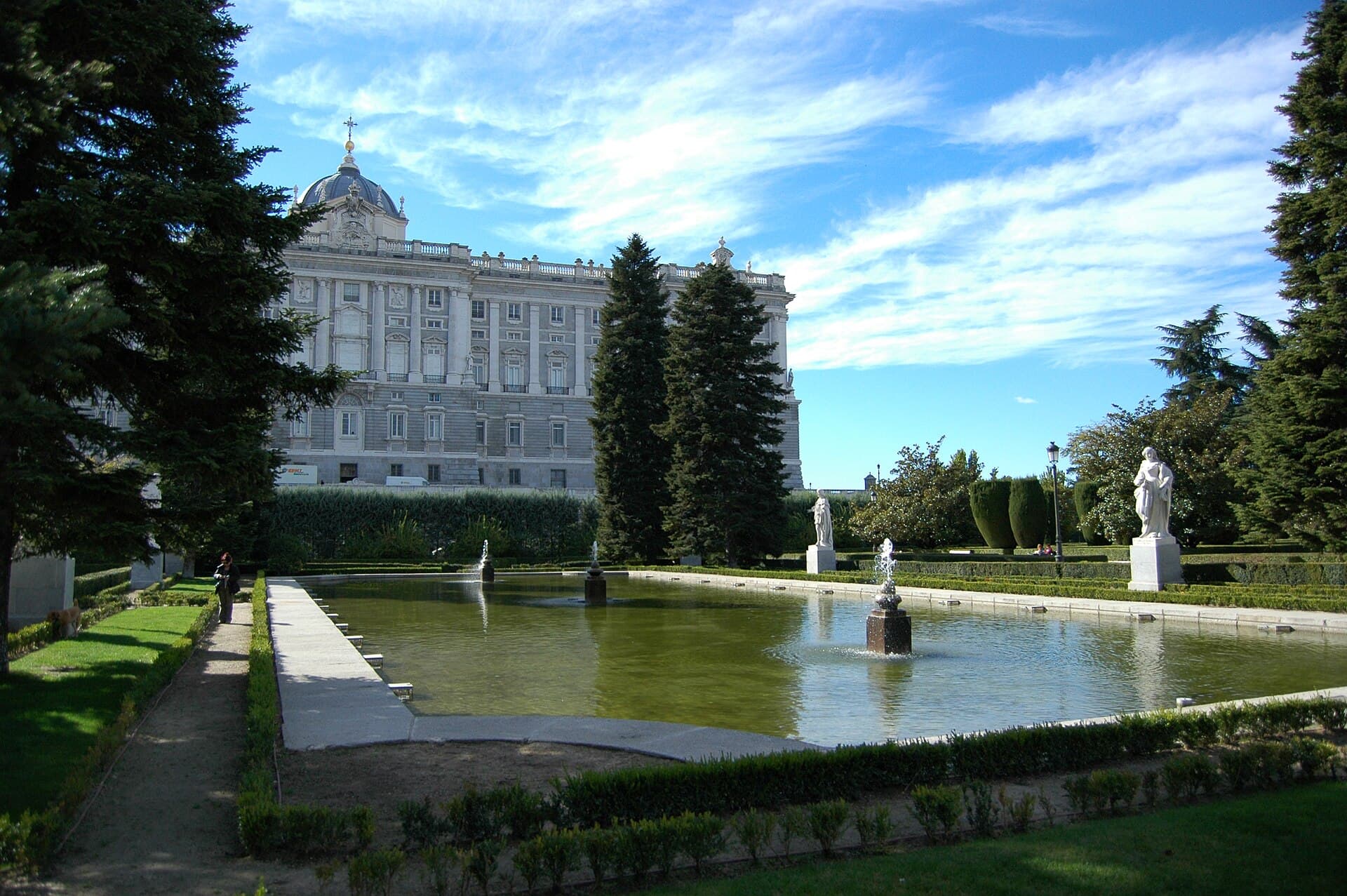 Sabatini GardensFormal gardens on the north side of Madrid's Royal Palace, laid out in the neocl6 minutes walk4.7
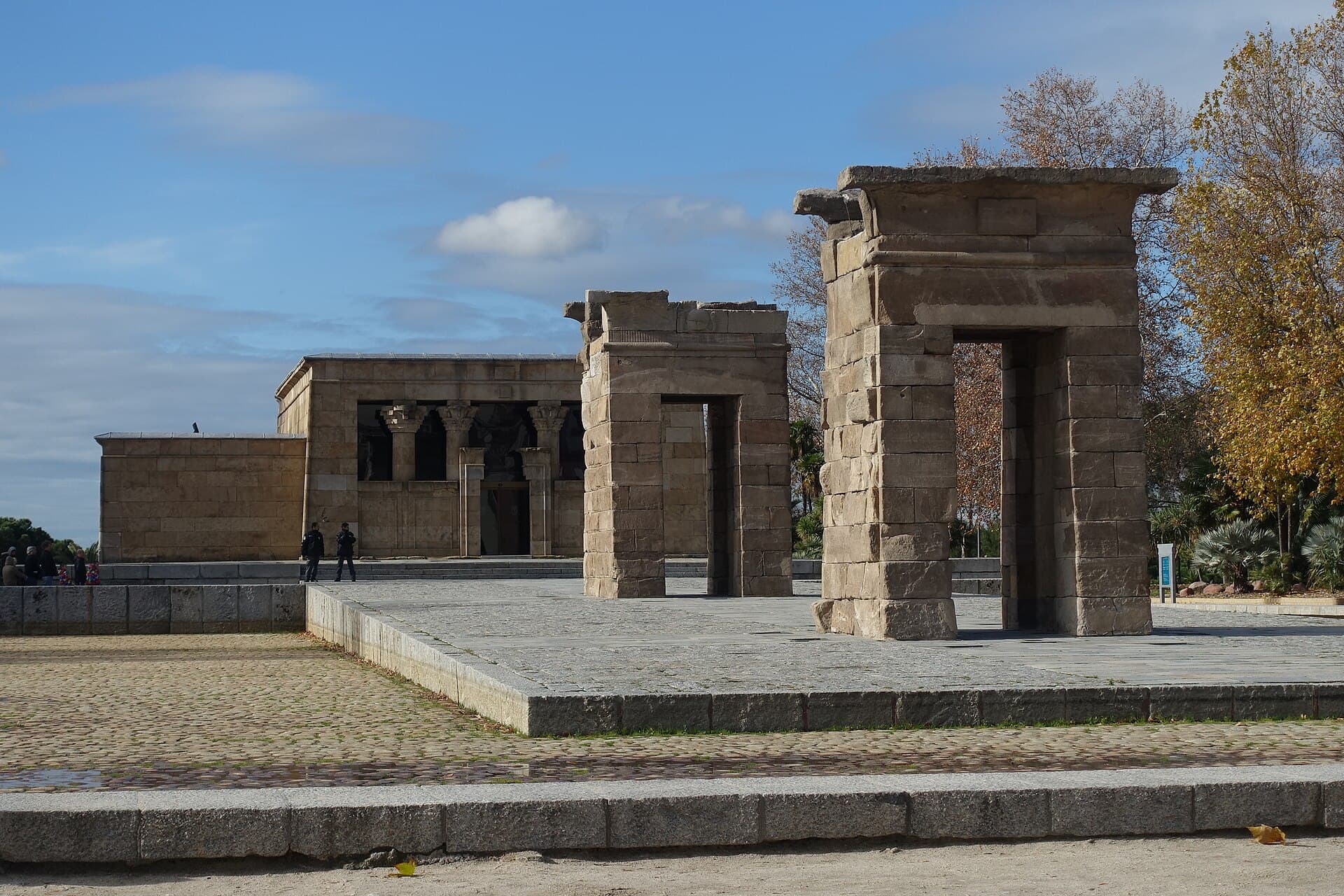 Temple of DebodA genuine two-thousand-year-old Egyptian temple stands on a Madrid hill — Debod,7 minutes walk4.5
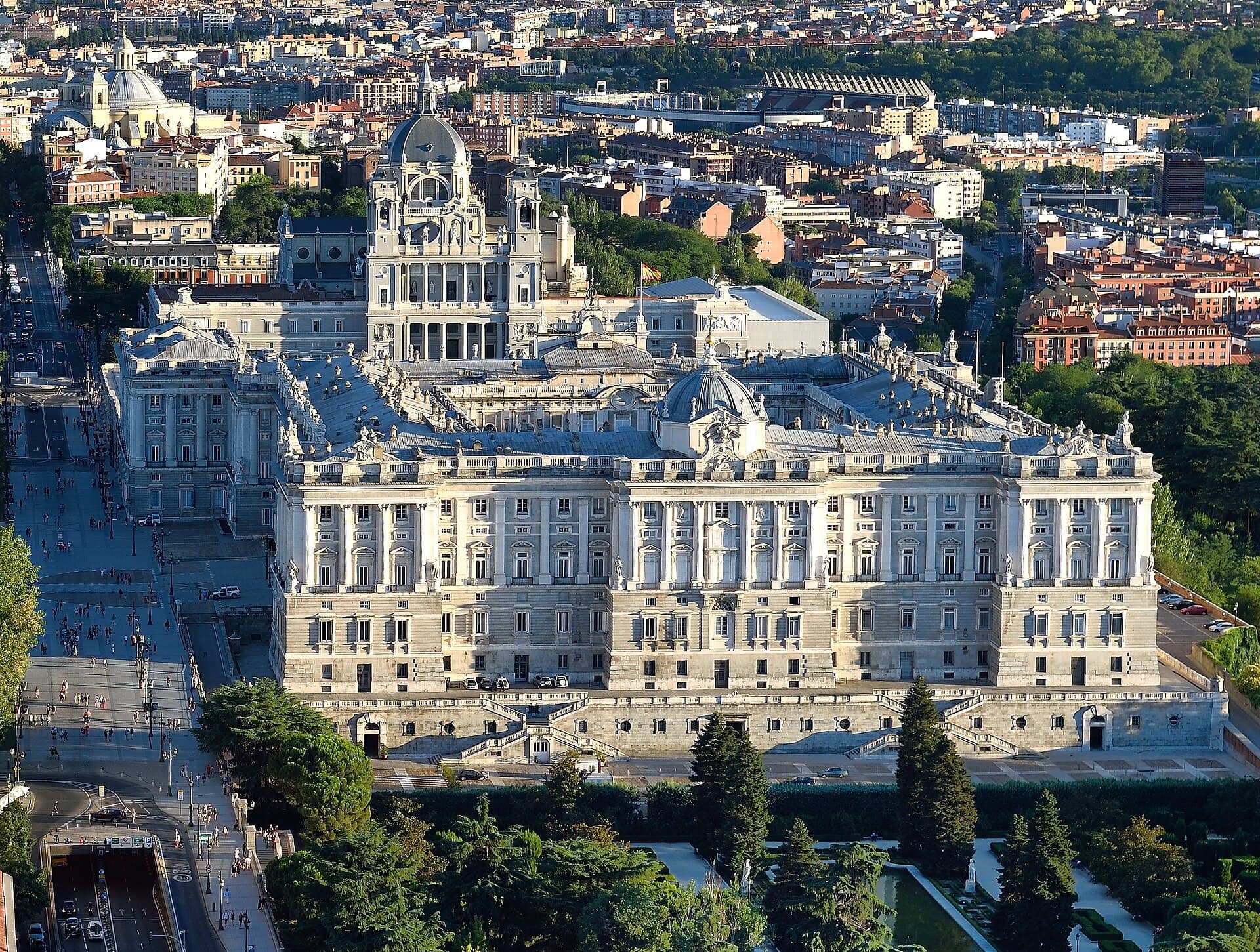 Royal Palace of MadridMadrid's Royal Palace is western Europe's largest working palace: 135,000 square9 minutes walk4.6
Partly. The lobby and the shops on the lower floors are open to any visitor without a ticket, while the hotel floors and rooms are for guests. The rooftop bar and terrace are entered on a separate ticket that non-guests can buy too, and booking ahead is wise in the evening.
Plaza de España on Lines 3 and 10, with exits straight onto the square in front of the building. The nearby alternative is Ventura Rodríguez on Line 3, about five minutes on foot, a reasonable option if you are coming from the Calle de la Princesa and Argüelles side.
If you only do one: Círculo de Bellas Artes is in the middle of the city and looks down Calle de Alcalá over the classical buildings, which suits anyone staying near the centre. This terrace is higher and wraps the whole tower for a 360-degree view over the square, along Gran Vía and towards the Casa de Campo side, but it is a little further out and leans towards bar atmosphere in the evening. Both are paid, so confirm prices and hours before going.