
The modern lines
The only modern bridge in central Budapest: white cables without ornament among 19th-century neighbours.
Norbert Aepli, Switzerland (User:Noebu) — CC BY 2.5 · Sjaak Kempe from Groningen, The Netherlands — CC BY 2.0 · VargaA — CC BY-SA 4.0 · Paul Colin Hennig firstdorsal.eu — CC BY-SA 4.0
Elisabeth Bridge is the slim white crossing between the Chain Bridge and Liberty Bridge, named for the Empress Elisabeth — Sisi — whom Hungarians liked considerably more than her husband Franz Joseph, because she learned Hungarian and supported the compromise that gave Hungary self-government in 1867. The present bridge is not the original. The first was built between 1897 and 1903 and was then the longest single-span suspension bridge in the world, carried on chains like the Chain Bridge. Retreating German forces destroyed it in 1945 along with every Budapest bridge, and it was the only one that could not be restored — so the river went without a crossing here for twenty years, until the present bridge opened in 1964. The result is that this is the only bridge in central Budapest with a wholly modern appearance: white steel cables and clean lines without ornament, standing among its decorated 19th-century neighbours. Many find it less beautiful than they are, but its plainness makes it the best of them to photograph from below. Its practical value is that it is the direct crossing to Gellért Hill: come off at its western end and you are at the St Gerard monument and the start of the climb.
The only modern bridge in central Budapest: white cables without ornament among 19th-century neighbours.
A large statue with a small waterfall on the slope facing the bridge — visible from the bridge itself.
Lit end to end in white, reading as a clean line on the water — the crispest of Budapest's bridges after dark.
From midspan you see the Chain Bridge north and Liberty Bridge south — three generations of bridge engineering in one look.
Erzsébet híd, between Ferenciek tere and the foot of Gellért Hill
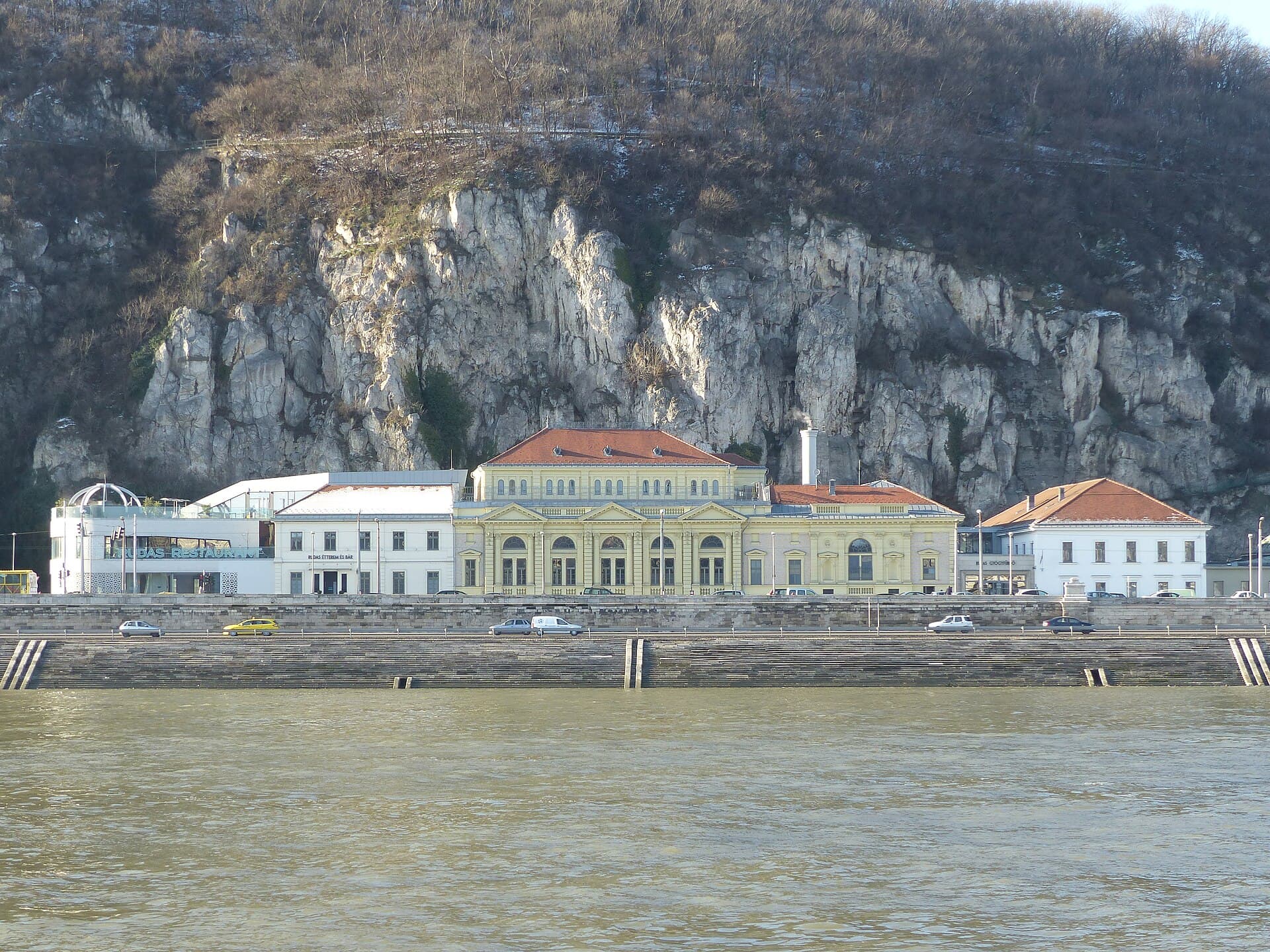 Rudas Thermal Bath and Swimming PoolThe Rudas Baths are the oldest and most historically authentic of Budapest's bat3 minutes walk4.4
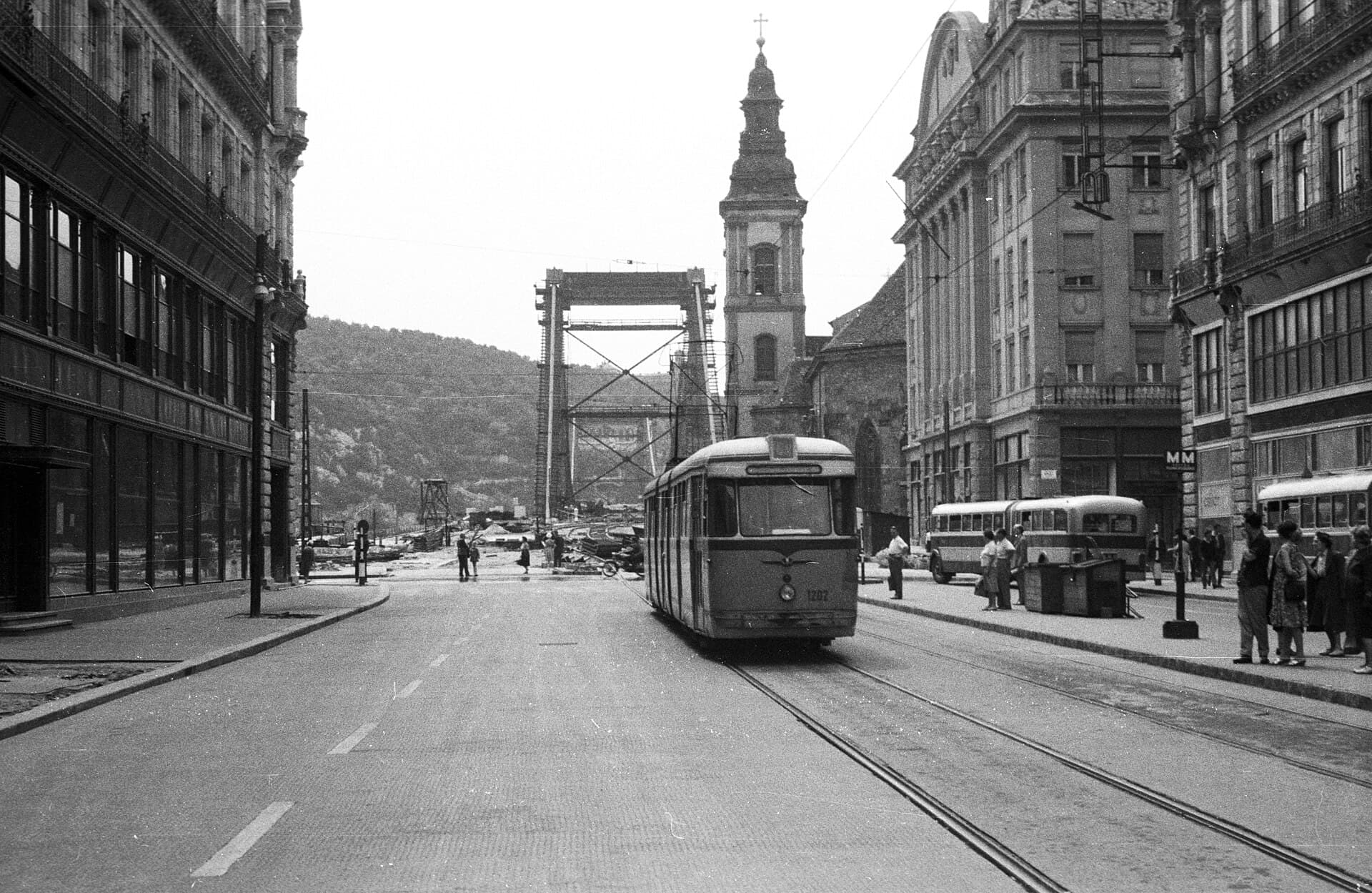 Inner City Parish ChurchThe Inner City Parish Church is the oldest building in Pest, wedged between Elis3 minutes walk4.5
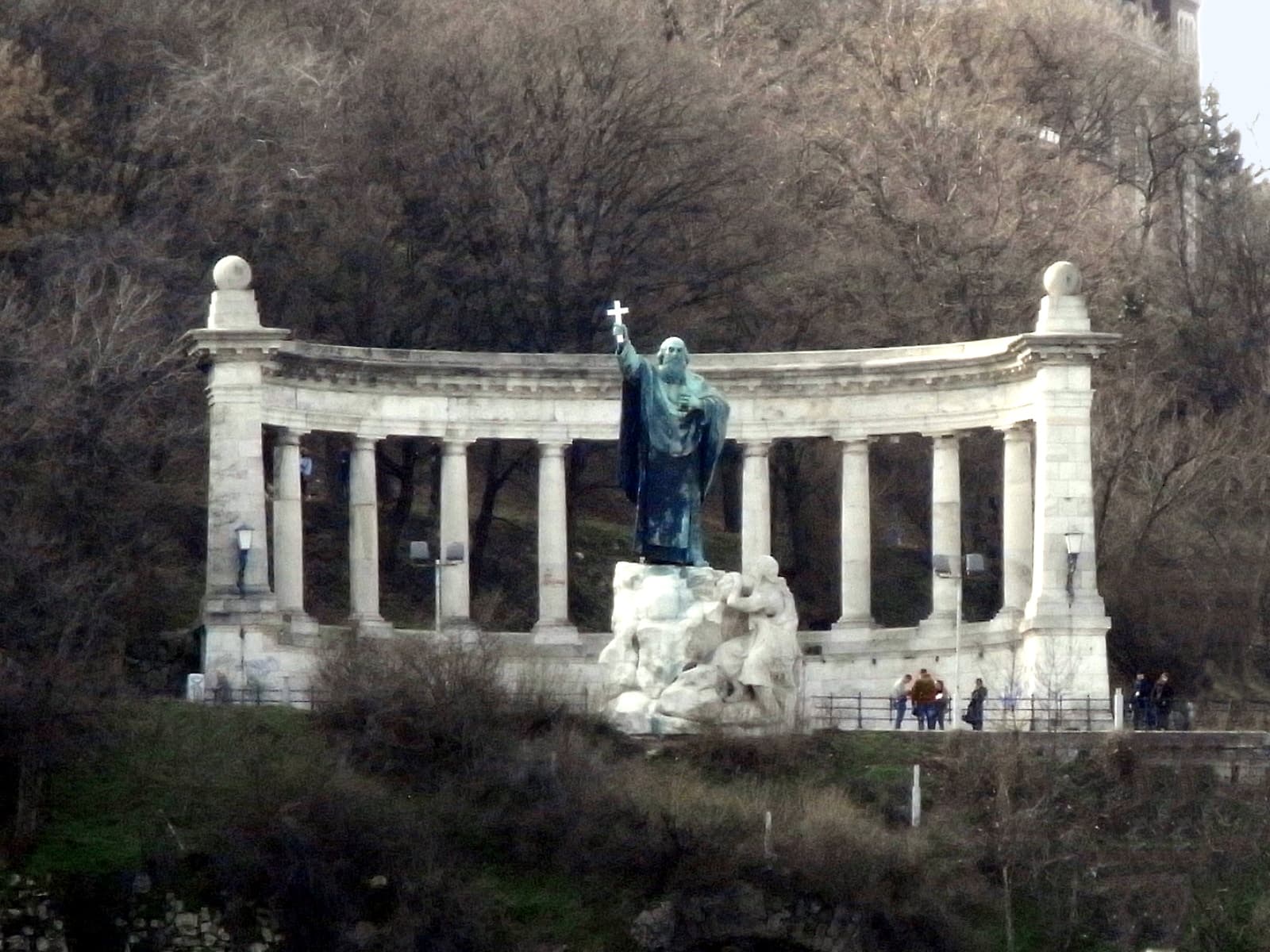 St Gellért MonumentA monumental statue on the slope of Gellért Hill overlooking the Danube, showing4 minutes walk4.7
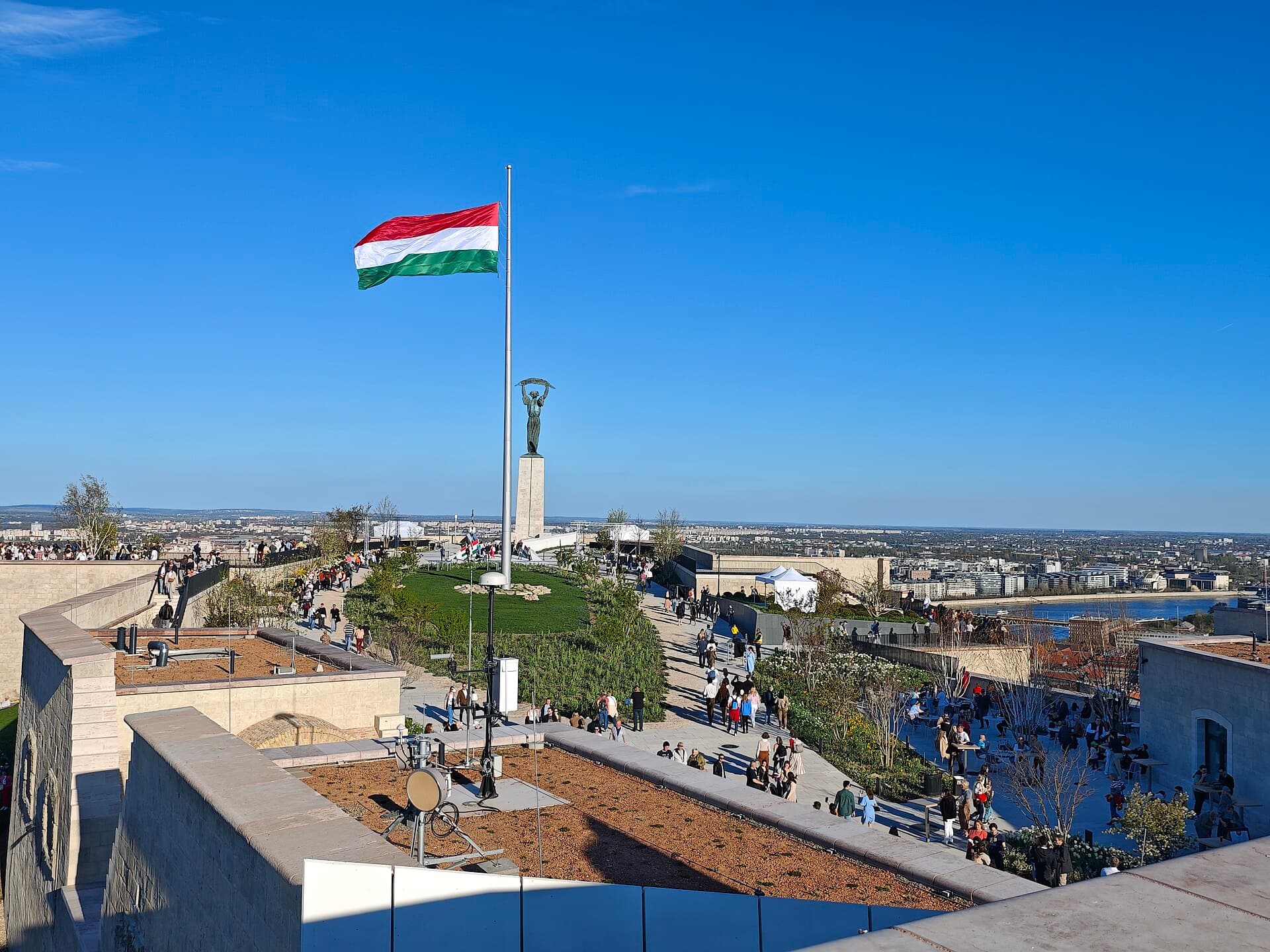 CitadellaThe Citadella is a low stone fort running some two hundred metres along the summ6 minutes walk4.5
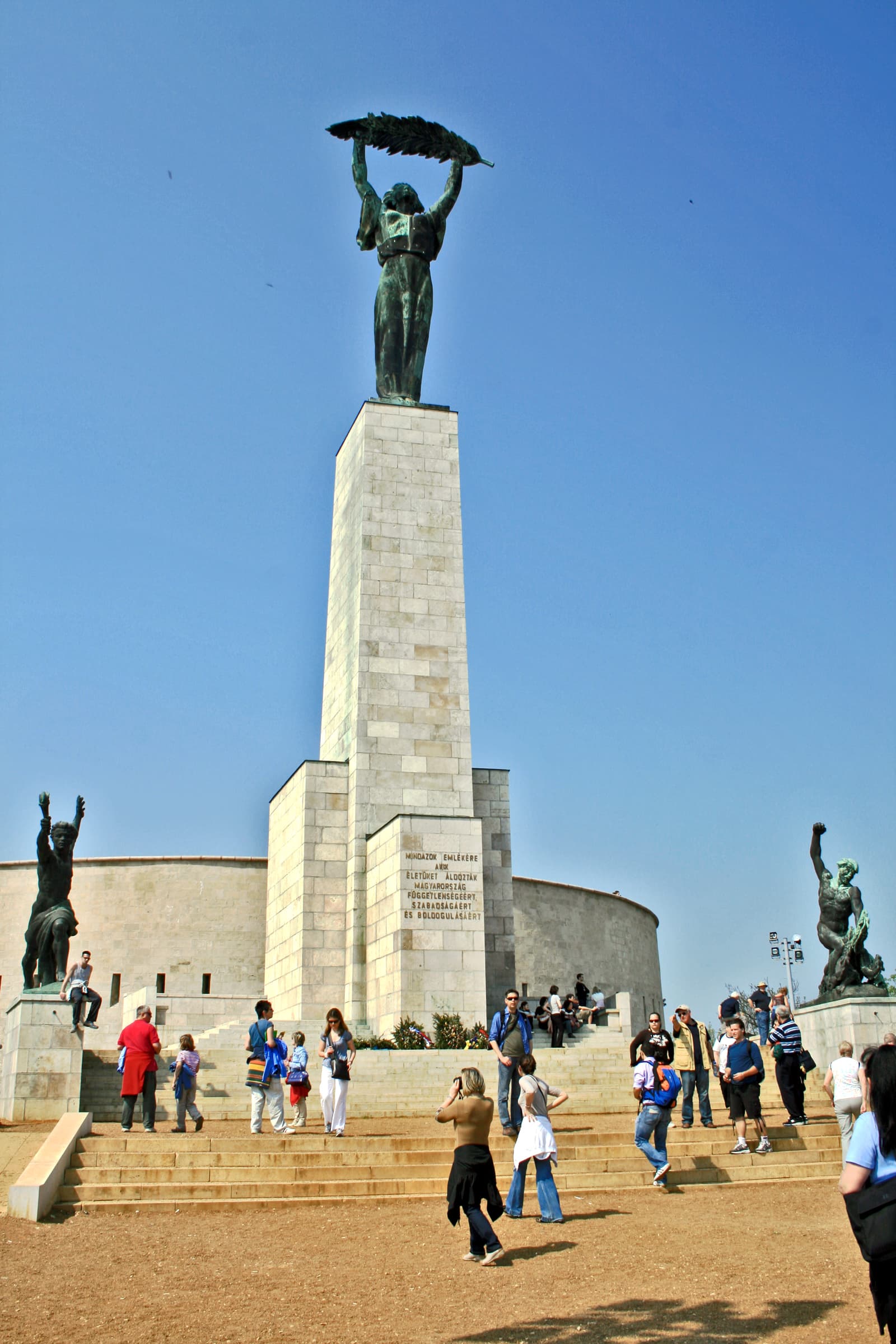 Liberty StatueThe Liberty Statue is a fourteen-metre bronze woman holding a palm frond above h6 minutes walk4.5
Because it is the only one not restored after the 1945 destruction. The original was chain-suspended and ornamented like its neighbours, but the damage was too severe; the crossing stood empty for twenty years and a new bridge was built to a 1960s design — which is why it does not match its surroundings.
The wife of Emperor Franz Joseph, known as Sisi. She learned Hungarian and supported the compromise that gave Hungary self-government in 1867, and Hungarians held her in unusual affection — with statues and places named for her in both Budapest and Vienna.
The Chain Bridge, without competition: the oldest, the handsomest and the one bound up with the city's history. Walk Elisabeth Bridge if you are specifically heading for Gellért Hill — it is the shortest way there.
The Inner City Parish Church sits right at its eastern end, and Gellért Hill and the Rudas Baths at its western — the bridge is the link between them.