
The two Artemis statues
The museum's most famous pieces: the city's goddess with rows of egg-shaped forms and animals carved up her robe, unlike any other Artemis.
Klaus-Peter Simon — CC BY-SA 3.0 · Dosseman — CC BY-SA 4.0 · Ozlmktv — CC BY-SA 4.0 · Dosseman — CC BY-SA 4.0
Every statue you miss while walking the marble streets of Ephesus is here, three kilometres from the ruins, in an unassuming building in the middle of Selçuk. The stars are two marble figures of Artemis of Ephesus, the goddess worshipped in one of the Seven Wonders of the ancient world, with rows of egg-shaped forms across her chest and animals carved up her skirt. They look like no other Artemis in the Greek world, and on their own they justify the detour. Around them sit a marble head of Socrates, a small bronze Eros riding a dolphin, a head of Eros attributed to the circle of Lysippos, and a whole gallery of the imperial cult, including the colossal head and severed forearm of Emperor Domitian. The museum is small, and that is a virtue. Closed at the end of 2012 and reopened fully renovated in November 2014, it is arranged by find-spot rather than by century: a gallery for the wealthy Terrace Houses with a reconstructed room, frescoes and mosaic floor intact; a hall of sculpture from the city's fountains; a room of burials; and one for the Temple of Artemis itself, of which a single re-erected column survives at the temple site a short walk away. Labels are in clear English, the floors are level and wide enough for a pushchair, and an hour is enough, an hour and a half if you read everything. In August heat it is the air-conditioned pause you will need after the ruins. Order matters. See the archaeological site first and come here afterwards, because the ruins have been stripped of their sculpture and this is where you learn what stood where. Children tire quickly of columns but linger in the gladiator room with its carved tombstones. Foreign adults pay 10 euros, by card or in Turkish lira cash; no advance booking is needed. Open daily, 08:30 to 20:00 in summer with the ticket office closing half an hour earlier; winter hours are shorter, closing around 17:30. From Kuşadası it is about 20 km: roughly half an hour by car on the dual carriageway towards Selçuk, or by dolmuş from Kuşadası bus station, which runs to Selçuk every twenty to thirty minutes; the museum is a few minutes' walk from the Selçuk terminal. Most organised tours from Kuşadası include it after the site, but anyone driving can easily fold it into a half-day with the Temple of Artemis and the Basilica of St John.
The museum's most famous pieces: the city's goddess with rows of egg-shaped forms and animals carved up her robe, unlike any other Artemis.
A reconstructed room with its frescoes and mosaic floor shows how the wealthy of Ephesus actually lived.
The colossal head and forearm of Domitian, remains of a statue that once towered over his temple in the city centre.
Atatürk Mah., Uğur Mumcu Sevgi Yolu No. 26, Selçuk, İzmir
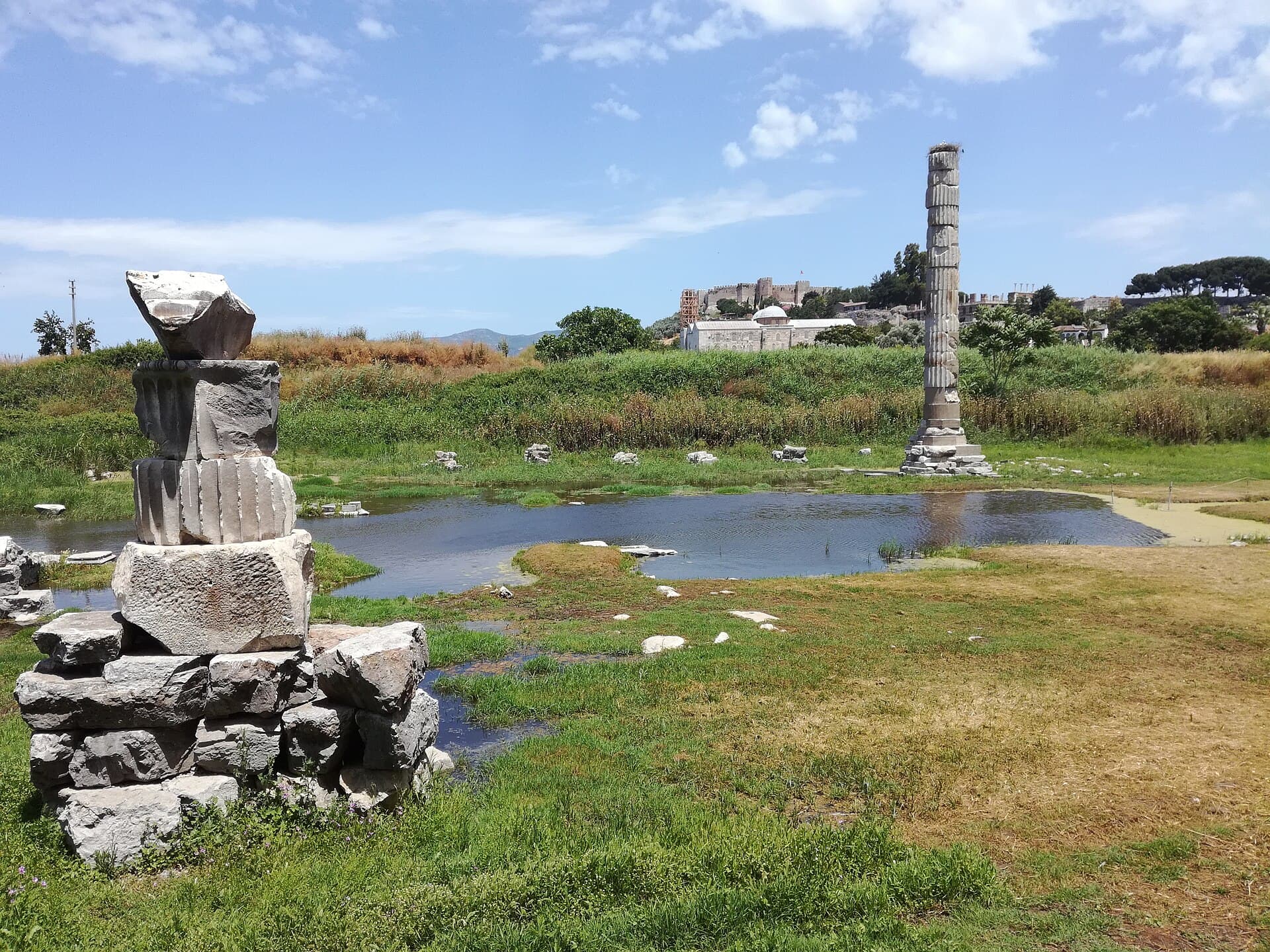 Temple of ArtemisOne of the Seven Wonders of the Ancient World now amounts to a single column wit4 min walk4.3
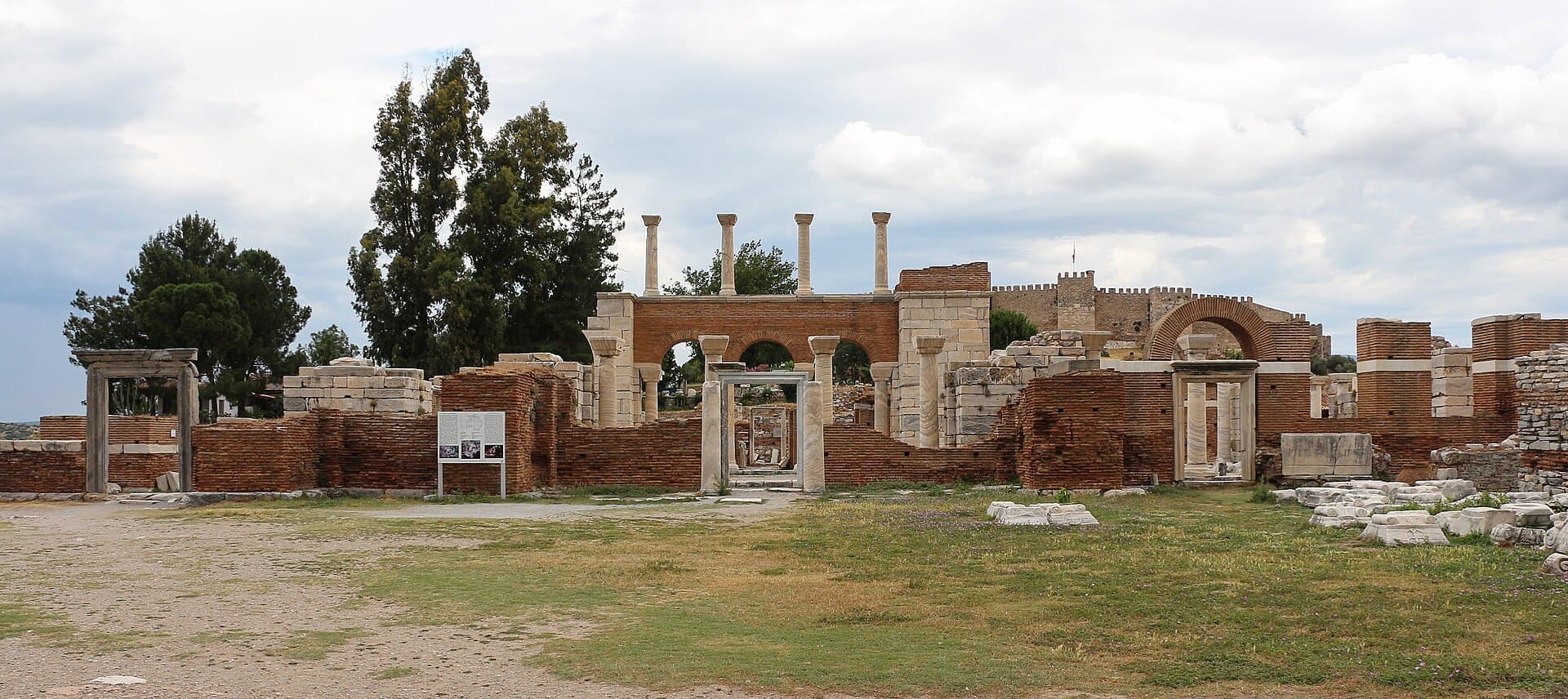 Basilica of St. JohnWhen Justinian ordered a church built over the tomb traditionally held to be tha5 min walk4.6
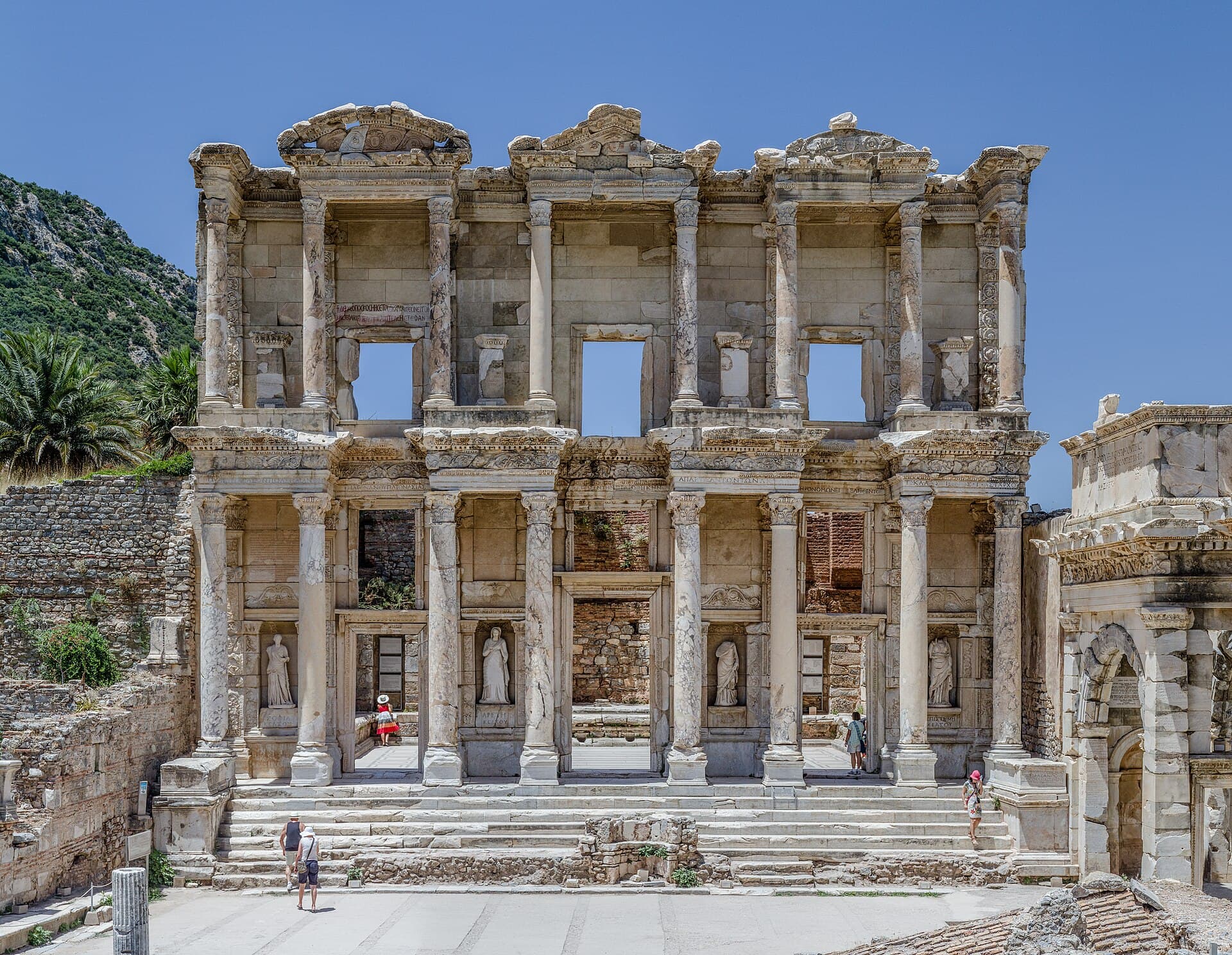 EphesusFew places let you walk a Roman city on this scale: from the Upper Gate to the L25 min walk4.9
Yes, and specifically after the site, not before. The ruins are columns and facades with no statues; everything removed from them is shown here in one air-conditioned hour. If time is truly short and you must choose, the site wins without argument, but the difference is 10 euros and an hour, a fair price for understanding what you just saw.
By car it is about half an hour on the Selçuk road, with parking near the museum. Without a car, the dolmuş from Kuşadası bus station to Selçuk runs every twenty to thirty minutes and takes about 35 minutes; the museum is a five-minute walk from the Selçuk terminal.
Sign in to write your review of this place.
No reviews yet — be the first.