
A bright snout on a dark body
The mark of millions of hands on the bronze.
Sailko — CC BY 3.0 · Diego Delso — CC BY-SA 4.0 · DONATELLA BAJO — CC BY-SA 4.0 · Sailko — CC BY 3.0
A bronze fountain in the form of a wild boar in the Loggia del Mercato Nuovo in Florence, and among the most touched objects in the city. Tradition says that whoever rubs the boar's snout and places a coin in its mouth so that it falls through the grate below will return to Florence. The result is a snout polished bright while the rest of the statue stays dark. The statue standing today is a modern copy — the seventeenth-century bronze original by Pietro Tacca is kept in a museum, and it is itself a copy of a Roman marble in the Uffizi, which is in turn a copy of a lost Hellenistic Greek original. That sequence — a copy of a copy of a copy — is typical of European art history, and is how ancient Greek forms reached modern Europe at all. The loggia itself is sixteenth century and today holds leather and souvenir stalls. A public space, free to see.
The mark of millions of hands on the bronze.
A Florentine bronze after a Roman marble after a lost Greek original.
That sequence is how the ancient forms survived at all.
The Loggia del Mercato Nuovo, central Florence
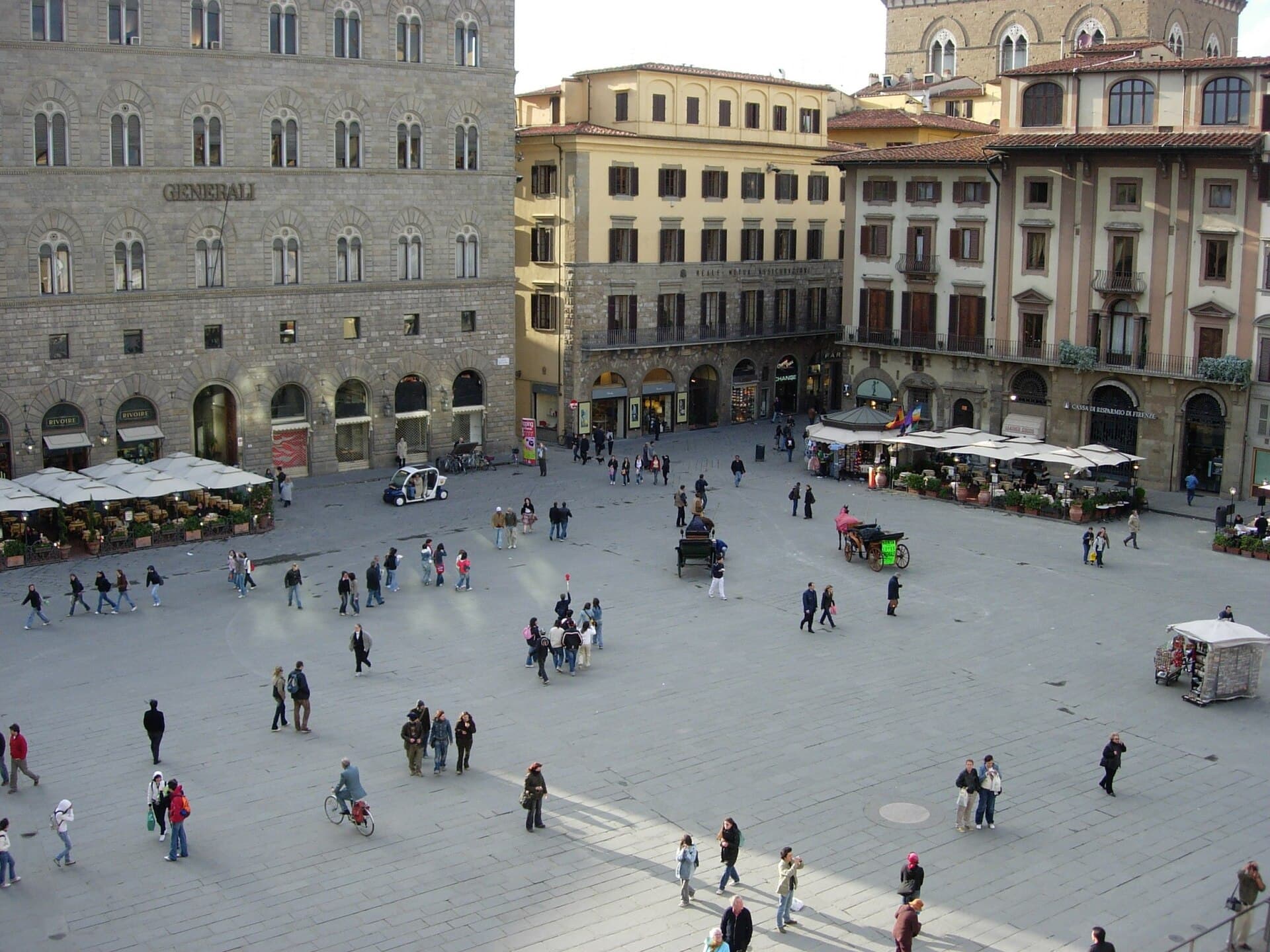 Piazza della SignoriaThe Signoria has been Florence's square of power for seven centuries — decrees p1 minute walk4.9
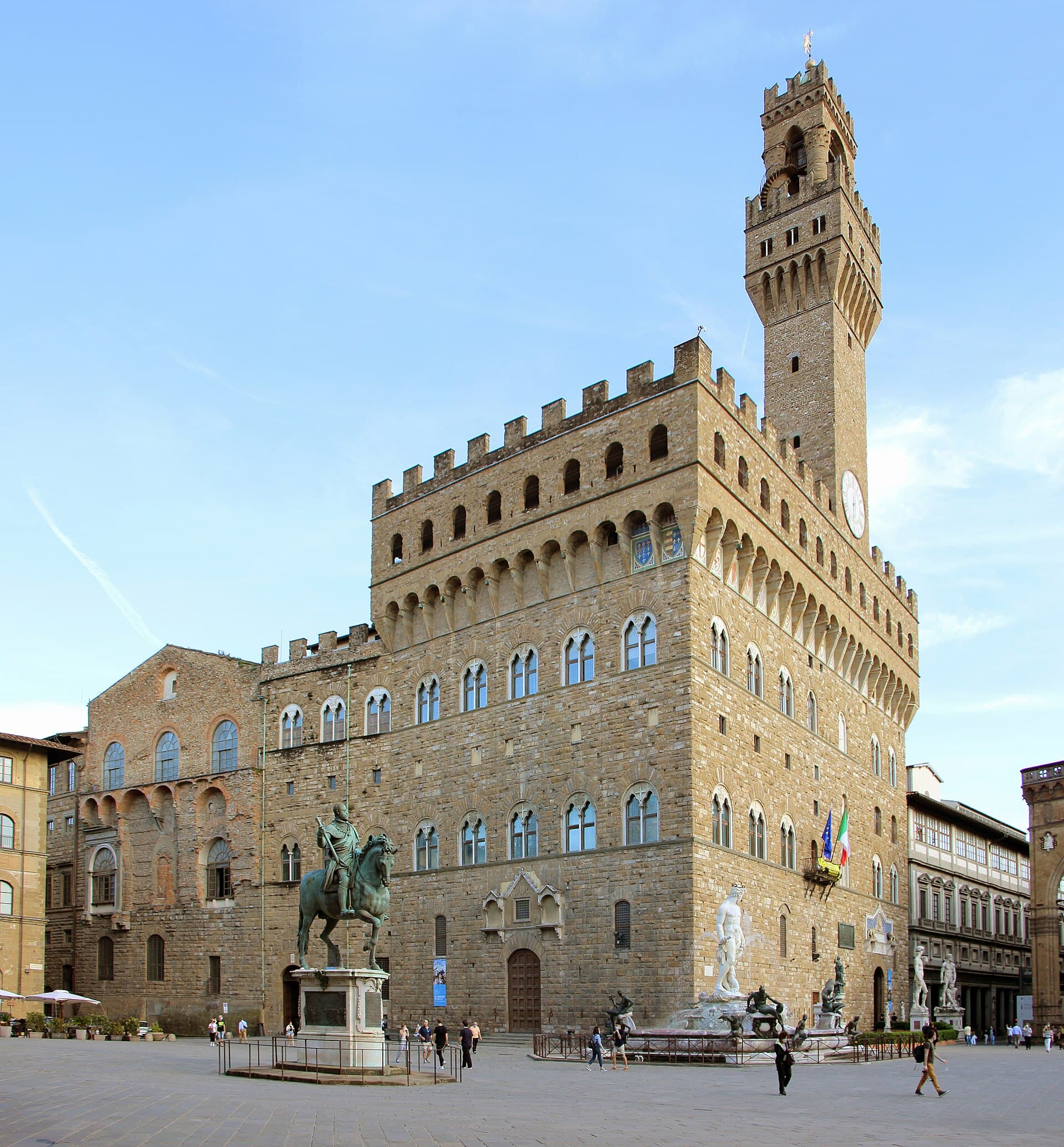 Palazzo VecchioThe Palazzo Vecchio is Florentine power in stone: a crenellated square fortress 2 minutes walk4.8
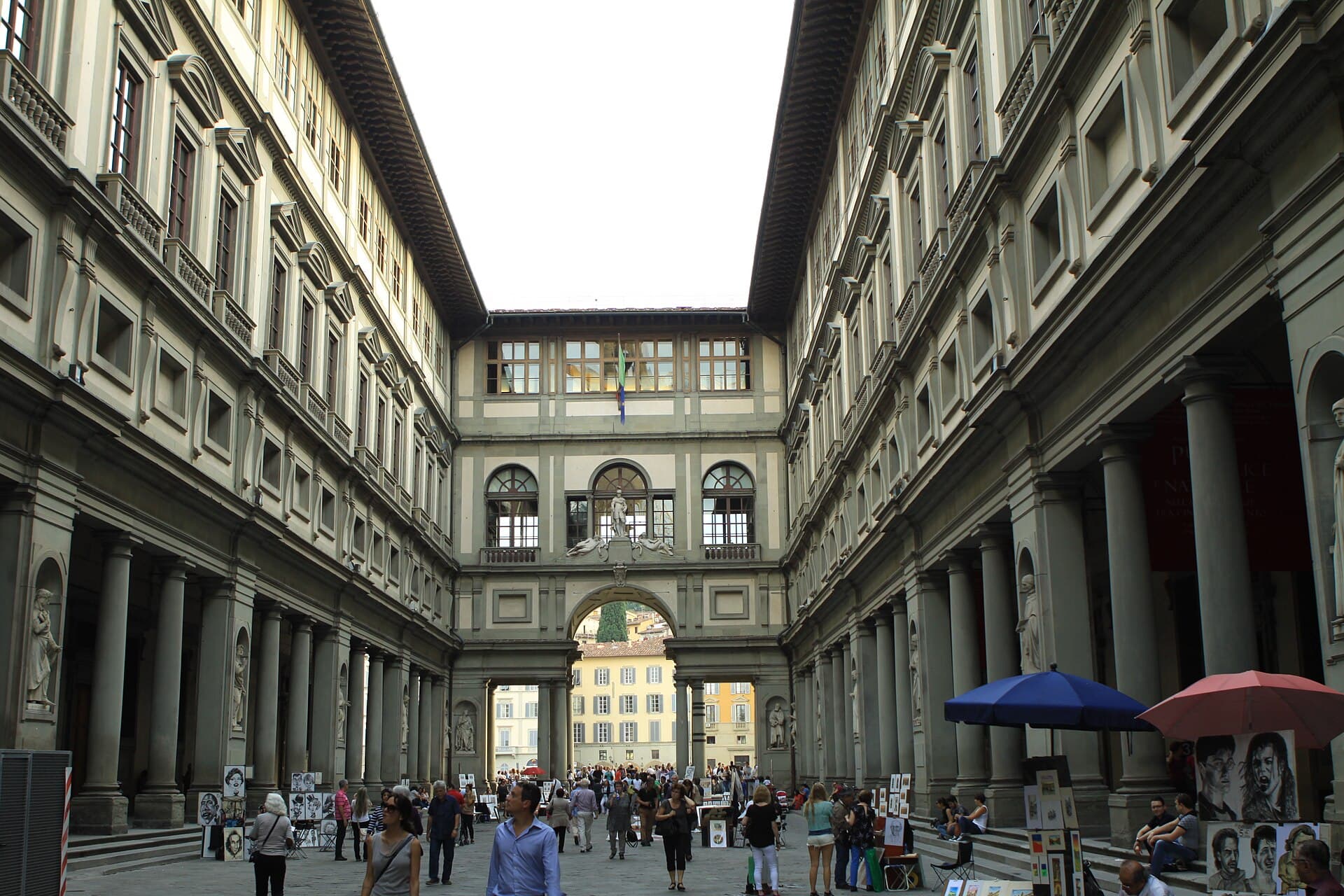 The Uffizi GalleryThe Uffizi is the first museum of Italian painting, absolutely: in the Offices V2 minutes walk4.6
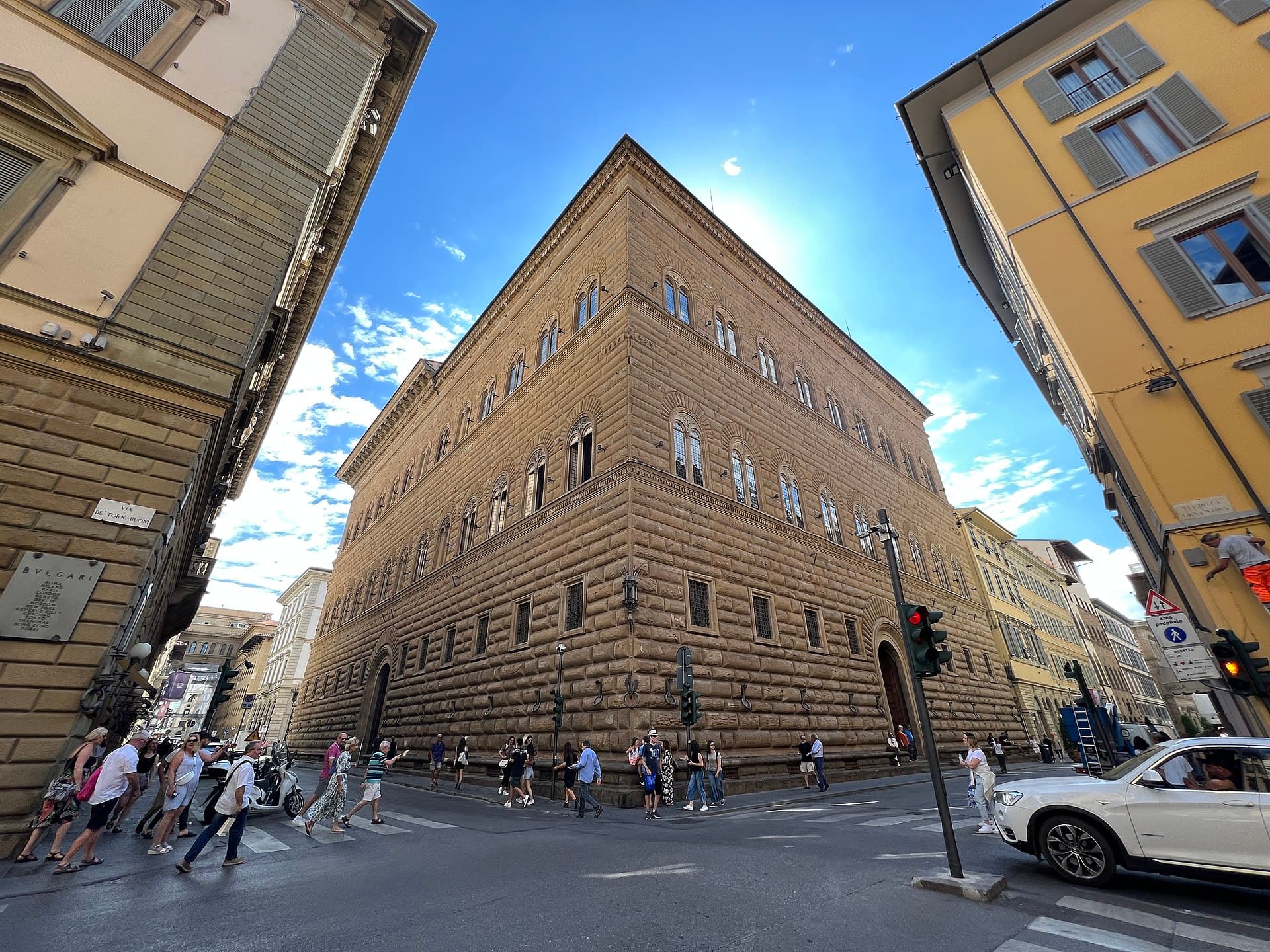 Palazzo StrozziFlorence's most complete private Renaissance palace — and today its exhibition p3 minutes walk4.7
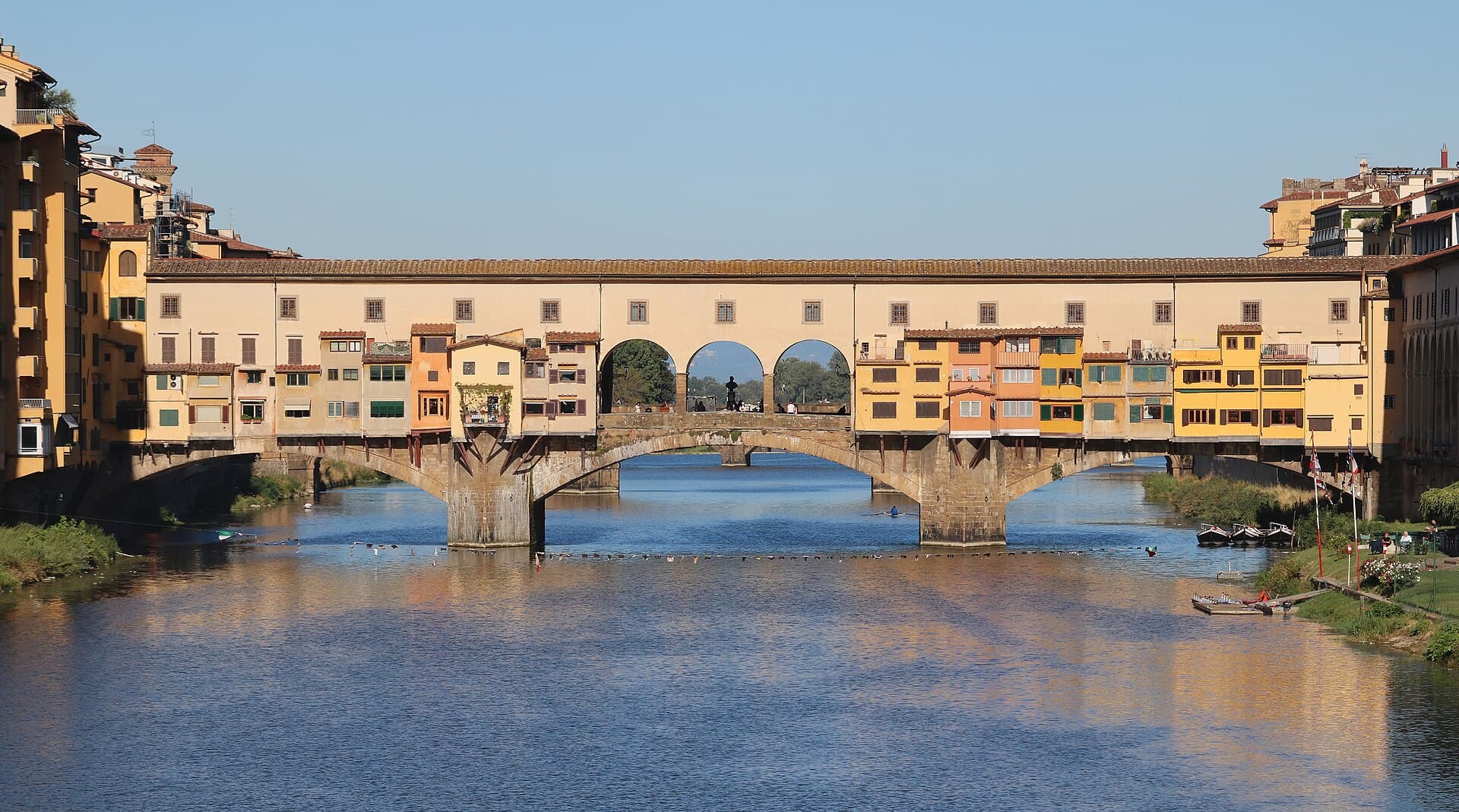 Ponte VecchioThe Ponte Vecchio is Italy's most famous bridge and its strangest survivor: a 133 minutes walk4.6
A columned covered arcade built in the mid-sixteenth century as Florence's silk and gold market. The loggia is a typical Italian architectural form: a covered public space open at the sides, sheltering from sun and rain while allowing trade and assembly. Today it holds leather and souvenir stalls aimed at tourists. Set in the floor is a marble circle called the stone of scandal, where bankrupts were publicly punished.
The site is in the heart of Florence: Piazza della Signoria and the Palazzo Vecchio two minutes away, the Uffizi behind it, the Ponte Vecchio to the south with its goldsmiths' shops, and the Duomo to the north. The whole area is walked in half an hour but needs days to visit its museums. Book the Uffizi and the Accademia in advance — the queues without a booking are very long.