
The Botticelli room
The Birth of Venus and Primavera face to face — the Renaissance's beating heart.
Arek N. — CC BY-SA 3.0 · Ingo Mehling — CC BY-SA 4.0 · Xosema — CC BY-SA 4.0 · Xosema — CC BY-SA 4.0
The Uffizi is the first museum of Italian painting, absolutely: in the Offices Vasari built for Cosimo de' Medici's ministries (1560) the family hung its collection, and the last heiress, Anna Maria Luisa, bound it to Florence forever (1737) on condition it never leave — making the two Arno-lit corridors the greatest visible lesson in Western art's birth: from Giotto's golden altarpieces to Leonardo, Raphael, Michelangelo, Titian and Caravaggio, room upon room in an order that explains itself. Its heart is the Botticelli room that takes breath away collectively: the Birth of Venus and the Primavera facing one another — two paintings all humanity knows, standing here together in one light. Around them: Raphael's Madonna of the Goldfinch, Leonardo's young Annunciation, the Doni Tondo — Michelangelo's only finished panel painting — Titian's Venus of Urbino, and Caravaggio's shrieking Medusa on her shield. It is Italy's most visited museum and its queues are legend — advance timed booking is not advice but sanity's condition, and two and a half hours its honourable minimum.
The Birth of Venus and Primavera face to face — the Renaissance's beating heart.
Michelangelo's only finished panel — the sculptor painting as sculpture.
The two Arno-lit galleries with their statues and grotesque ceilings.
The severed shriek on the shield — darkness opening the Baroque.
Piazzale degli Uffizi 6, 50122 Florence
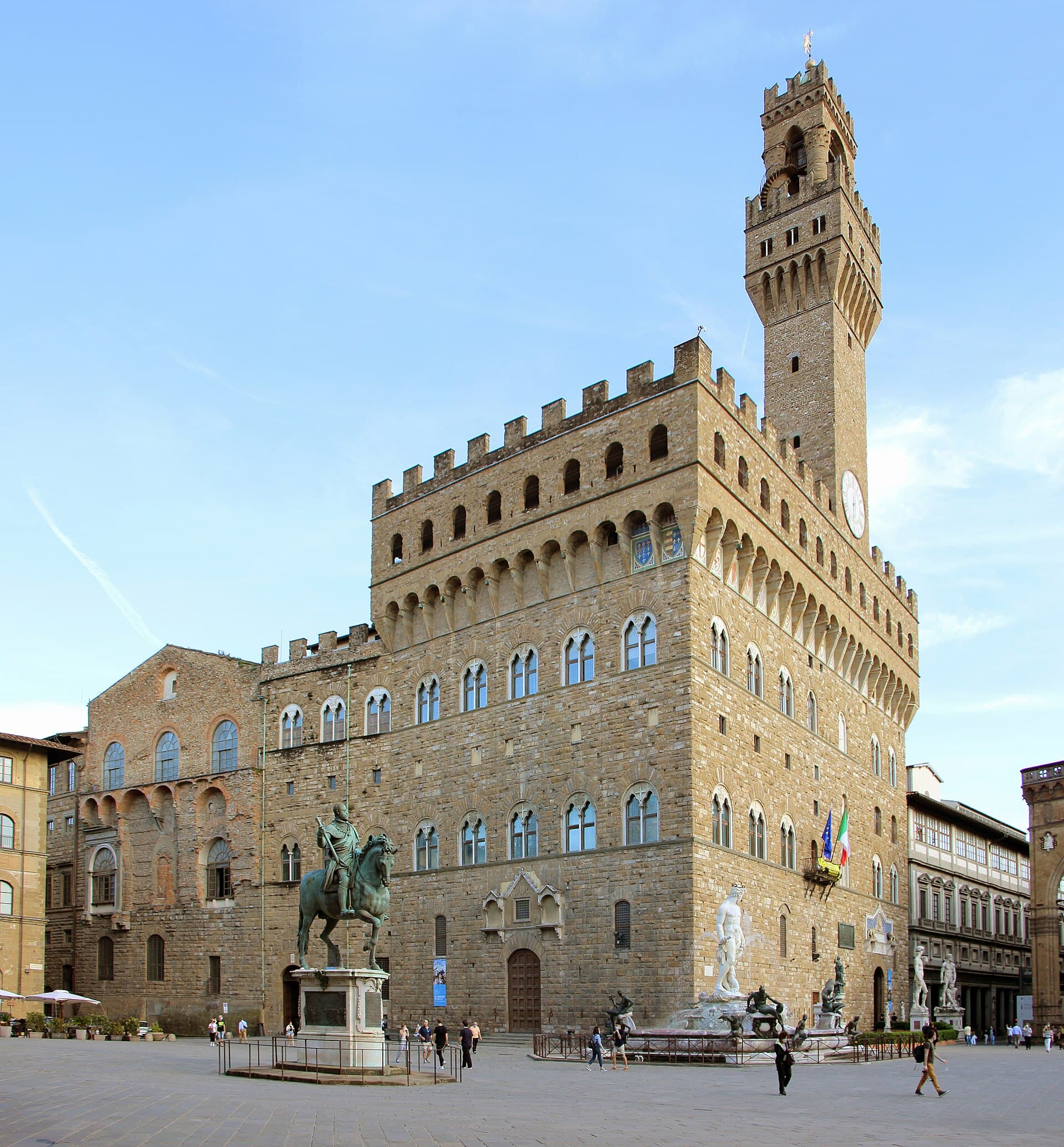 Palazzo VecchioThe Palazzo Vecchio is Florentine power in stone: a crenellated square fortress 1 minute walk4.8
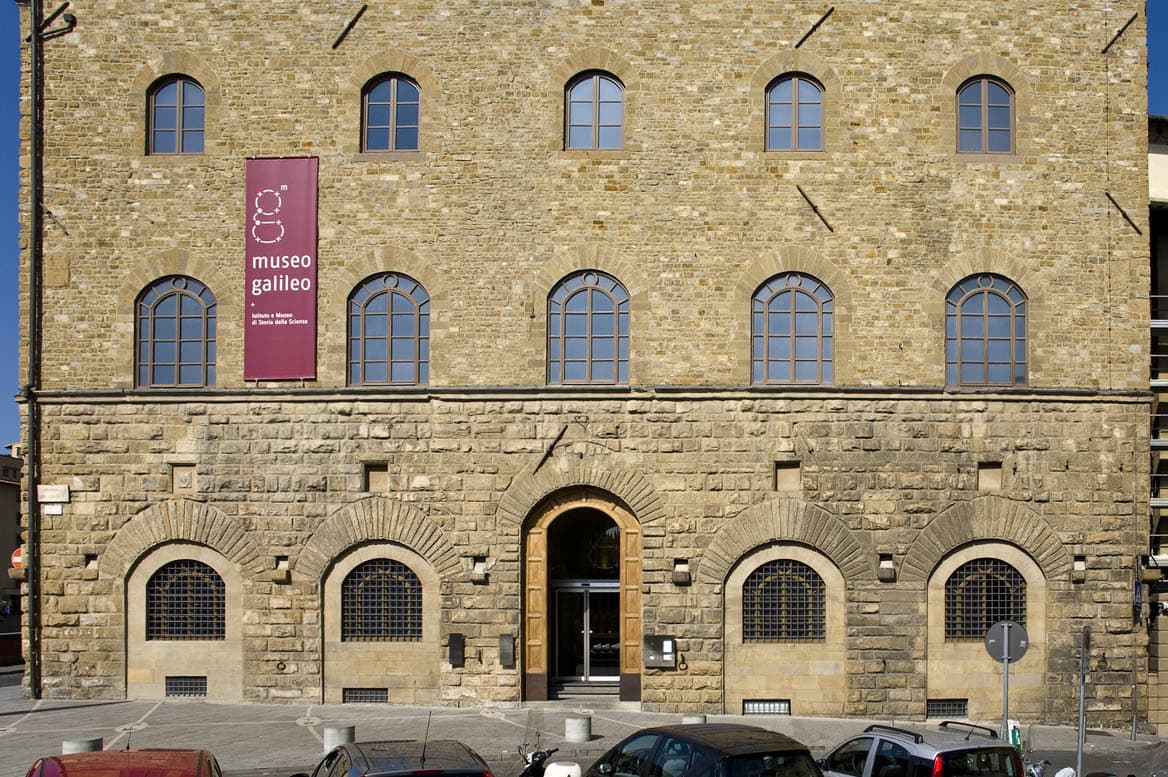 Museo GalileoDirectly behind the Uffizi on the riverbank stands the Museo Galileo — Florence'1 minute walk4.6
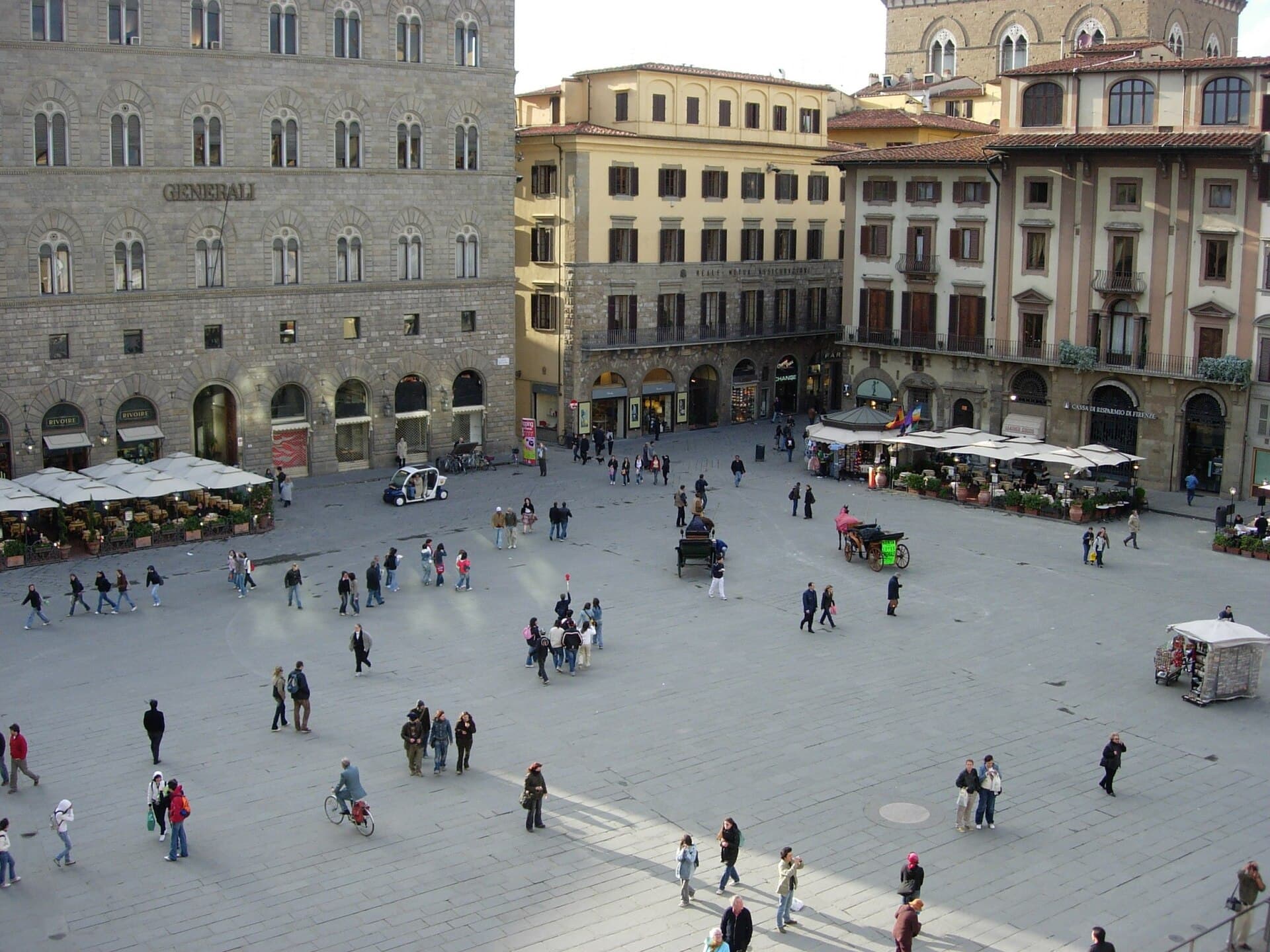 Piazza della SignoriaThe Signoria has been Florence's square of power for seven centuries — decrees p2 minutes walk4.9
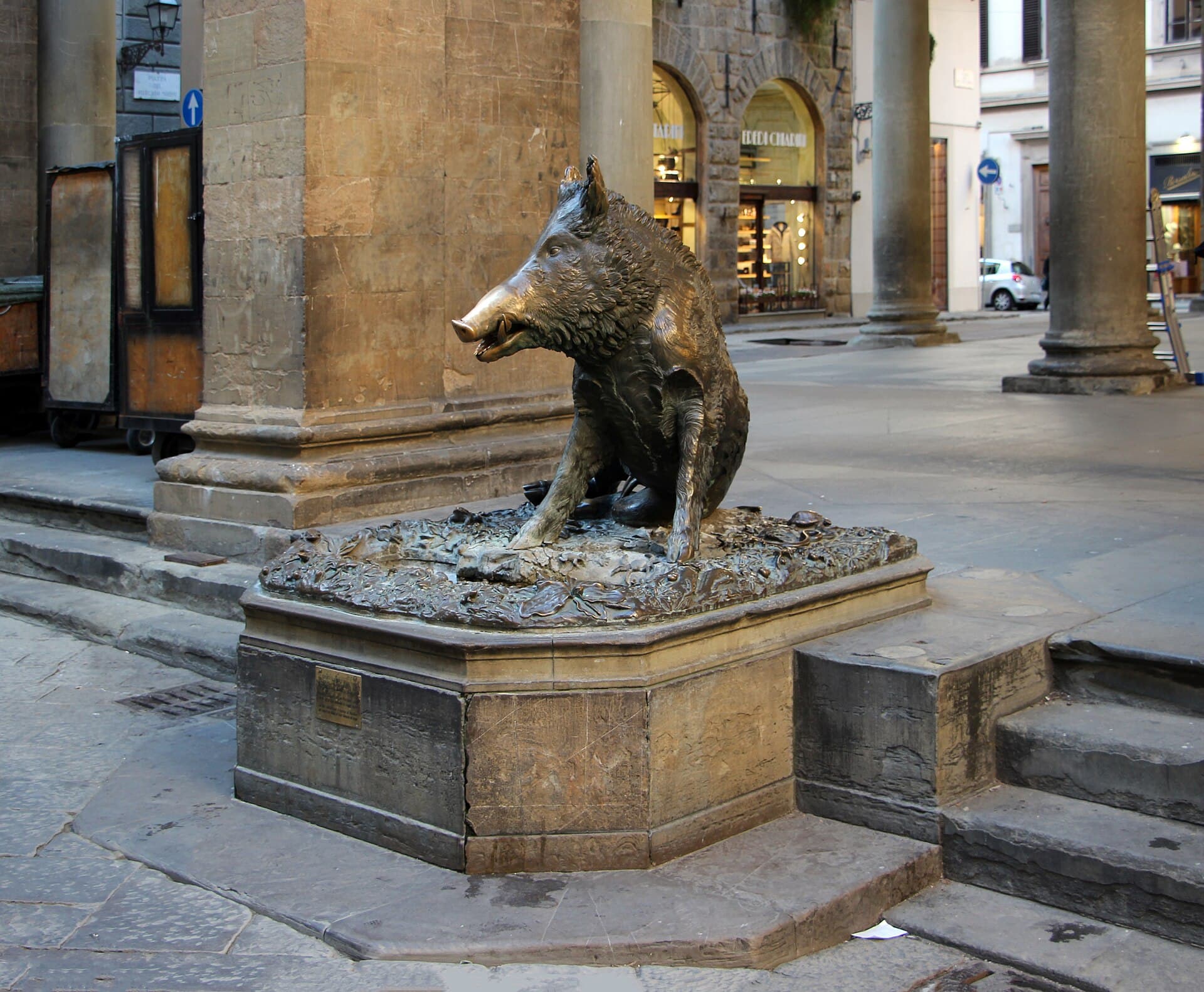 The Fountain of the Little PigA bronze fountain in the form of a wild boar in the Loggia del Mercato Nuovo in 2 minutes walk4.6
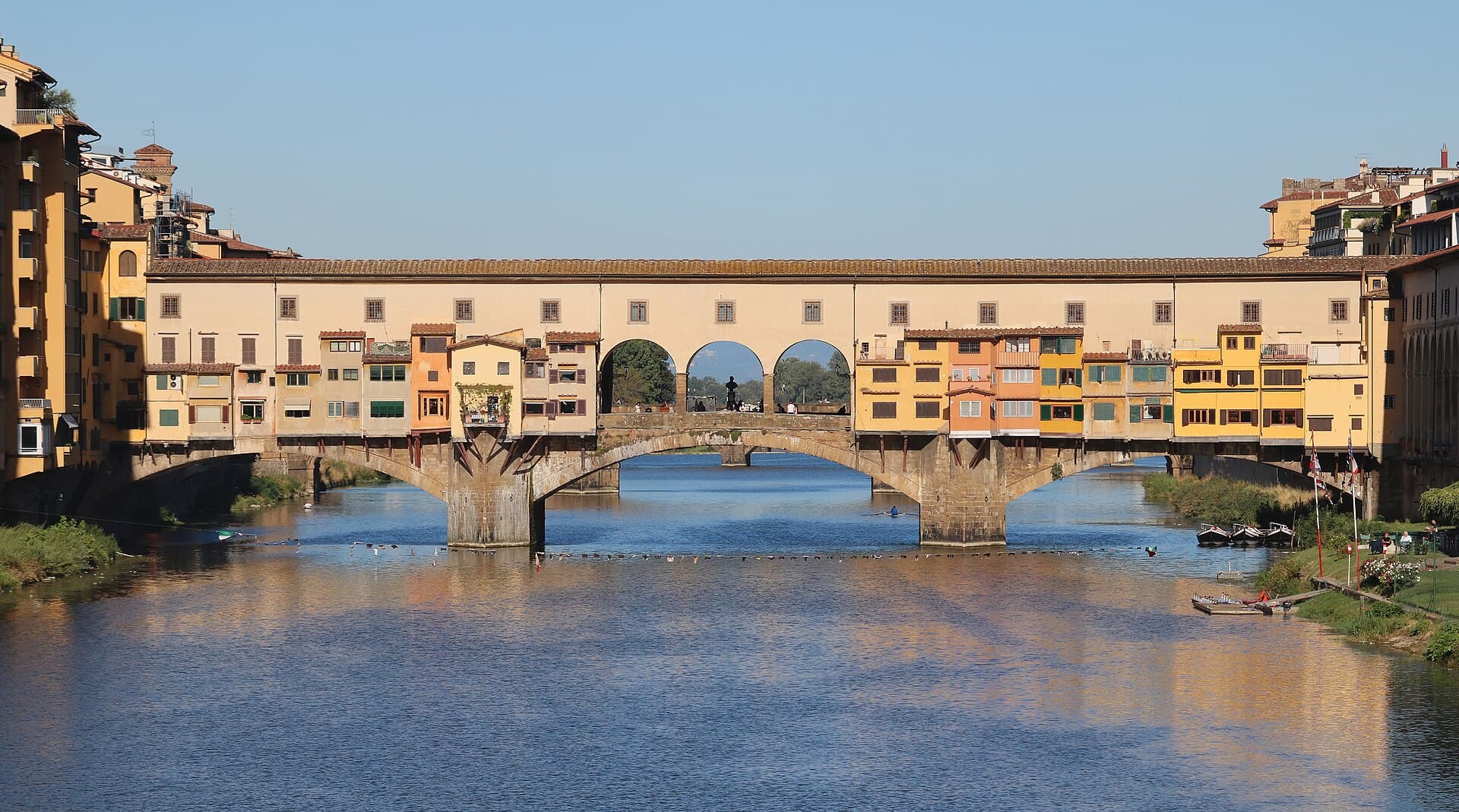 Ponte VecchioThe Ponte Vecchio is Italy's most famous bridge and its strangest survivor: a 133 minutes walk4.6
Only the official site (uffizi.it) — resellers sell the same ticket plus commission. The 8:15 slot is pure gold: a near-empty Botticelli room for half an hour. The respectable alternative is the last two slots — the middle guarantees crush. Carry the ticket ready; the collection window is another queue.
Follow the chronology, that is its genius: Giotto's beginnings, the Botticelli detonation, Leonardo, the south corridor with its Ponte Vecchio view, Raphael–Michelangelo–Titian, Caravaggio closing downstairs. Skip bravely what does not call you — the Uffizi defeats completists.
The Medici's last heir: the line died with her (1743), but first she signed the Family Pact giving every treasure to Florence on two conditions — never to leave it, always for the public. Without her the Uffizi would be scattered through Europe's palaces — which is why Florence lays flowers on her tomb every 18 February.