
The stone gate
An ornate Spanish entrance.
André Héroux — CC BY 3.0 · Bobbet21 — CC BY-SA 4.0 · Bahnfrend — CC BY-SA 4.0 · xiquinhosilva — CC BY 2.0
A stone citadel the Spanish built in 1571 at the mouth of the Pasig River to guard their new city, on the site of an earlier wooden fort of Rajah Sulayman, the Muslim ruler of Manila before the Spanish arrived. It is one of the most important historic sites in the Philippines, witness to centuries of Spanish rule, then American rule, then Japanese occupation in the Second World War. José Rizal, the national hero of the Philippines, was held in its prison before his execution in 1896. Today the Rizal Shrine inside the fort displays his belongings and writings, and bronze footprints set in the ground trace his last walk from his cell to the place of execution in what is now Rizal Park. You enter through an ornate stone gate into gardens and broad courts, then climb to the ramparts above the river and go down to the cells and vaults, some of which have been opened to visitors. Late afternoon is the best time, when the sun softens, and the fort stays open into the evening. The ticket is cheap, and the place combines history, gardens and river views. Allow an hour and make it the end of your walk through Intramuros.
An ornate Spanish entrance.
His last walk in bronze.
Views of the Pasig.
Northern end of Intramuros, at the mouth of the Pasig River, Manila
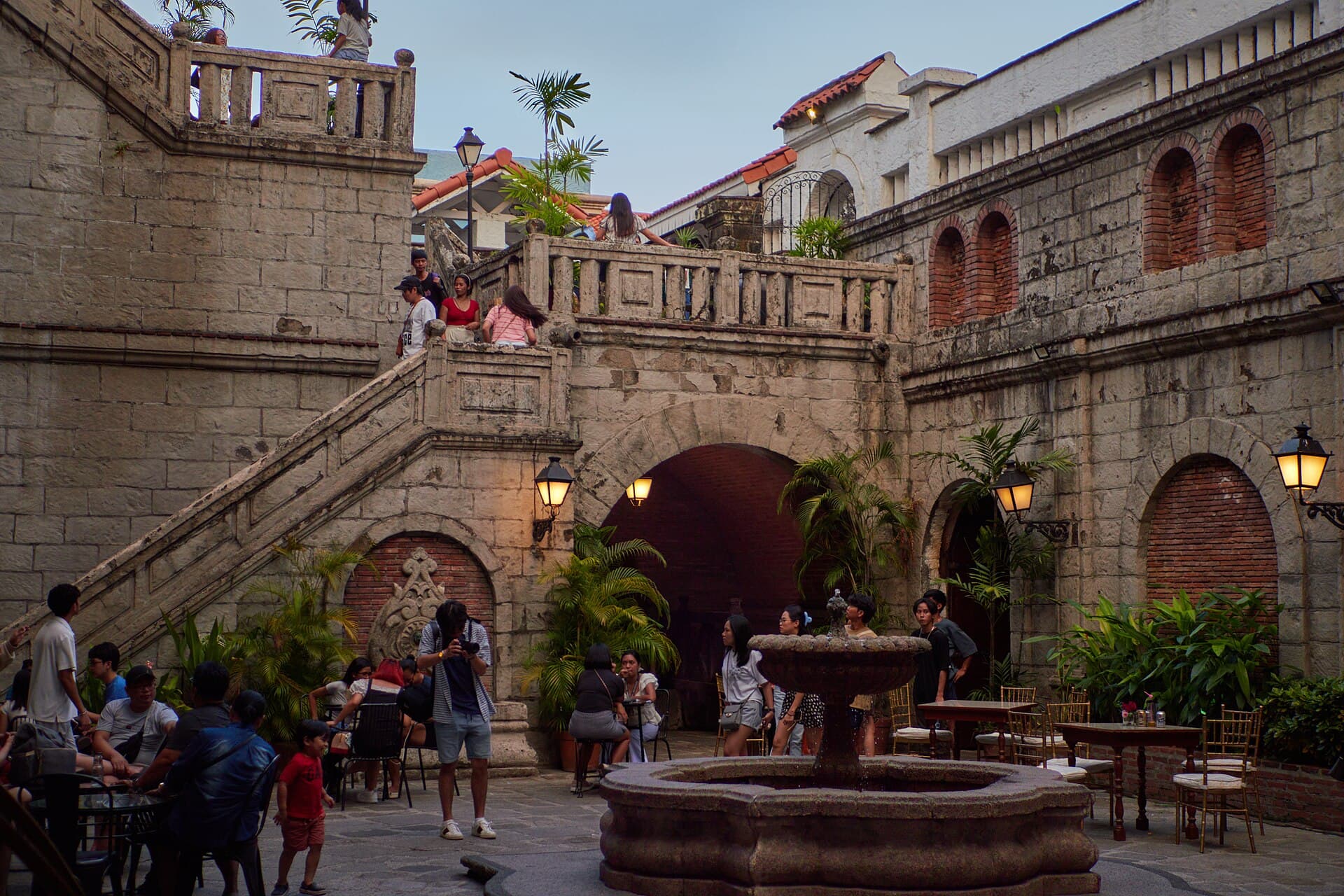 IntramurosThe old walled city at the heart of Manila; its Spanish name means «within the w9 minutes walk
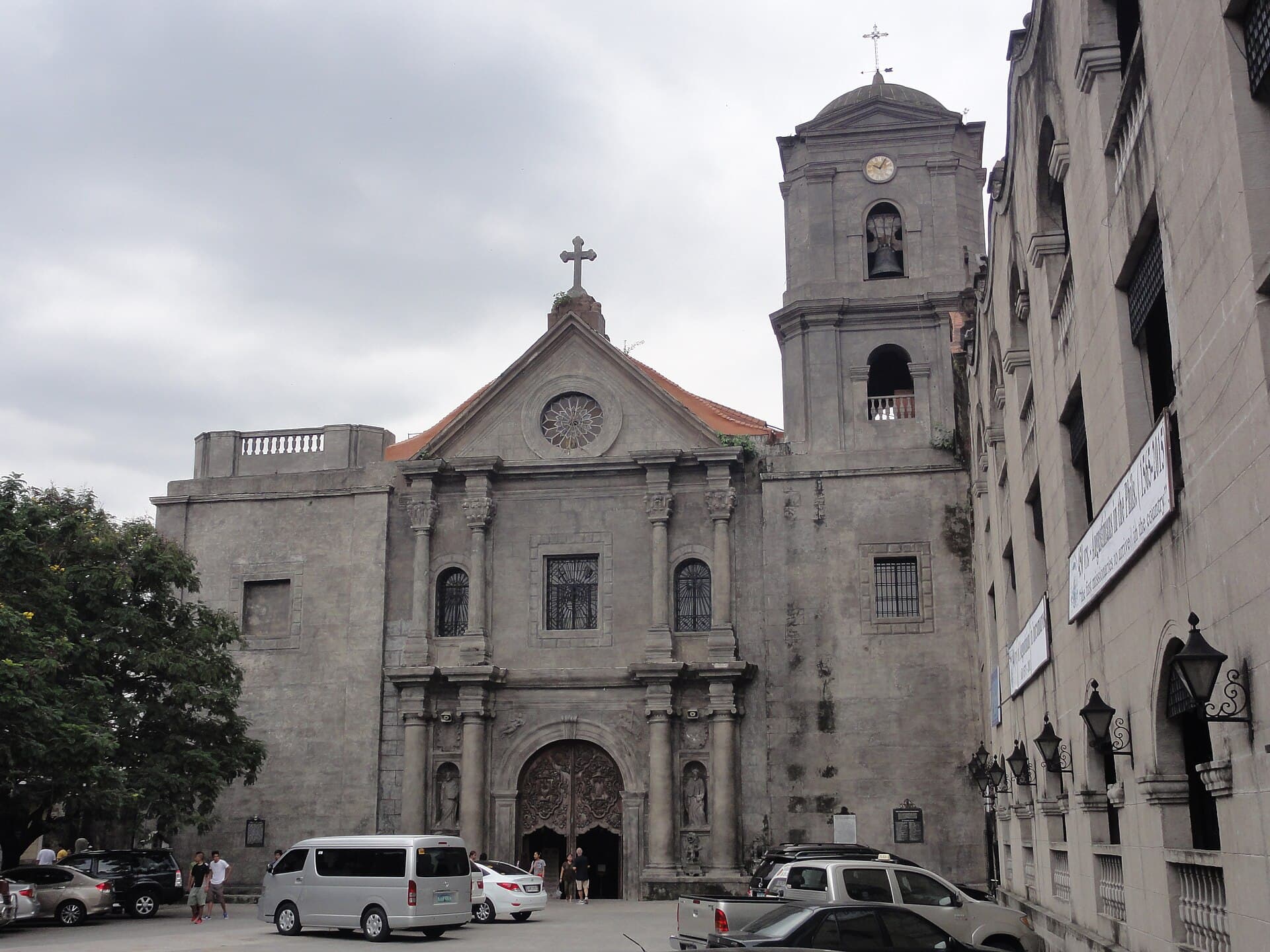 San Agustin ChurchThe oldest stone church in the Philippines, completed in 1607 within the walls o10 minutes walk4.5
 Binondo ChinatownThe oldest Chinatown in the world, founded by the Spanish in 1594 across the riv11 minutes walk
 National Museum of Fine ArtsThe largest art museum in the Philippines, housed in the Old Legislative Buildin17 minutes walk4.6
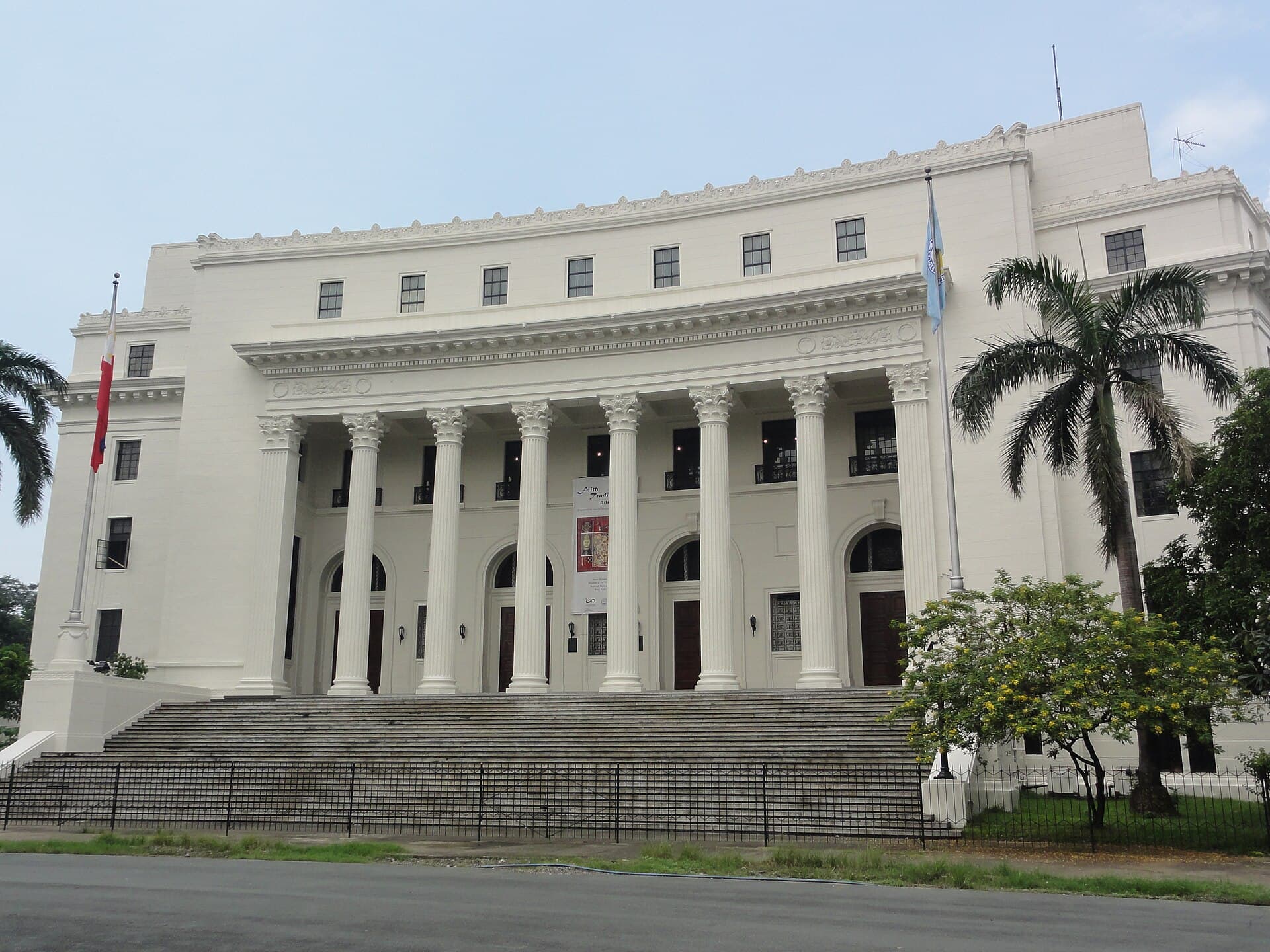 National Museum of AnthropologyThe museum of the history and archaeology of the Filipino peoples, in a neoclass19 minutes walk4.7
75 pesos for adults and 50 pesos for students, seniors and people with disabilities, per the Intramuros Administration.