
The underground galleries
The fortress's restored passages, part of the tour.
Diego Delso — CC BY-SA 4.0 · Cayambe — CC BY-SA 3.0 · Moncle — CC BY-SA 4.0 · Zinneke — CC BY-SA 3.0
Fort Thüngen stands on the edge of the Kirchberg plateau, and is known locally as Dräi Eechelen, the Three Acorns, after the three stone acorn finials on its towers — all that remained visible of it after the dismantling. The Austrians built it in 1732 as part of the fortress's outer defensive ring, and it was among its strongest points. It was demolished in 1867 under the Treaty of London along with the rest of the fortifications, and its foundations and underground galleries lay buried until they were excavated and restored in the 1990s. The museum inside tells one story clearly: how Luxembourg became a country. It begins with the fortress as a European stronghold fought over by Spain, France, Austria and Prussia, and moves to the 1867 treaty that required the fortress to be razed and the country neutralised — the moment it turned from a military position into an independent state. The restored underground galleries are part of the visit.
The fortress's restored passages, part of the tour.
How a contested stronghold became a neutral state.
5 Park Dräi Eechelen, 1499 Luxembourg
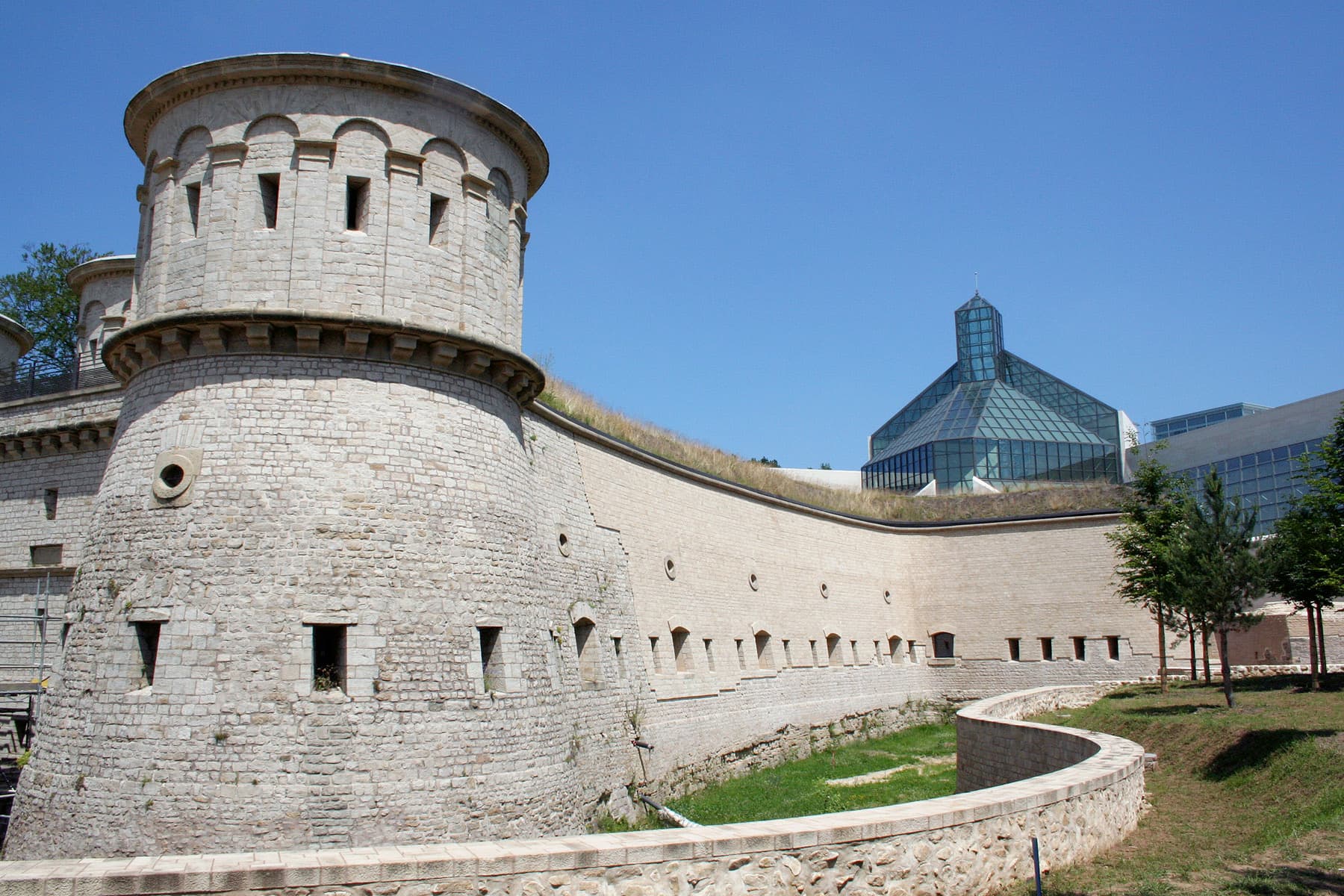 Mudam, the Museum of Modern ArtMudam is Luxembourg's major museum of contemporary art, opened in 2006 on the Ki1 minute walk4.3
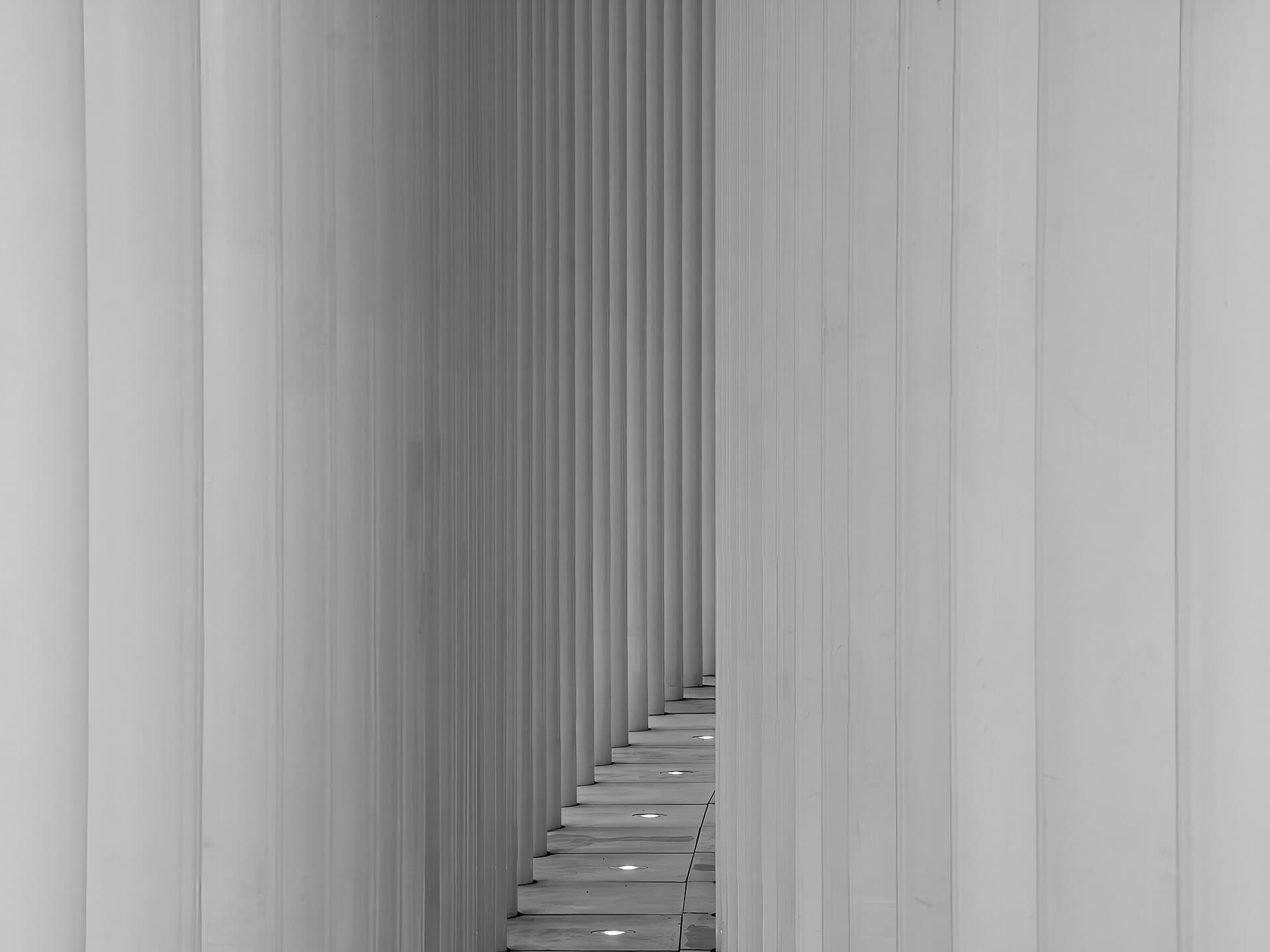 The PhilharmonieThe Philharmonie on the Kirchberg plateau is among Luxembourg's most distinctive4 minutes walk4.7
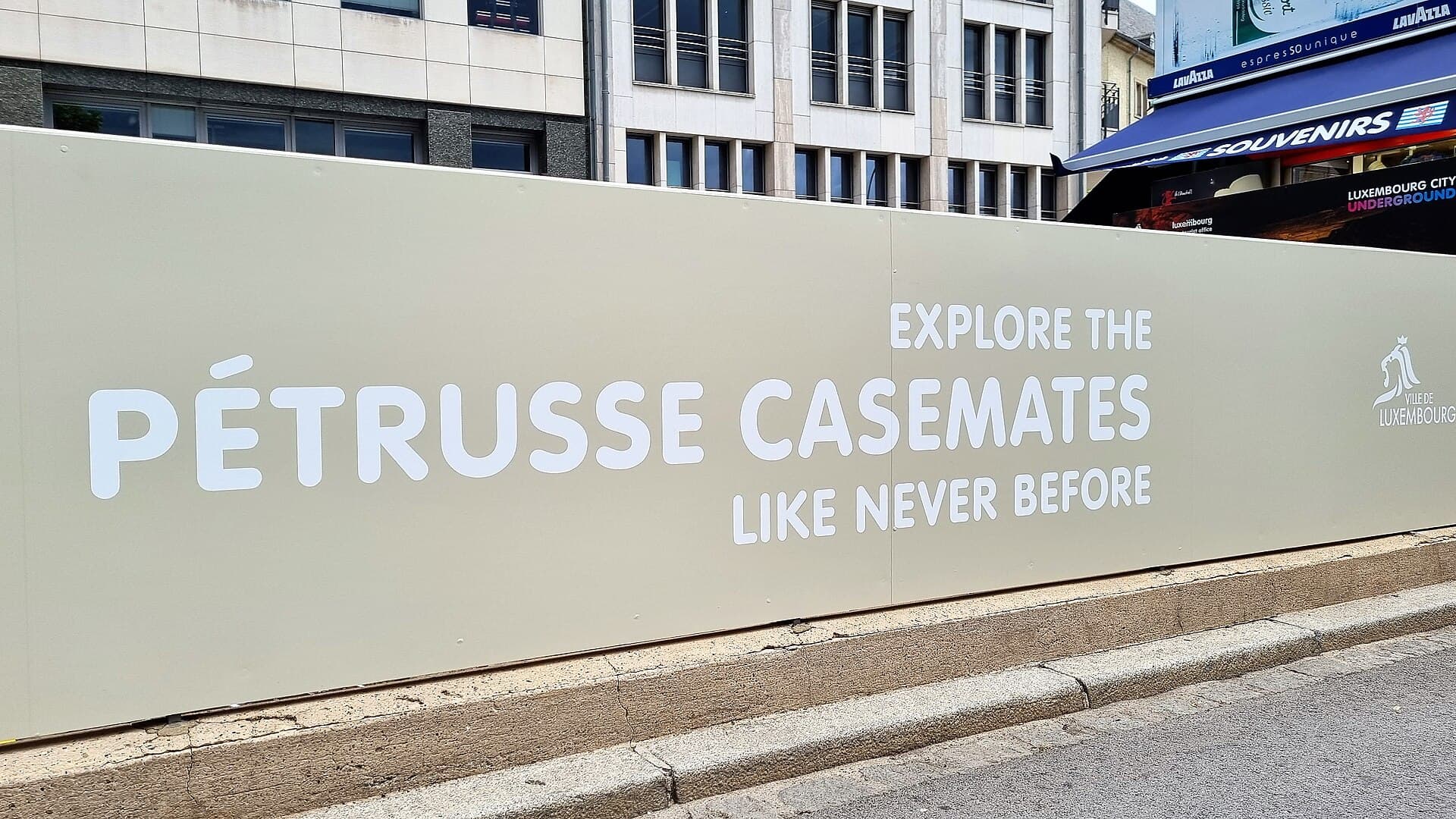 The Pétrusse CasematesThe Pétrusse Casemates are the second network of military tunnels beneath Luxemb6 minutes walk4.7
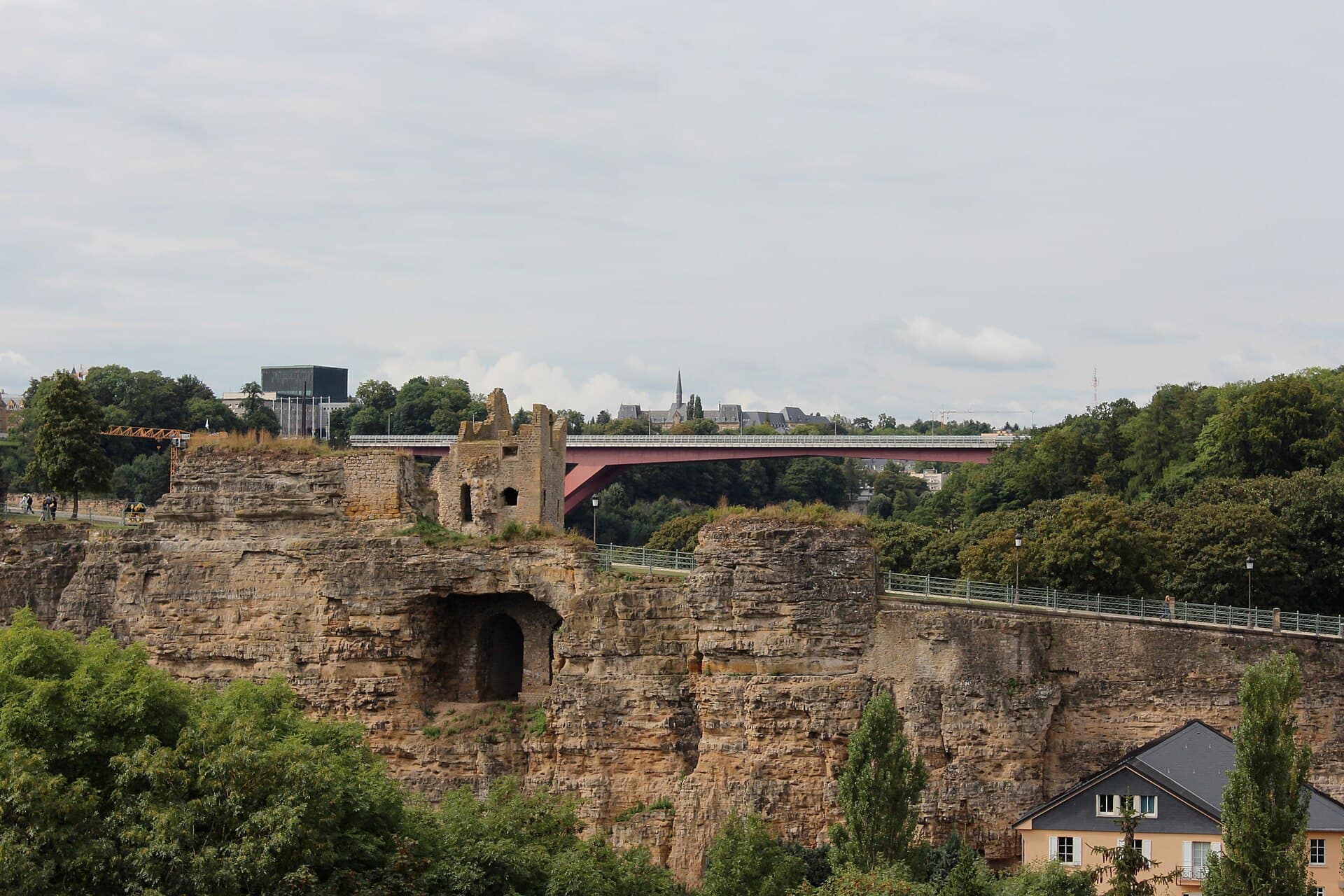 The Bock CasematesThe Bock Casemates are a network of tunnels cut inside the rock beneath the old 7 minutes walk4.5
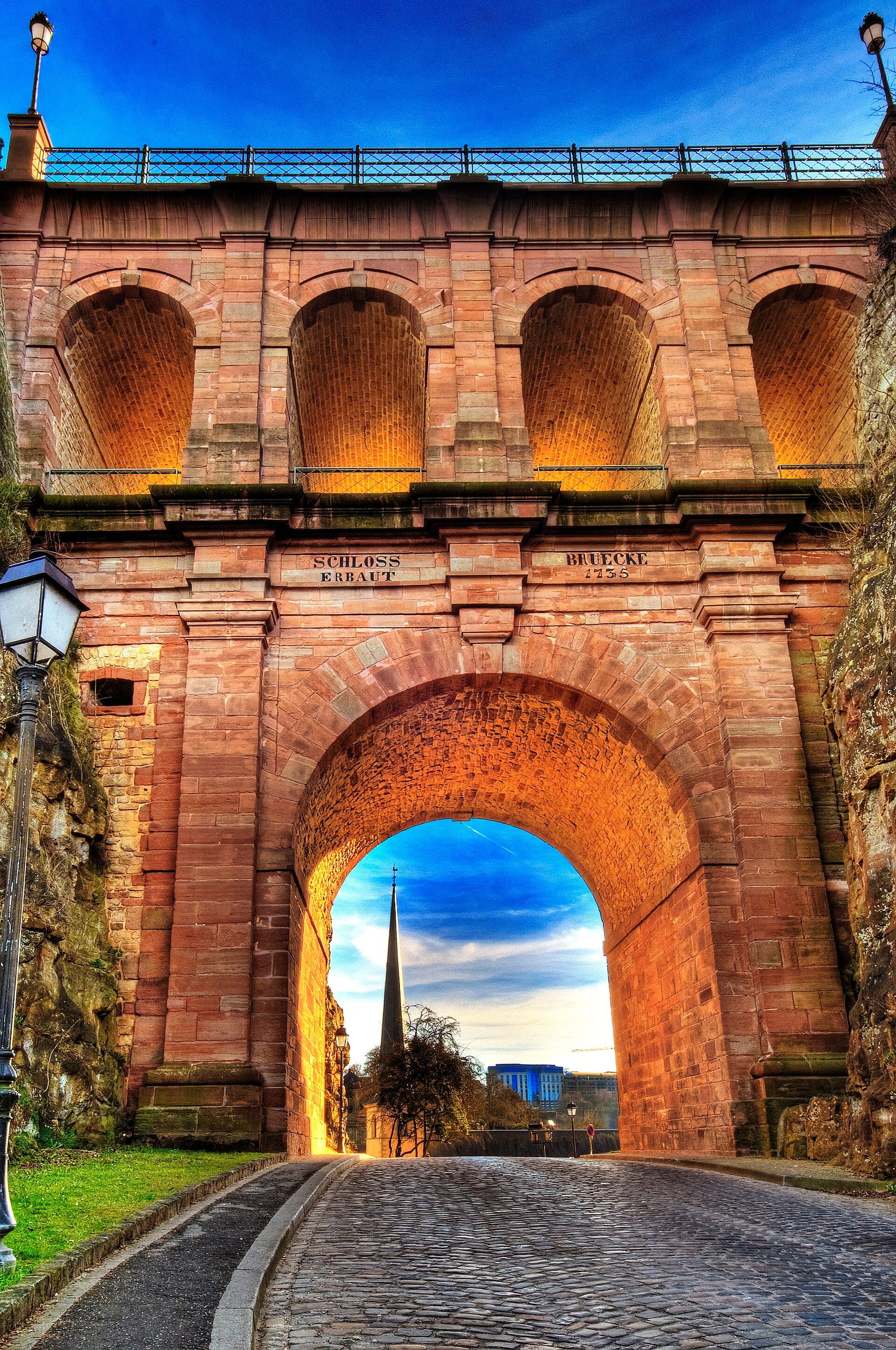 The Castle BridgeA short stone bridge linking the upper town to the Bock promontory, and the only7 minutes walk4.6
A European crisis that nearly set off a war between France and Prussia when France tried to buy Luxembourg. It was settled by a conference in London that decided three things: Luxembourg would become permanently neutral, the Prussian garrison would withdraw, and the fortress would be demolished entirely so it tempted no one. The demolition took sixteen years. That is why almost every historic site in the city refers to 1867 — it is the year that gave the country its present shape.