
The twin towers
Two green onion domes; no building in central Munich may rise above them.
Diliff — CC BY 2.5 · AuHaidhausen — CC BY 4.0 · AuHaidhausen — CC BY 4.0 · Álvaro de la Paz Franco — CC0
The Frauenkirche is Munich's best-known building after the town hall, and its twin towers with their green domes are the symbol of the city. It was built in red brick in the late fifteenth century and finished in only twenty years, which is very fast for a church of this size. The green domes were added later, in the sixteenth century, and their shape is unusual for Germany: more onion than pointed Gothic spire. They became the mark by which Munich is recognised from a distance, and a local rule forbids anything in the centre from rising higher. Inside it is plain, wide and tall, with long white columns. The church was badly damaged in the war and restored simply, so do not expect much ornament. By the entrance a dark footprint is set into the floor, known as the Devil's Step, with a well-known local legend attached. Entry is free.
Two green onion domes; no building in central Munich may rise above them.
A dark footprint set into the floor by the entrance, with a well-known local legend.
Long white columns and a wide, plain space, restored after wartime destruction.
Frauenplatz 12, 80331 München
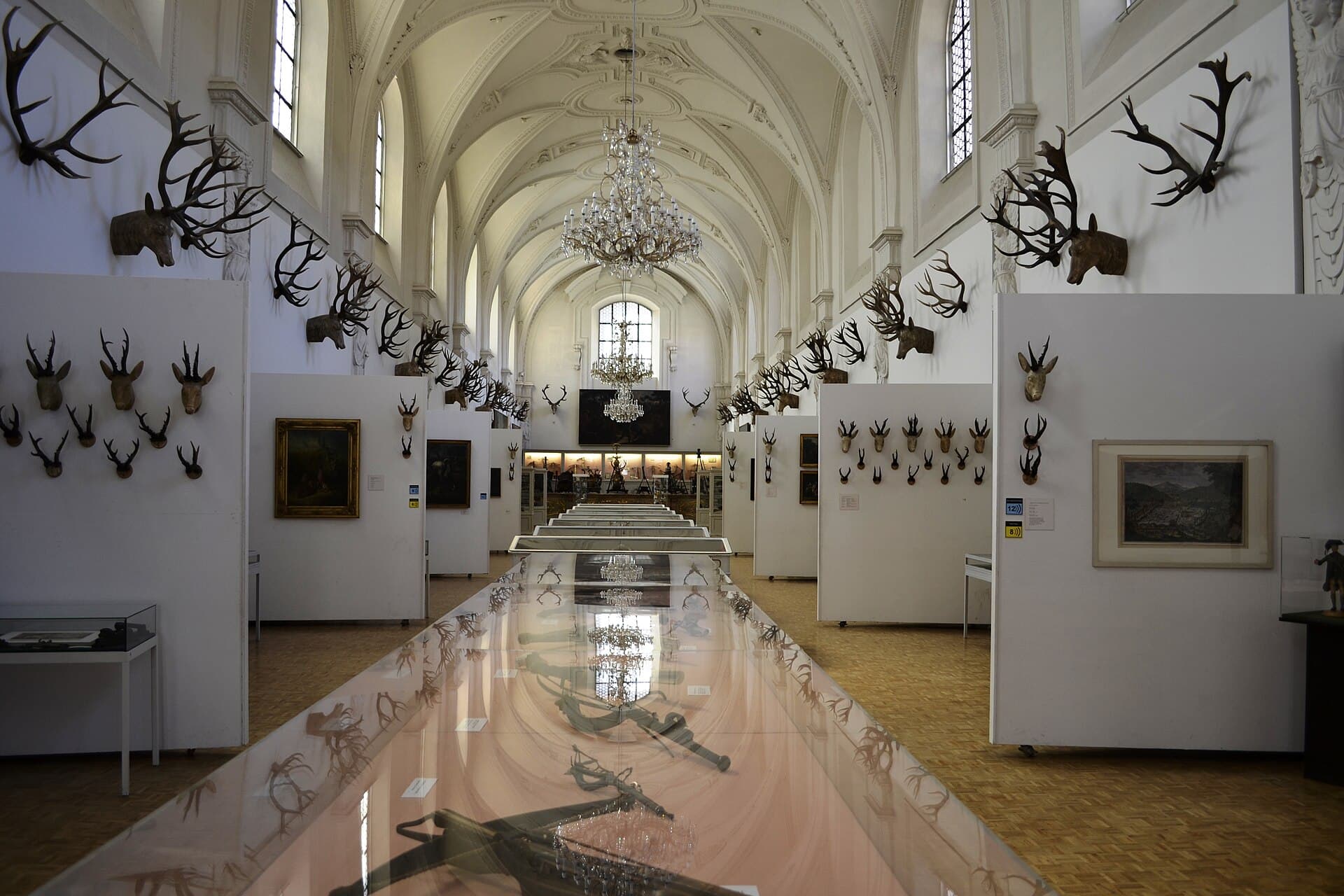 German Hunting and Fishing MuseumThe German Hunting and Fishing Museum occupies a fifteenth-century Augustinian c2 minutes walk4.5
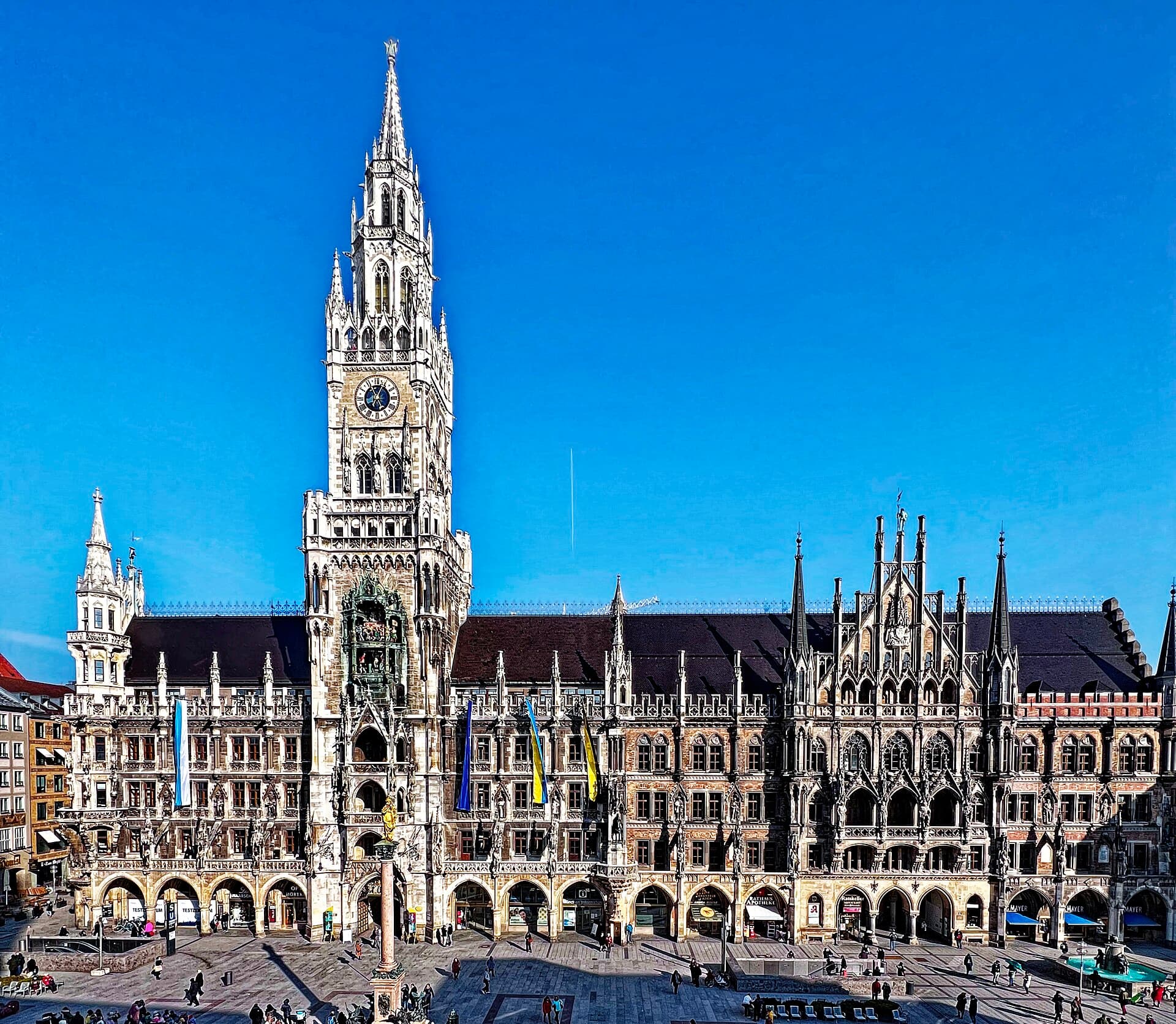 MarienplatzMarienplatz is the heart of Munich and the starting point for any visit. It has 2 minutes walk4.8
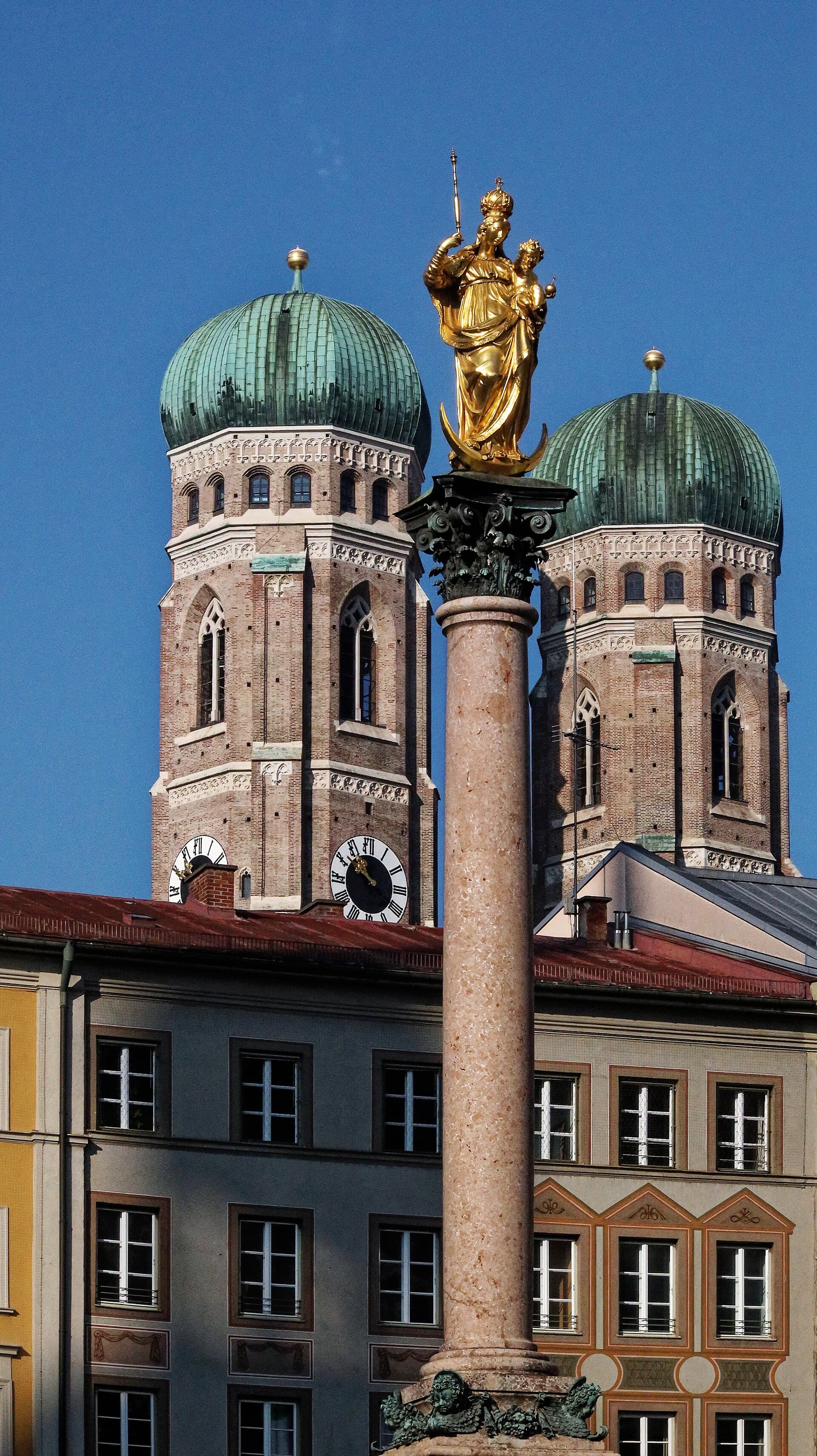 MariensäuleThe Mariensäule is a marble column in the middle of Marienplatz, topped by a gol2 minutes walk4.6
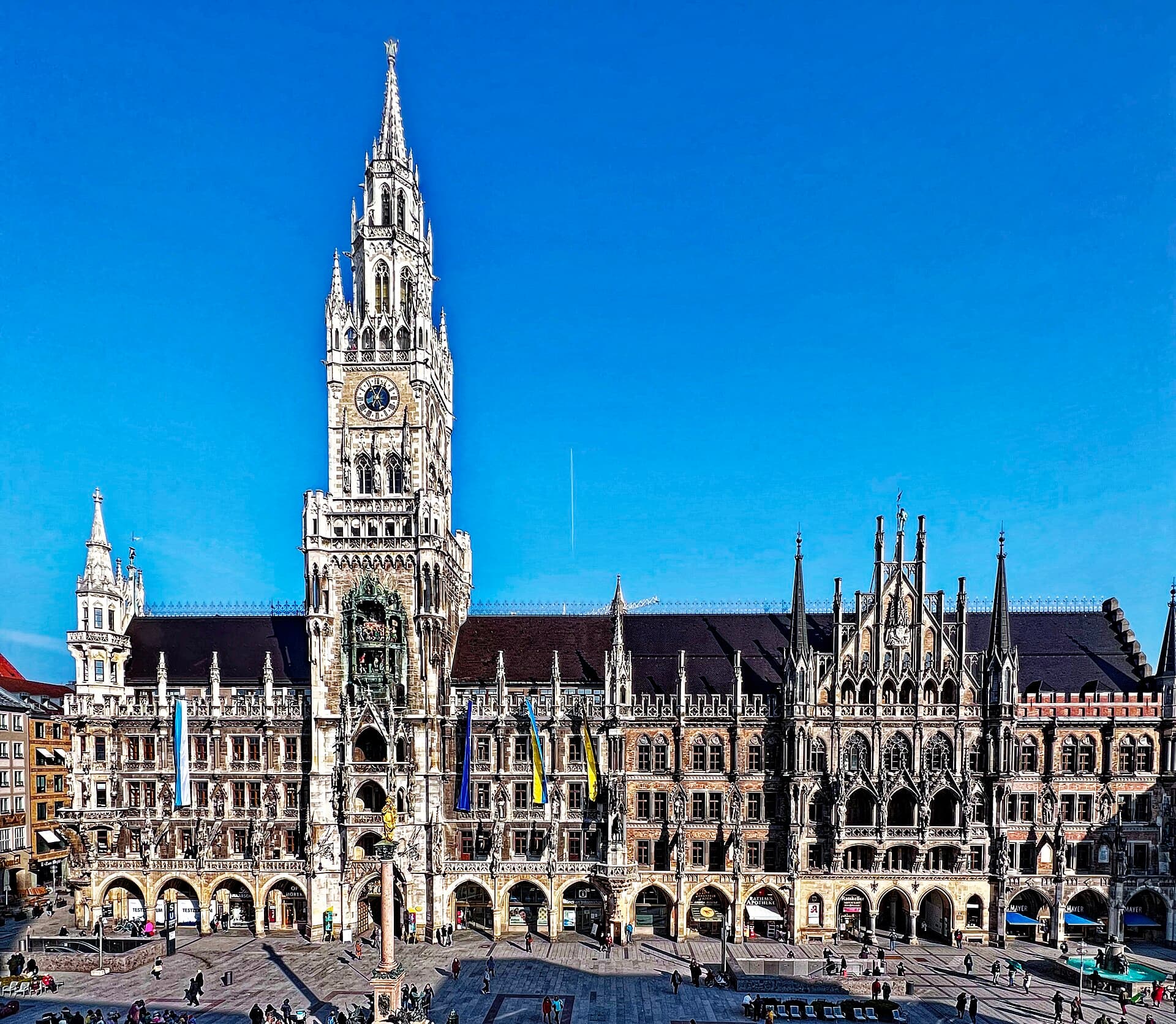 New Town HallThe New Town Hall is the large building with pointed towers filling the north si3 minutes walk4.8
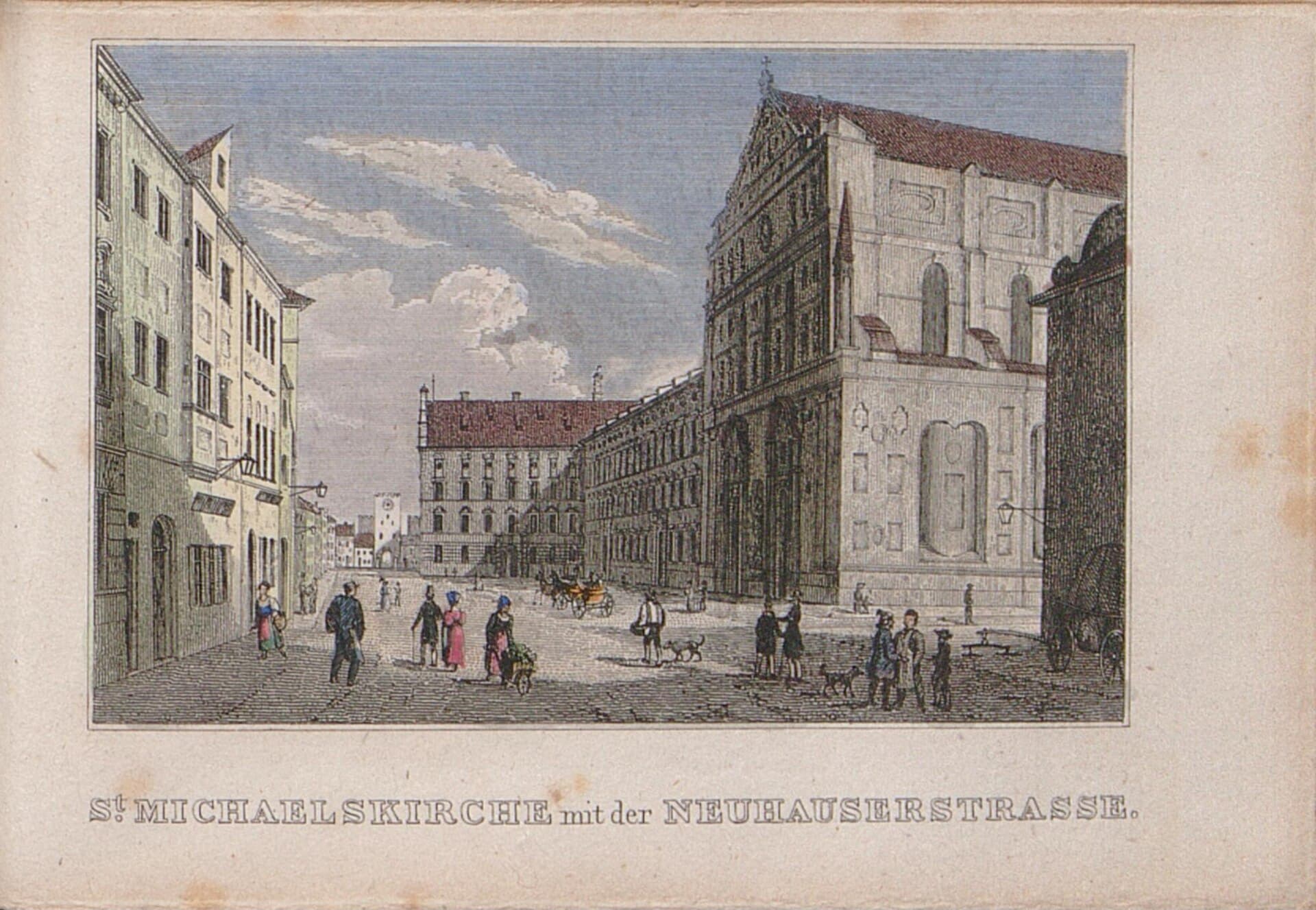 St Michael's ChurchSt Michael's is the Jesuit church in central Munich, built by Duke Wilhelm V bet3 minutes walk4.8
Yes — the church is free and still in use. What you pay for is the tower climb, which can be closed for restoration for long stretches.
A local legend says the Devil stood at this spot, saw a church with no windows and laughed, then realised he had been tricked and stamped his foot. The story is a legend, but the mark is there and visitors stand on it.