
Ludwig II's tomb
A coffin never without fresh flowers.
Unknown authorUnknown author — Public domain · Amrei-Marie — CC BY-SA 4.0 · Mit Beiträgen von Aug. Becker, R. Gadermann, B. Grueber, Fr. Lampert, Hrch. Noé, C. v. Spruner und mit Bildern namhafter Künstler herausgegeben von Herman von Schmid — Public domain · Maximilian Franck — Public domain
St Michael's is the Jesuit church in central Munich, built by Duke Wilhelm V between 1583 and 1597 as a beacon of the Counter-Reformation in southern Germany. It is the largest Renaissance church north of the Alps, and its barrel vault, spanning some twenty metres without a single supporting column beneath it, was the second widest of its kind after St Peter's in Rome. During construction, in 1590, the bell tower collapsed and brought down part of the choir. Wilhelm V read the accident as a sign that the church was meant to be larger, redesigned it with a wider choir, and abandoned the tower altogether — which is why it stands today as a huge facade with no spire and no tower at all, presided over by a bronze Archangel Michael spearing the dragon, cast by Hubert Gerhard in 1588. Beneath the church lies the princes' crypt, where around forty Wittelsbachs rest, and where most visitors are heading for one tomb in particular: the coffin of King Ludwig II of Bavaria, the builder of Neuschwanstein, laid here on the nineteenth of June 1886, days after his unexplained death in Lake Starnberg. Fresh flowers on it never run out. The church itself is free; the crypt costs three euros and keeps shorter hours than the church.
A coffin never without fresh flowers.
Twenty metres of span with no column.
Neuhauser Strasse 6, 80333 Munich
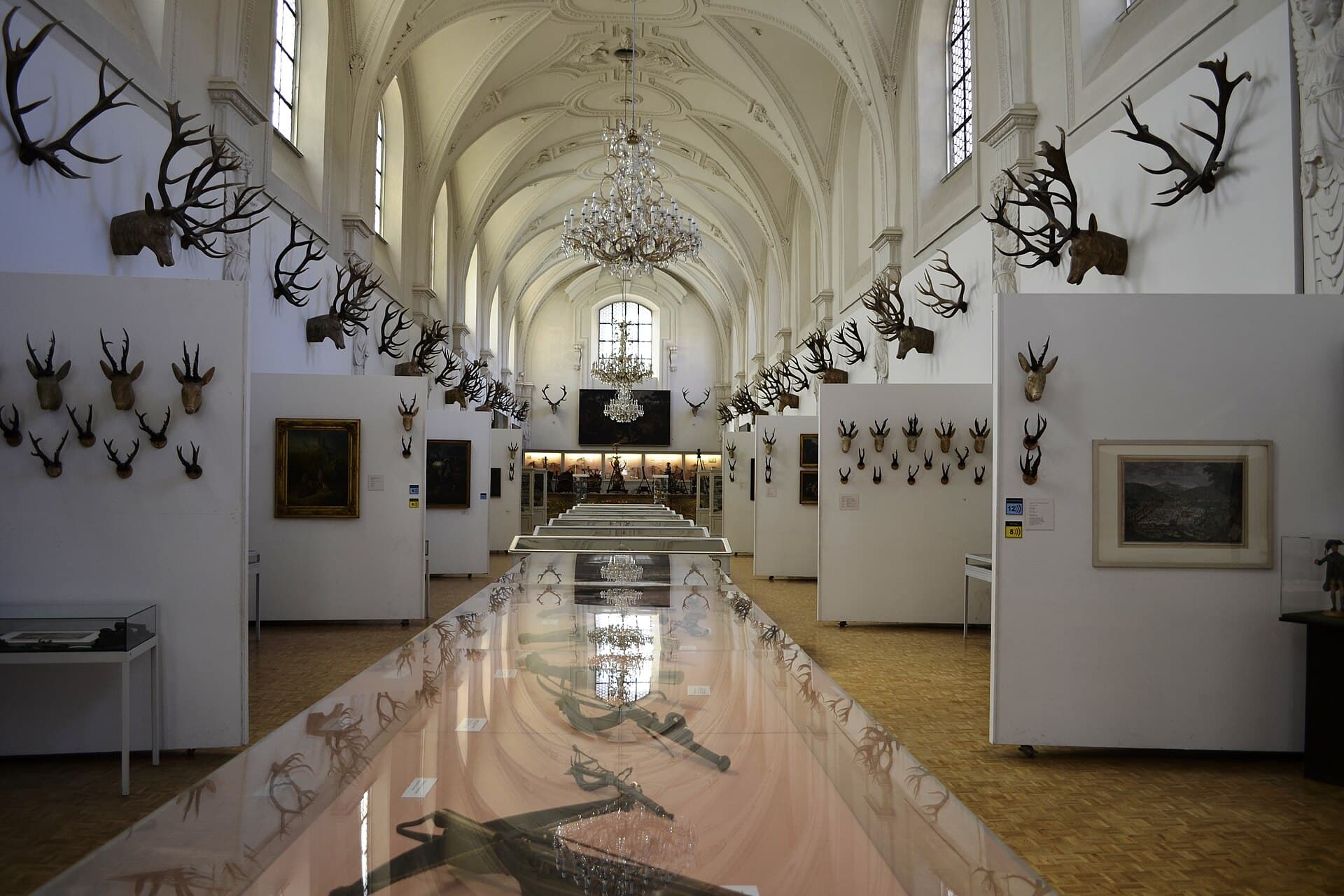 German Hunting and Fishing MuseumThe German Hunting and Fishing Museum occupies a fifteenth-century Augustinian c1 minute walk4.5
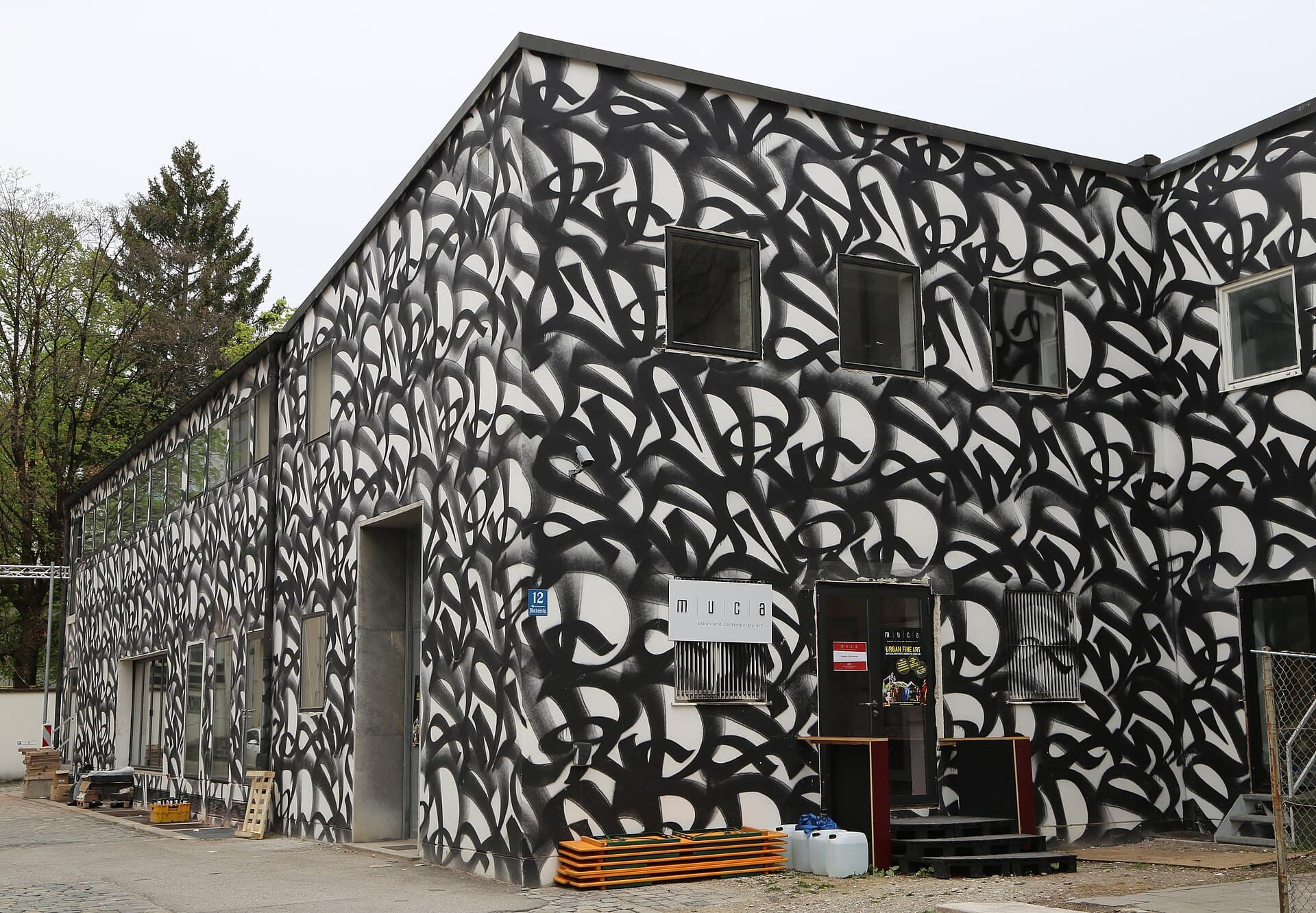 MUCA - Museum of Urban and Contemporary ArtMUCA is Germany's first museum devoted to street art and contemporary urban art,3 minutes walk4.2
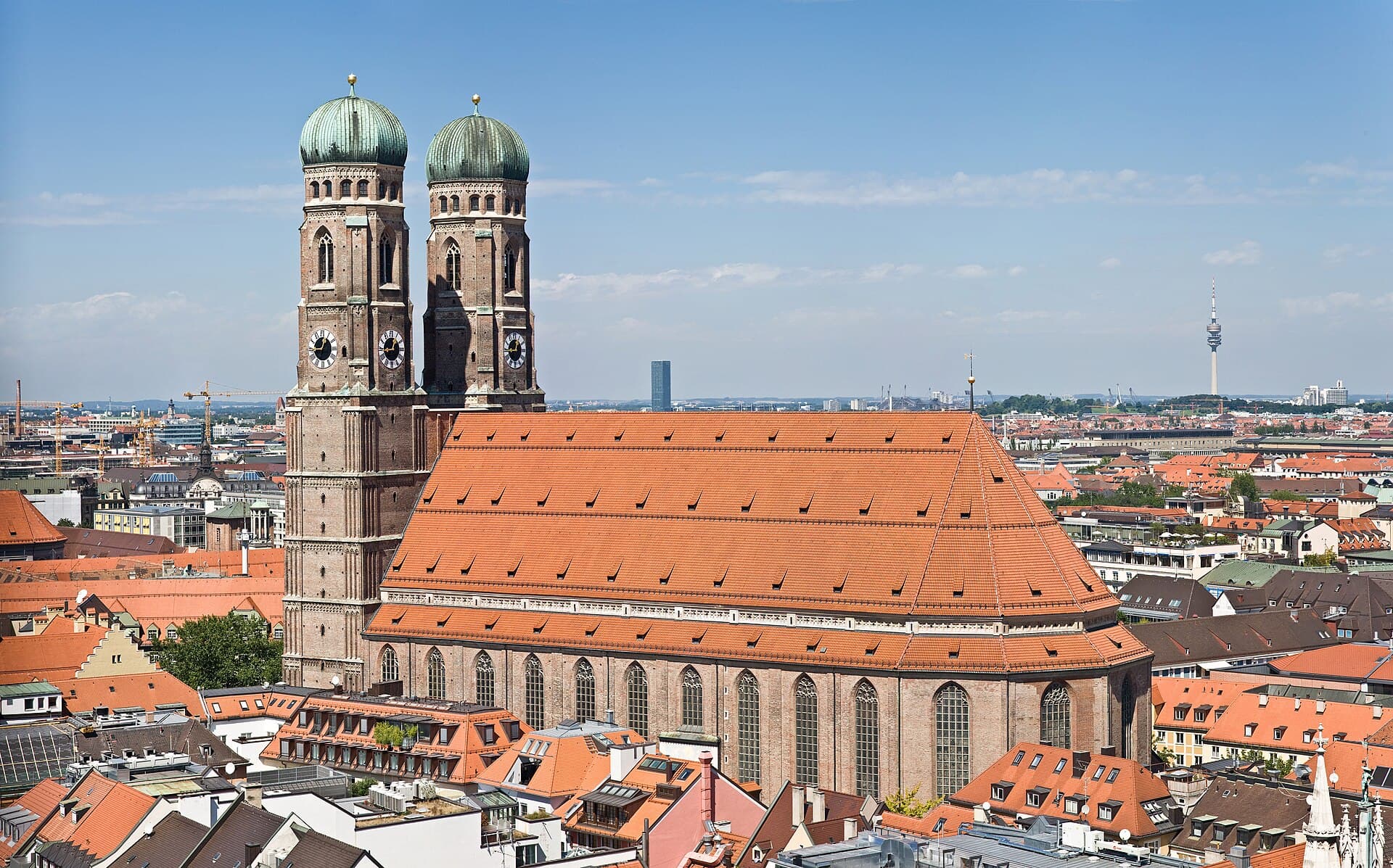 FrauenkircheThe Frauenkirche is Munich's best-known building after the town hall, and its tw3 minutes walk4.5
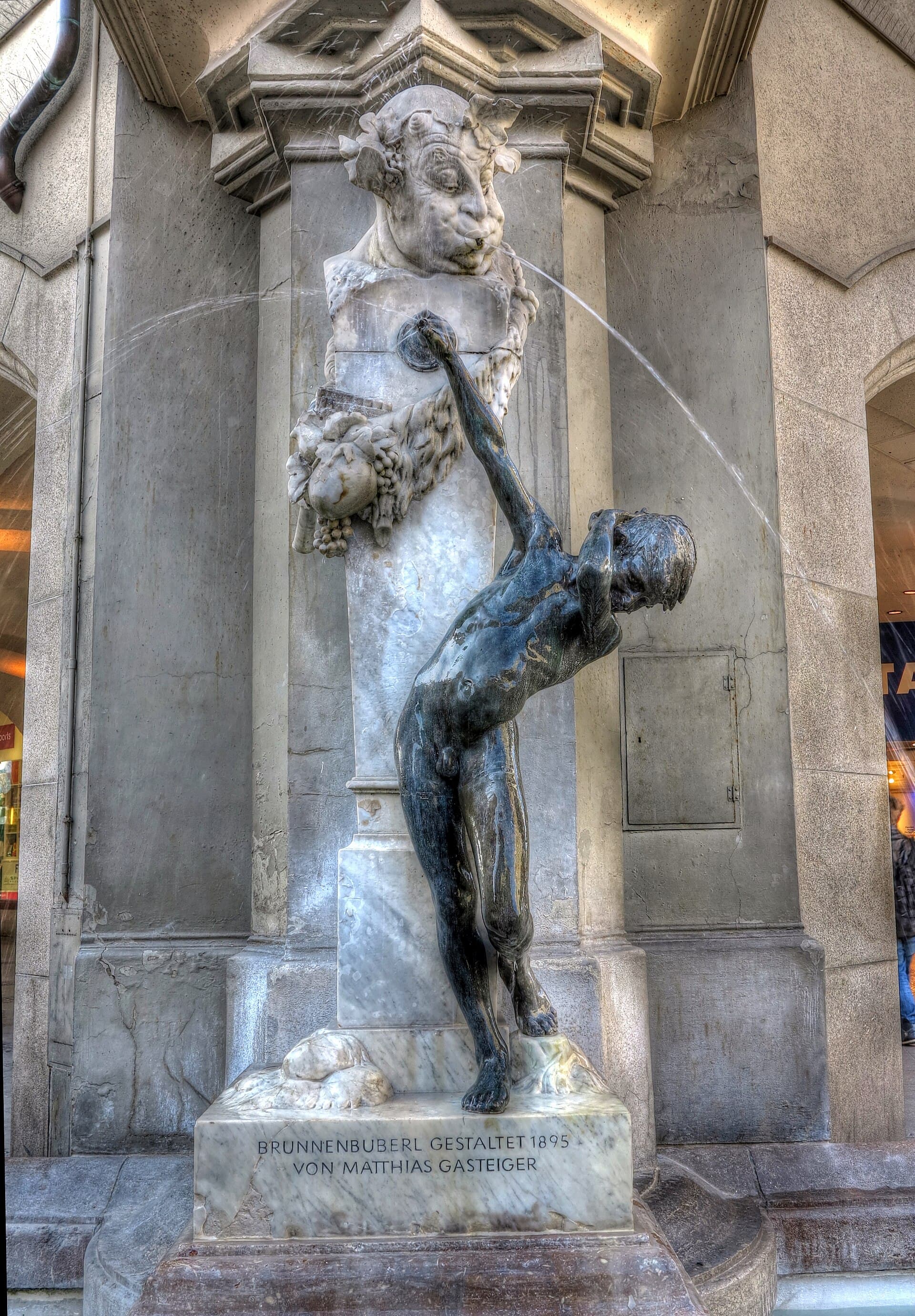 The BrunnenbuberlA small bronze fountain on the pedestrian Neuhauser Straße in central Munich, fr3 minutes walk4.7
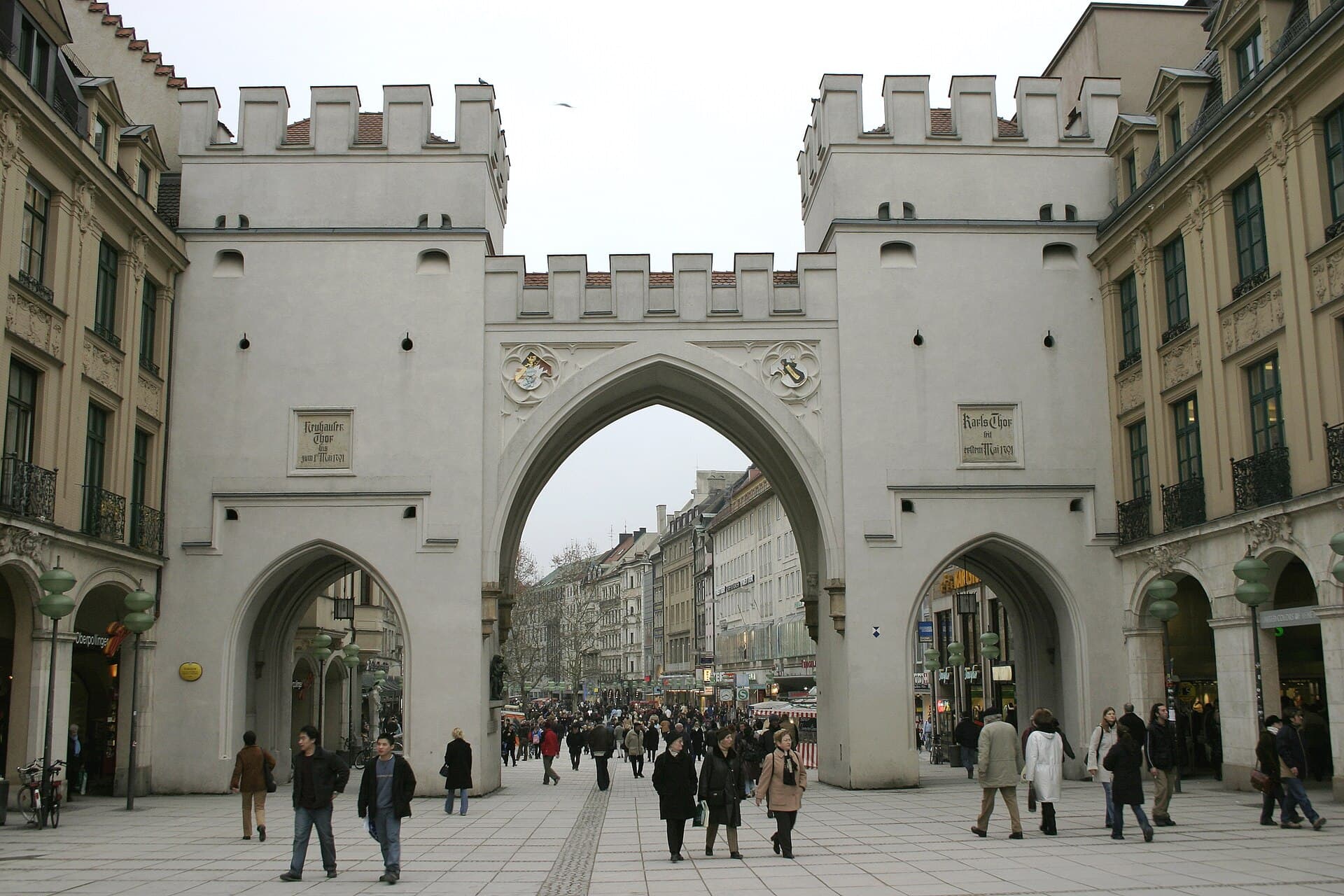 KarlstorThe Karlstor is one of three surviving gates from the second medieval wall that 3 minutes walk4.5
Because the tower collapsed during construction in 1590 and destroyed part of the choir. Rather than rebuild it, Duke Wilhelm V took the collapse as a message that the project should be bigger, enlarged the choir and dropped the tower from the design. The result is an enormous church front that, to someone walking the pedestrian street, reads more like a palace facade than a church.