
The Männleinlaufen
Moving figures circling the emperor every day at noon — the oldest mechanical clock display of its kind in Germany.
W. Bulach — CC BY-SA 4.0 · jailbird — CC BY-SA 2.0 de · Flocci Nivis — CC BY 4.0 · Gary Todd from Xinzheng, China — CC0
The Frauenkirche stands on Nuremberg's main square, its ornate Gothic front looking straight onto the market. It was built in the fourteenth century on the orders of Emperor Charles IV, a Catholic church in a city that later turned Protestant, and entry is free. Its best-known feature is the Männleinlaufen clock high on the façade. Every day at twelve noon the clock performs: small figures of the prince-electors appear and circle the emperor three times in salute. The show is short, only a few minutes, but people gather in the square well before it. Time your visit around it.
Moving figures circling the emperor every day at noon — the oldest mechanical clock display of its kind in Germany.
An ornate façade with a balcony and stone carving, facing the square and appearing in every photograph of Nuremberg.
On the same square, a gilded fourteenth-century fountain with a brass ring locals say brings luck when turned.
Hauptmarkt 14, 90403 Nürnberg
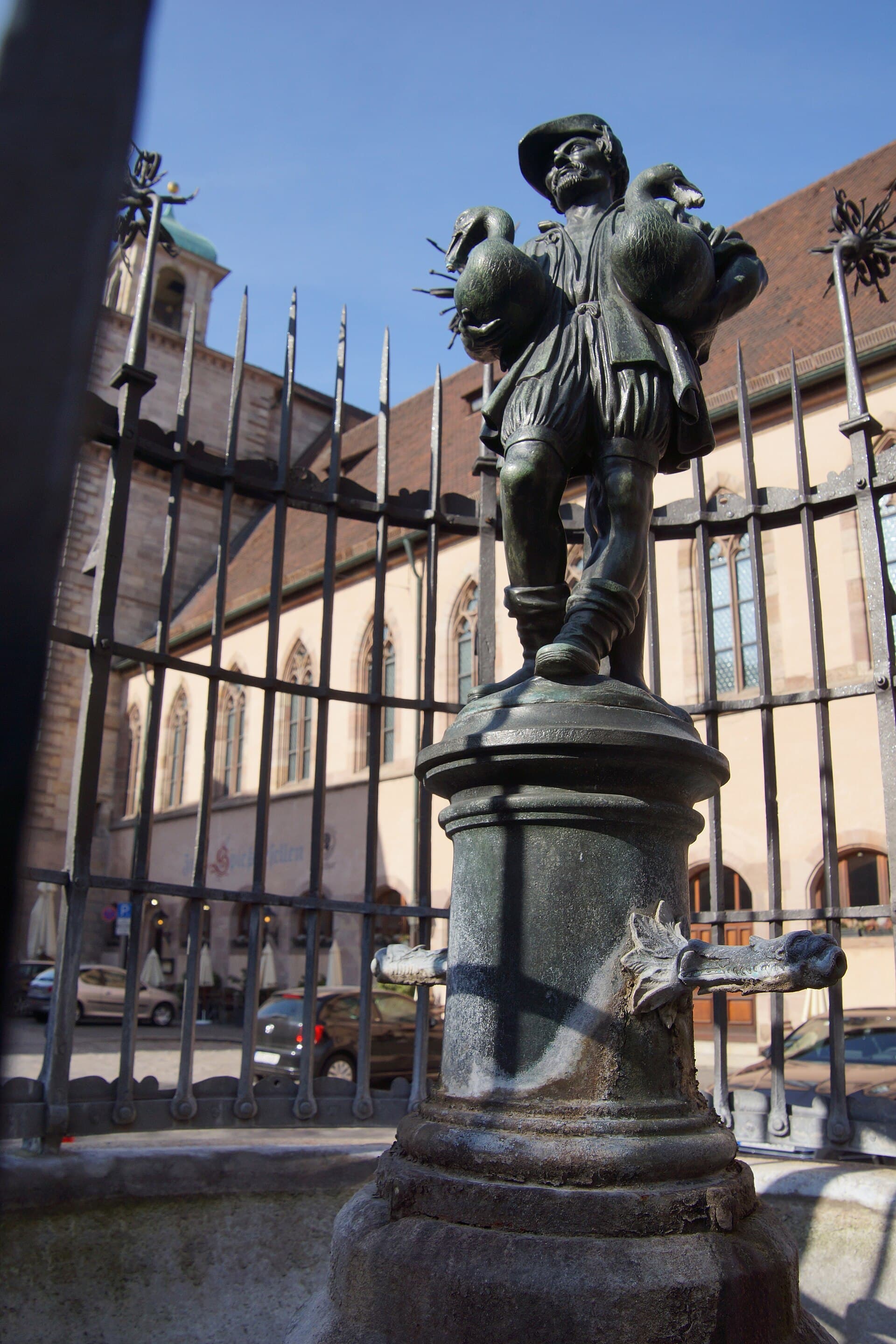 The Goose Man FountainA small bronze fountain near the main market square in Nuremberg, from the early1 minute walk4.6
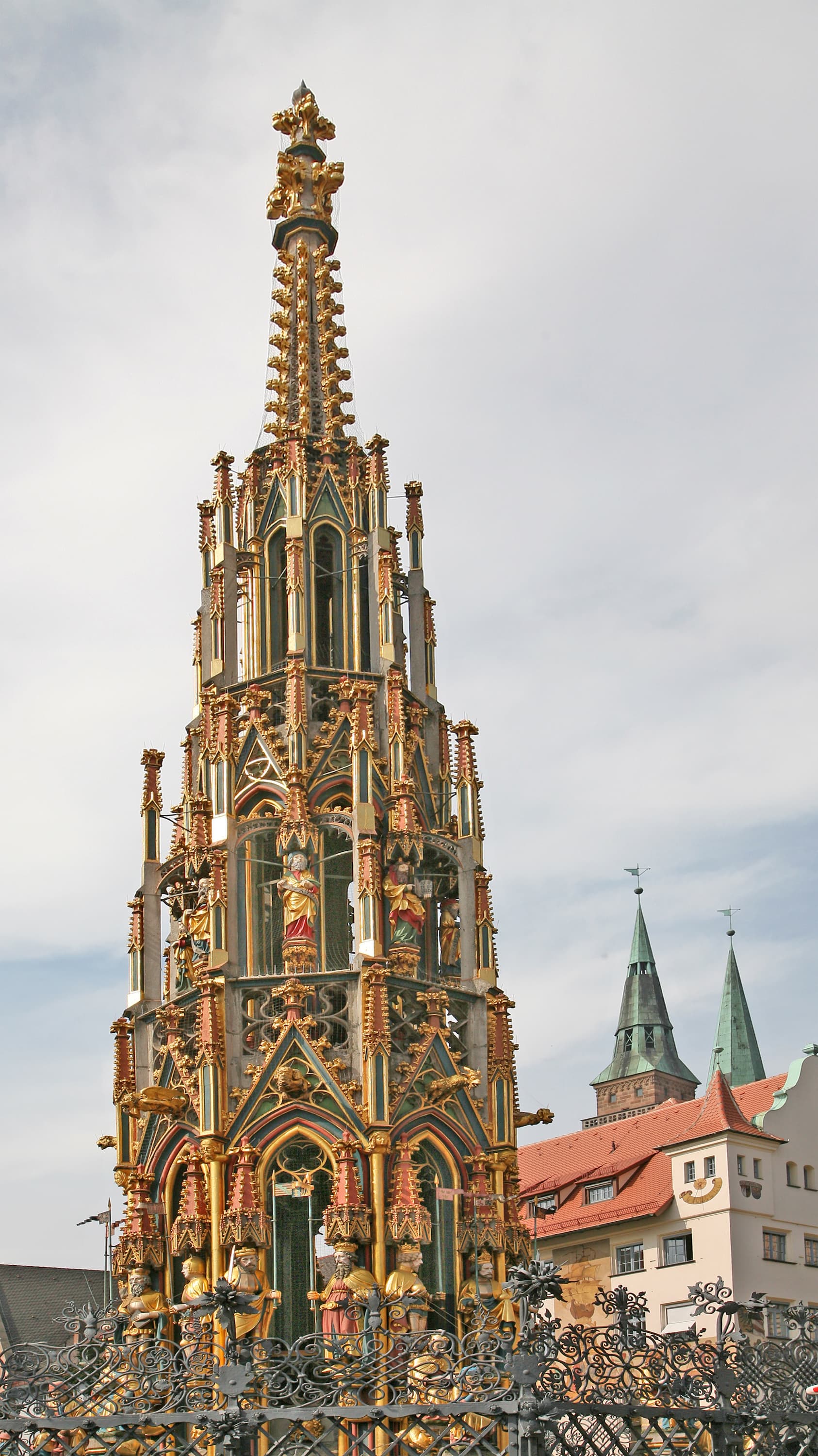 Schöner BrunnenThe Schöner Brunnen is a tall Gothic fountain on Nuremberg's main market square,1 minute walk4.6
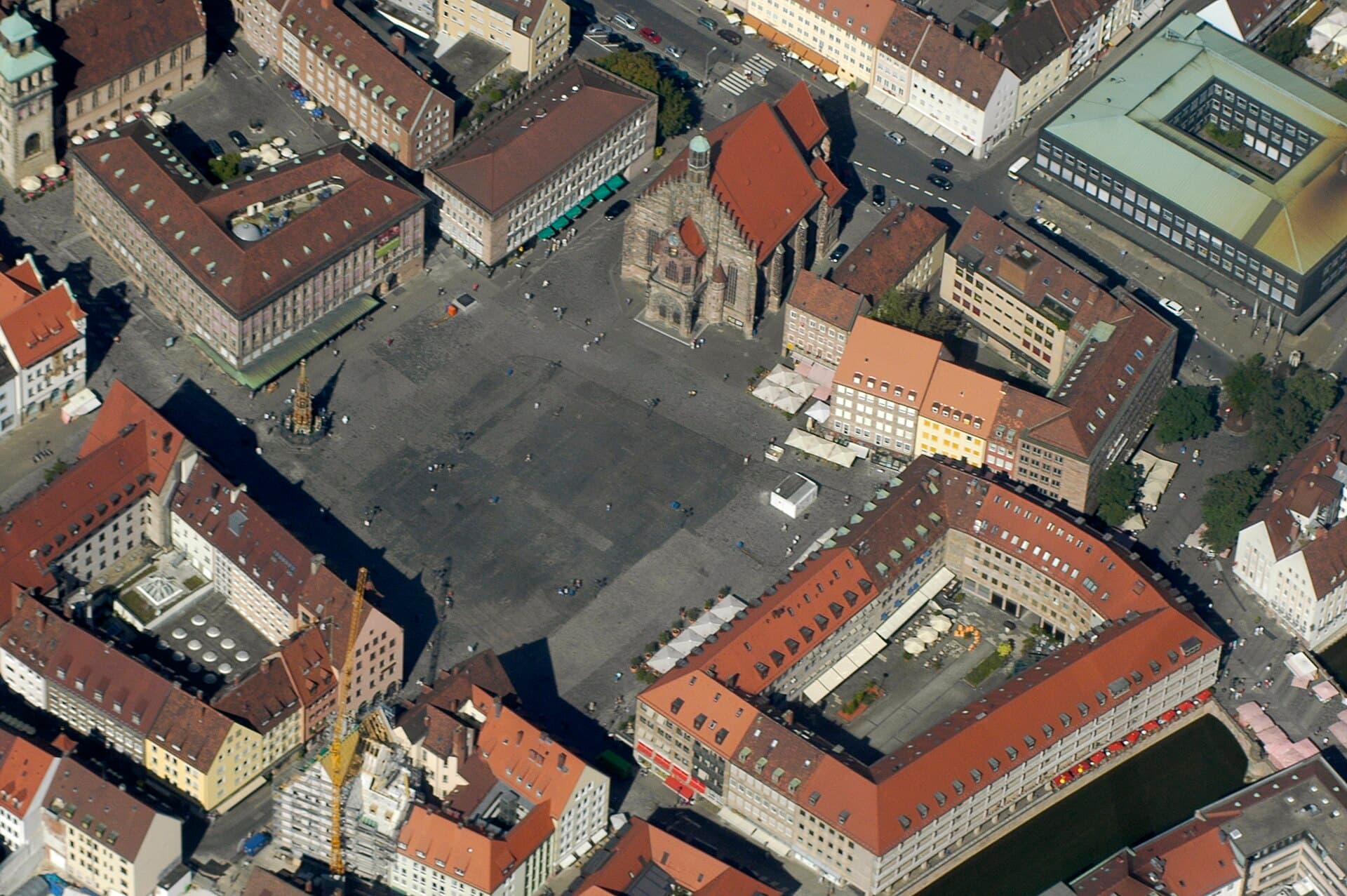 Nuremberg Main Market SquareThe commercial heart of Nuremberg since the middle of the fourteenth century, an1 minute walk4.5
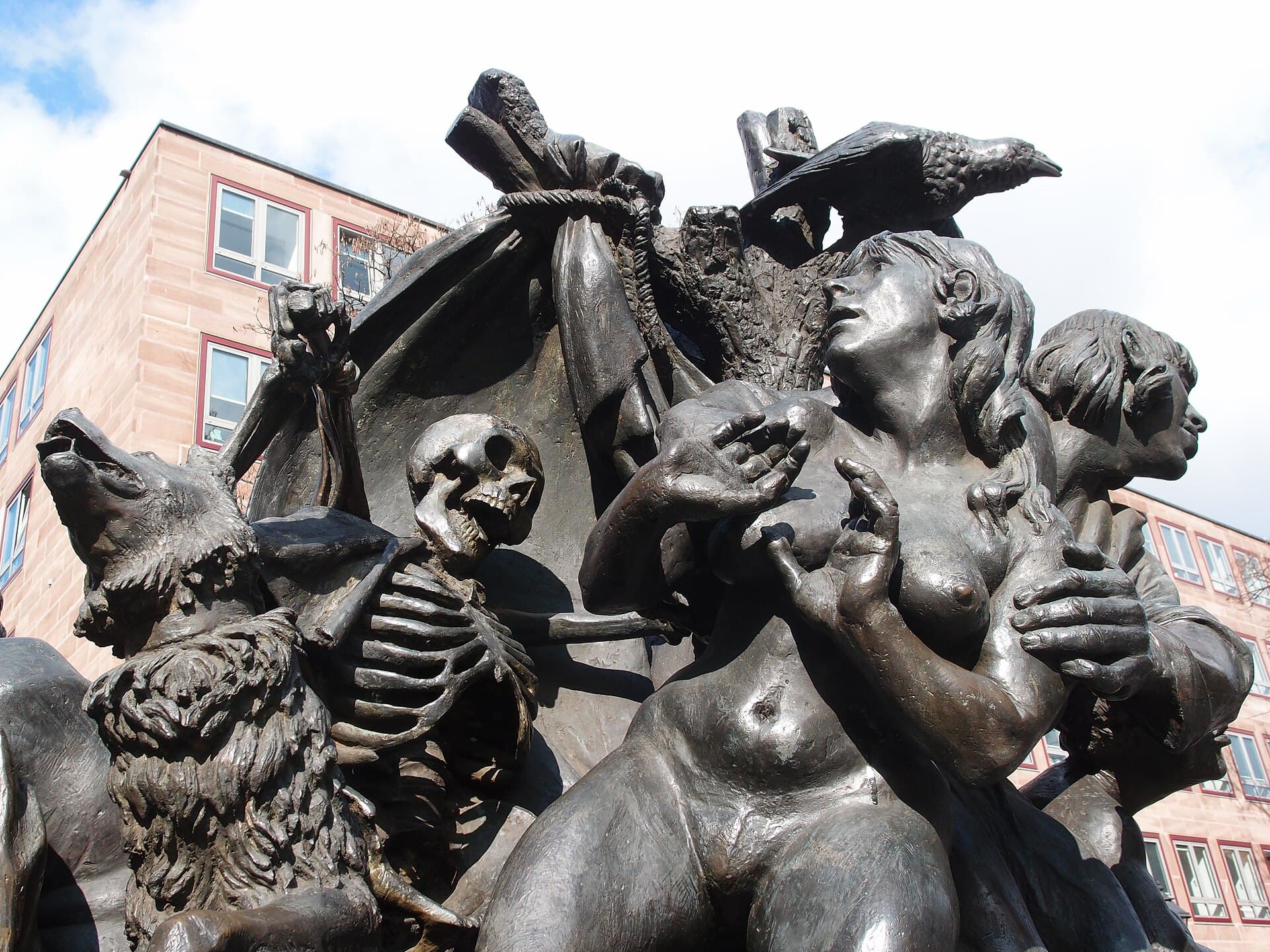 Ship of Fools FountainA strange bronze fountain in central Nuremberg, near the Museumsbrücke. The arti1 minute walk4.4
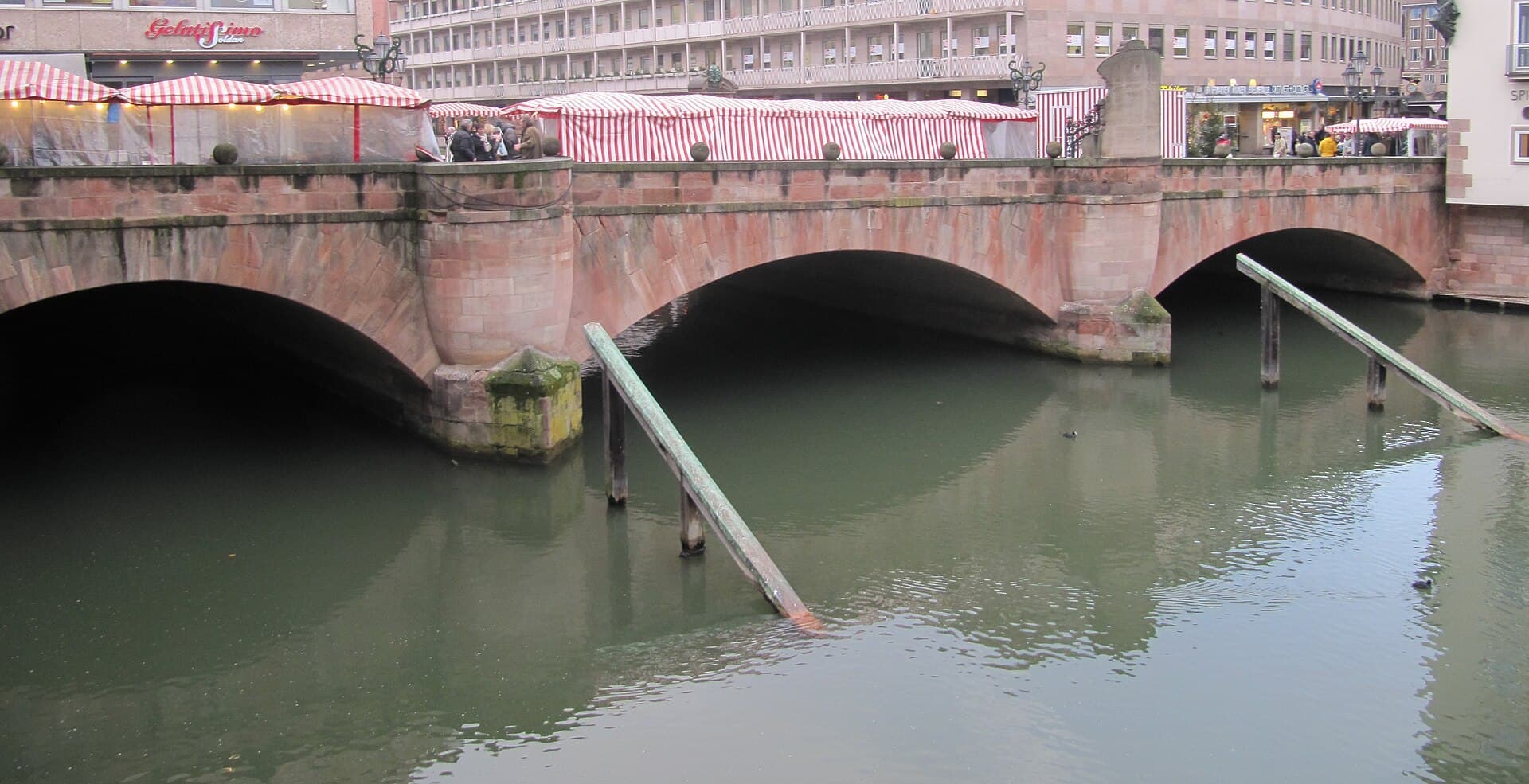 MuseumsbrückeThe Museumsbrücke is a short stone bridge over the river Pegnitz in the middle o2 minutes walk4.8
Every day at twelve noon exactly, lasting three to five minutes. People gather beforehand, so arrive ten minutes early if you want a good spot to film from. It is watched from the square and does not require going inside.
It was badly damaged in the wartime bombing, like most of old Nuremberg, and restored afterwards. The façade and clock were rebuilt from the original, and much of Nuremberg's old town as a whole was reconstructed after the war.
Twenty minutes for the church and square, a little more if you wait for the clock. The square is the heart of the old town, with the castle ten minutes uphill, so the two combine easily.