
Nothing heroic about it
A peasant on his way to market, under a metre high — and that is its charm.
DALIBRI — CC BY-SA 4.0 · Aarp65 — CC BY-SA 3.0 · froutes — CC BY-SA 2.0 · Ungenannt — Public domain
A small bronze fountain near the main market square in Nuremberg, from the early sixteenth century, and among the city's best-known emblems. The figure shows a peasant carrying two geese under his arms, water issuing from their beaks. It is small — under a metre — and that is part of its charm: there is nothing heroic about it. What makes it artistically important is that it is among the earliest European sculptures to depict an ordinary person of the common people seriously and precisely, rather than a saint, a ruler or a mythological figure. At a time when public sculpture was confined to kings and saints, choosing a peasant on his way to market as a subject was unusual. The figure on the street is a copy; the original is kept in the Germanic National Museum for its protection. Nuremberg was destroyed in the bombing of January 1945 by more than ninety per cent, and its old town was rebuilt. The fountain is among the few survivals, because it was hidden away. A stop of minutes in the middle of the old town.
A peasant on his way to market, under a metre high — and that is its charm.
Nuremberg was more than ninety per cent destroyed in 1945.
What you see in the street is a copy; the original is in the Germanic National Museum.
Near the Hauptmarkt, central Nuremberg
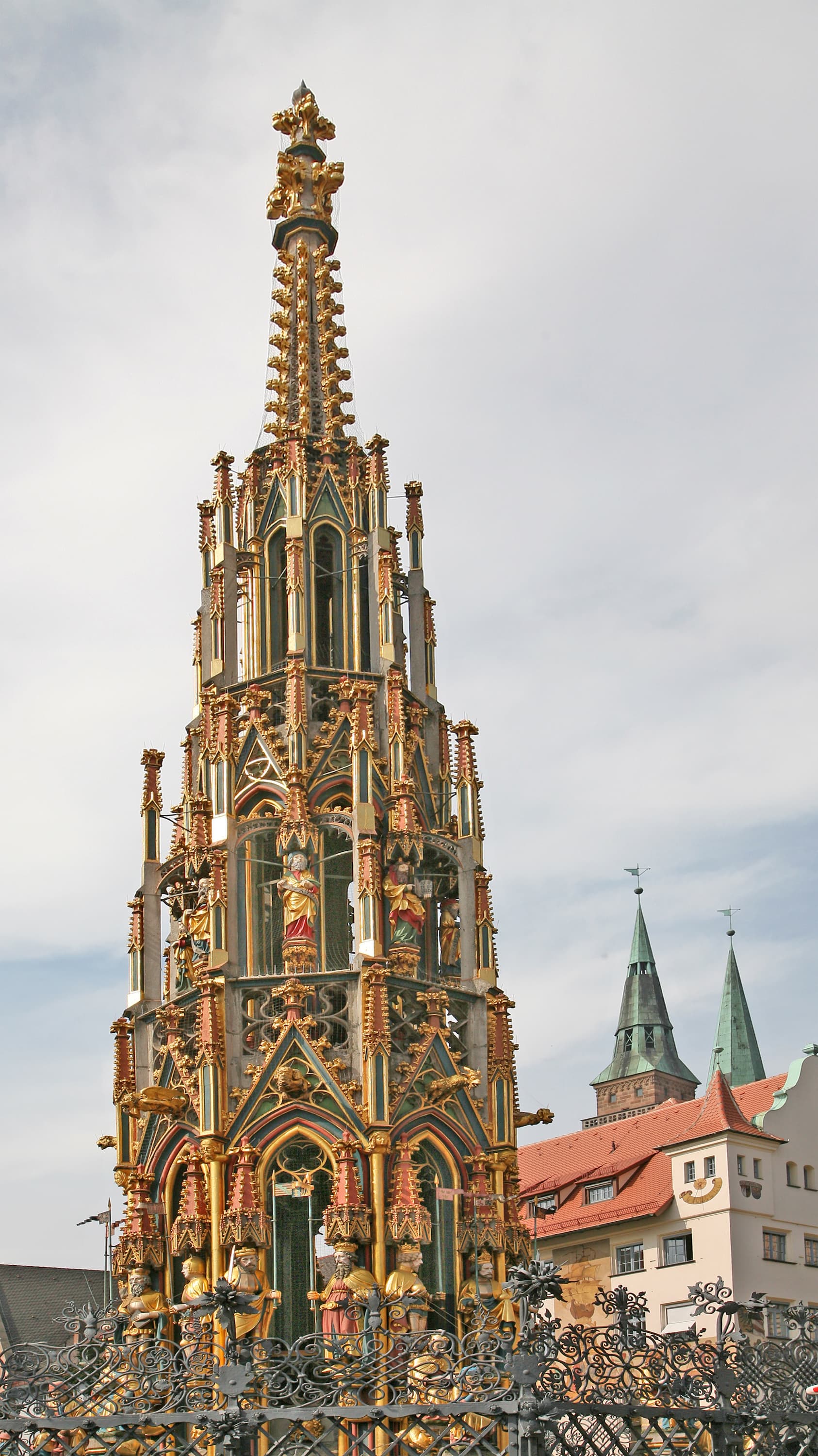 Schöner BrunnenThe Schöner Brunnen is a tall Gothic fountain on Nuremberg's main market square,1 minute walk4.6
 Medieval Dungeons (Lochgefängnisse)Beneath Nuremberg's old town hall hides the city's medieval jail as it was left:1 minute walk4.6
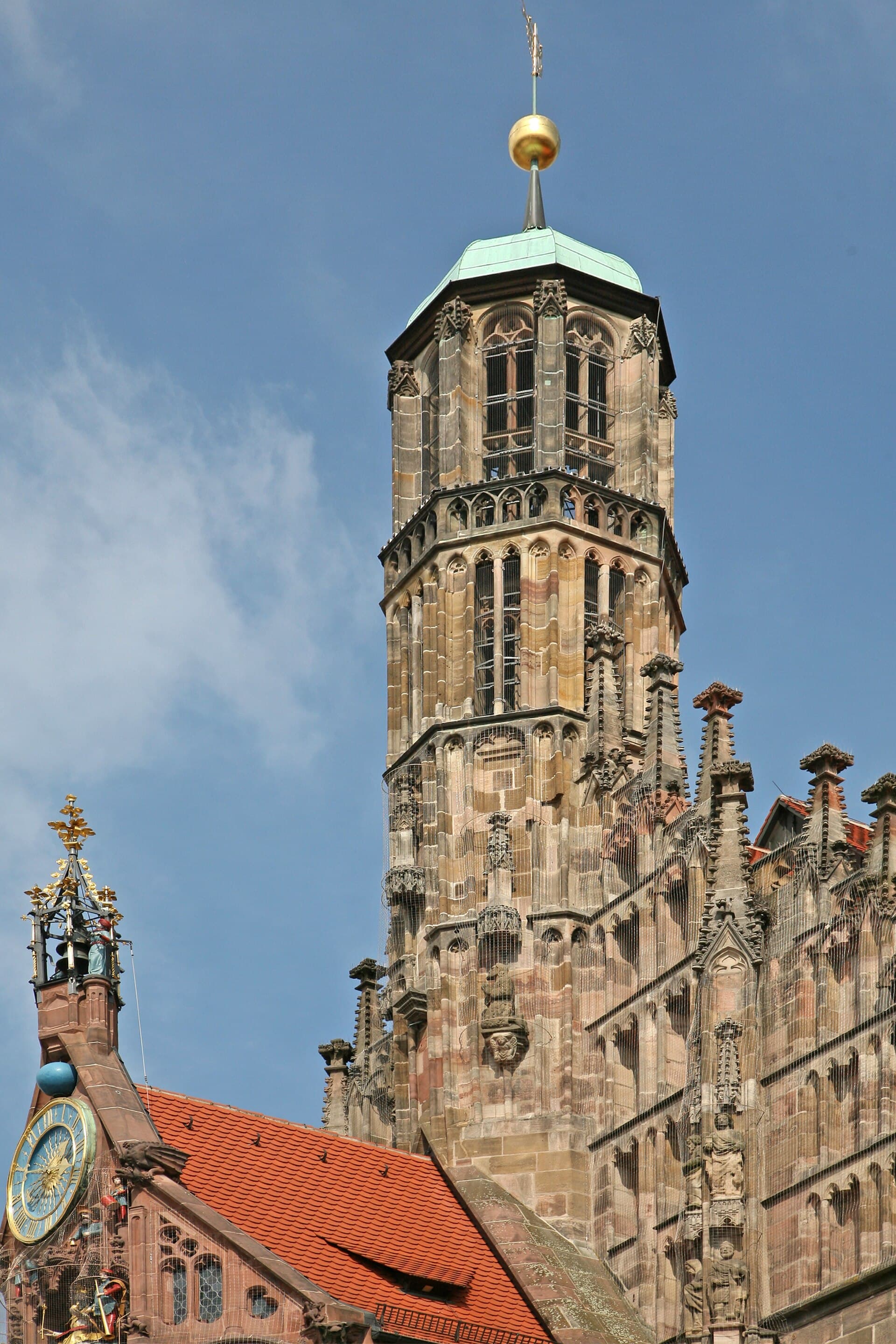 Frauenkirche NurembergThe Frauenkirche stands on Nuremberg's main square, its ornate Gothic front look1 minute walk4.8
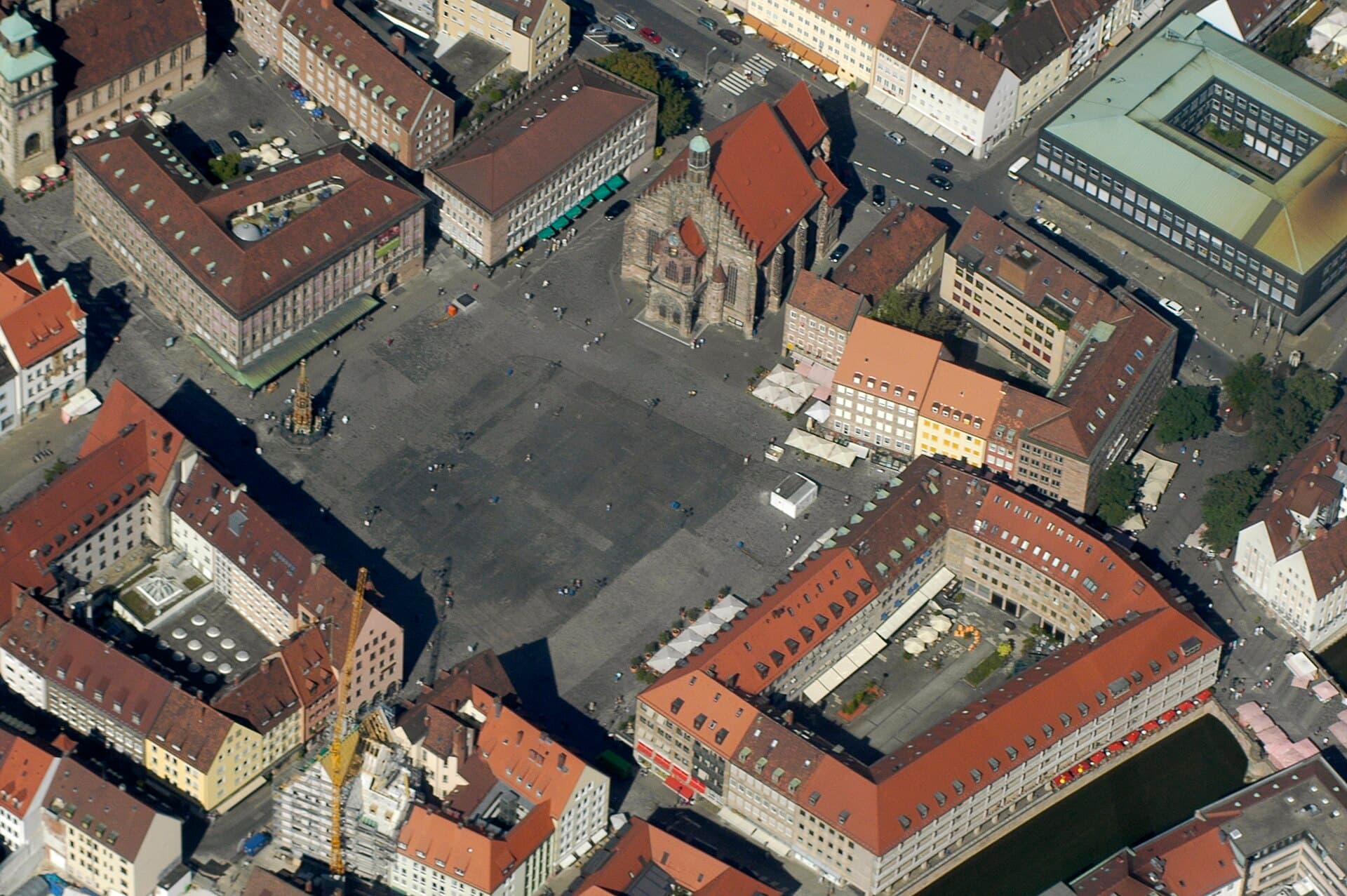 Nuremberg Main Market SquareThe commercial heart of Nuremberg since the middle of the fourteenth century, an1 minute walk4.5
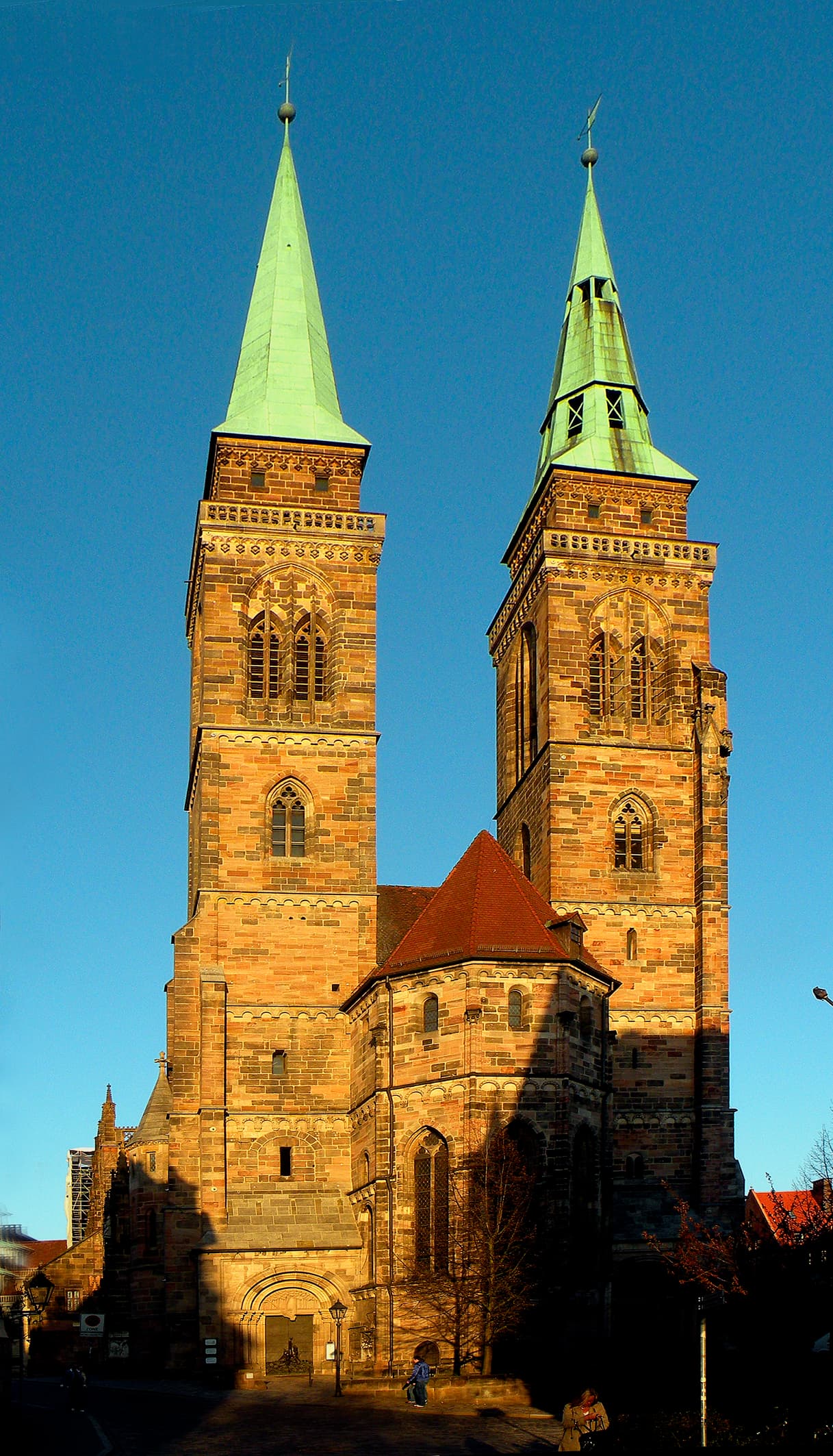 St. Sebaldus ChurchSt. Sebaldus is the oldest of Nuremberg's great churches, built in the thirteent1 minute walk4.8
The largest museum of culture and art in the German-speaking world, in Nuremberg, founded in 1852. It holds more than a million objects covering everything from prehistory to the twentieth century — art, furniture, musical instruments, arms and manuscripts, among them the oldest surviving globe in the world, made in 1492 before Columbus returned, so America does not appear on it.
The Imperial Castle above the city, the Germanic National Museum, the Hauptmarkt with its gilded fountain, and Albrecht Dürer's house. Then the Nazi party rally grounds with their documentation centre, and Courtroom 600 where the Nuremberg trials were held — both south of the centre, and both explaining the twentieth century.