
The largest porcelain mural
Around 25,000 Meissen tiles over 102 metres — a world record.
Kora27 — CC BY-SA 4.0 · Stefan Kühn — CC BY-SA 3.0 · CEphoto, Uwe Aranas — CC BY-SA 3.0 · Dewi König — CC BY-SA 3.0
The Fürstenzug is a huge mural on a wall along Augustusstraße, one hundred and two metres long, showing a procession of the rulers of Saxony on horseback across eight centuries. It is made from about twenty-five thousand Meissen porcelain tiles, and is the largest porcelain artwork in the world. It was first painted directly onto the wall in the nineteenth century, then transferred to porcelain in 1907 so it would survive the weather. Remarkably, it came through the bombing of 1945 — which destroyed almost everything around it — with very little damage. The mural is outdoors, free, and always on view.
Around 25,000 Meissen tiles over 102 metres — a world record.
Thirty-five rulers in chronological order, their clothes and armour changing as the centuries pass.
It came through the 1945 bombing that flattened its surroundings almost untouched — one of the few things in Dresden that did.
Augustusstraße 1, 01067 Dresden
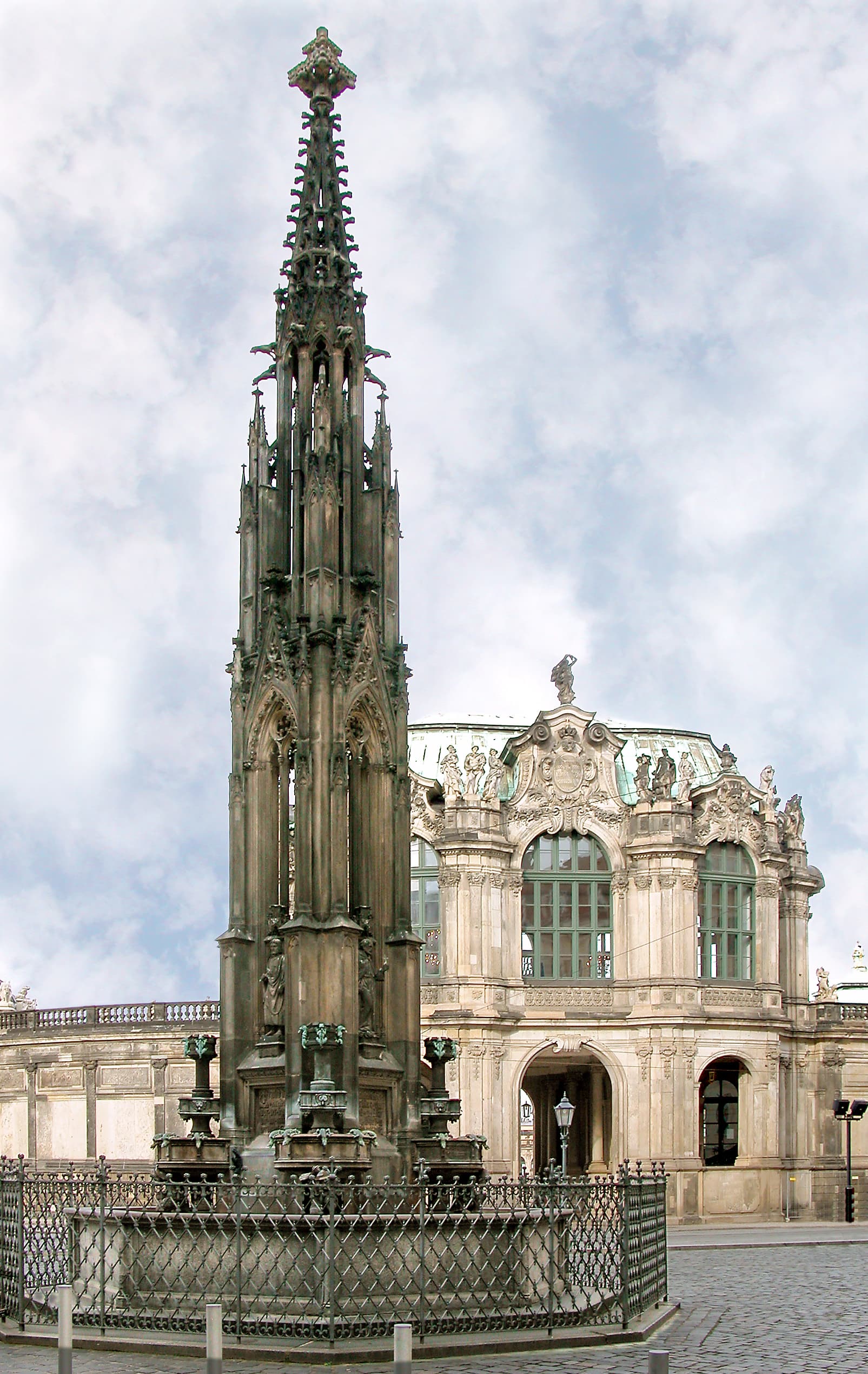 Cholera FountainThe Cholera Fountain is a Gothic-styled stone monument standing near Dresden's o1 minute walk4.8
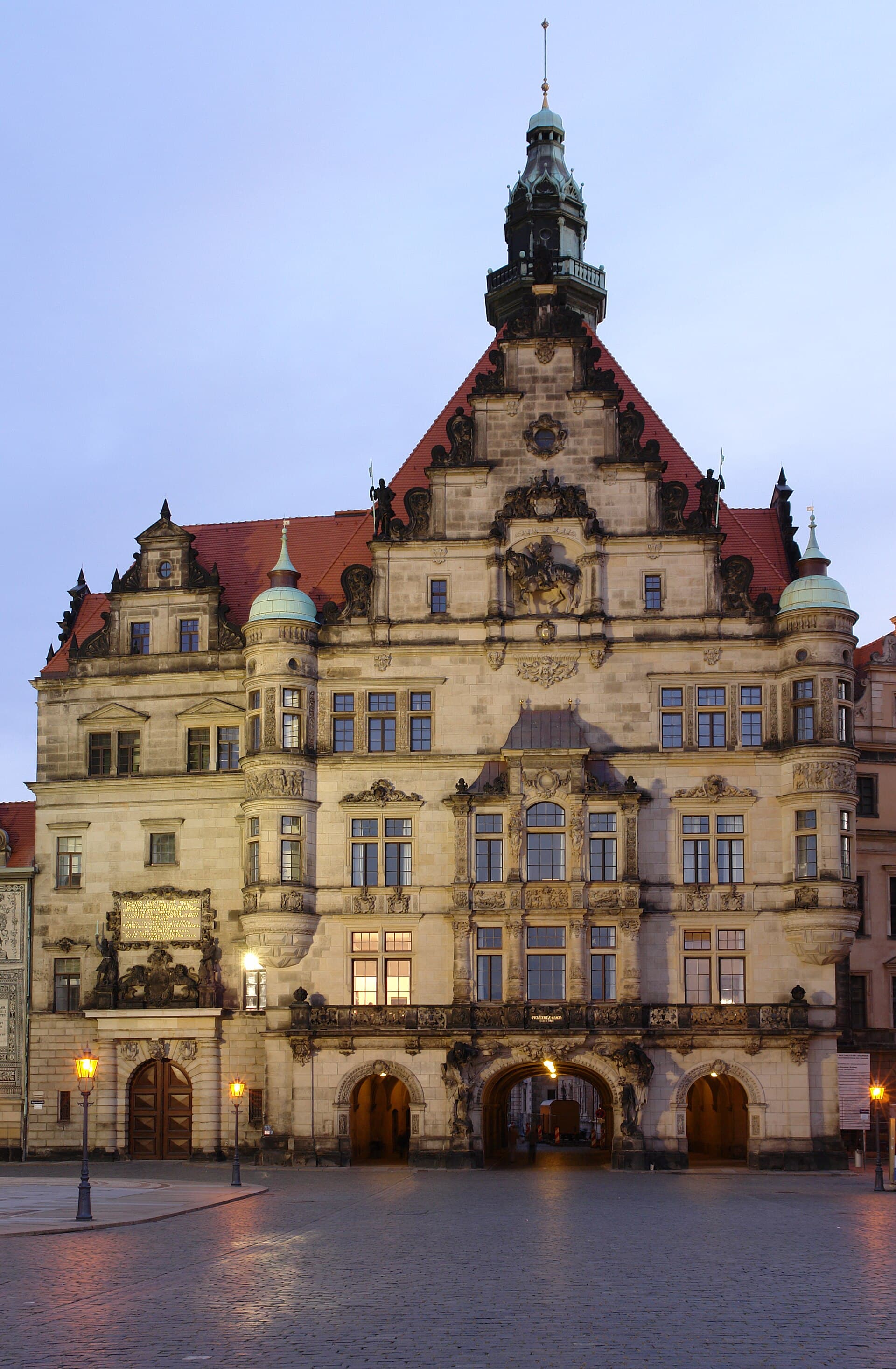 GeorgentorThe Georgentor was built between fifteen thirty and fifteen thirty-five for Duke1 minute walk4.7
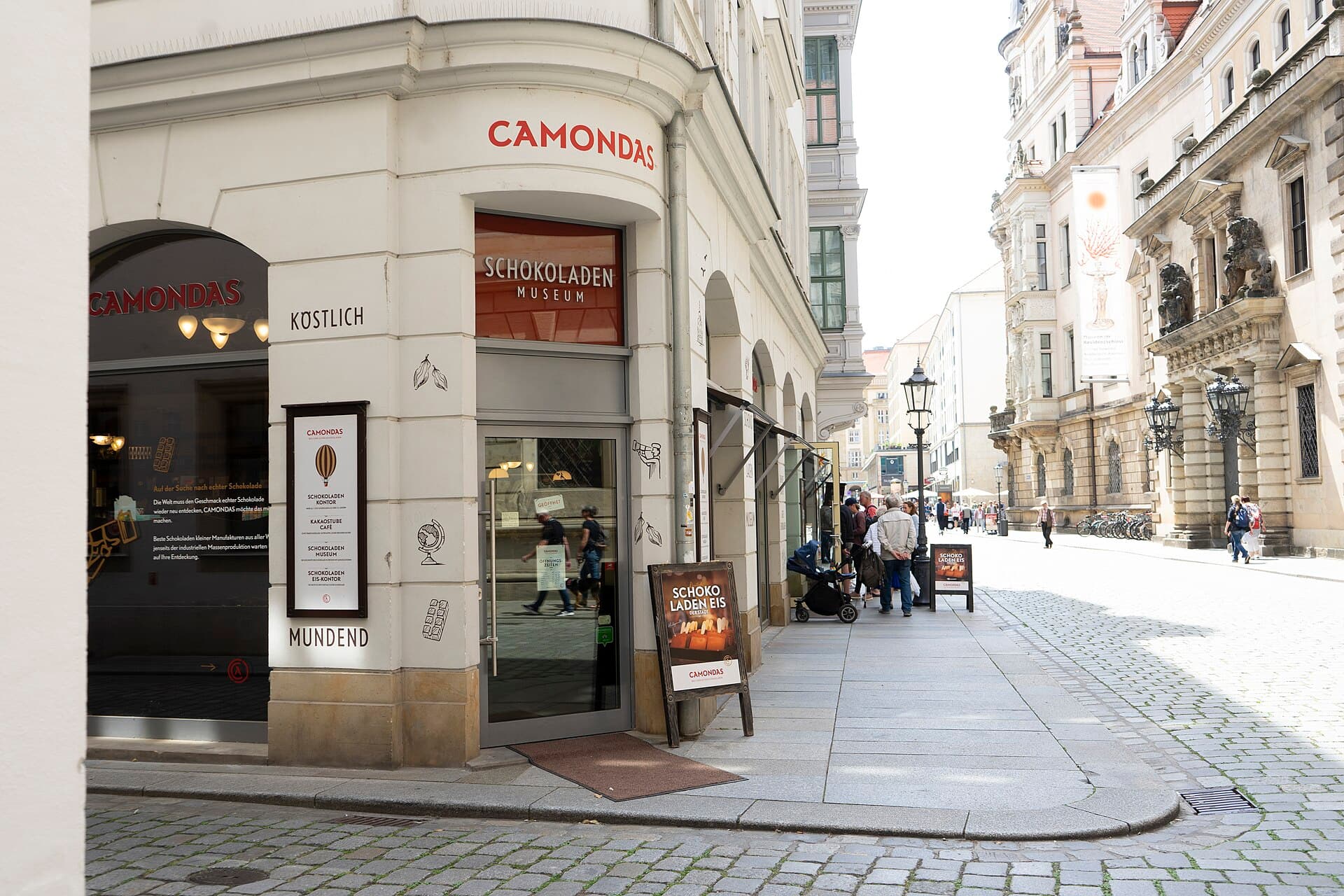 The Chocolate MuseumDresden is a chocolate city with a longer history than most people assume, and t1 minute walk4.6
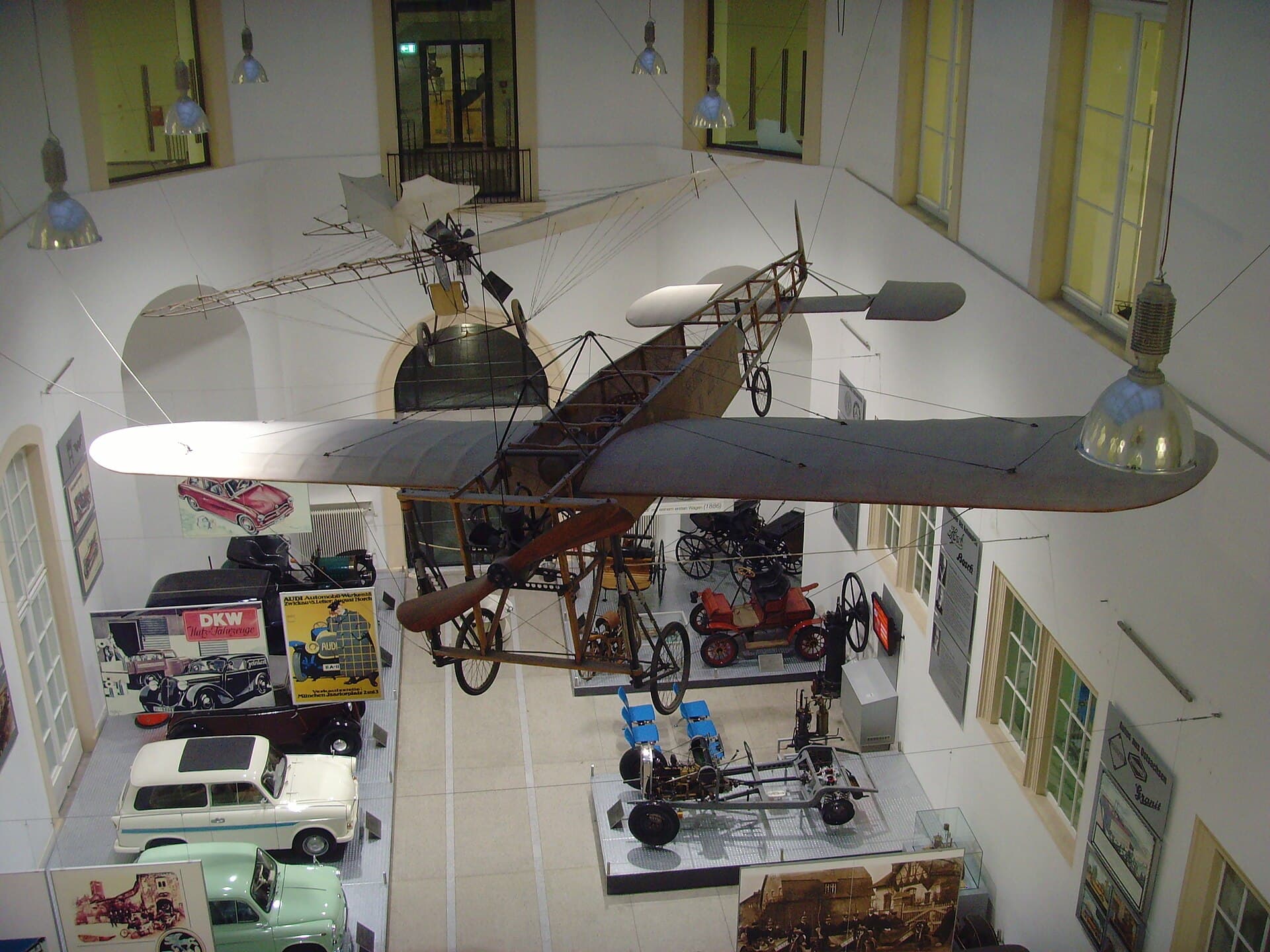 Dresden Transport MuseumThe Dresden Transport Museum occupies the historic Johanneum building in the hea1 minute walk4.5
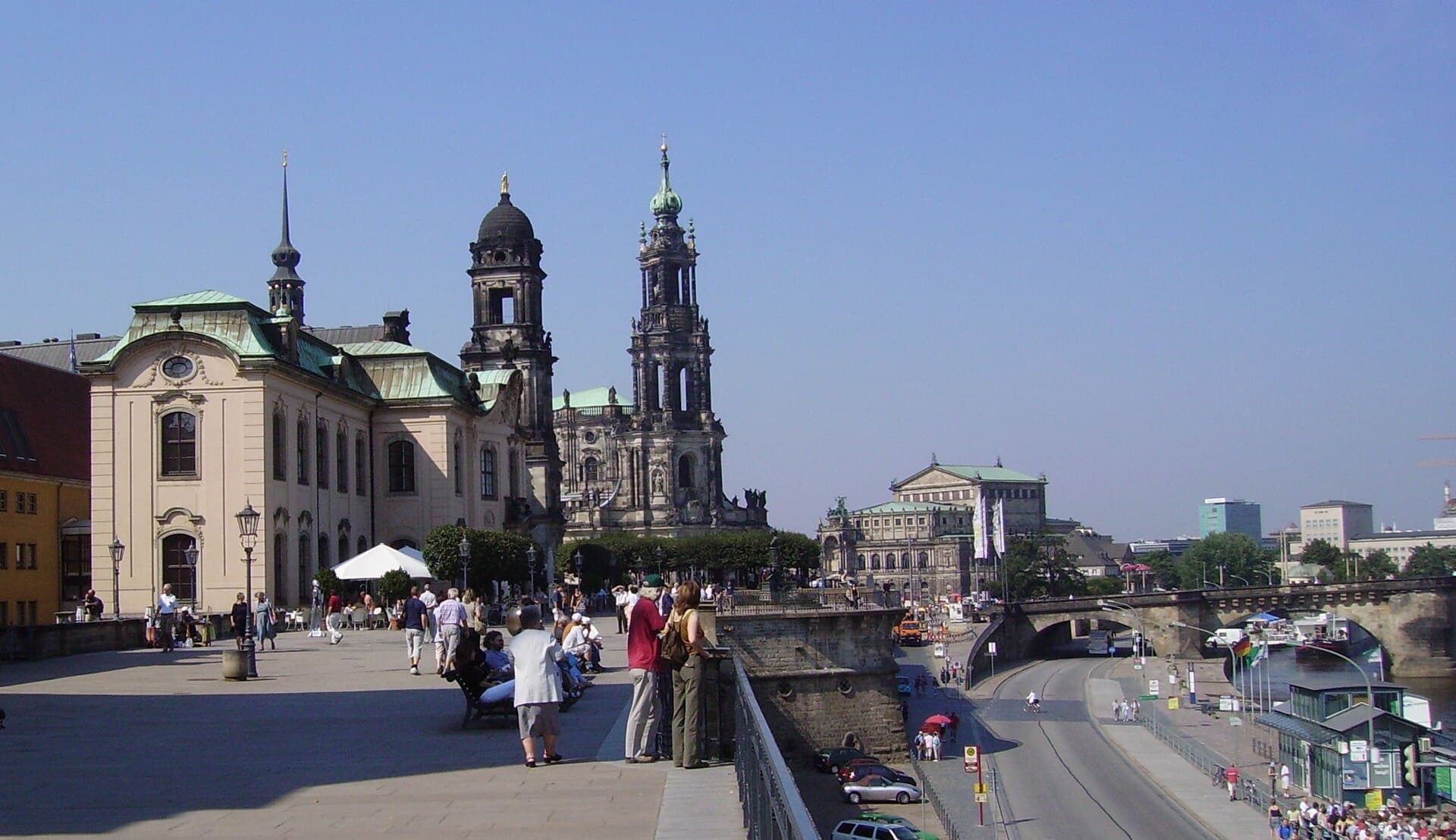 Brühl's TerraceBrühl's Terrace is a raised promenade above the river Elbe in the heart of old D1 minute walk4.8
A quarter of an hour is enough to walk its length and look at the detail. It is a short stop on an old-town circuit, lying on the route between the Zwinger and the Frauenkirche.
You practically cannot — the street is too narrow. The trick is to shoot it in three or four sections, or stand at one end and take it at an angle so it stretches away. Early morning is better, with fewer people in the way.
Mostly yes. The tiles date from 1907 and survived the bombing with limited damage, and the damaged ones were restored afterwards. What you see is the original work itself, not a modern copy.