Starry ceiling
The tomb of Si-Amun.
Marsupium — CC BY 4.0 · Roland Unger — CC BY-SA 3.0 · Roland Unger — CC BY-SA 3.0 · Gihad Abd Elsamie — CC BY-SA 4.0 · Marsupium — CC BY 4.0 · Marsupium — CC BY 4.0 · Marsupium — CC BY 4.0 · MoeneSaeed — CC BY-SA 4.0
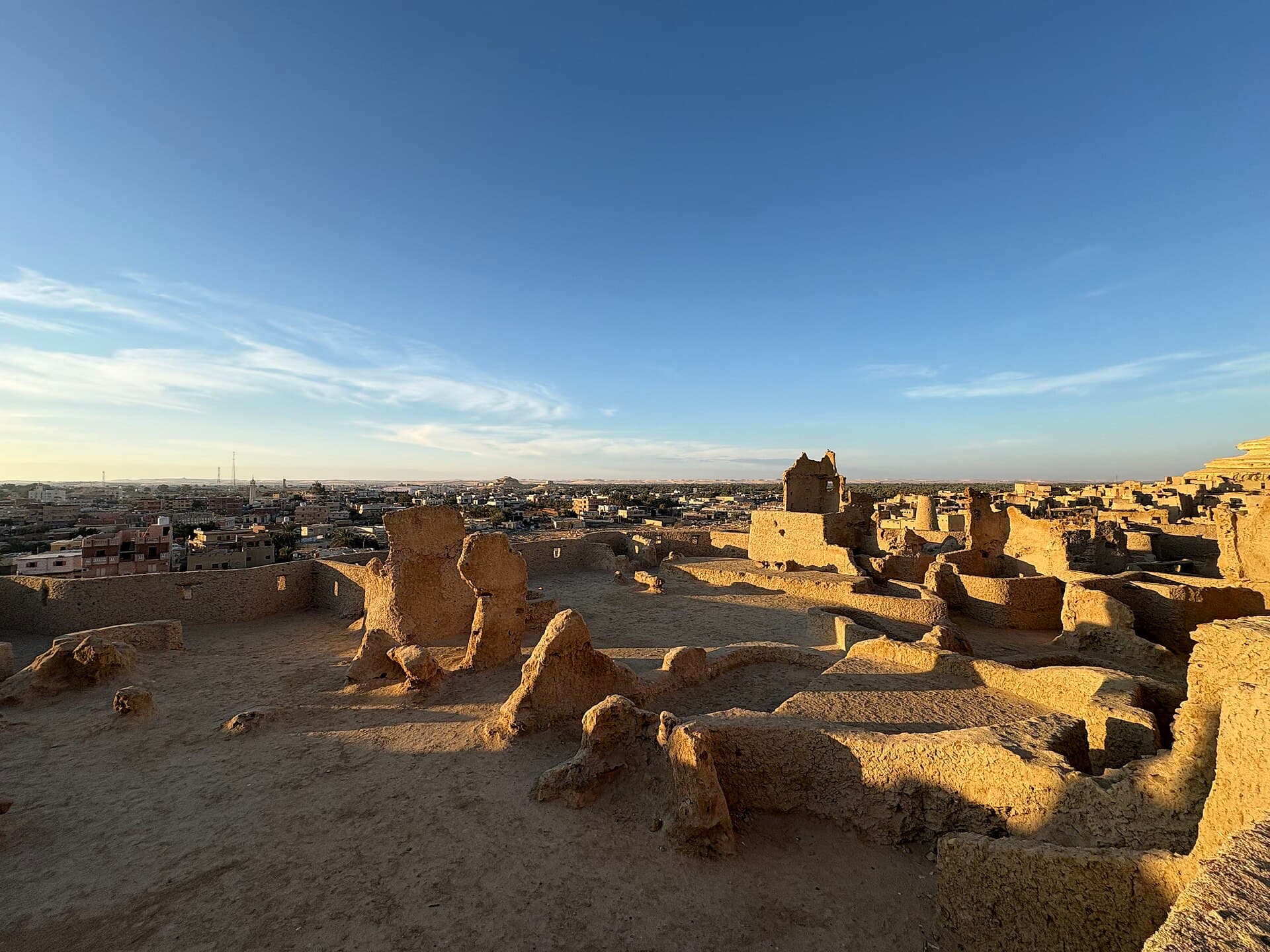
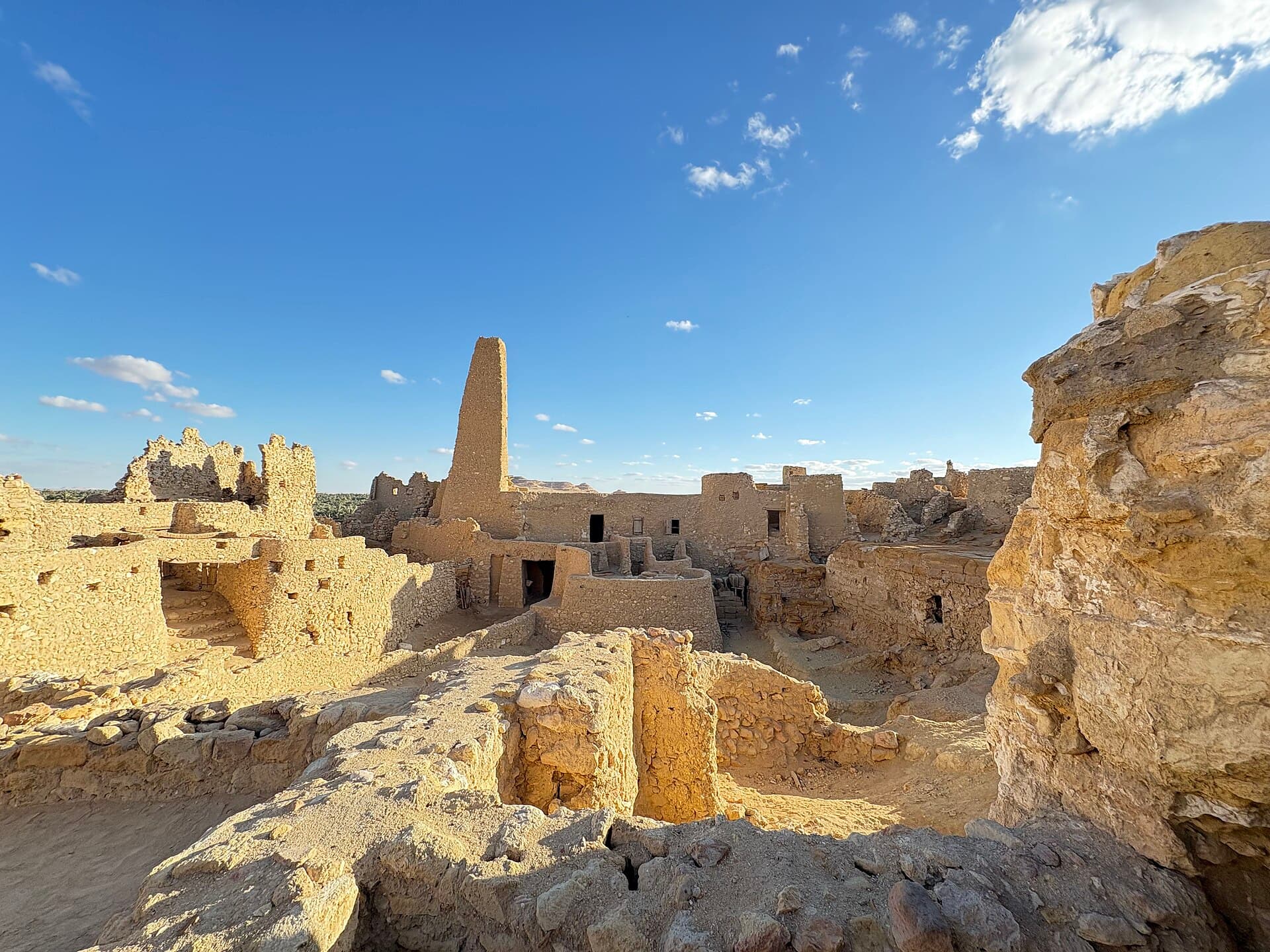
A small conical hill north of Siwa town whose slopes are riddled with hundreds of rock-cut tombs, so it looks like a honeycomb. It was Siwa's main cemetery from the Twenty-sixth Dynasty through the Ptolemaic and Roman eras. The finest is the tomb of Si-Amun, one of the best painted tombs in the Western Desert, with a ceiling of stars on a blue ground and colourful scenes of its owner with the gods of Egypt, blending Egyptian and Greek styles. Others include the Crocodile Tomb, the tomb of Mesu-Isis and the tomb of Niperpathot. In the Second World War the people of Siwa sheltered in these tombs from air raids, uncovering some painted tombs that had not been known. From the top of the hill there is a wide view over Shali Fortress, the palms and the lakes. A foreign visitor's ticket costs about a hundred and twenty Egyptian pounds according to the ministry list, and it opens from nine to five; the guard may open locked tombs on request. It is close to town, so walk or take a donkey cart.
The tomb of Si-Amun.
Hundreds of tombs.
Shali and the lakes.
About a kilometre north of Siwa town, Siwa Oasis
No, only some painted tombs are open; the guard may open others on request, and photography inside may be banned.