The carved door
Timber and plaster ornament.
Richard Mortel from Riyadh, Saudi Arabia — CC BY 2.0 · Robin Chew — CC BY-SA 4.0 · Halidtz — CC BY-SA 4.0 · Richard Mortel from Riyadh, Saudi Arabia — CC BY 2.0 · Richard Mortel from Riyadh, Saudi Arabia — CC BY 2.0
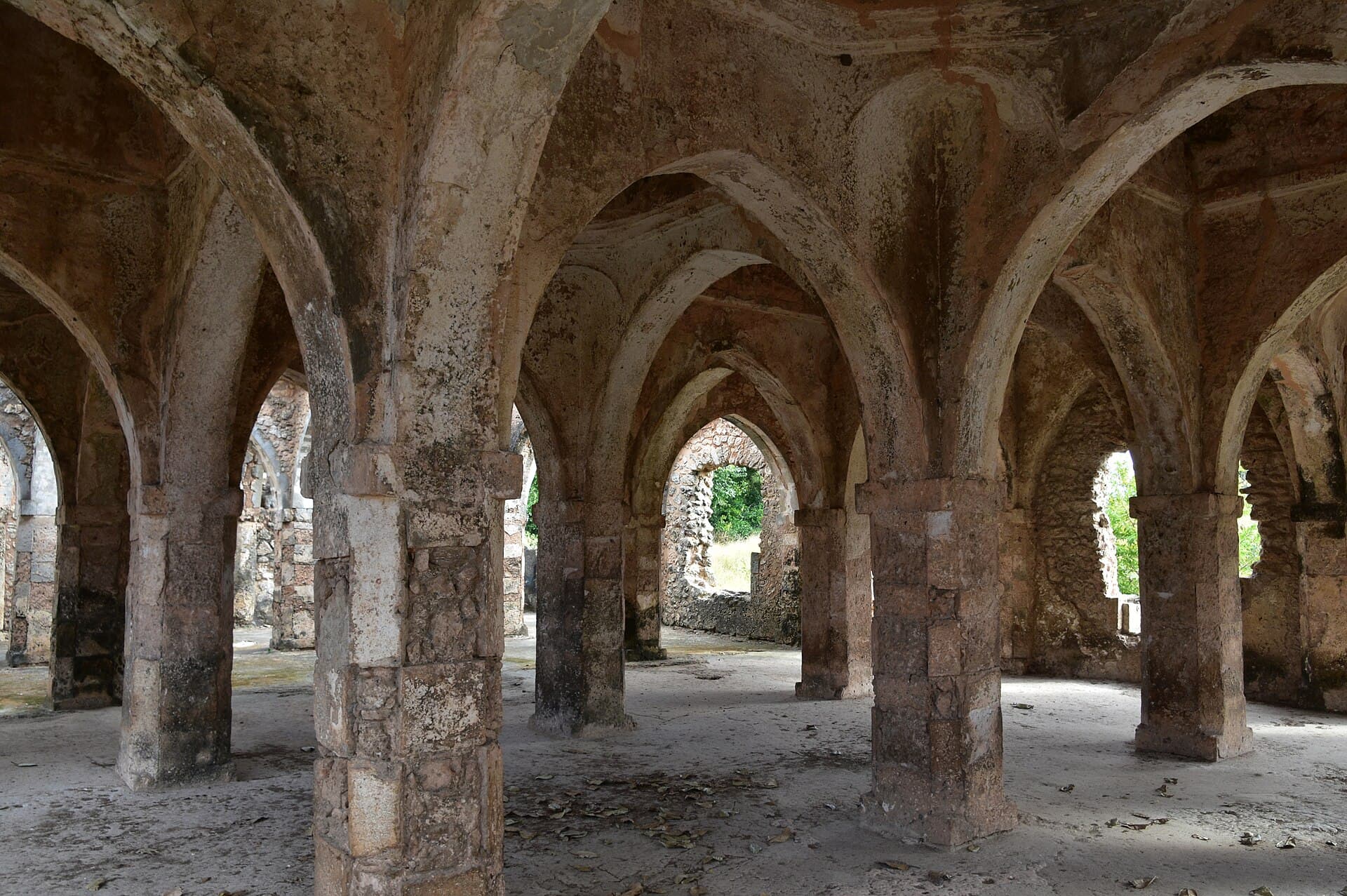
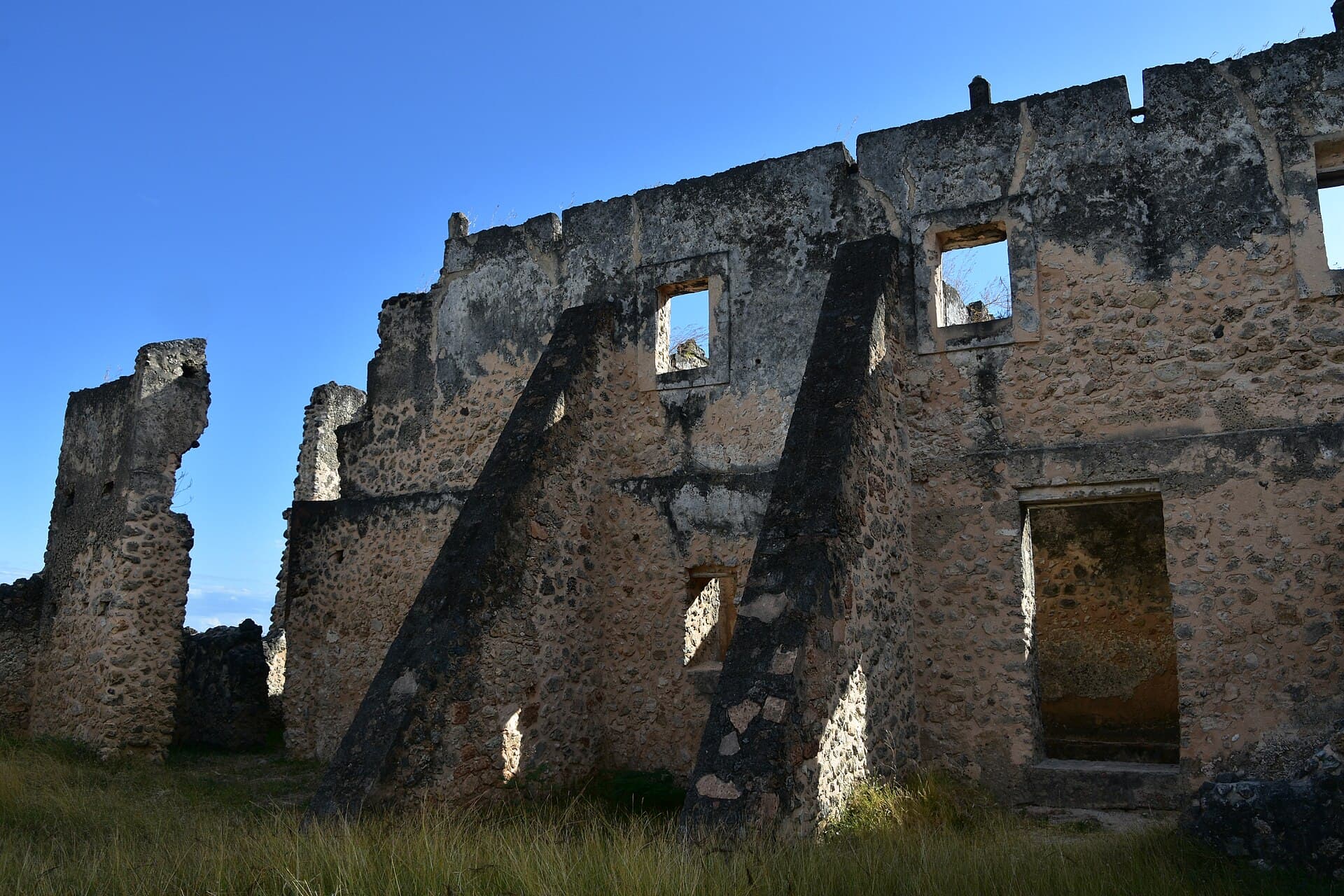
Gereza Fort, also called the Arab Fort, stands on the shore of Kilwa Kisiwani, between Makutani Palace and the Great Mosque. It is usually the first thing you see on arriving by boat, with its round towers and crenellated walls, and it is one of the clearest landmarks of the island's World Heritage Site. Evidence suggests the original structure was Portuguese, while its present form is that of a typical Omani fort, and sources say the Omanis built it on the ruins of a Portuguese fort. The word gereza means prison in Swahili, possibly pointing to its later use for holding enslaved people, a painful chapter in the history of this coast. You enter by a stair leading to a carved timber door, topped by a band of plaster ornament and Arabic script, the finest detail of the fort. Inside are a courtyard with a well, half-ruined rooms and corner towers, and from up high you see the channel, small boats and the mangroves across the water. It is about 200 m in a straight line from the Great Mosque. You can visit only as part of an island trip, with a permit from Kilwa Masoko. Take care walking among the rooms, as some walls are unstable, and stay out of unsafe spots. Bring water and sun protection, and ask a local guide to tell you the fort's story.
Timber and plaster ornament.
Above the entrance.
Looking over the water.
Kilwa Kisiwani island, Lindi Region
Evidence points to a Portuguese origin, while its present form is Omani.
It means prison in Swahili, which may point to a later use.