
Behaim's globe
The world's oldest surviving globe, made in 1492 before America was known — so it is not on it.
GNM-MA — CC BY-SA 4.0 · Germanische Nationalmuseum — CC BY-SA 4.0 · Mateus2019 — CC BY-SA 3.0 · Mayer A-K — CC BY-SA 4.0
The Germanisches Nationalmuseum in Nuremberg is the largest museum of history and culture in the German-speaking world: over a million objects telling how people here lived from prehistory to now, tens of thousands of them on display in a vast building wrapped around a fourteenth-century monastery whose cloisters are still part of the route. Its most famous object is the "Erdapfel" — Martin Behaim's globe of 1492, the oldest surviving globe on earth, made before Columbus returned and therefore showing no America at all. Around it: works by Nuremberg's own Albrecht Dürer, the first pocket watches ever made, musical instruments, armour, costume and antique dolls' houses. It is too big to finish in one visit; the right approach is to pick a few wings — and the famous pieces are linked by a signposted short route.
The world's oldest surviving globe, made in 1492 before America was known — so it is not on it.
Paintings and prints by Albrecht Dürer in his own city — the greatest German Renaissance artist.
Fourteenth-century Carthusian cloisters turned into galleries — a building within the building.
Among the first portable watches ever made, Nuremberg work of the sixteenth century.
Kartäusergasse 1, 90402 Nuremberg
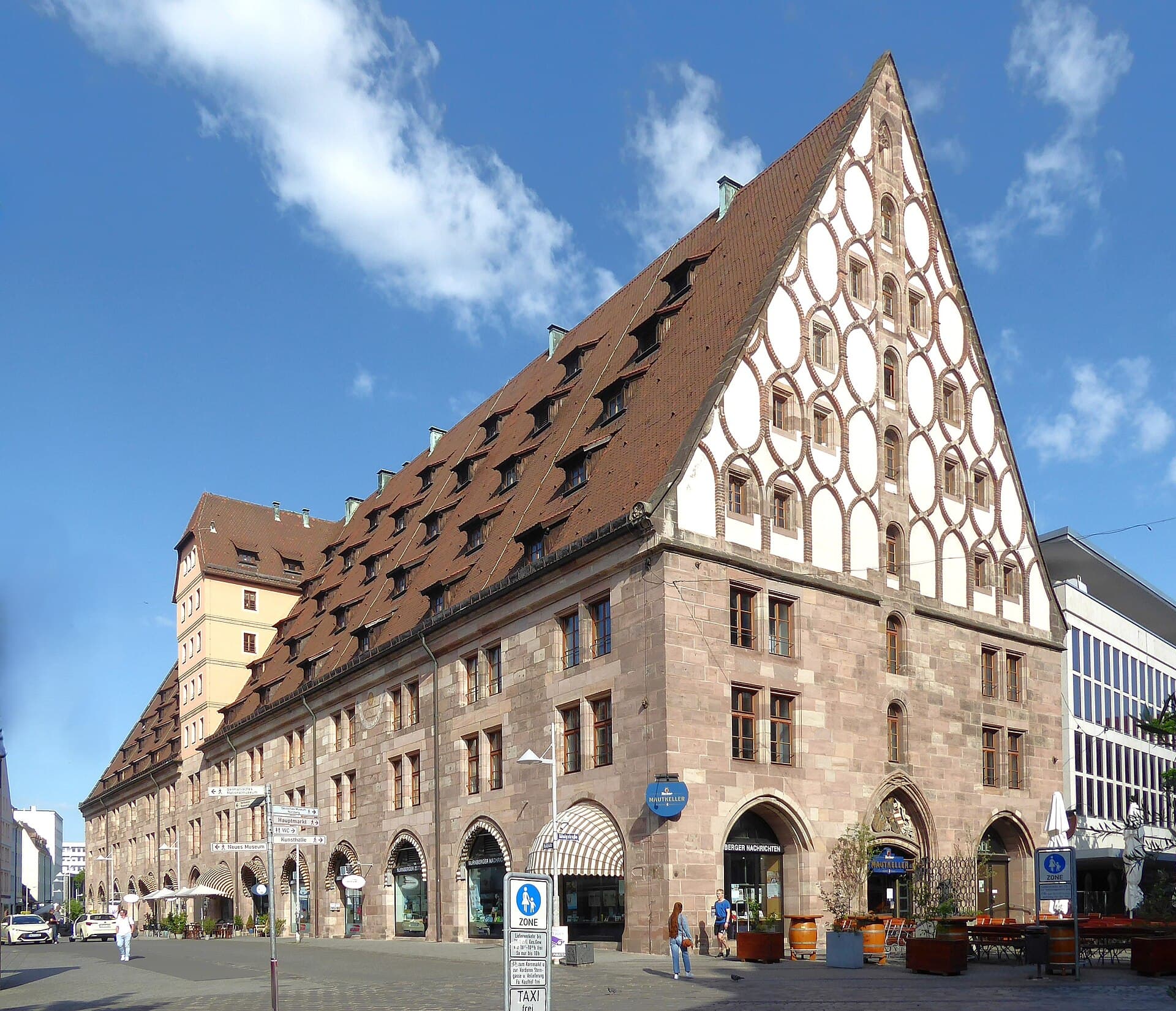 The MauthalleThe Mauthalle is a huge building of 1502 raised as both a grain store and a cust3 minutes walk4.3
 DB Railway MuseumIn the city where Germany's first train ran in 1835 stands the country's oldest 4 minutes walk4.5
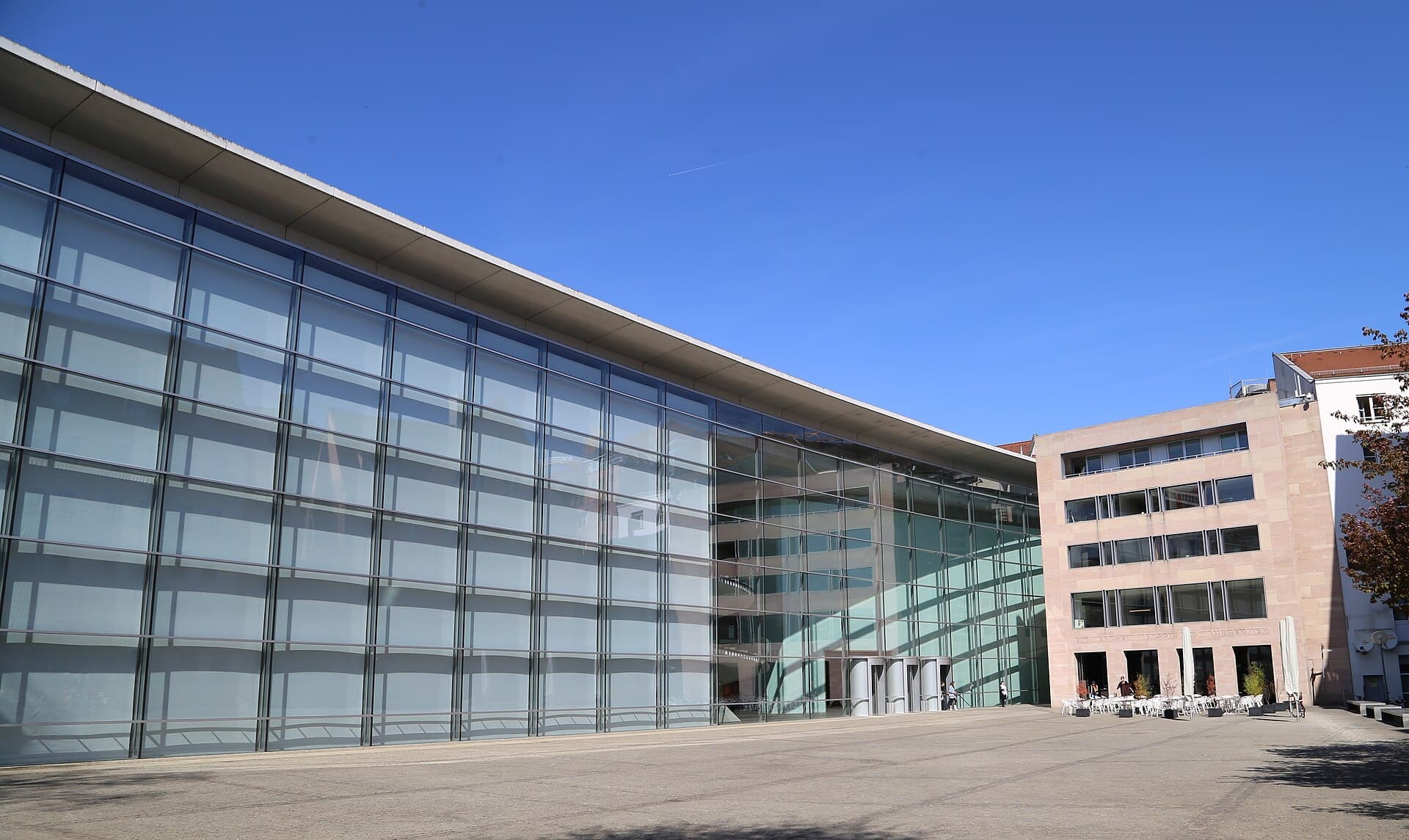 Neues Museum NurembergThe Neues Museum Nuremberg is a museum of modern art and design, opened in 2000 4 minutes walk4.3
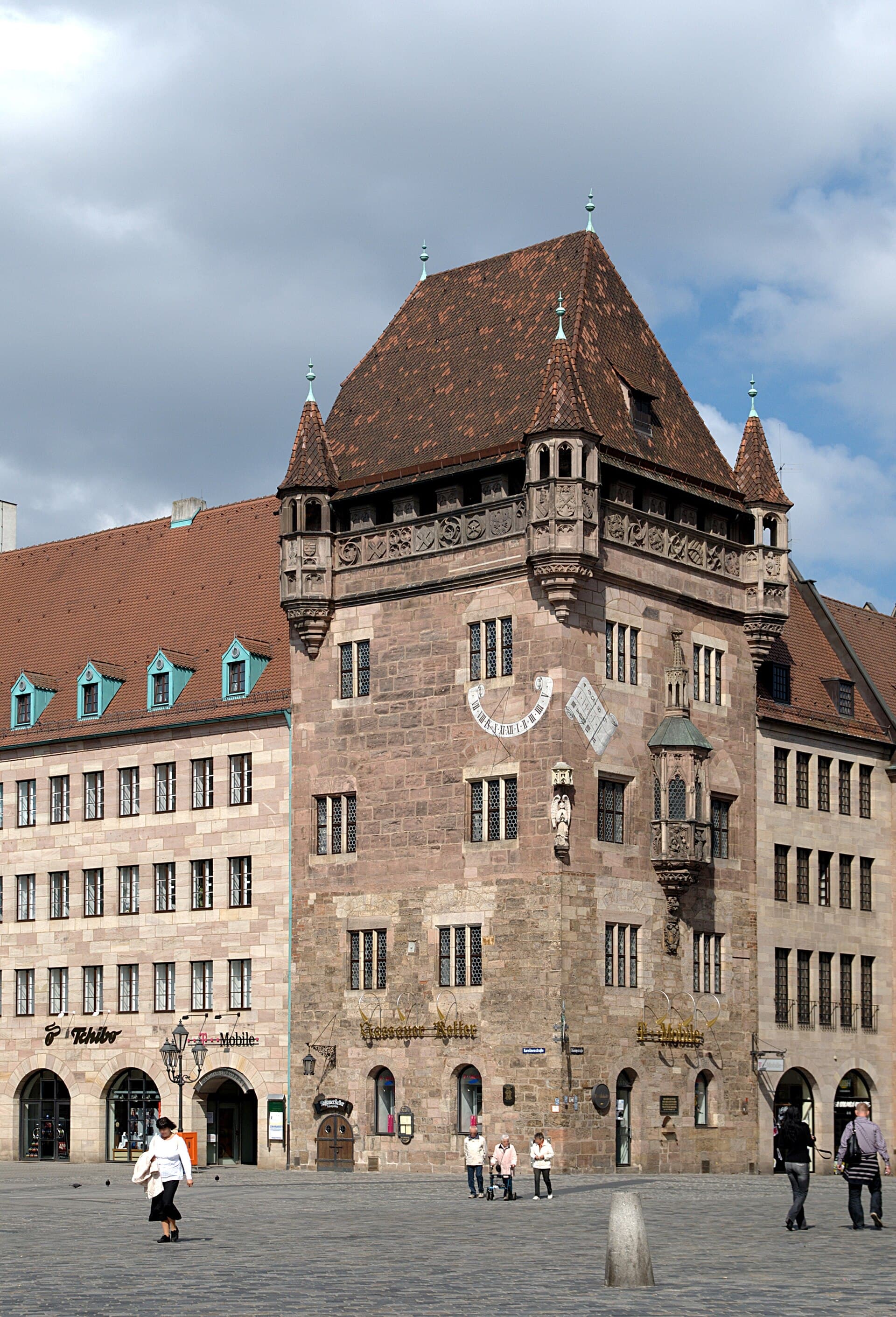 Nassauer HausThe last medieval residential tower still standing in Nuremberg, on the corner o4 minutes walk4.9
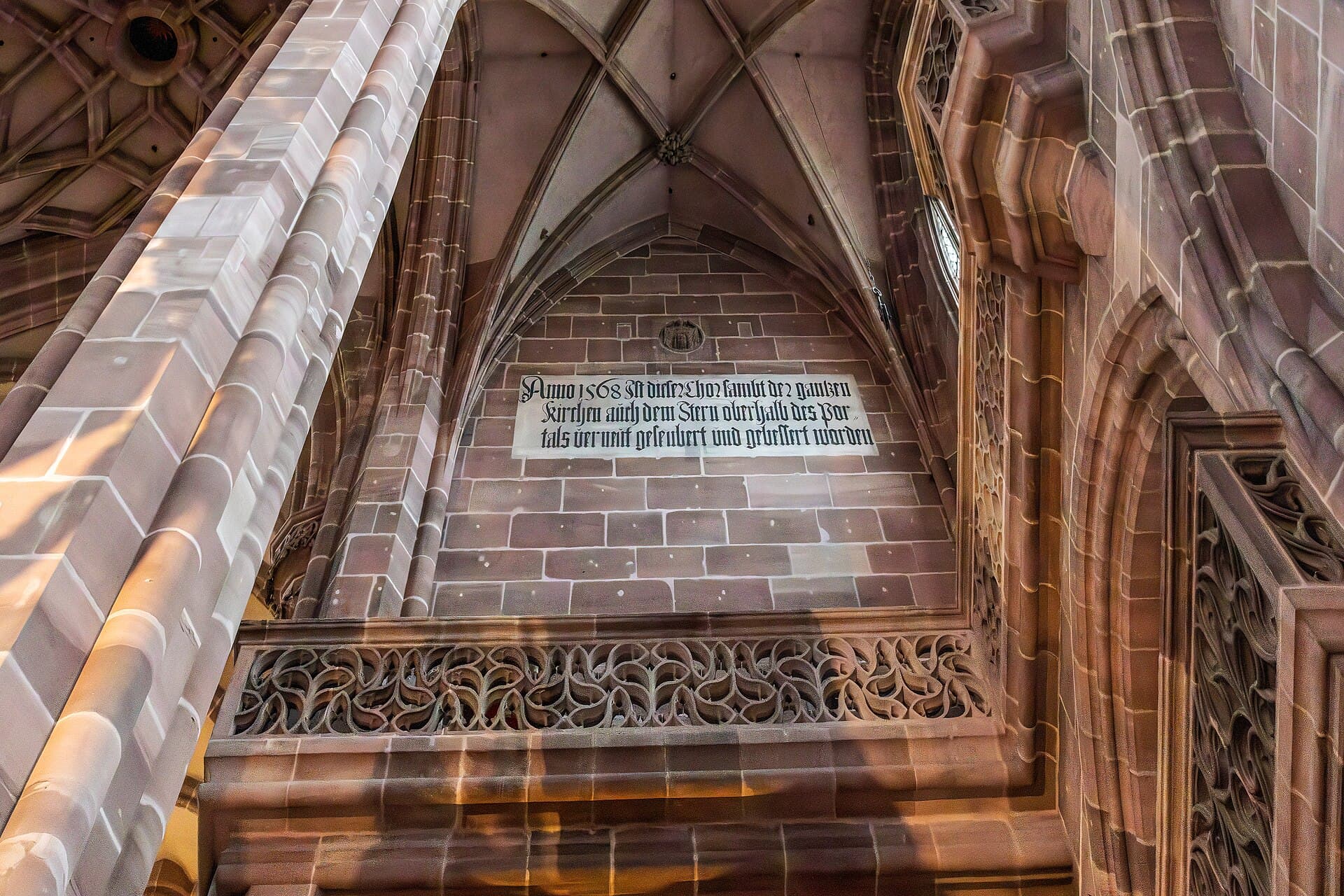 St Lorenz ChurchThe great church of the old town south of the river, its twin towers standing ei5 minutes walk4.6
With the highlights route: the museum links its famous pieces — the globe, the Dürers, the watches — into a signposted circuit of about two hours. After that, pick one wing to your taste: instruments, costume, arms, dolls' houses.
The toy, dolls'-house and instrument wings genuinely absorb them, and the sheer size is an adventure. Just do not attempt full coverage — two hours of chosen wings is the practical ceiling.
A sculptural avenue of thirty white pillars carved with the articles of the Universal Declaration of Human Rights in different languages — Arabic among them. Raised in 1993 before the museum deliberately: Nuremberg, a name tied to the Nazi trials, chose to tie it to rights instead.