
The vast roof
Rows of ventilation windows for stored grain.
Chris06 — CC BY-SA 4.0 · Diego Delso — CC BY-SA 3.0 · Ximeg — CC BY-SA 3.0 · Tilman2007 — CC BY-SA 4.0
The Mauthalle is a huge building of 1502 raised as both a grain store and a customs office — and it is among the clearest surviving explanations of how a late medieval trading city worked. Its form tells you its function: an enormous roof of six successive attic storeys beneath the gable, pierced with rows of small windows for ventilation. Grain was stored in those floors as the city's reserve against famine and siege, while duty was collected on goods passing through on the ground floor. The building survived the 1945 bombing with partial damage and was restored. The ground floor today holds a traditional beer restaurant in its vaulted cellars, and the upper floors are offices and not visitable. The whole value is in the facade and roof, seen from the street in a few minutes — but they are among the best visual explanations of Nuremberg's medieval wealth.
Rows of ventilation windows for stored grain.
A traditional beer restaurant below.
Hallplatz 2, 90402 Nuremberg
 St Lorenz ChurchThe great church of the old town south of the river, its twin towers standing ei2 minutes walk4.6
 Neues Museum NurembergThe Neues Museum Nuremberg is a museum of modern art and design, opened in 2000 2 minutes walk4.3
 Nassauer HausThe last medieval residential tower still standing in Nuremberg, on the corner o3 minutes walk4.9
 Germanisches NationalmuseumThe Germanisches Nationalmuseum in Nuremberg is the largest museum of history an3 minutes walk4.7
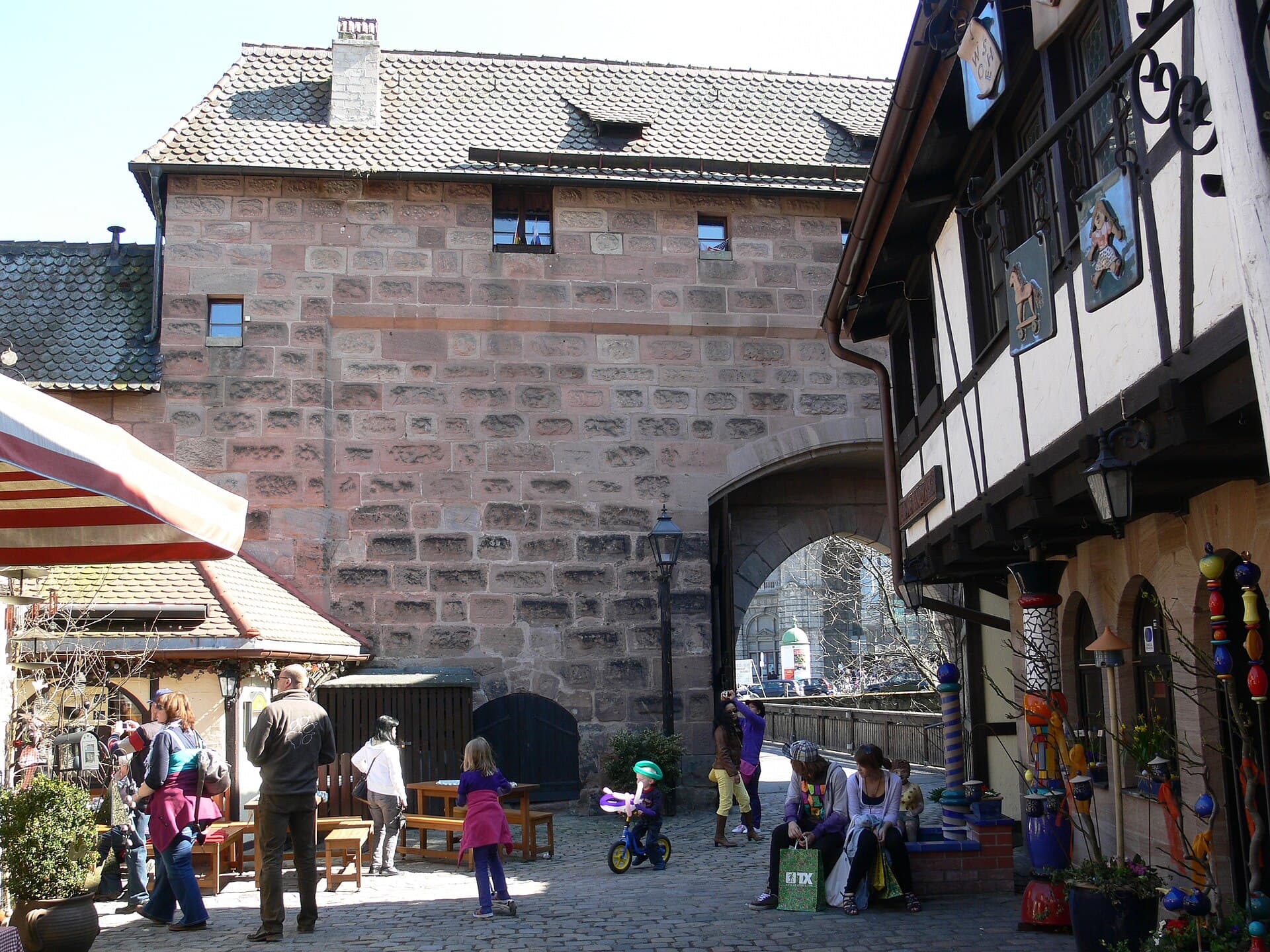 HandwerkerhofThe Handwerkerhof is a cluster of small timber-framed houses set inside the city4 minutes walk4.7
Because the medieval city faced two constant threats: siege and crop failure. A public grain reserve was a genuine food security policy run by the city rather than by merchants, allowing the population to be fed for months and prices to be broken in years of scarcity. The size of this store is a direct index of Nuremberg's population and wealth in the sixteenth century.