
The pink facade
Round arches and a minaret at each end.
Mohammad hajeer — CC BY-SA 4.0 · R Prazeres — CC BY-SA 4.0 · Dosseman — CC BY-SA 4.0 · Dosseman — CC BY-SA 4.0 · Fjmustak — CC BY-SA 4.0
The grand Friday mosque of downtown Amman and one of the city's oldest, at the head of King Talal Street in al-Balad. Emir Abdullah I laid its foundation stone in 1923, soon after founding the Emirate of Transjordan, and named it after his father, Sharif Hussein bin Ali, leader of the Great Arab Revolt. It was the first building project of the new capital. The Omari Mosque it replaced, the lower town's congregational mosque, is traced by tradition to Caliph Umar's day, and scholars date its colonnades to the Umayyads; in the 10th century the geographer al-Muqaddasi described it as a fine mosque at the market's edge, decorated with mosaic. The new mosque lost the stone top of its first minaret in the 1927 earthquake; the courtyard was widened and a second minaret added around 1950, and the building was restored in 1986–87. Its pink stone facade faces a small square, with round-arched doorways and a minaret at each end, one taller than the other. After a fire in July 2019 the interior was renewed, with a walnut and oak minbar modelled on Saladin's minbar at Al-Aqsa and columns faced in hand-cut mosaic. Since 2024 a 50-tonne glass roof has covered the courtyard and its small fountain under a green dome. Souk al-Sukkar and Souk al-Bukhariya flank the mosque, and the Roman Theatre is about half a kilometre east. The Amman Citadel is some 550 metres north, a climb on foot, and Rainbow Street about 700 metres west on Jabal Amman, so the mosque fits easily into a downtown walk.
Round arches and a minaret at each end.
Walnut and oak, after Saladin's minbar.
Souk al-Sukkar and Souk al-Bukhariya beside it.
Downtown (al-Balad), at the head of King Talal Street, Amman
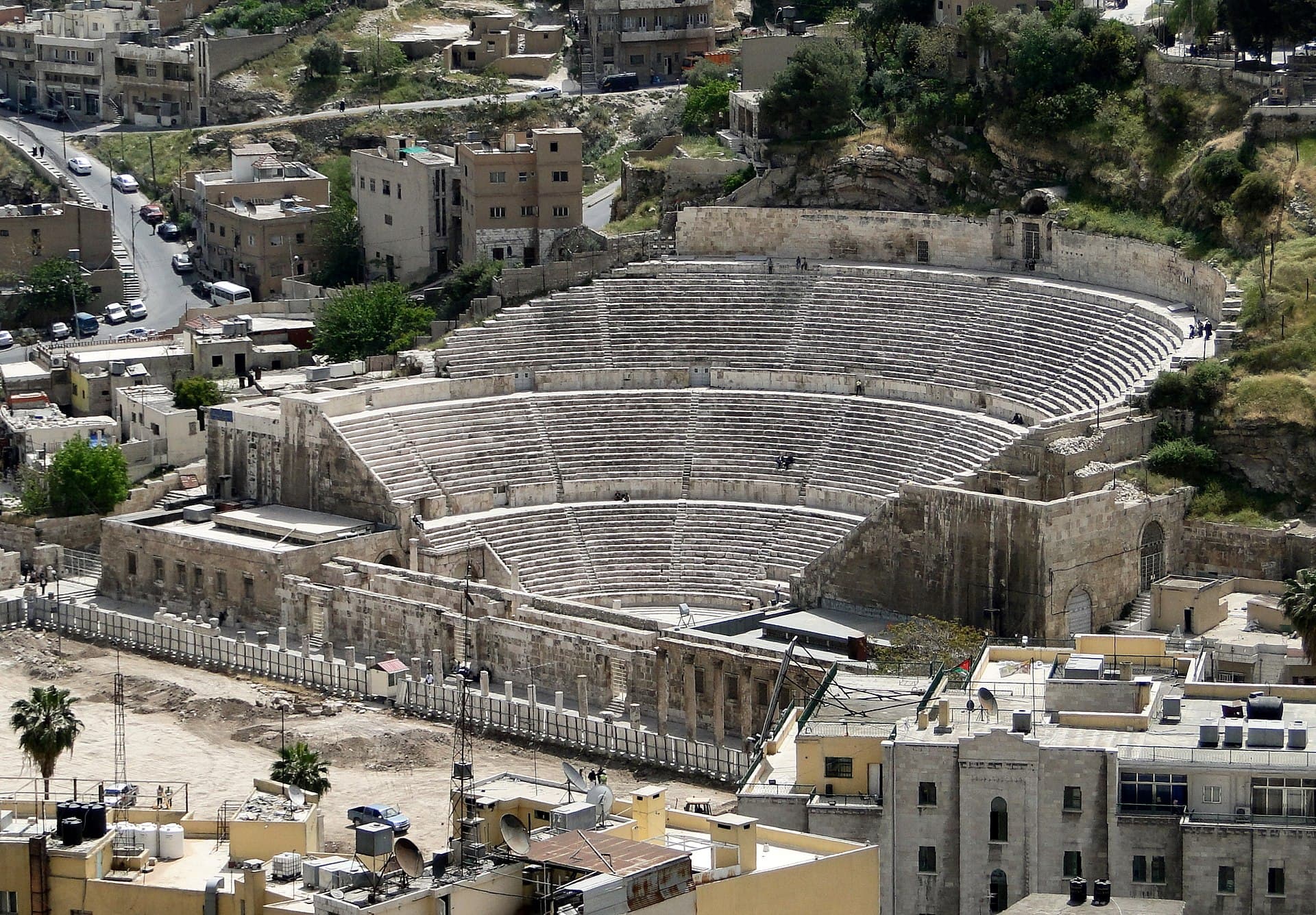 Roman TheatreA Roman theatre cut into the hillside in the middle of downtown, seating six tho6 minutes walk4.6
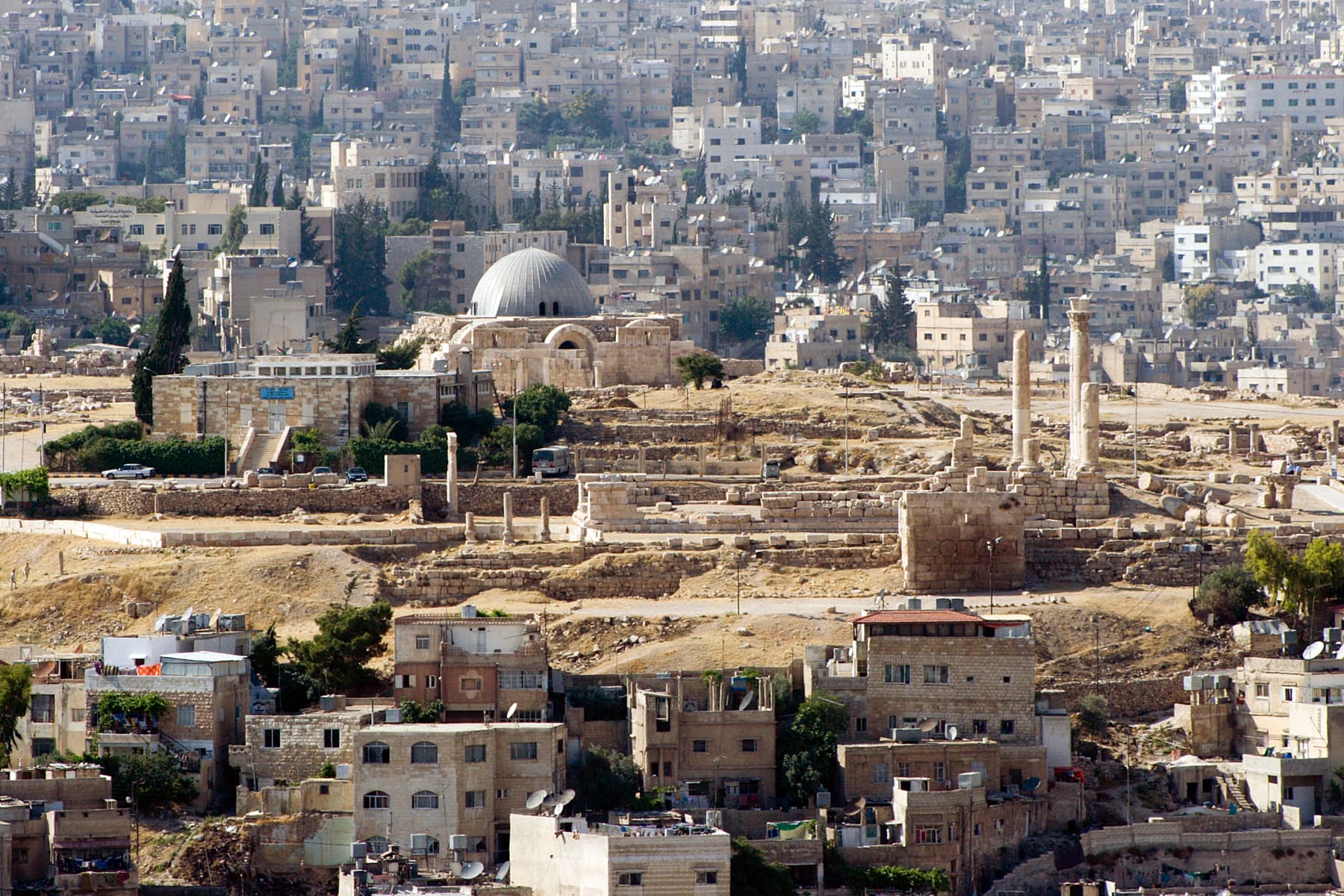 Amman CitadelThe highest of Amman's seven original hills, where every layer of the city stand7 minutes walk4.6
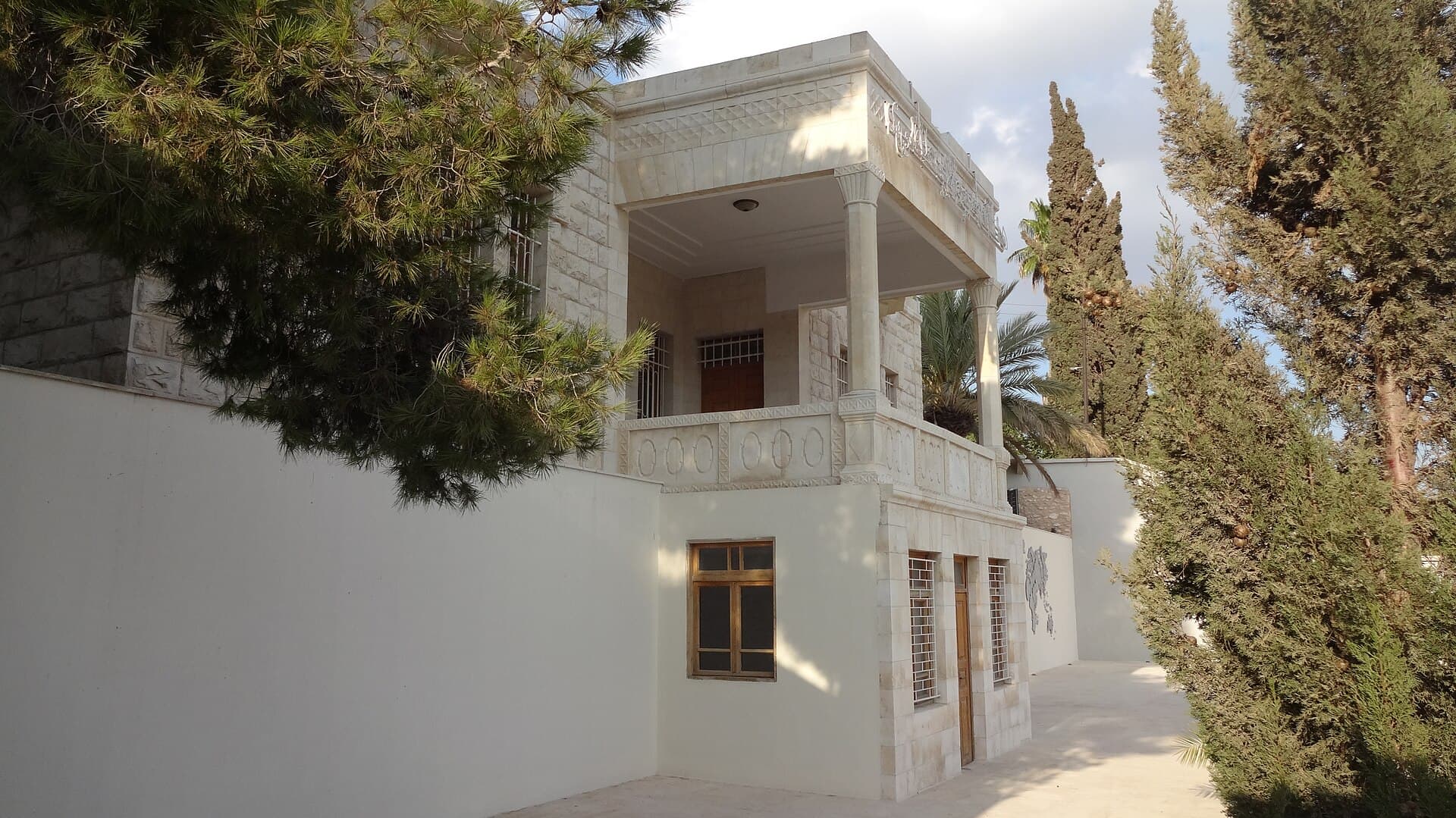 Darat al FununDarat al Funun, a home for the arts, is a centre for contemporary Arab art in re8 minutes walk
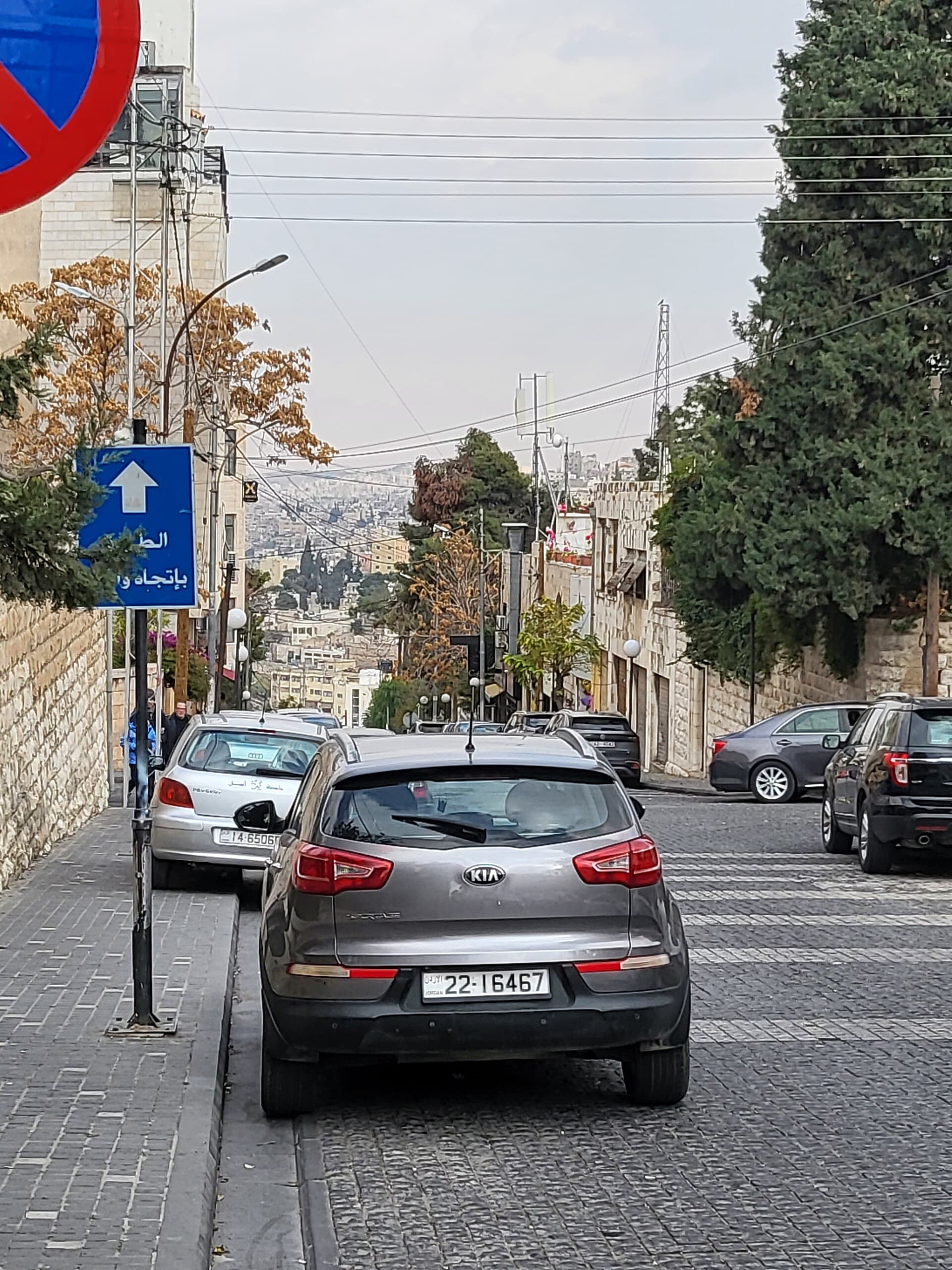 Rainbow StreetA single street in Jabal Amman between the First Circle and downtown, and the pl8 minutes walk4.4
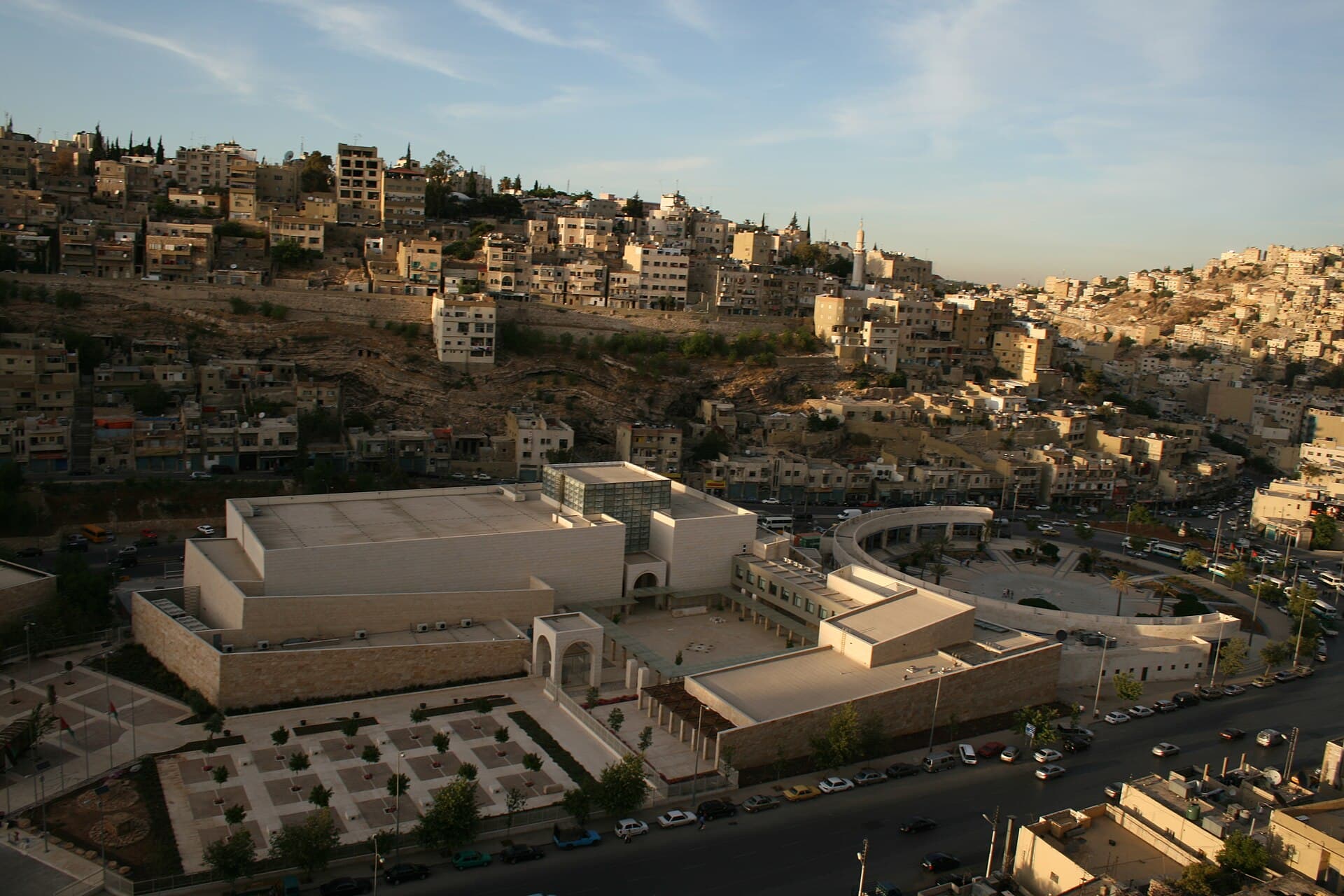 The Jordan MuseumJordan's national museum, holding two objects with no equal in any museum anywhe10 minutes walk4.3
It is a working mosque first, and non-Muslims are not always let in: dress modestly and ask at the gate outside prayer times. For a mosque that formally receives non-Muslims, go to the King Abdullah I Mosque, about 2.5 km north-west.
No. The Husseini Mosque downtown is named after Sharif Hussein bin Ali; the King Hussein bin Talal Mosque, named after the late king, is a modern mosque opened in 2006 in Al-Hussein Public Parks in West Amman, about 11 km away.