
The castle-and-cathedral view
From mid-span looking upstream, the castle, Ness Bridge and the cathedral towers line up in a single frame.
Enric — CC BY-SA 4.0 · Balon Greyjoy — CC BY-SA 3.0 · Balon Greyjoy — CC BY-SA 3.0 · Balon Greyjoy — CC BY-SA 3.0
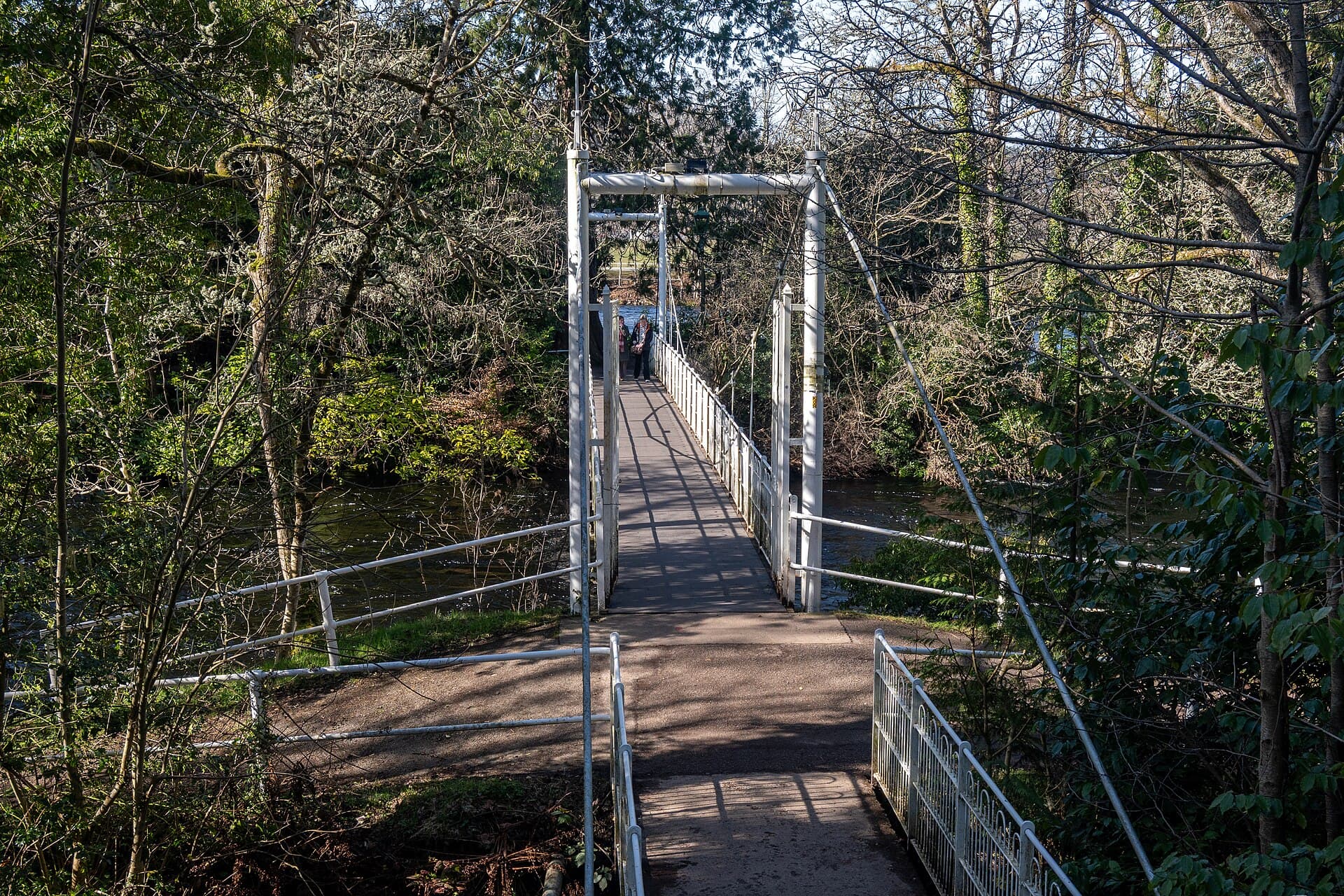
Invernessians call it the Bouncy Bridge, and they are not exaggerating: get four or five people walking in step and the deck starts to shiver underfoot, and jumping on it in unison has been a local childhood rite for generations. The white suspension footbridge was hung over the River Ness in 1880-81 by engineer C. R. Manners with the town's own Rose Street Foundry, for a mere 1,400 pounds. Three spans, a central one of roughly 61 metres flanked by two of about 20, hang from steel wire cables slung over lattice pylons on cast-iron piers; the cables were renewed in 1952, the anchorages in 1989, and it has been Category B listed since 1971. It is for walkers and cyclists only, open around the clock and free. It joins Greig Street on the west bank to Bank Street and the Old High Church on the east, and that is where its real worth lies: from the middle, looking upstream, the whole Inverness set piece lines up at once, the Ness Bridge, the red castle on its mound and the cathedral towers further up the west bank. At dusk, when the lamps come on along both banks and the white ironwork reflects off the river, this is one of the most photographed views in the city. Be clear about what it is: not a destination but a five-minute stop on the riverside walk, which deserves to be done in full from the centre out to the Ness Islands. Anyone uneasy with heights or prone to dizziness may prefer the solid Ness Bridge nearby, because the sway is real, if perfectly safe. A pushchair will normally cross without trouble, though summer crowds mixed with bicycles make the narrow deck slow going in late afternoon. In a Highland winter, when the sun is down before four, the lights rather than the castle become the show. It is about ten minutes on foot from Inverness railway station via Bank Street, and its near-twin, the Infirmary Bridge, built to the same design, crosses upstream by the cathedral, though that one closes for repairs more often, so check before you count on it; linking the two in a loop along both banks is the best hour's walk in Inverness.
From mid-span looking upstream, the castle, Ness Bridge and the cathedral towers line up in a single frame.
A deck hung in 1881 that shivers underfoot; jumping on it together is an old Inverness childhood habit.
When the lamps come on along both banks and the white ironwork reflects off the river, this is one of the city's most photographed shots.
Greig Street to Bank Street, River Ness
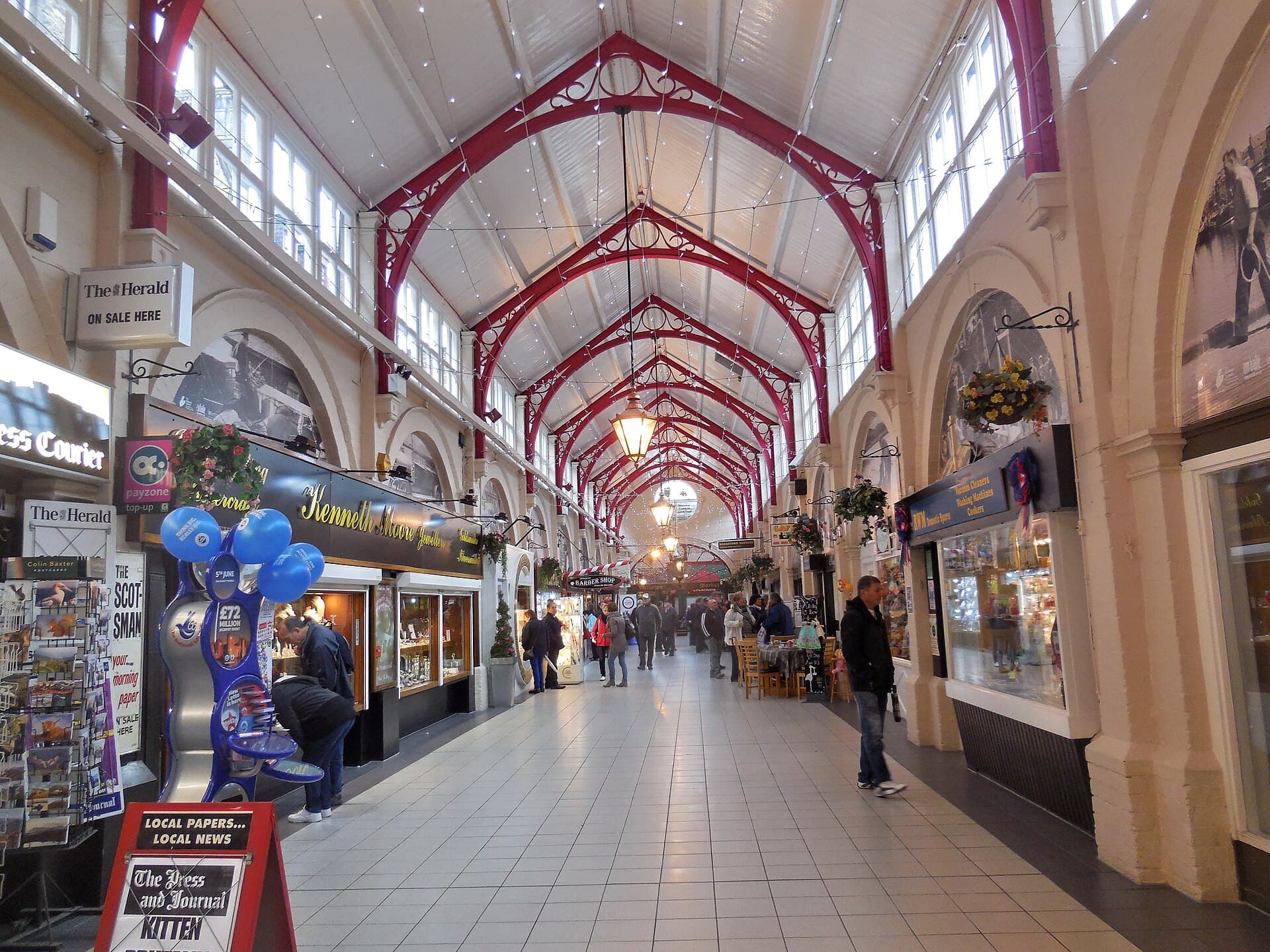 Victorian MarketIn 1889 this market burned to the ground, and the story told here is a bleak one3 minutes walk4.0
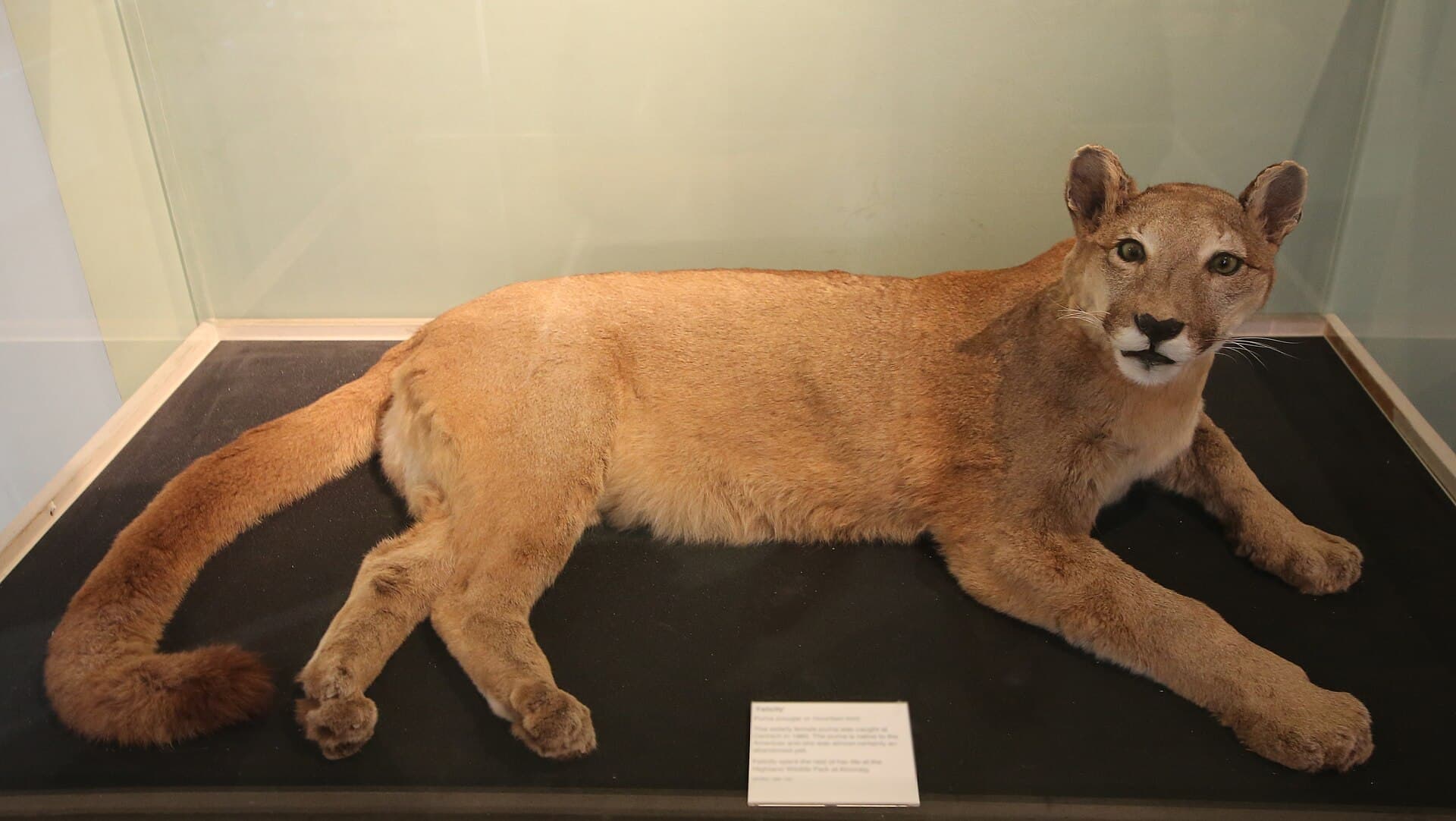 Inverness Museum and Art GalleryIn the ground-floor natural history room stands a stuffed puma, caught alive in 4 minutes walk4.6
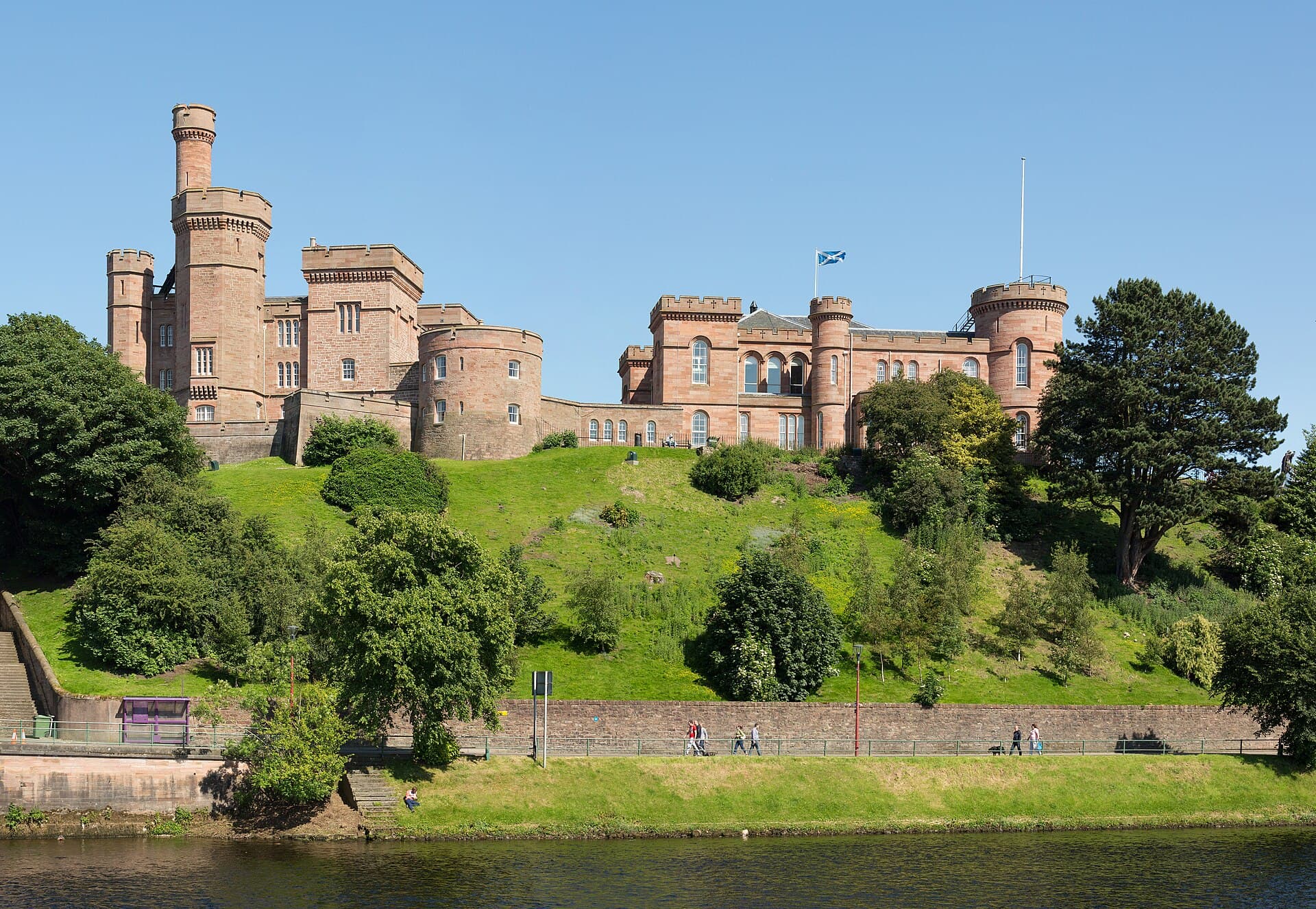 Inverness CastleThe red castle you see from every bridge in Inverness was a working courthouse r5 minutes walk4.2
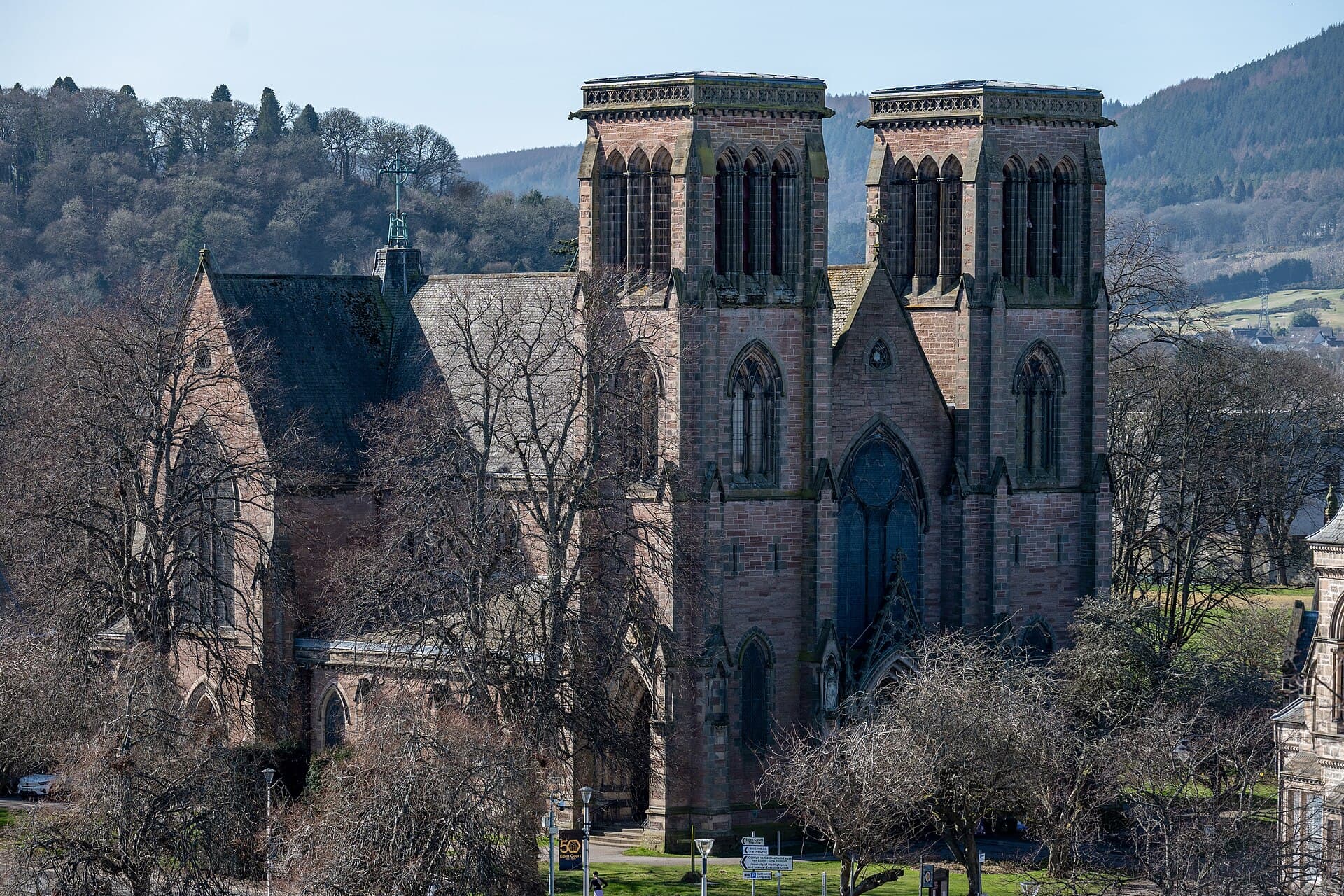 Inverness CathedralTwo square towers, cut off flat as if someone forgot to finish them. That is how7 minutes walk4.3
 Ness IslandsTwenty minutes' walk upstream from Inverness city centre, the River Ness splits 22 minutes walk4.9
Just pass over it. It is a five-minute photo stop on the riverside walk, not a destination; fold it into a loop along both banks taking in the cathedral, the Infirmary Bridge and the Ness Islands, and time it for late afternoon or dusk when it looks its best.
Perfectly safe; the wobble is part of the charm, not a fault. A pushchair normally crosses easily, but the deck is narrow and shared with cyclists, so hold small hands when it is busy, and anyone who gets dizzy can use the solid Ness Bridge a few minutes away.