
The spires that never came
Alexander Ross drew two soaring spires; the money ran out, and the flat-topped towers became the city's signature.
Lucas Kendall — CC BY-SA 4.0 · Tanya Dedyukhina — CC BY 3.0 · Tanya Dedyukhina — CC BY 3.0 · Tanya Dedyukhina — CC BY 3.0
Two square towers, cut off flat as if someone forgot to finish them. That is how Inverness Cathedral looks from across the river, and that is exactly what happened. Architect Alexander Ross drew two soaring spires on top of them; the money ran out before either was built, and the cathedral has stood unfinished since 1869 for so long that the truncated silhouette is now simply the face of the city. Built between 1866 and 1869 in pinkish-red Tarradale sandstone, it is the northernmost diocesan cathedral still standing on the British mainland and the first new Protestant cathedral completed in Great Britain since the Reformation. The interior is calmer than the outside and richer than a building of this modest size suggests: columns of polished Peterhead granite that gleam like dark marble, a timber roof, and Hardman stained glass that fills the nave with colour on a clear afternoon. Two details are worth hunting for. The font is a kneeling angel carved after Thorvaldsen's famous piece in Copenhagen, and a set of Russian icons is traditionally said to have been a gift from the Tsar to Bishop Robert Eden, the man who pushed the whole project through. Entry is no longer free. The cathedral now charges anyone coming in as a visitor: £6 for adults, £3 for teenagers aged 13 to 17, £2 for children aged 4 to 12, under-fours free. There is no advance booking, and the desk and donation points take contactless as well as cash. Anyone stepping in to pray, light a candle or attend a service still enters free of charge. Doors open daily from 9am to 6pm, right through the year. Remember this is a working church: Morning Prayer around 8.30, a said Eucharist at 12.30 and Evening Prayer at 5.30, with Tuesdays and Thursdays running later at 9.30 and 10.15, and visitors are asked to keep quiet during them. Step-free access is by the ramp at the rear entrance and there is an accessible toilet; a small shop and cafe run alongside, a useful bolt-hole when the Inverness rain arrives without warning. Be honest with yourself: this is a twenty-to-forty-minute stop, and nobody travels to Inverness for it alone. Its real value is where it stands, on the west bank across the water from the castle, beside Eden Court Theatre, at the start of the lovely half-hour riverside walk to the Ness Islands. The best photograph is from the east bank or Ness Bridge at dusk when the floodlights come on; in the Highland summer, when light lingers until ten, that is easy to time. In winter the sun is gone before four, so make it your last stop before dinner.
Alexander Ross drew two soaring spires; the money ran out, and the flat-topped towers became the city's signature.
Polished Peterhead granite and Hardman stained glass make the interior far richer than the building's size suggests.
A kneeling-angel font copied from Thorvaldsen, and Russian icons said to have been presented by the Tsar.
Ardross Street, west bank of the River Ness, Inverness
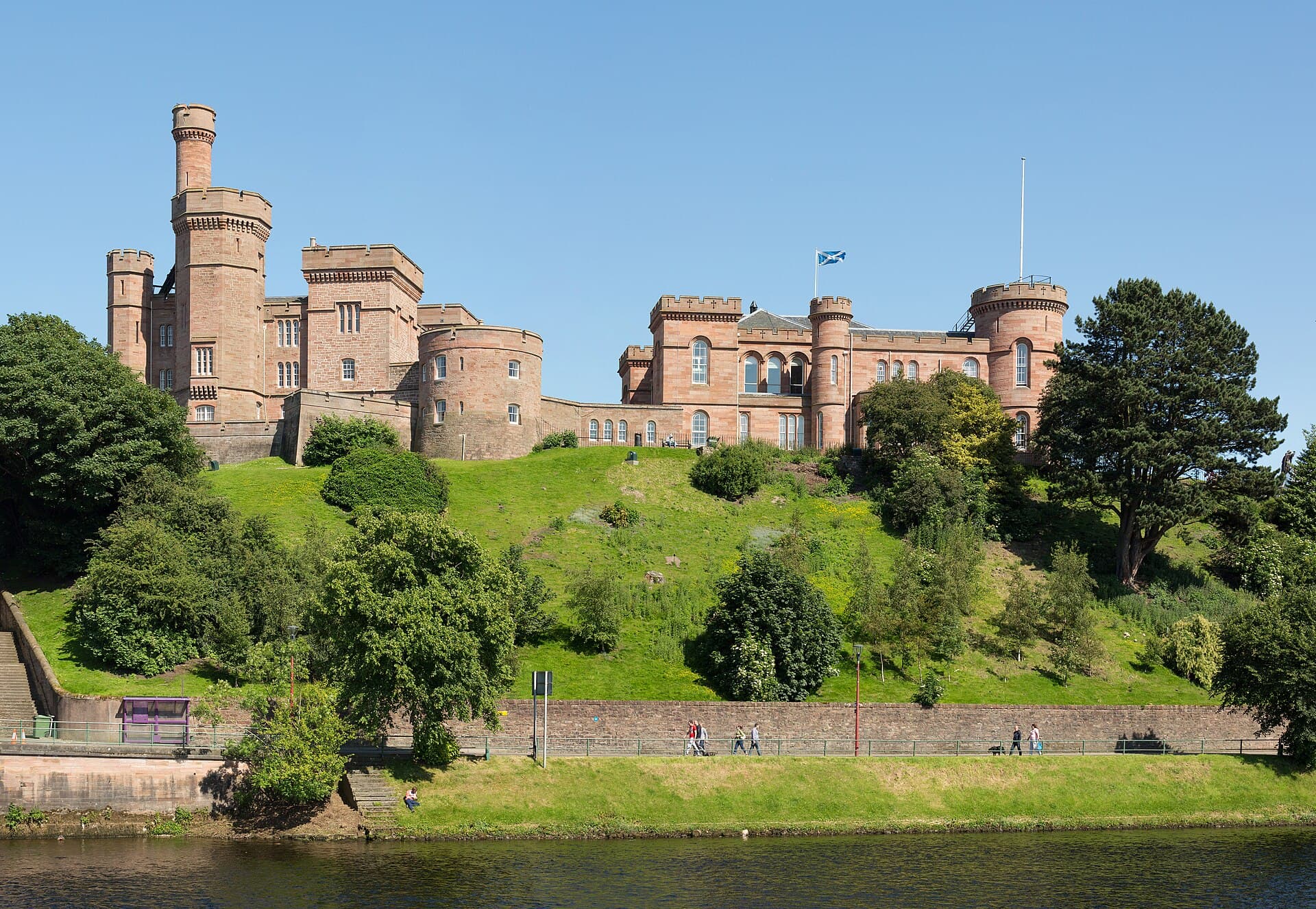 Inverness CastleThe red castle you see from every bridge in Inverness was a working courthouse r4 minutes walk4.2
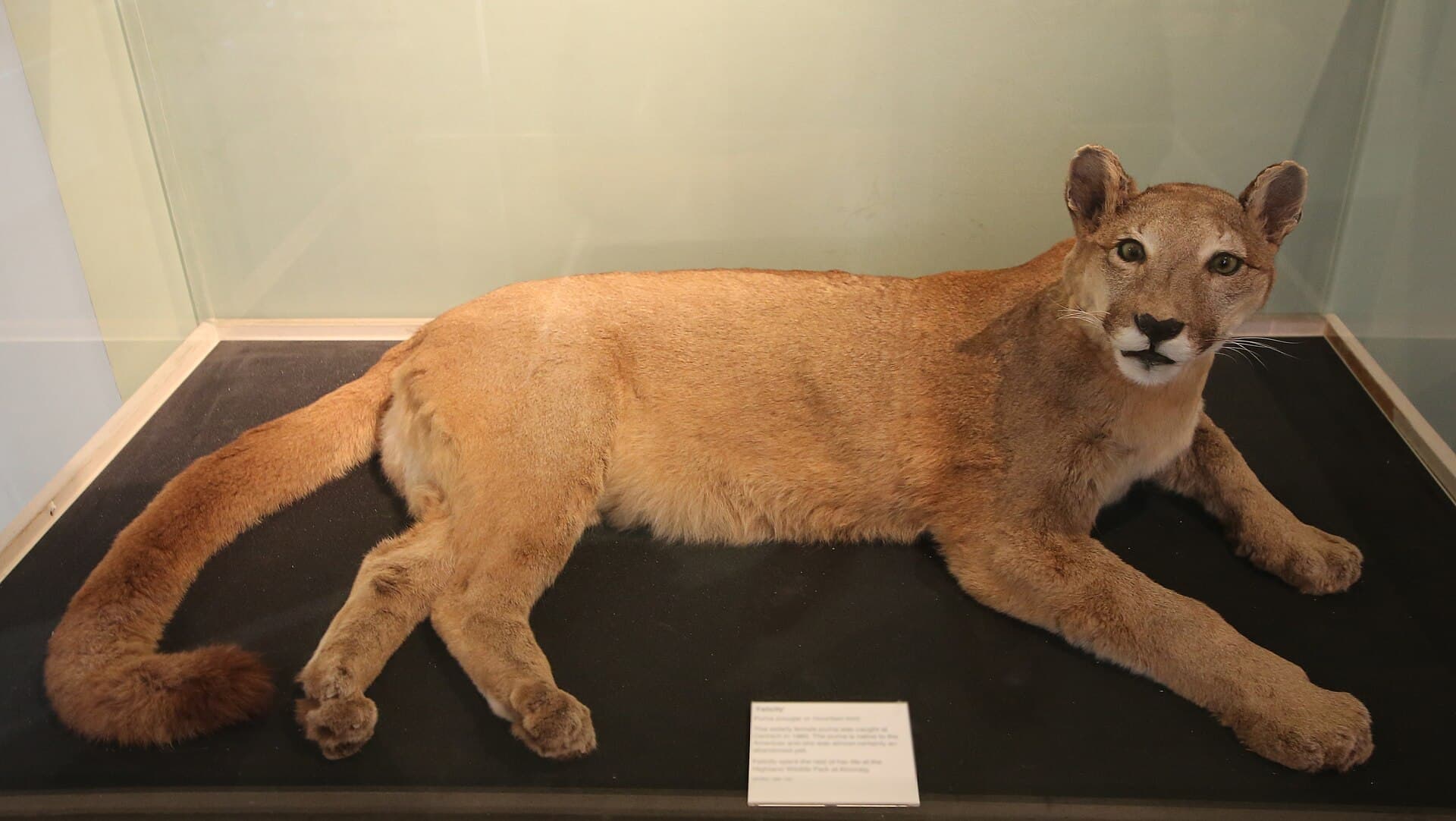 Inverness Museum and Art GalleryIn the ground-floor natural history room stands a stuffed puma, caught alive in 5 minutes walk4.6
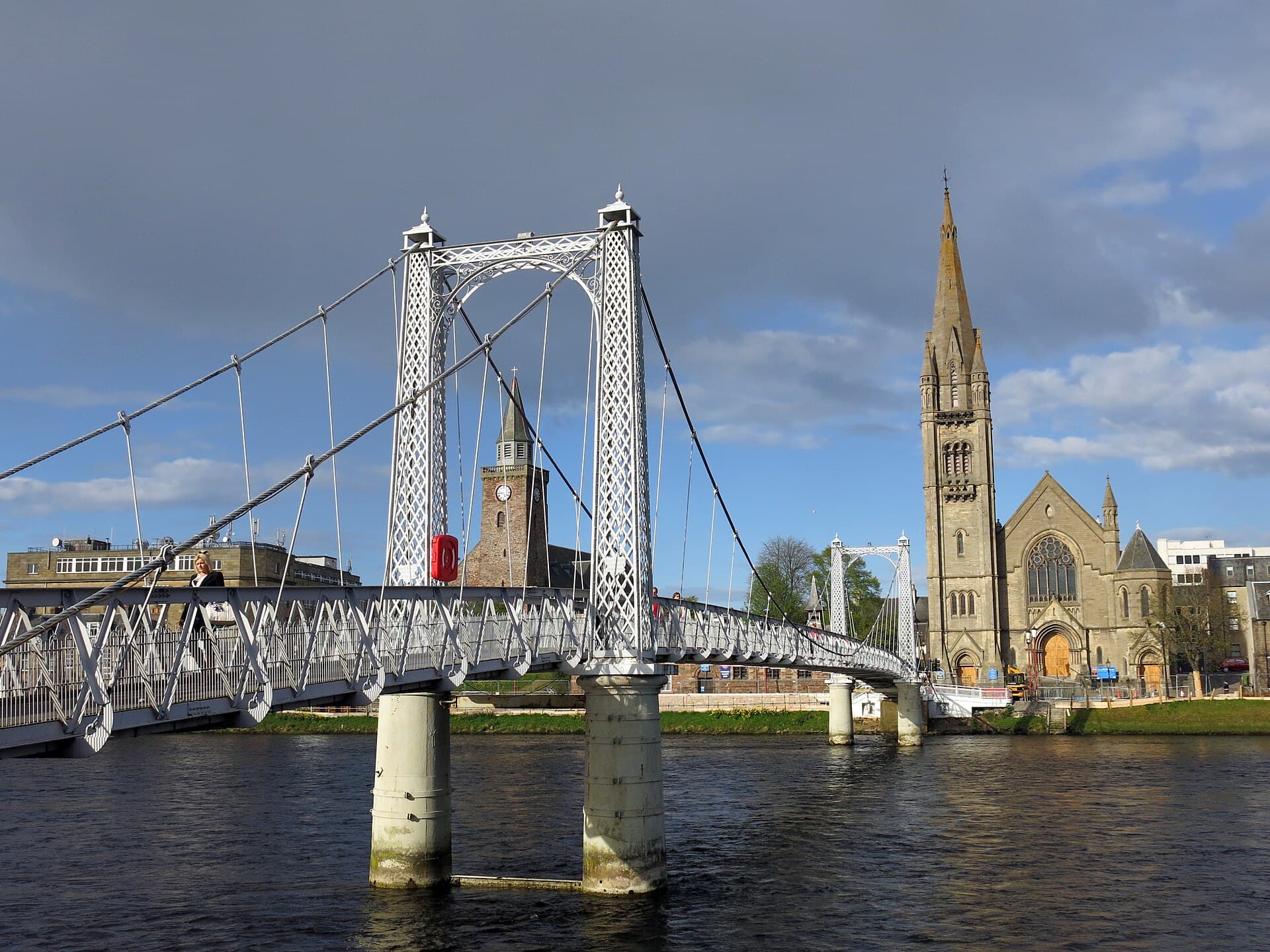 Greig Street BridgeInvernessians call it the Bouncy Bridge, and they are not exaggerating: get four7 minutes walk4.6
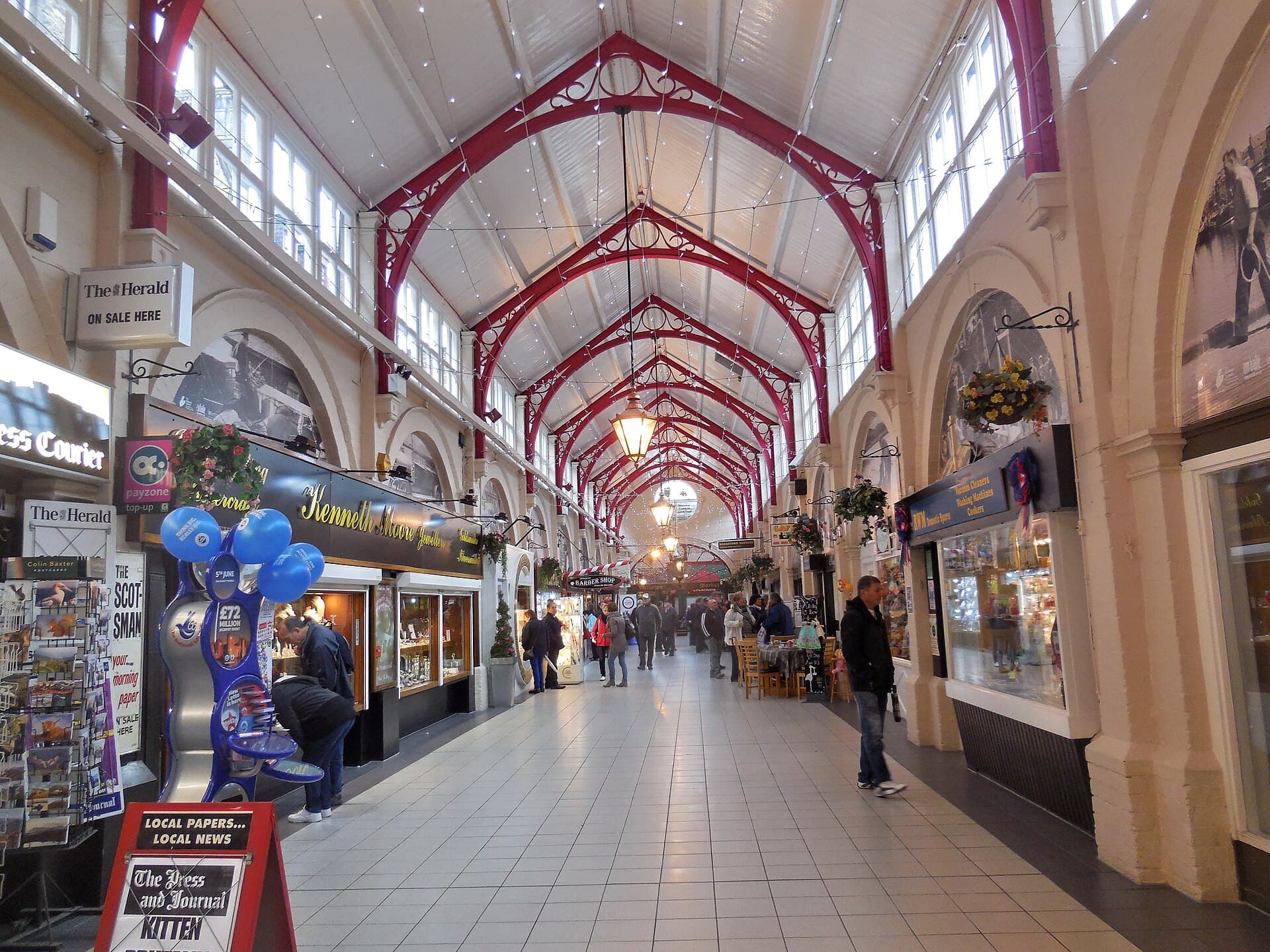 Victorian MarketIn 1889 this market burned to the ground, and the story told here is a bleak one7 minutes walk4.0
 Ness IslandsTwenty minutes' walk upstream from Inverness city centre, the River Ness splits 16 minutes walk4.9
The view from Ness Bridge or the east bank is genuinely the main event, especially at dusk when it is floodlit. Inside now costs £6 for an adult and £2 for a child aged 4 to 12, and it takes twenty minutes at most, with a cafe alongside for a break with little ones. Step in if you are already walking to the Ness Islands; do not make a special trip.
A ticket yes, a booking no. You pay at the door by card or cash with no timed slots, and the doors are open every day from 9am to 6pm. Anyone coming in to pray or to attend a service pays nothing. Avoid the service times if you want to wander and photograph freely.