
Geunjeongjeon throne hall
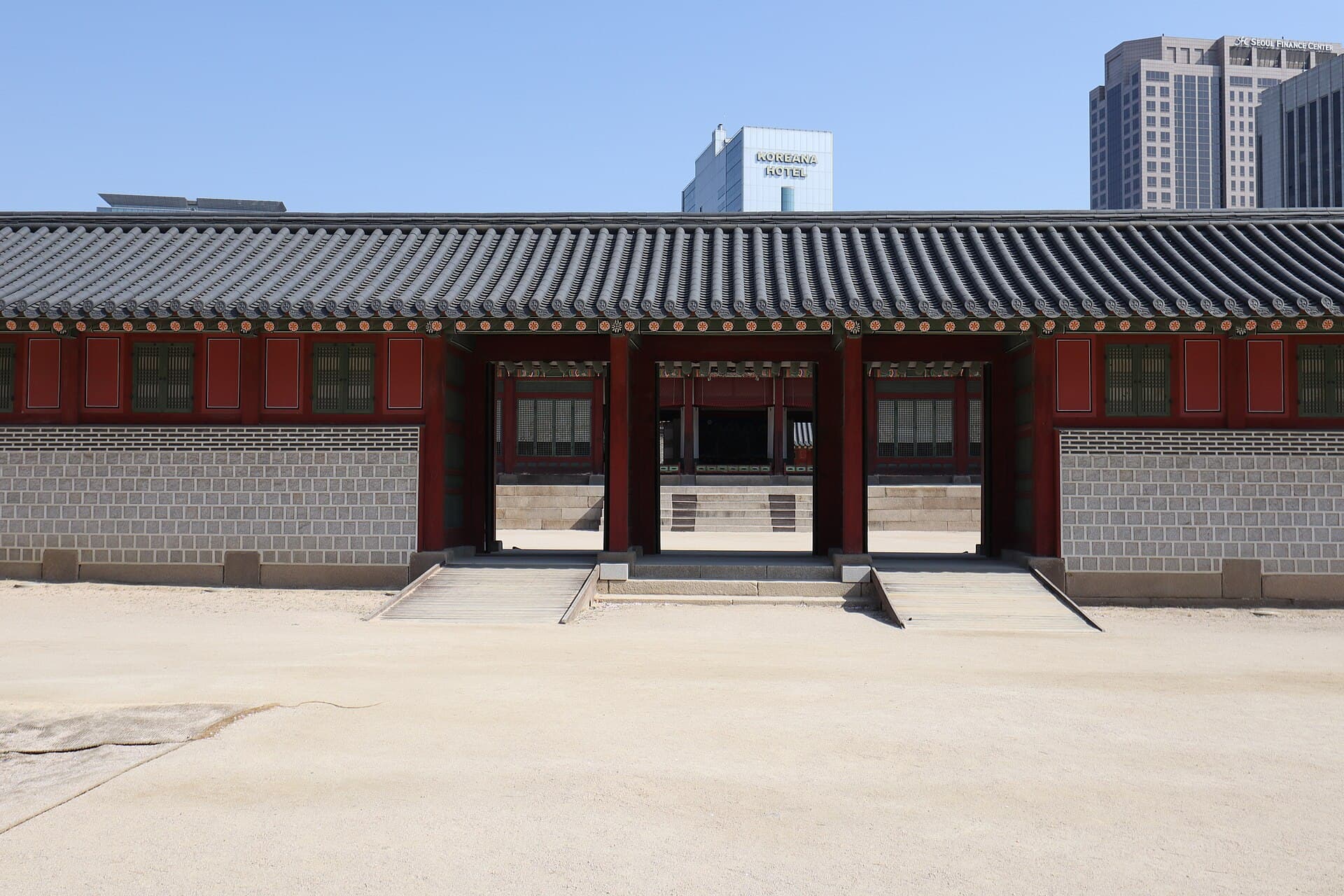
Double roof over a stone court.
Noh Mun Duek — CC BY-SA 4.0 · Unknown — CC BY-SA 3.0 · Choozit — CC BY-SA 3.0 · Komatta — CC BY-SA 3.0
The largest and best known of Seoul's five royal palaces, and the first one the Joseon dynasty built when it made Seoul its capital. It was founded in 1395 and flourished under King Sejong the Great, in whose reign the Korean alphabet, Hangul, was created. The whole palace burned down in the war of 1592 and lay in ruins for almost three centuries, until it was rebuilt in the late nineteenth century. You enter through Gwanghwamun, the main gate facing the great square, and cross a series of courtyards to Geunjeongjeon, the throne hall with its double roof and stone-paved court. Behind it, Gyeonghoeru pavilion stands on stone pillars in a wide pond, where royal banquets were held. At the far north, the small Hyangwonjeong pavilion sits on an island reached by a wooden bridge. The changing of the royal guard takes place at 10:00 and 14:00 in the court before Heungnyemun gate, except on Tuesdays. Entry is free for anyone wearing hanbok, the traditional Korean dress, which many shops around the palace rent out. Two free museums stand inside the walls: the National Palace Museum and the National Folk Museum. Allow at least two hours and come in the morning, before the tour groups. The palace is closed on Tuesdays.
Double roof over a stone court.
The banquet hall on the pond.
A ceremony in period dress.
161 Sajik-ro, Jongno-gu; Gyeongbokgung Station (Line 3), exit 5
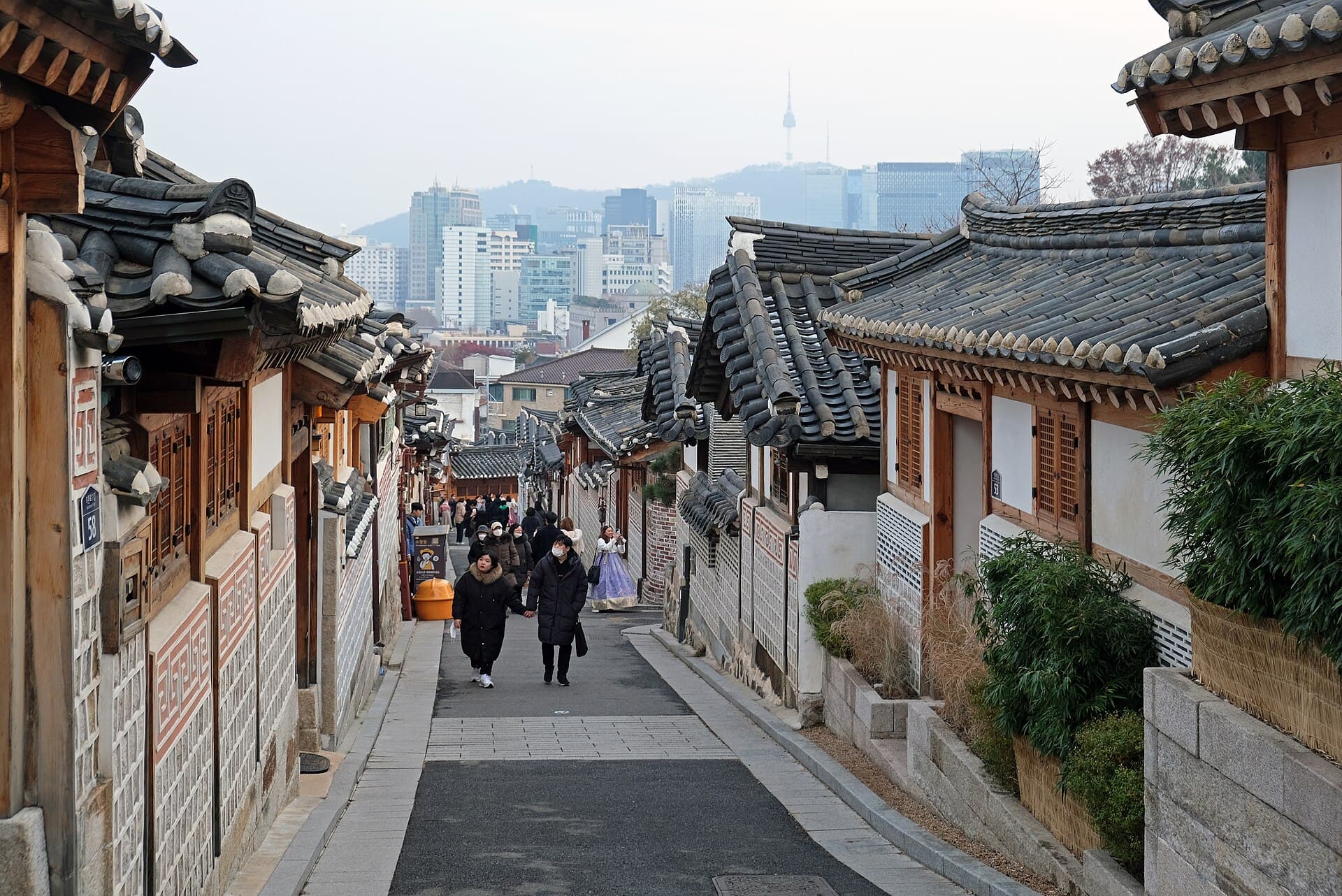 Bukchon Hanok VillageAn old residential quarter between Gyeongbokgung and Changdeokgung palaces, with9 minutes walk4.5
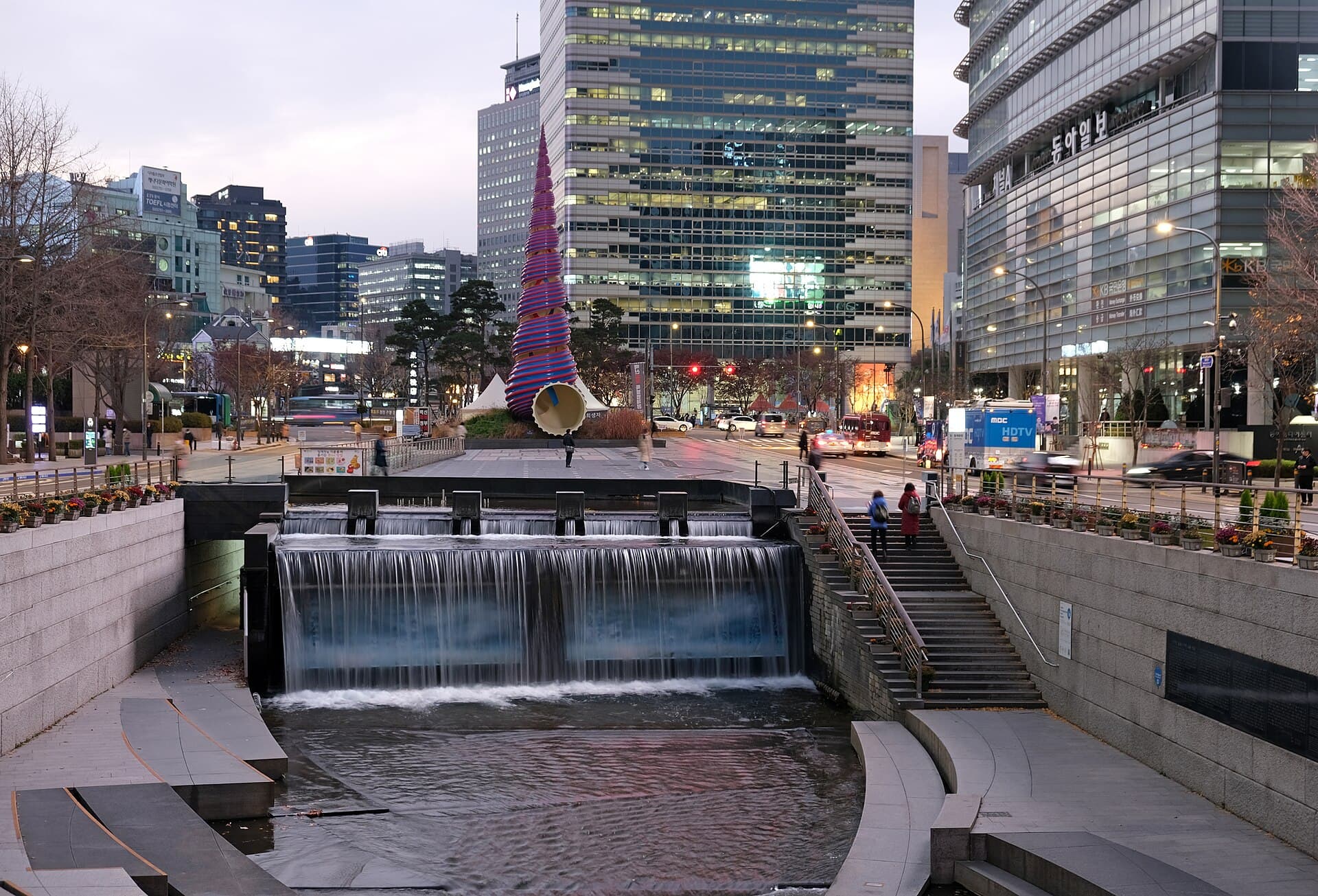 Cheonggyecheon StreamA stream running about 11 kilometres through the heart of Seoul, brought back to15 minutes walk4.5
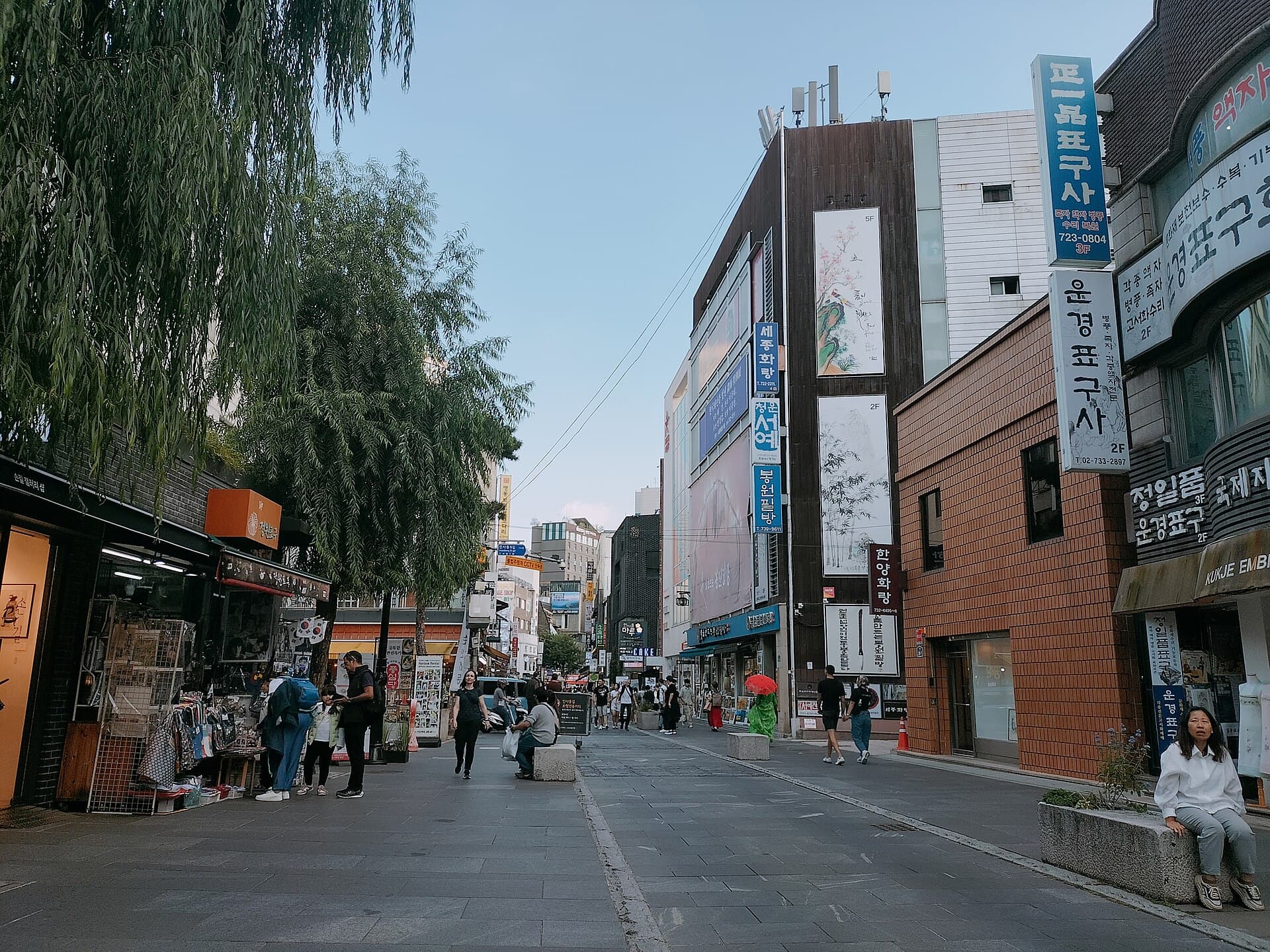 InsadongSeoul's street of traditional arts and crafts, and historically the largest mark15 minutes walk4.4
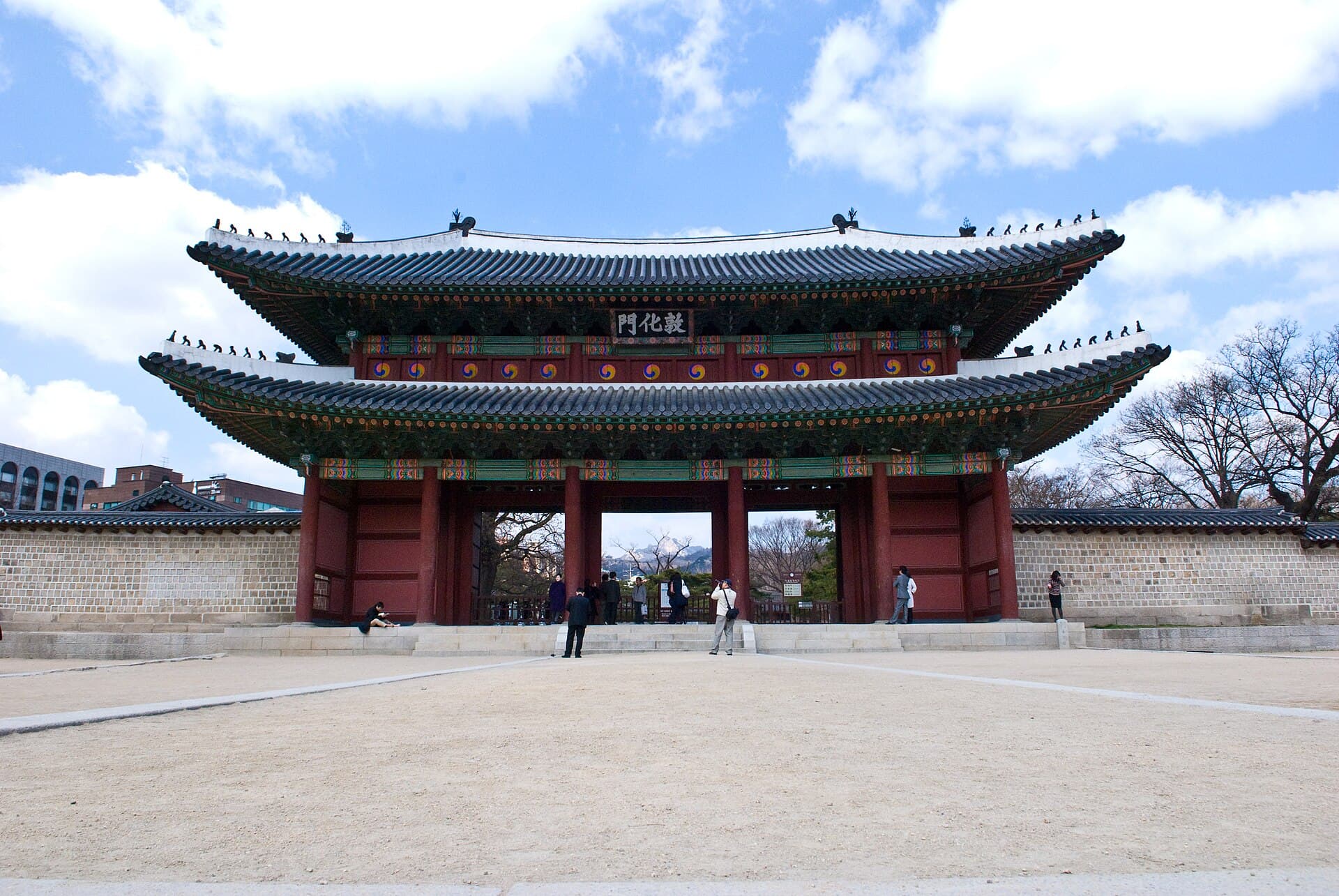 Changdeokgung Palace and Secret GardenThe best preserved of Seoul's royal palaces and a UNESCO World Heritage Site sin15 minutes walk4.5
 Deoksugung PalaceA small palace in the middle of modern Seoul, across from City Hall, that mixes 19 minutes walk4.5
3,000 won for adults, and free for anyone wearing hanbok. The Korea Heritage Service plans to raise palace fees from January 2027.
On Tuesdays. On other days it opens at 09:00 and closes between 17:00 and 18:30, depending on the season.