
King Sejong's statue
The maker of the Korean alphabet.
Dwkfolder — CC BY-SA 4.0 · Michaela den — CC BY-SA 3.0 · Richard Mortel from Riyadh, Saudi Arabia — CC BY 2.0 · Tristan Surtel — CC BY-SA 4.0
The great square in the heart of Seoul, running about a kilometre and a half south from Gwanghwamun gate in front of Gyeongbokgung Palace. In Joseon times this was the Street of Six Ministries, lined with the offices of state; in the twentieth century it became a sixteen-lane road, before being turned into a pedestrian square, reopened in a wider, greener redesign in August 2022. Two statues stand along the square: Admiral Yi Sun-sin, the naval commander who held off the Japanese fleets in the sixteenth century, with a fountain before him recalling his battles, and then King Sejong the Great, seated, in whose reign the Korean alphabet was created. Beneath Sejong's statue is a free underground exhibition about his life and the inventions of his time. The square is where the city gathers for celebrations and big events, with markets and lights in winter and fountains for children to play in during summer. From its northern end you see the palace with Mount Bugaksan behind it, one of the finest views in Seoul. The square is free and always open, and at its best in the evening. It combines easily with Gyeongbokgung and with the Cheonggyecheon stream at its southern end.
The maker of the Korean alphabet.
And his fountain of sea battles.
Gwanghwamun and Bugaksan.
Sejong-daero, Jongno-gu; Gwanghwamun Station (Line 5)
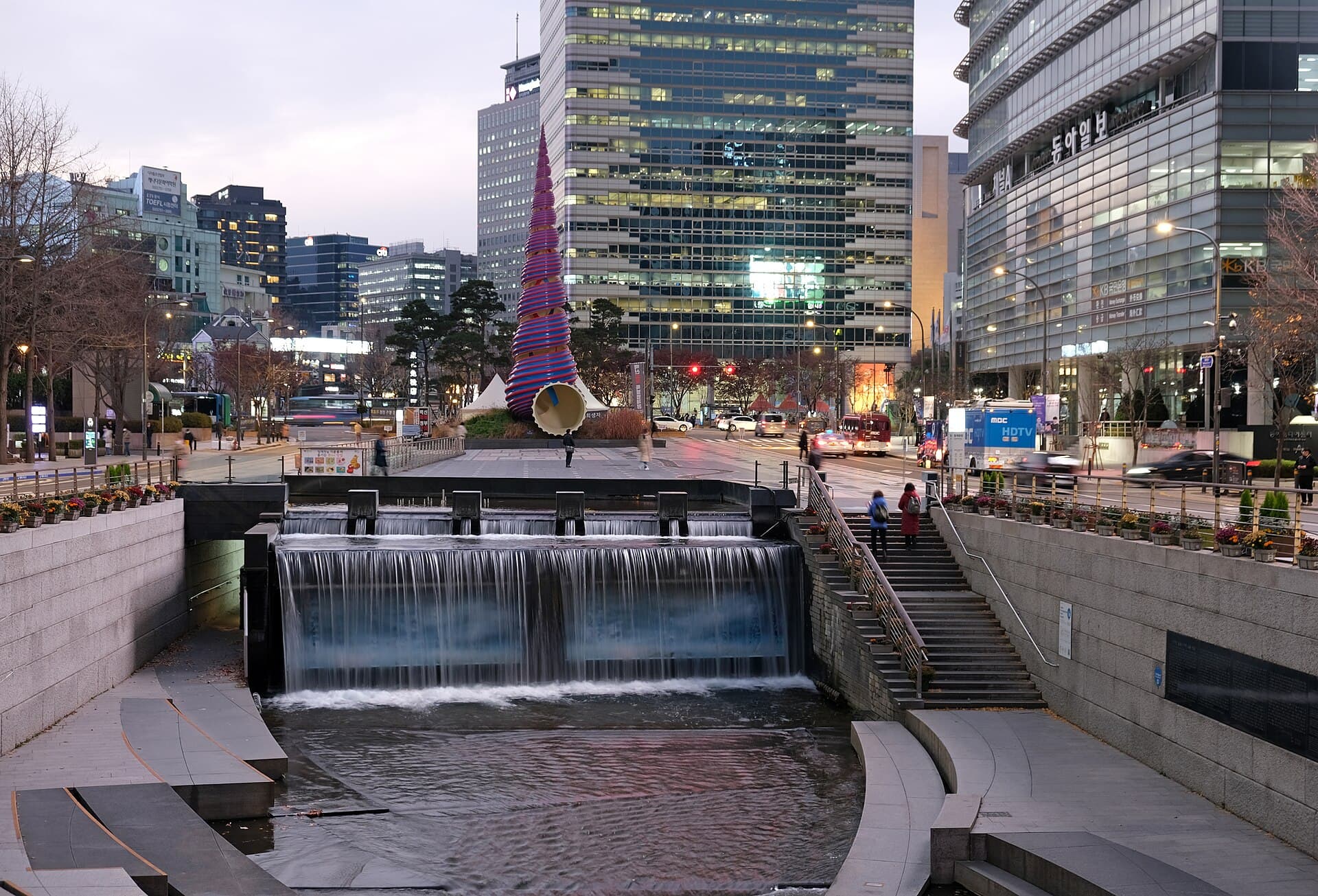 Cheonggyecheon StreamA stream running about 11 kilometres through the heart of Seoul, brought back to5 minutes walk4.5
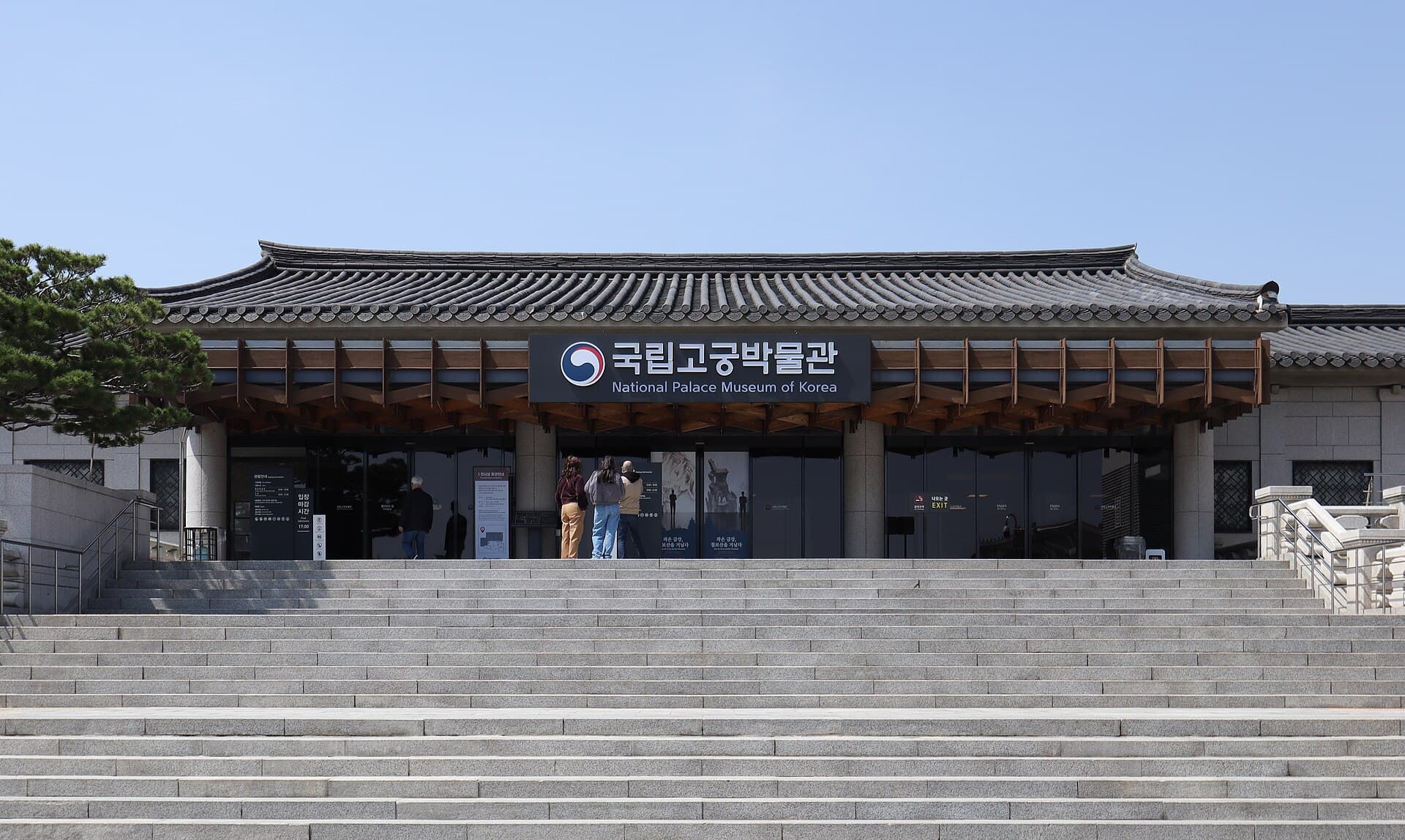 National Palace Museum of KoreaThe museum of royal life under the Joseon dynasty and the Korean Empire, holding6 minutes walk4.7
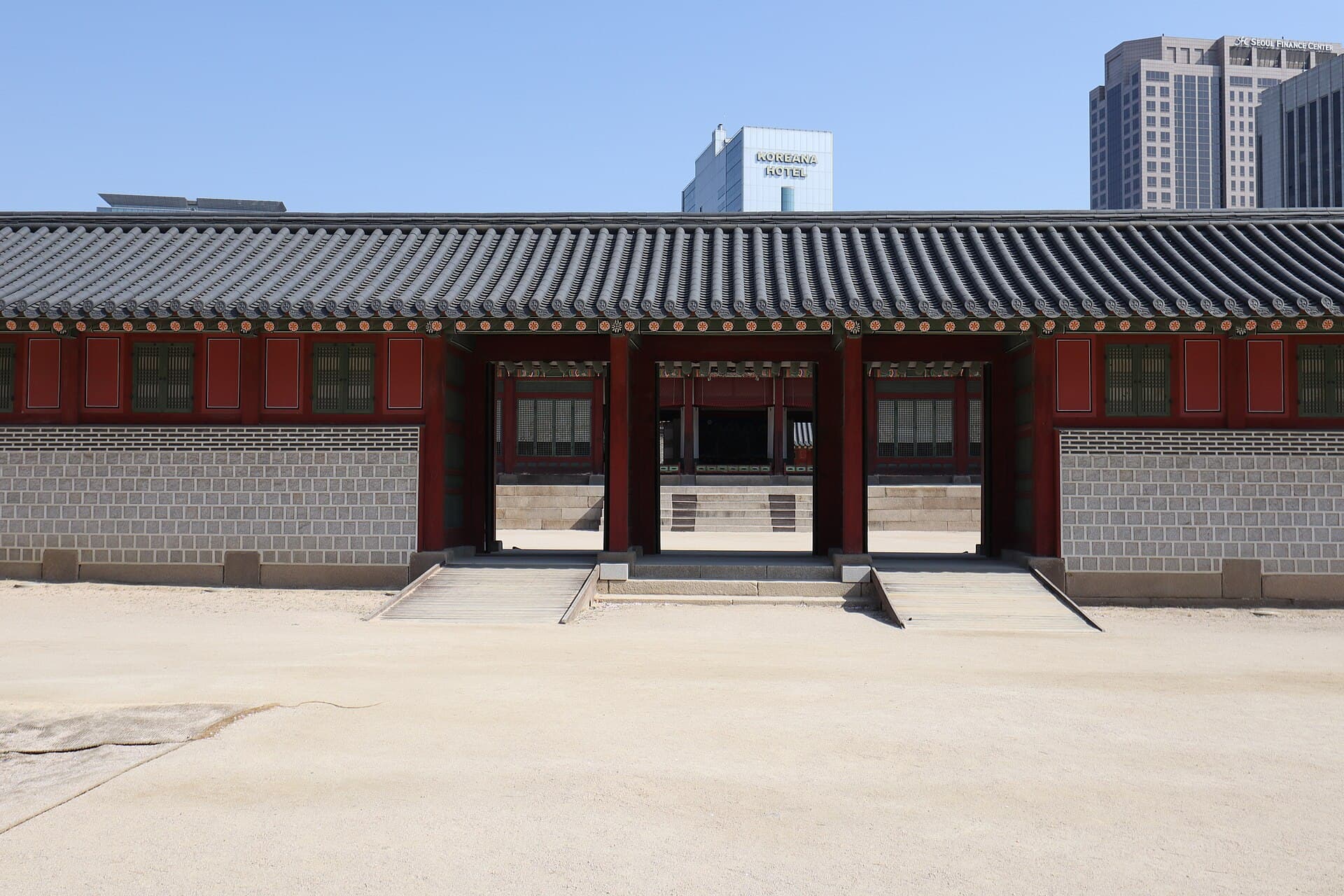 Deoksugung PalaceA small palace in the middle of modern Seoul, across from City Hall, that mixes 9 minutes walk4.5
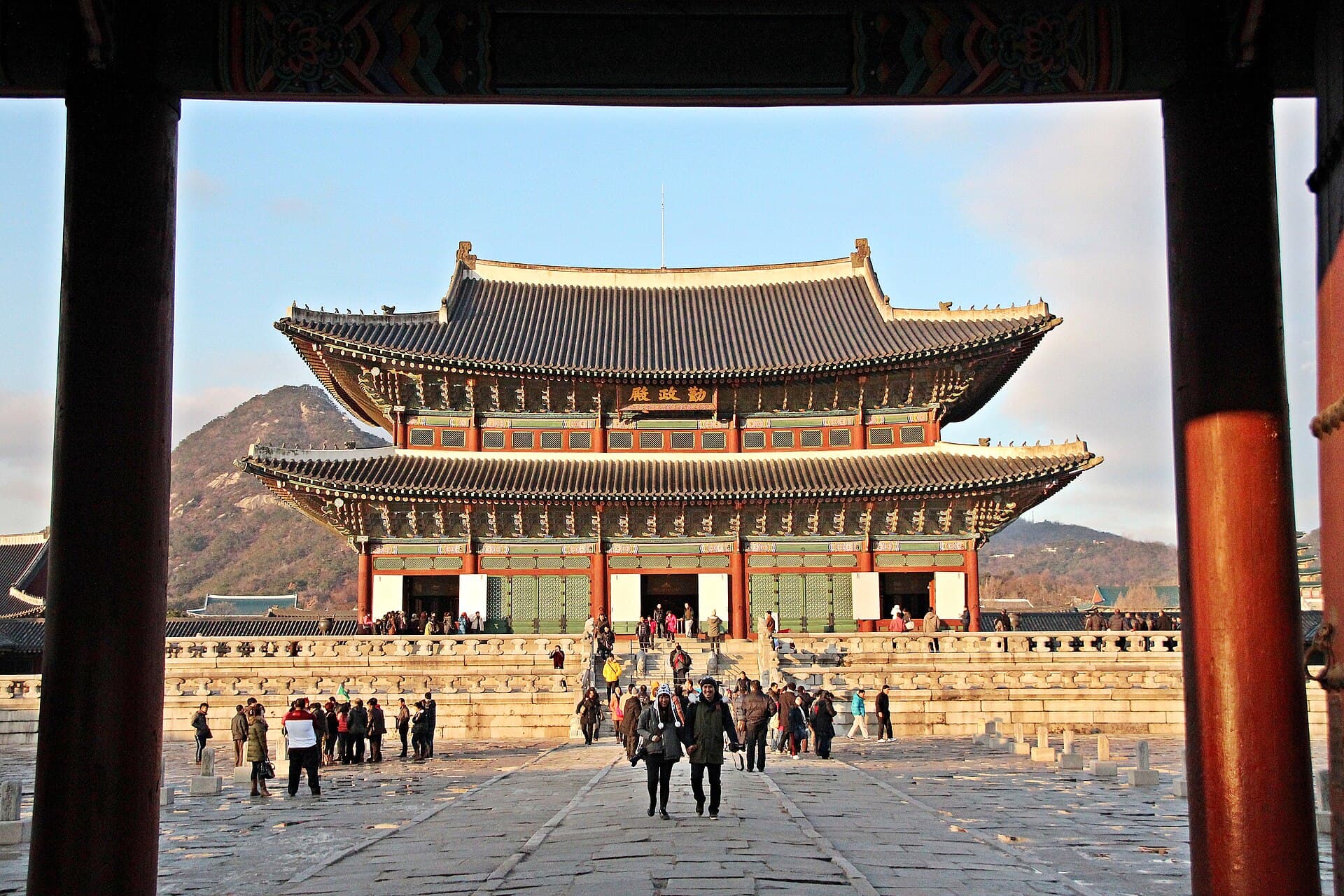 Gyeongbokgung PalaceThe largest and best known of Seoul's five royal palaces, and the first one the 10 minutes walk4.5
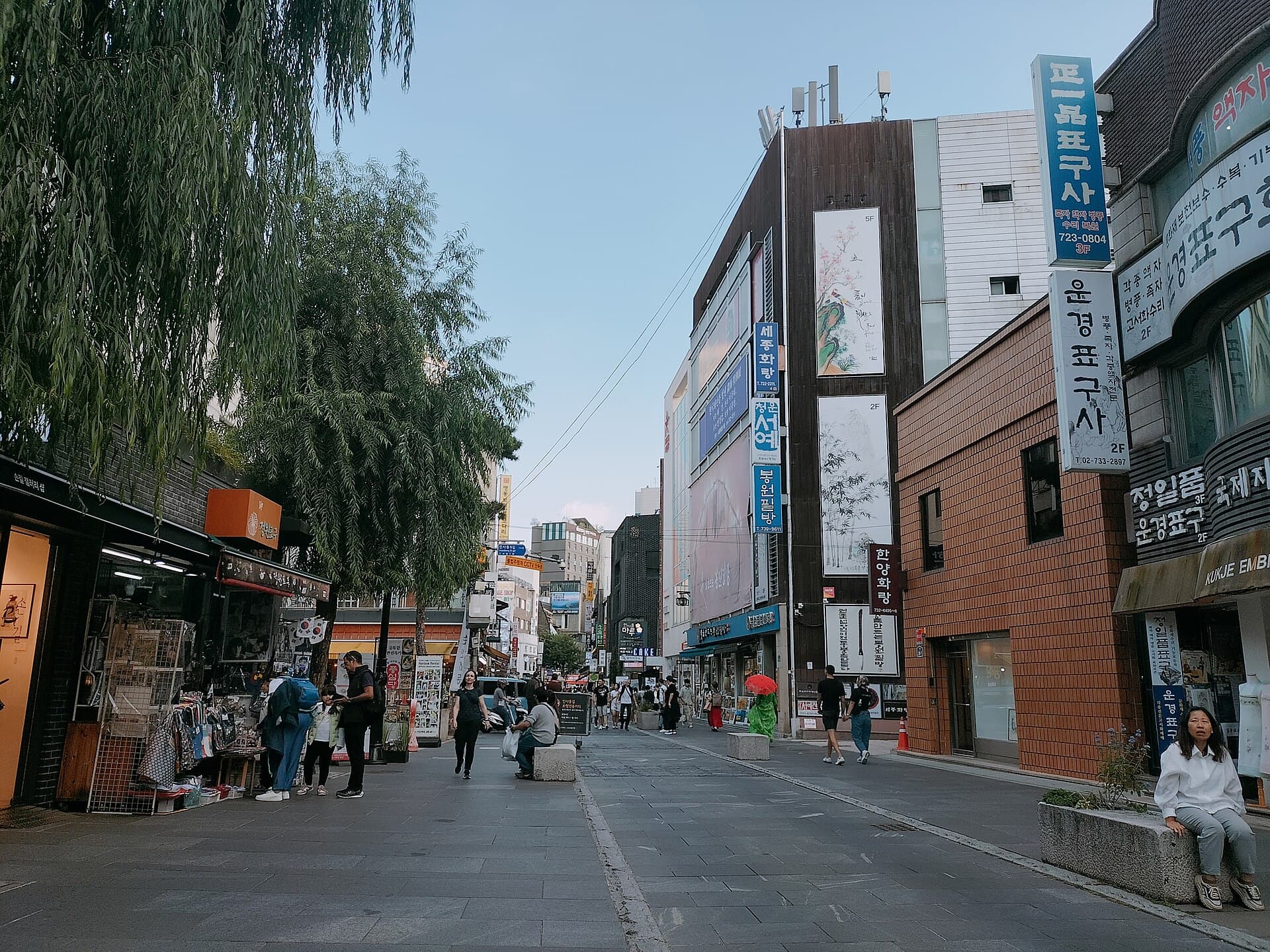 InsadongSeoul's street of traditional arts and crafts, and historically the largest mark11 minutes walk4.4
A free underground exhibition on King Sejong's life, the Korean alphabet and the inventions of his time, entered from behind the statue.