
The gold crowns
Pure gold from royal tombs.
by martinroell — CC BY-SA 2.0 · ko:User:Eggmoon — CC BY-SA 3.0 · ko:User:eggmoon — CC BY-SA 3.0 · Josep Panadero — CC BY-SA 4.0
The museum devoted to the Silla kingdom, which made Gyeongju its capital for nearly a thousand years. It was founded in 1945 as a branch of the National Museum, became a museum in its own right in 1975, and stands in the middle of the heritage area, among the pond, the tombs and the old palace sites. Its greatest treasures are the gold pieces from the royal tombs: crowns of pure gold with branches and antlers hung with jade beads, along with gold belts, earrings and shoes, all bearing out Gyeongju's old name, «city of gold». Another wing holds the finds drawn from Wolji Pond when it was drained, including everyday objects from palace life. In the museum garden hangs the Divine Bell of King Seongdeok, one of the largest bronze bells in Korea, cast in the eighth century and weighing about 19 tonnes. It is known as the Emille Bell after a sad legend about its casting, and the relief work around its rim is among the finest Silla craftsmanship. Entry is free and captions are in English. Allow an hour and a half, and make it your first stop in Gyeongju: it explains everything you will see afterwards.
Pure gold from royal tombs.
8th-century bronze, 19 tonnes.
Objects of palace life.
186 Iljeong-ro, central Gyeongju, south of Wolji Pond
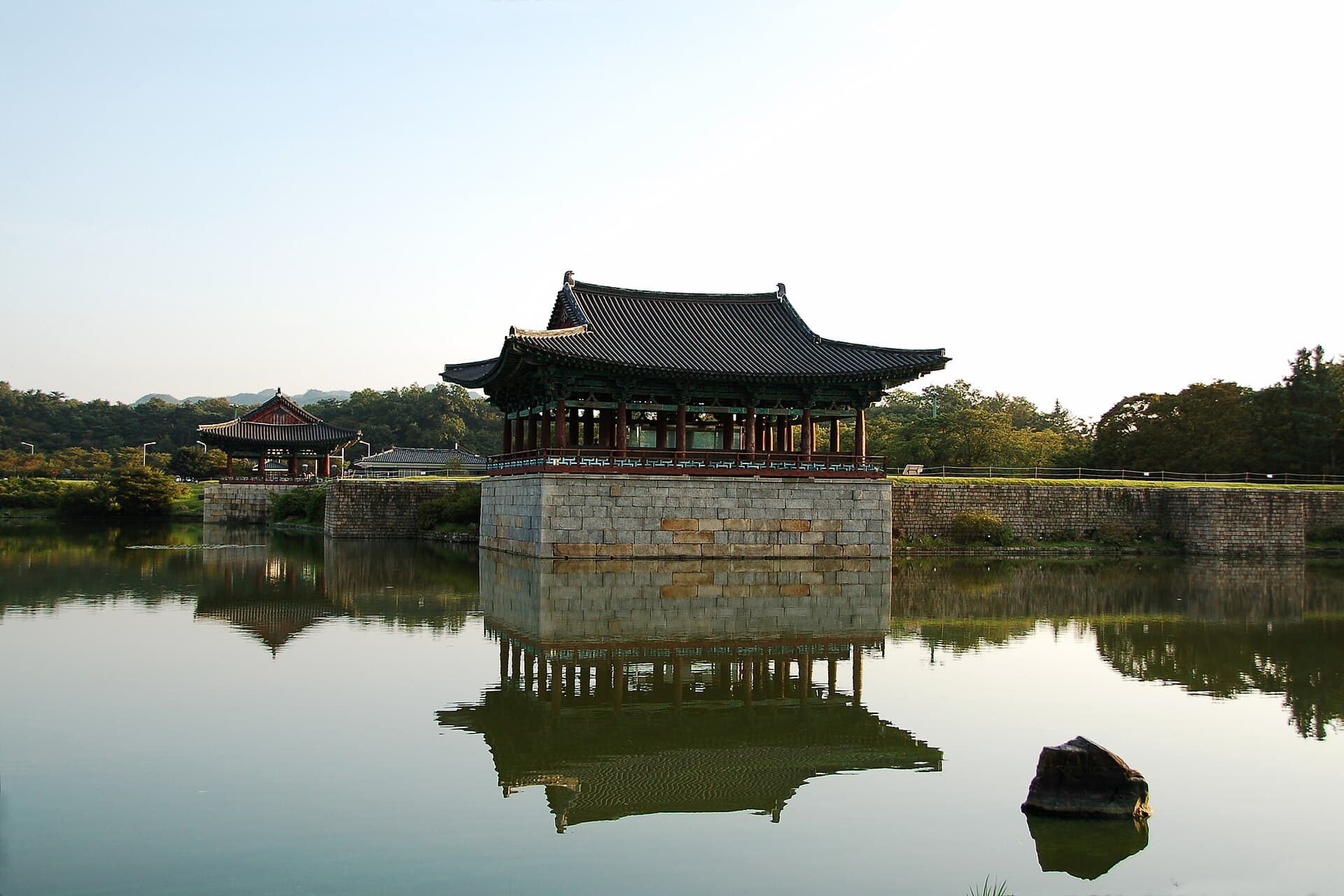 Donggung Palace and Wolji PondThe remains of the Silla crown prince's palace and its artificial pond, built on8 minutes walk4.6
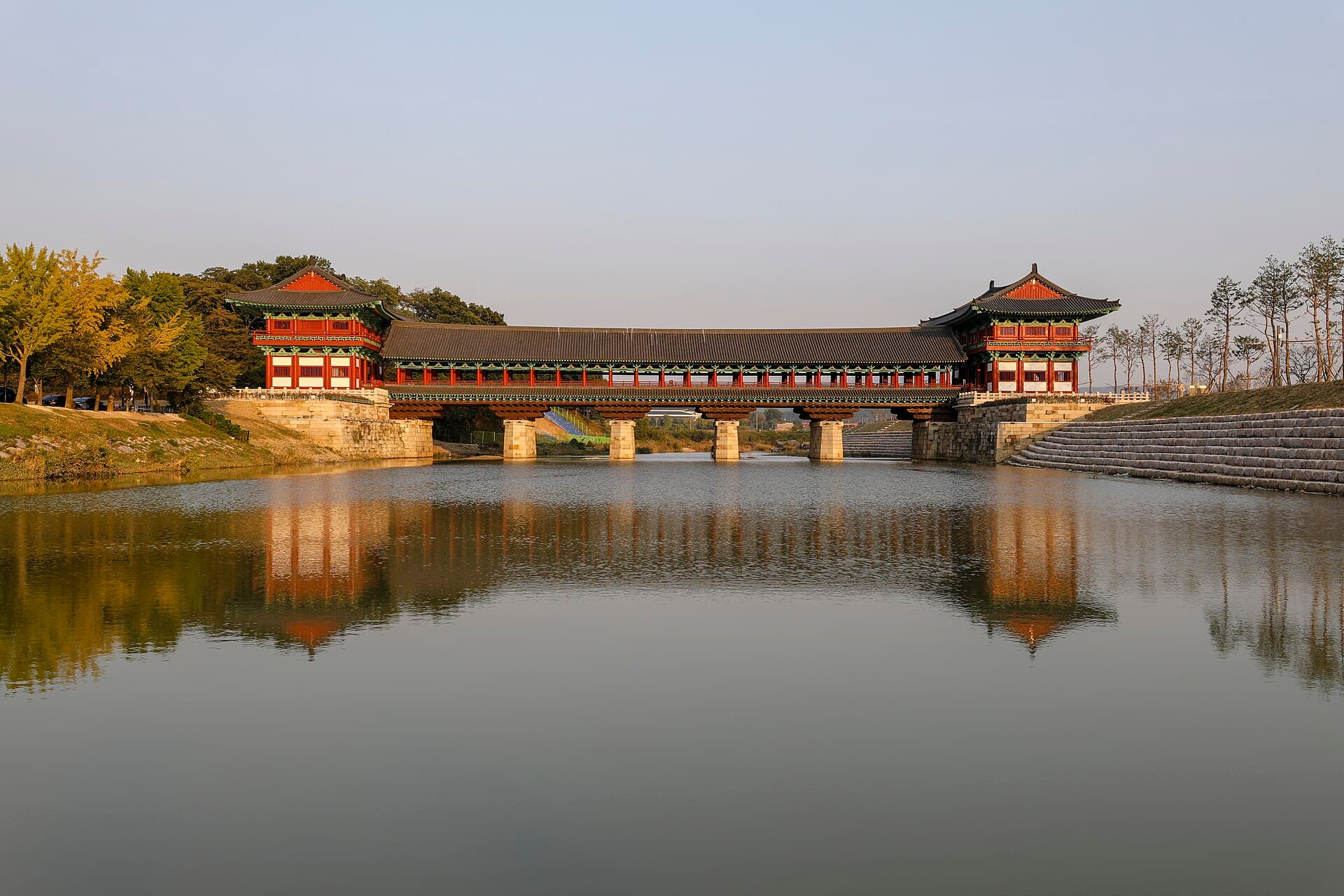 Woljeonggyo Bridge and Gyochon VillageA covered wooden bridge with colourful tiled roofs and tall gate towers at each 11 minutes walk4.5
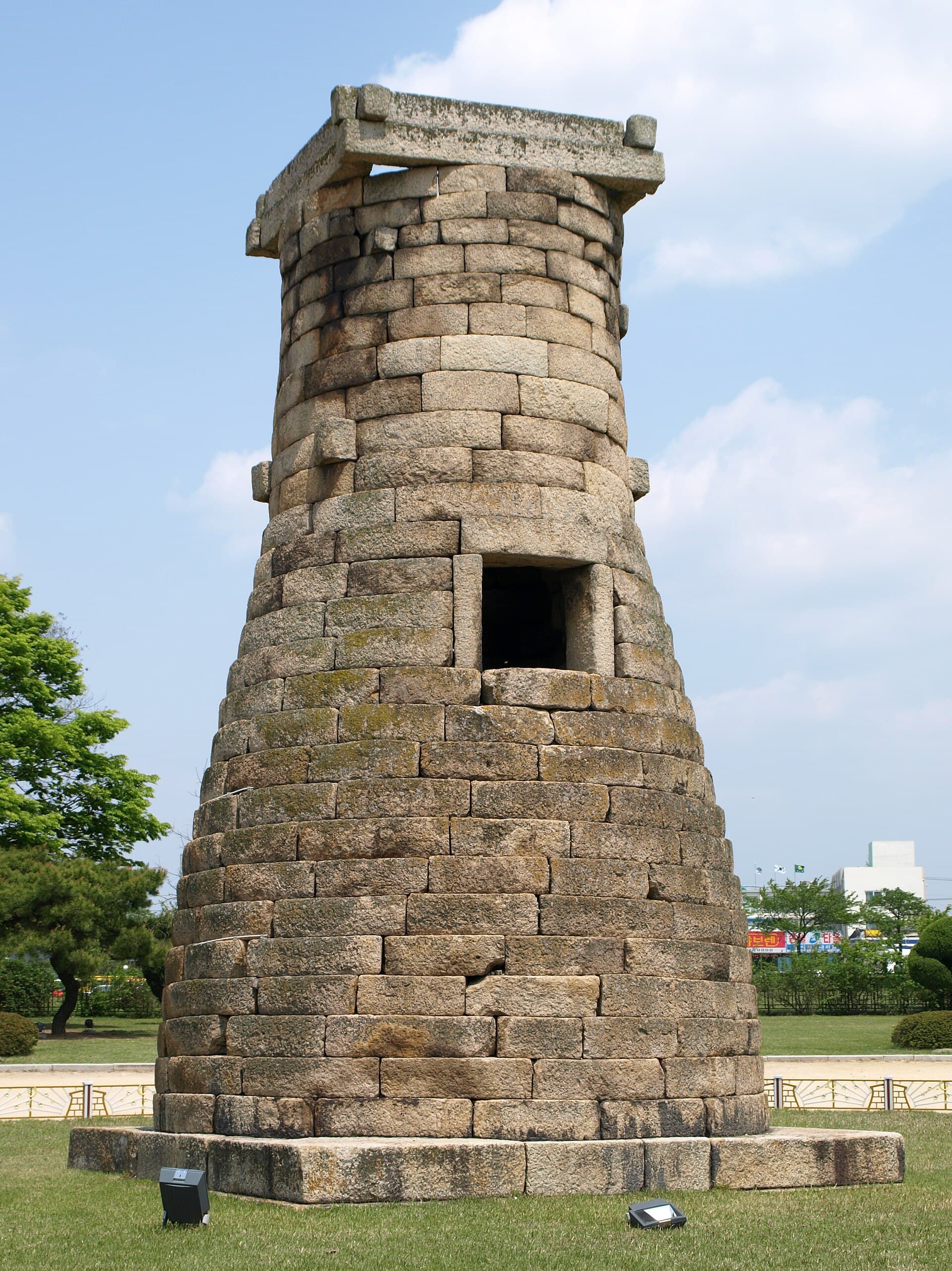 Cheomseongdae ObservatoryA small stone tower from the seventh century, counted as the oldest surviving as12 minutes walk4.4
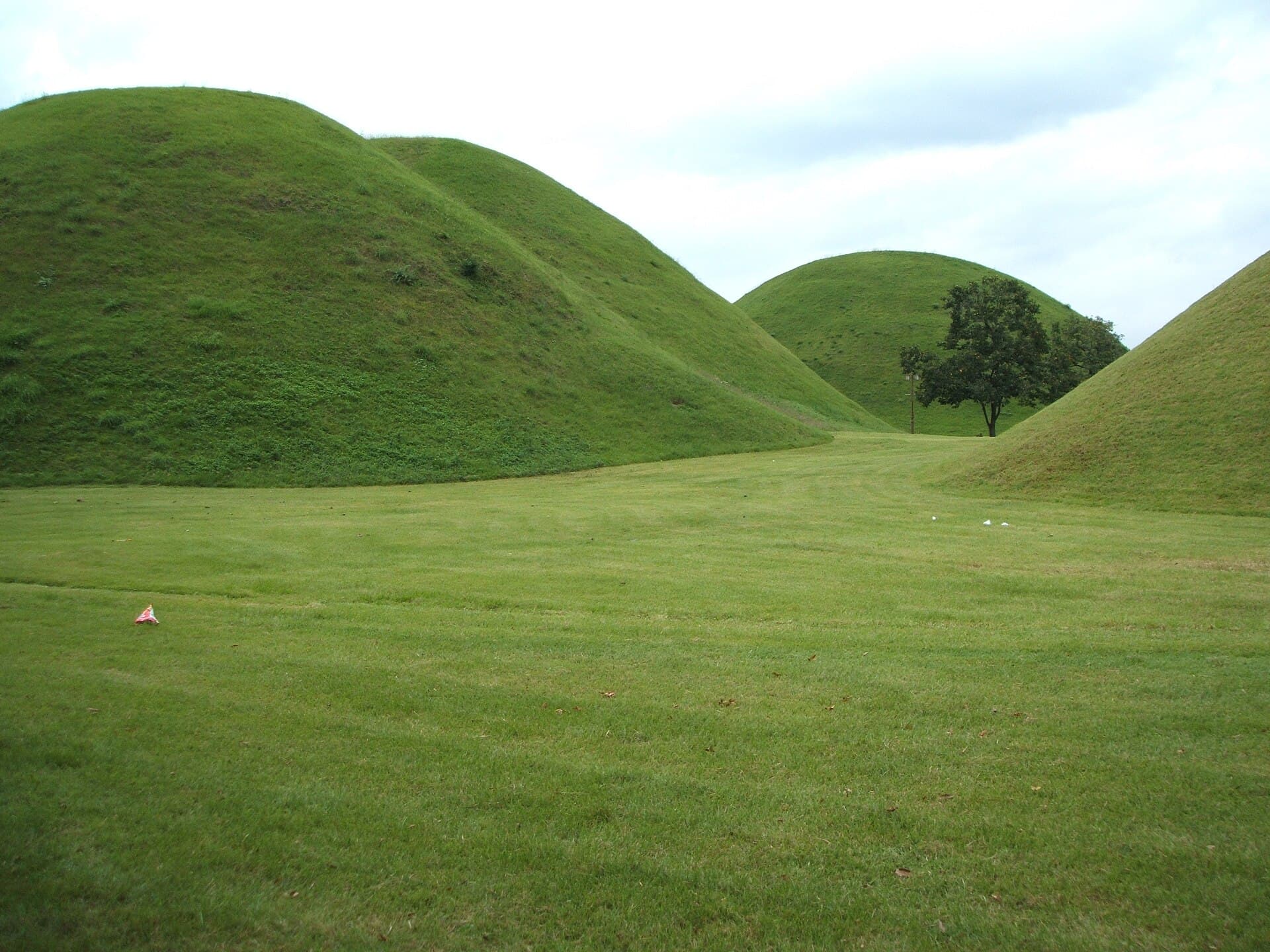 Daereungwon Tomb ComplexA park in the heart of Gyeongju holding 23 round, grassy mounds: the tombs of th23 minutes walk4.4
Yes, the permanent galleries are free; some special exhibitions charge. It closes on 1 January, Seollal and Chuseok.