
Granary halls
Cool earth walls.
Bernard Gagnon — CC BY-SA 3.0 · Josep Renalias — CC BY-SA 3.0 · Claudia Ledda from Genova — CC BY-SA 2.0 · john581 — CC BY 2.0 · RACHID BAYA — CC BY-SA 4.0 · Robert Prazeres — CC BY-SA 4.0 · Robert Prazeres — CC BY-SA 4.0 · Froh Belfakir — CC BY-SA 4.0
A massive building from the reign of Sultan Moulay Ismail that served as the granary and storehouse of his imperial kasbah, joined to the House of the Ten Norias, whose waterwheels drew water from deep wells to supply the palaces. It is often mistaken for the royal stables, which stood elsewhere to the south. You walk its halls with extremely thick earth walls and high vaults, designed to stay cool and protect the grain from heat and damp. Behind them stretch the ruins of endless rows of huge arches open to the sky, a majestic scene used in international films. Next to it lies the Agdal Basin, or Sahrij Souani, a huge rectangular reservoir that stored irrigation water for the royal orchards and gardens, now ringed by a promenade, cafés and benches, with the city wall mirrored in the water, where locals stroll at sunset. Admission is about seventy dirhams according to 2026 guides, and opening hours are usually split into a morning and an afternoon session. It is some way from Place el-Hedim, so come by petit taxi or horse-drawn carriage.
Cool earth walls.
Open to the sky.
A sunset stroll.
South of the Ismaili kasbah, Meknes
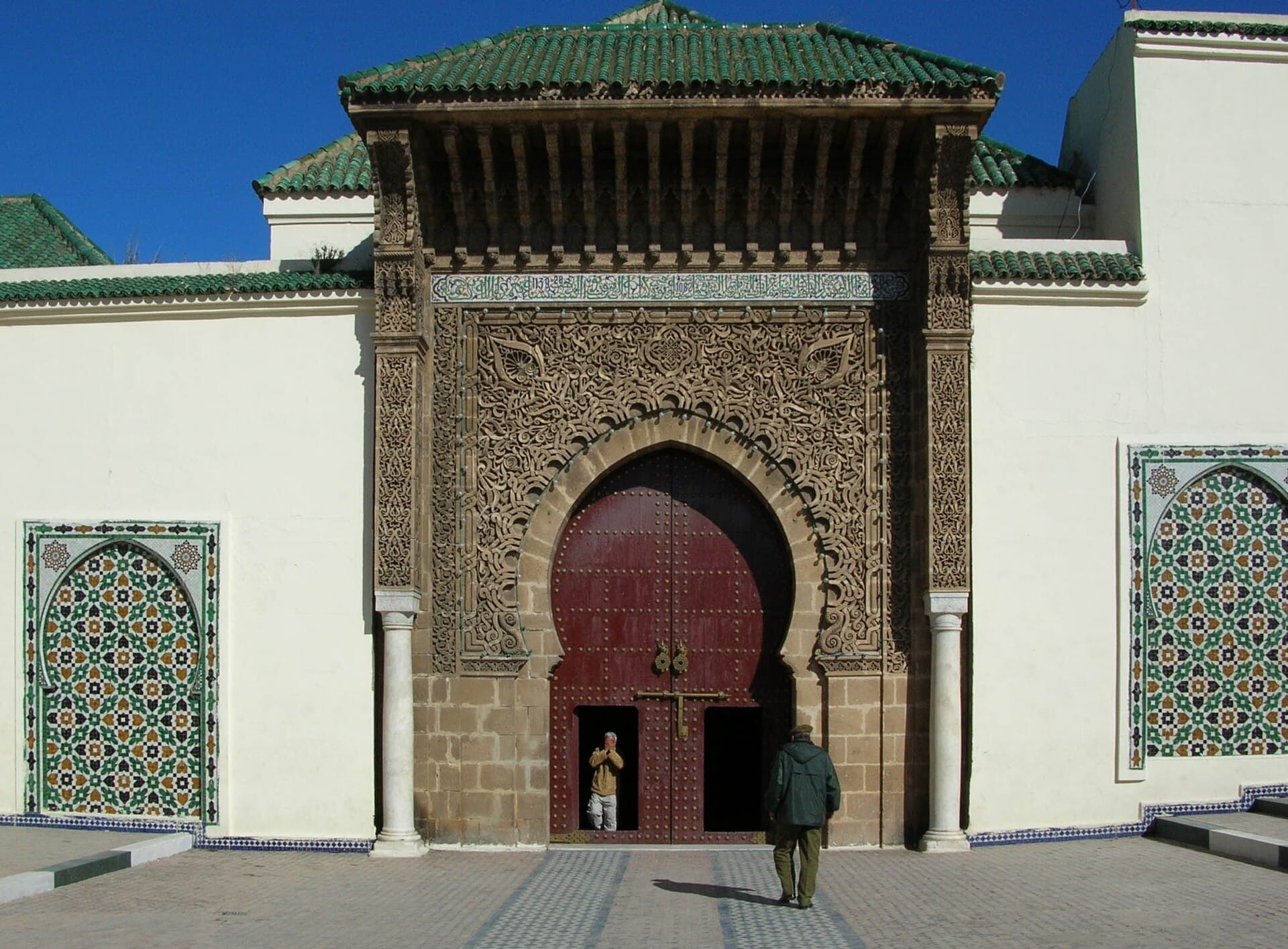 Mausoleum of Moulay IsmailA funerary complex holding the tomb of Sultan Moulay Ismail, who ruled Morocco f16 minutes walk
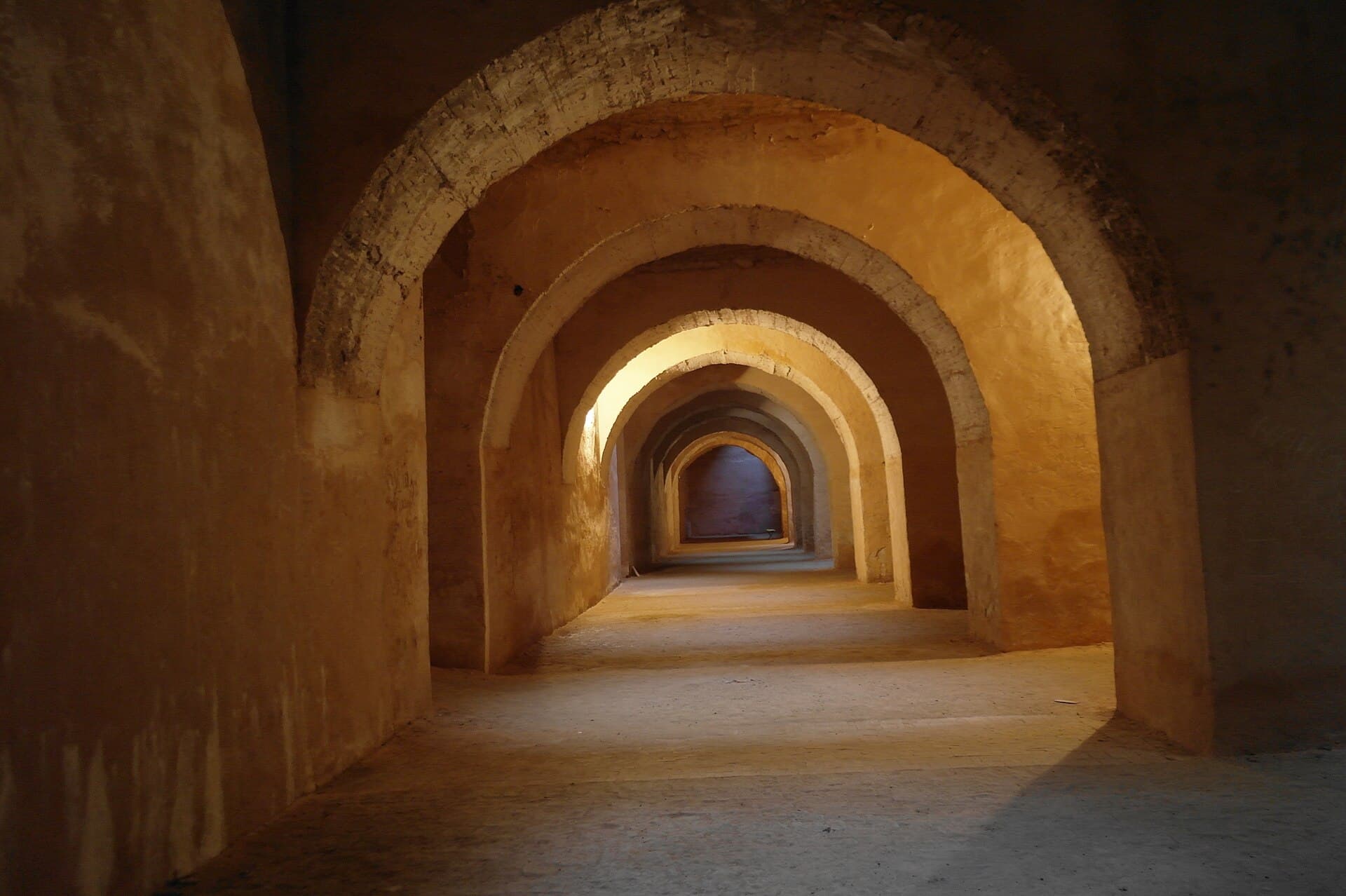 Qara PrisonA series of underground vaulted chambers built in the early eighteenth century b17 minutes walk
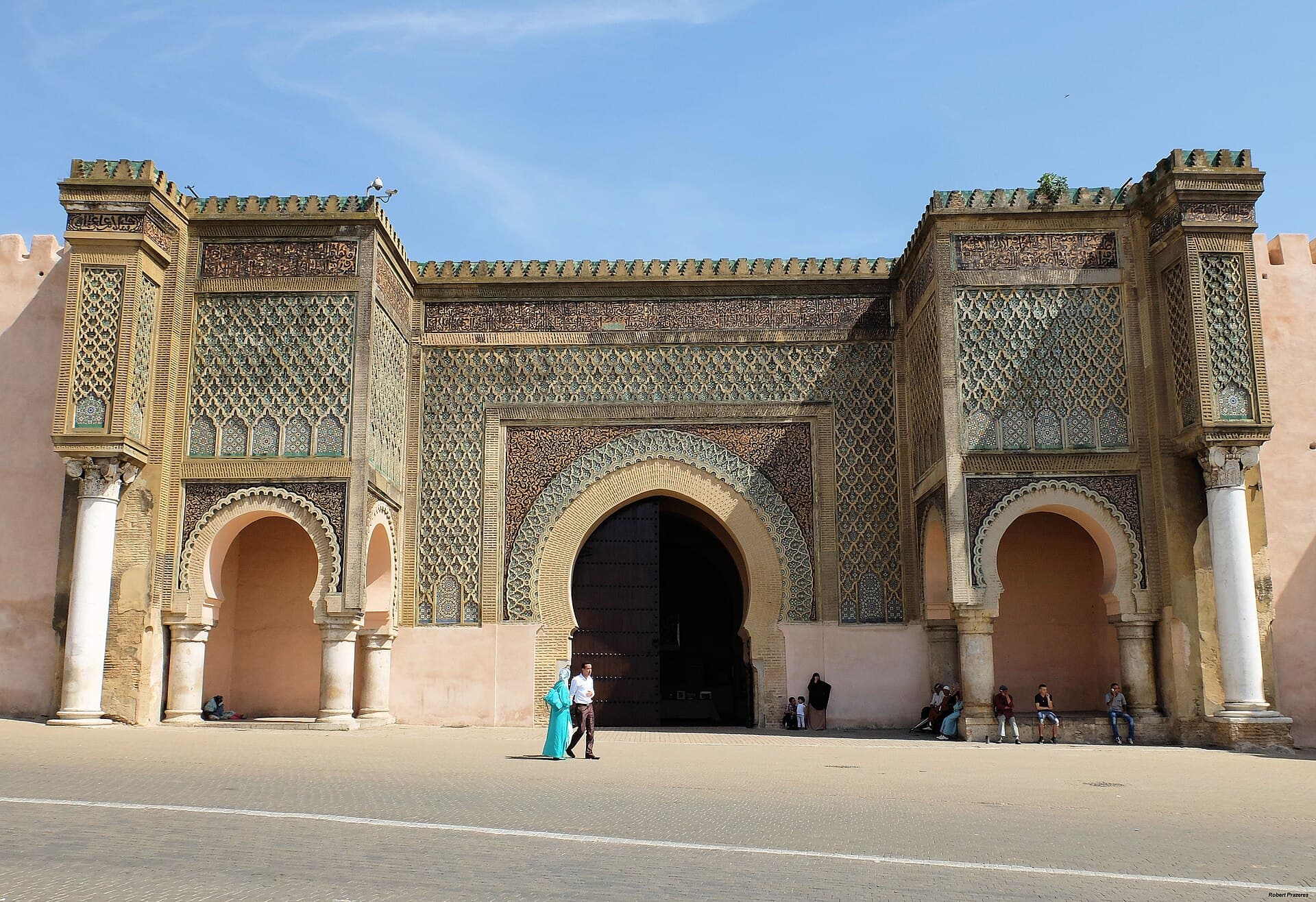 Bab MansourThe most famous and beautiful gate of Meknes and one of the finest historic gate19 minutes walk
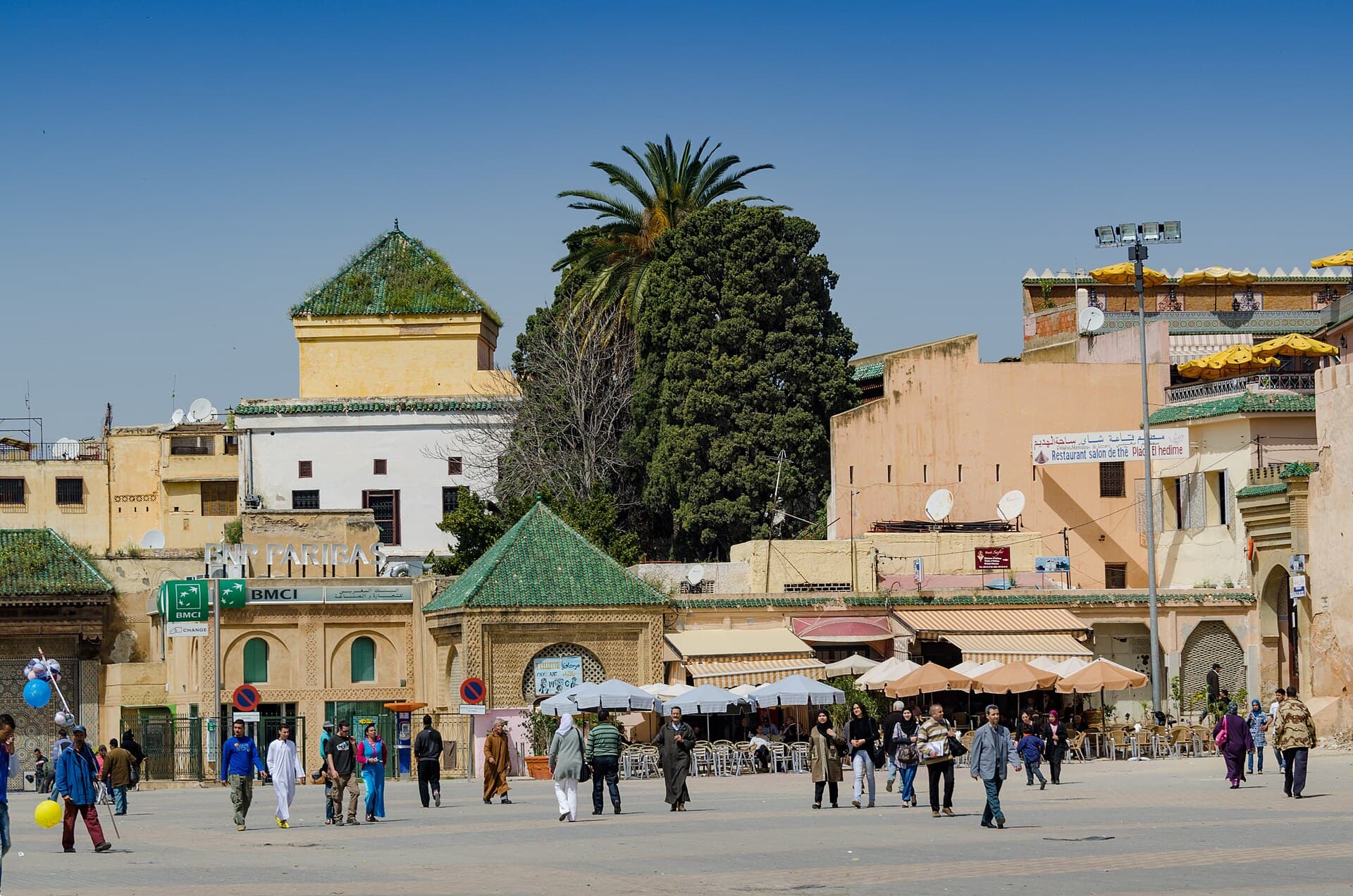 Place el-HedimThe great square of old Meknes, separating the medina from Moulay Ismail's kasba20 minutes walk
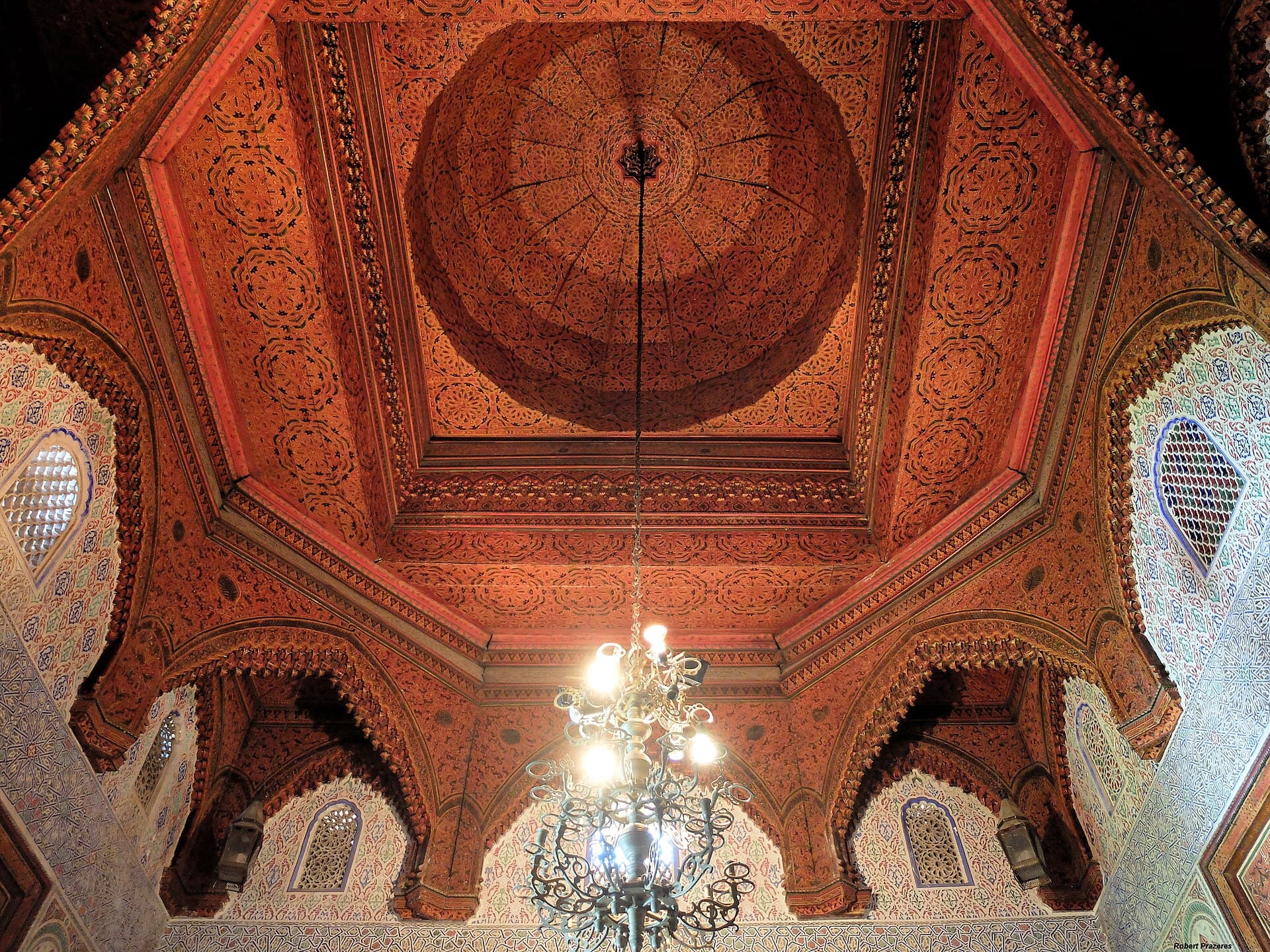 Dar Jamaï Museum (National Museum of Music)A late nineteenth-century palace on Place el-Hedim, built in 1882 for the Jamaï 21 minutes walk
Many call them that, but historians see them as granaries and water works; the stables stood elsewhere to the south.