
A city with five identities
Its official identity changed five times in about one century.
A theatre in Zadar's old town, one of the Croatian national theatres, with a history that reflects the succession of powers over this city. Zadar changed its official identity repeatedly within a single century. It was under Venetian rule for centuries, then Austrian, then became Italian between the wars as Zara under the 1920 Treaty of Rapallo while the country around it stayed Yugoslav, then was destroyed by Allied bombing in the Second World War, then became Yugoslav, then Croatian in 1991. The theatre went through all of it: the language of its productions, its management and its audience changed with each shift. A cultural institution in a city like this is not a luxury but the arena in which questions of language and belonging get settled. The bombing is part of the story too: Zadar was among the most heavily damaged cities on the Adriatic, more than half its buildings destroyed, and what you see today is a mixture of restoration and modern building on Roman and Venetian foundations. Practical points: the building is free to see from outside; going in means attending a performance. Check the programme, and productions are normally in Croatian.
Its official identity changed five times in about one century.
The language of productions changed with each power — the theatre is an arena.
Allied bombing in the Second World War changed Zadar's form entirely.
Old town, Zadar
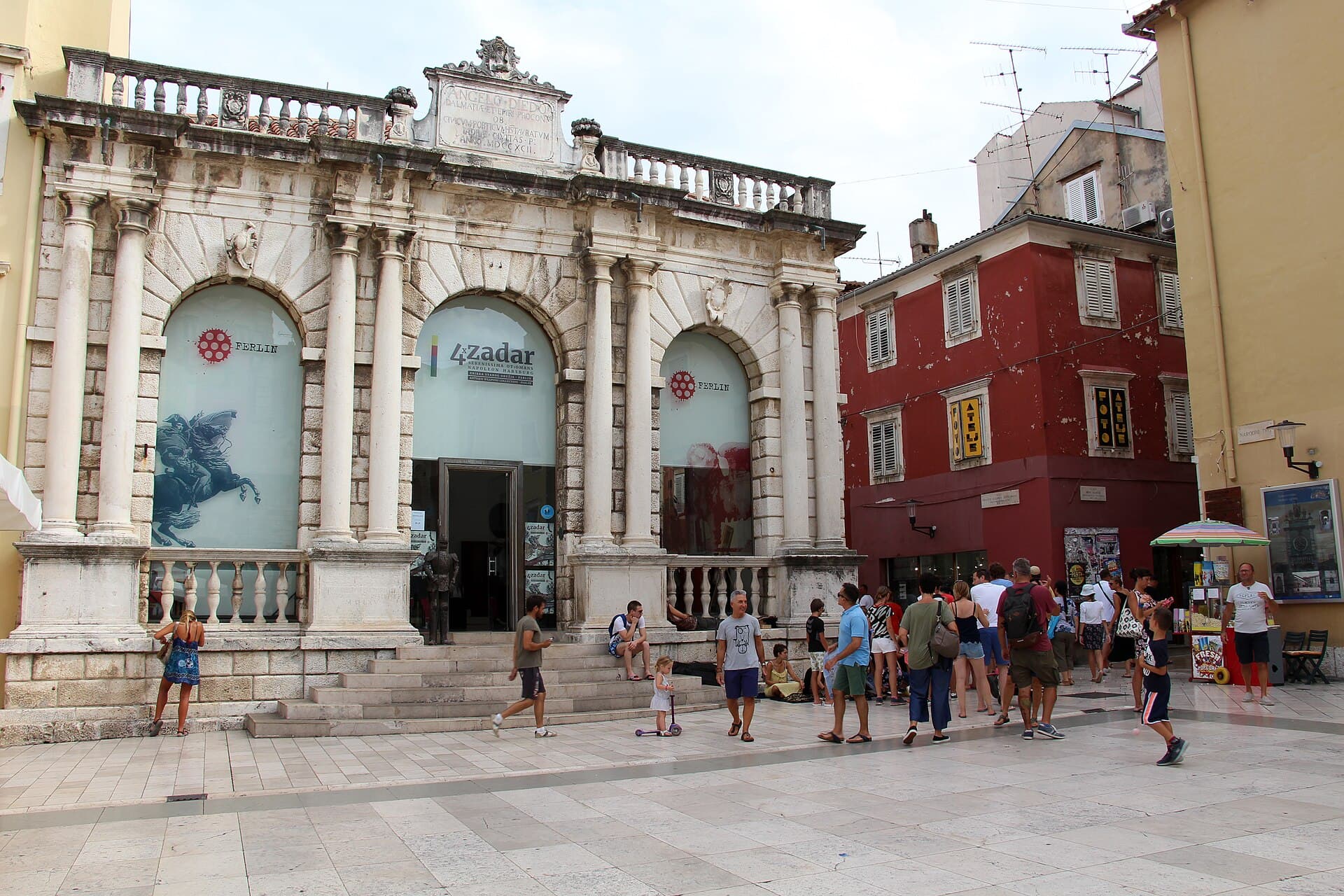 The City LoggiaThe City Loggia stands on Narodni trg, the People's Square, Zadar's administrati2 minutes walk4.1
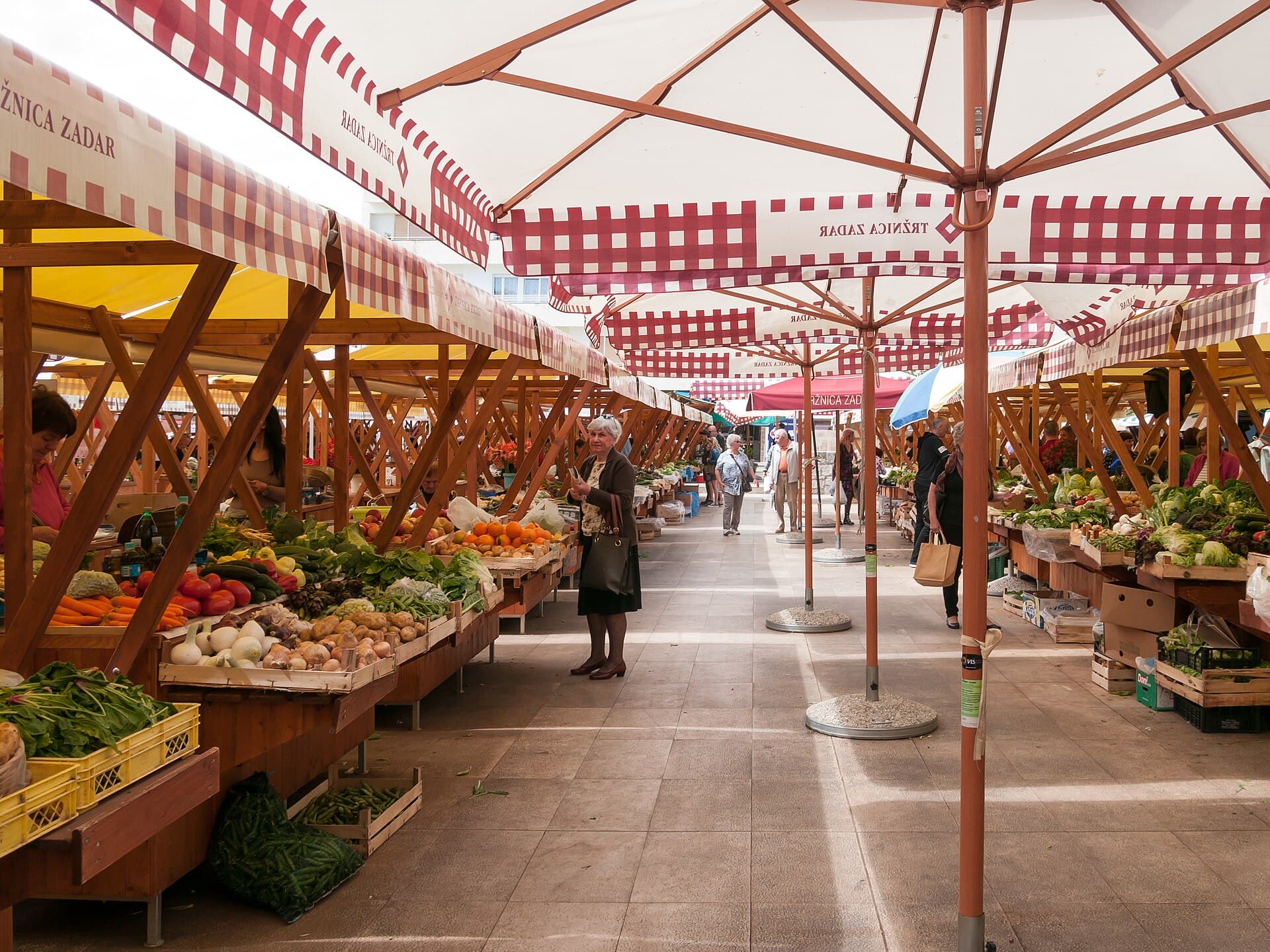 Zadar MarketZadar's central market is a genuine daily market inside the old town near the wa2 minutes walk4.4
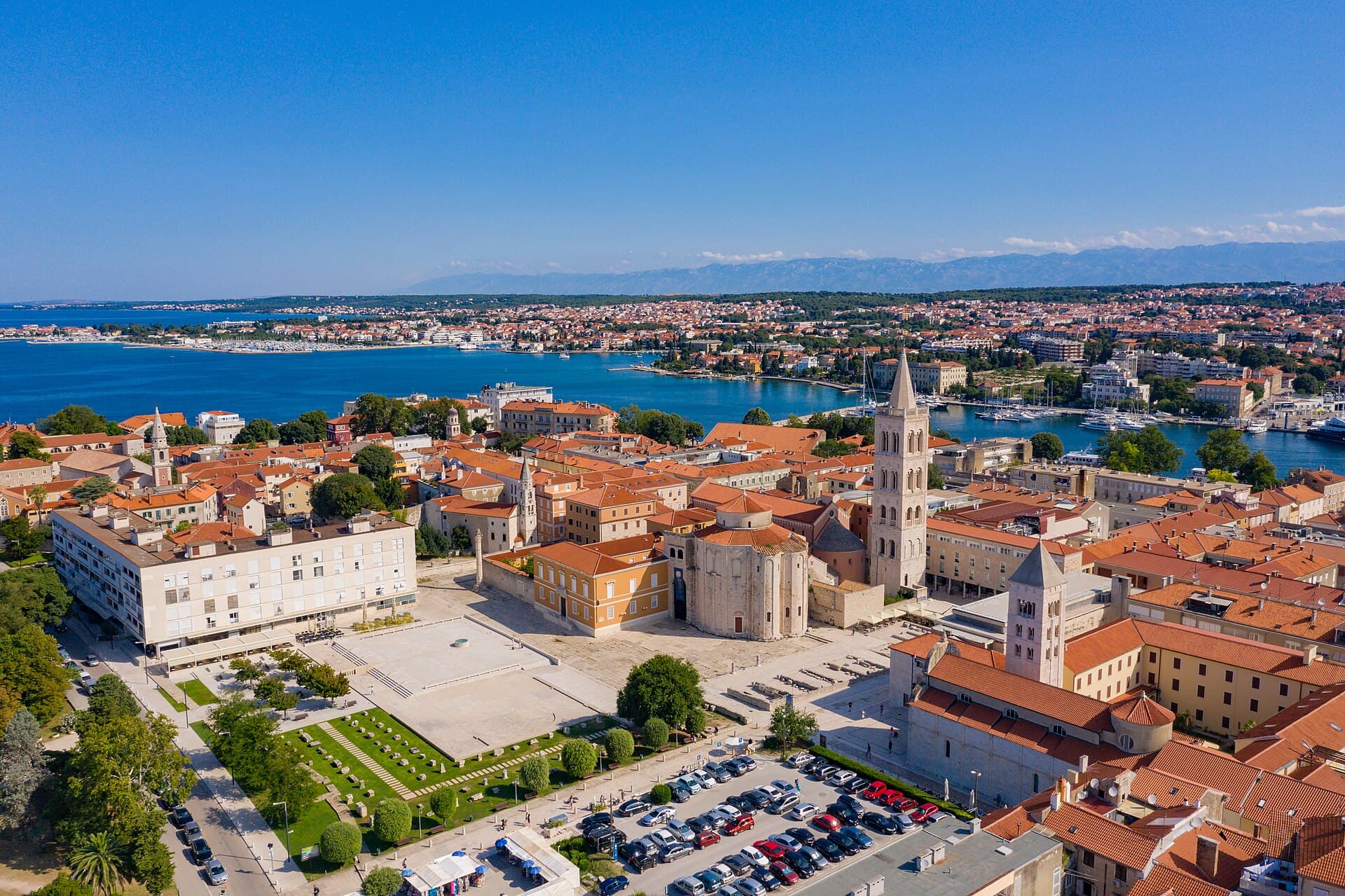 Zadar Old TownZadar's old town is Dalmatia condensed: a walled peninsula split by the Kalelarg2 minutes walk4.8
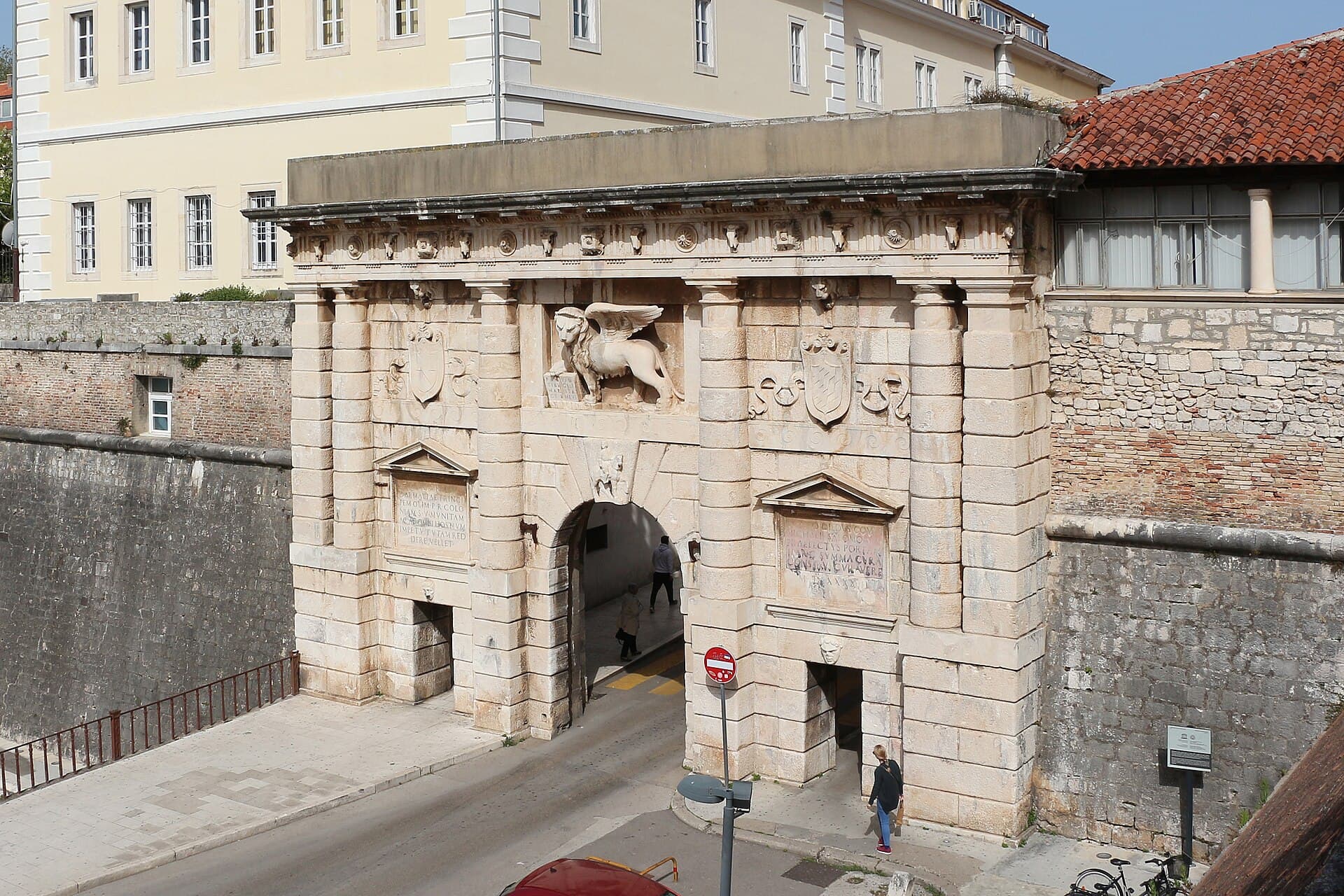 The Zadar City Walls and Land GateZadar's Venetian walls are inscribed on the UNESCO World Heritage list within th3 minutes walk4.6
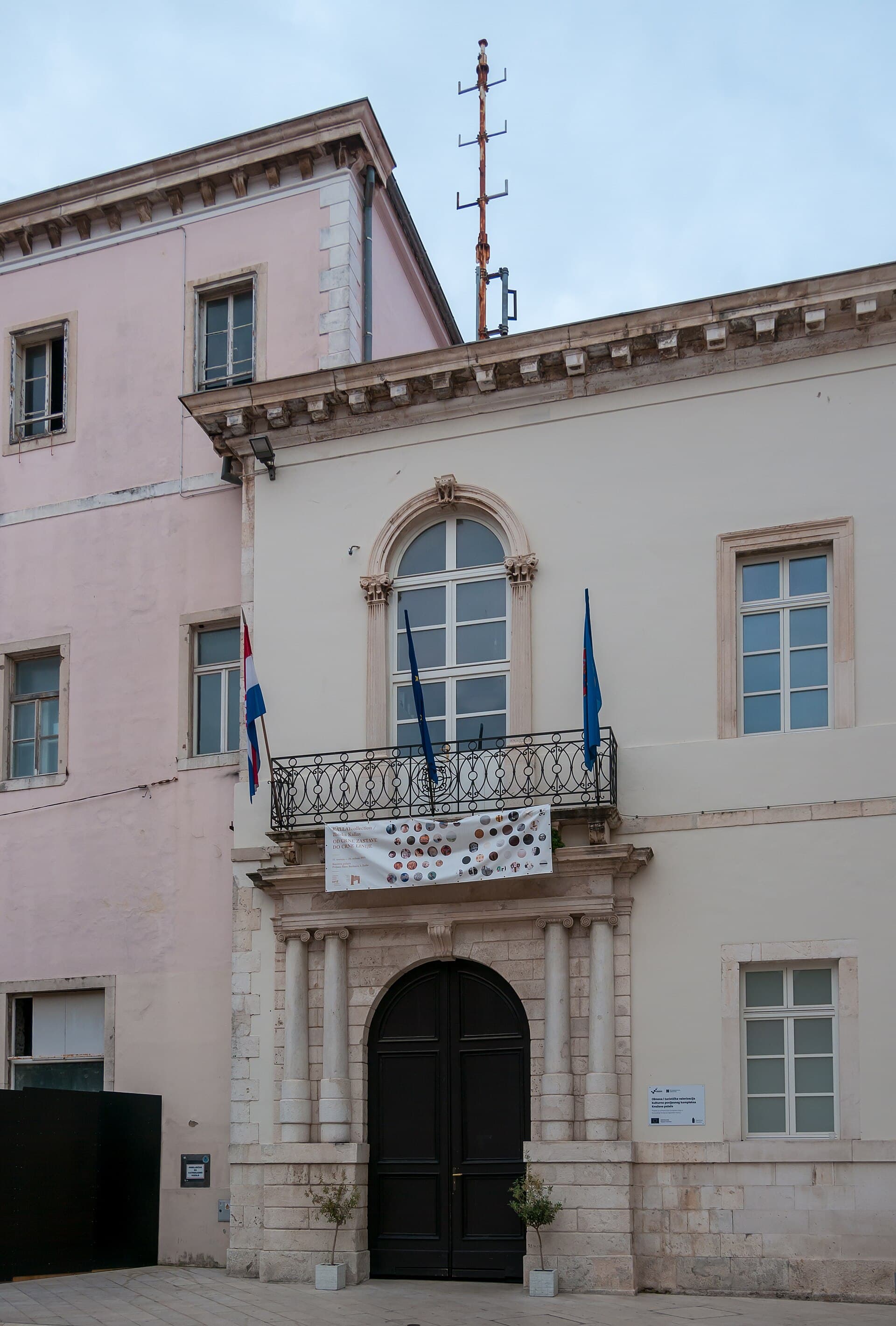 Rector's Palace, ZadarThe seat of Zadar's government through centuries of Venetian rule and after it, 3 minutes walk4.6
Because it was an Italian city inside Yugoslav territory, and Italy was an Axis power. It suffered dozens of raids in 1943 and 1944 that destroyed more than half its buildings and killed or displaced most of the population. After the war it passed to Yugoslavia and most of its Italian inhabitants left. That explains why the old town looks so strange today: Roman columns and ninth-century churches beside 1950s buildings.
The Sea Organ and Greeting to the Sun on the waterfront at sunset, the circular ninth-century Church of St Donatus standing on the Roman forum, the forum itself, and the Venetian city walls. The town is small and covered on foot in half a day.