
The Vřídlo
Two thousand litres a minute from two kilometres down — earth breathing.
Lubor Ferenc — CC BY-SA 4.0 · Ray Swi-hymn from Sijhih-Taipei, Taiwan — CC BY-SA 2.0 · Ray Swi-hymn from Sijhih-Taipei, Taiwan — CC BY-SA 2.0 · Lubor Ferenc — CC BY-SA 4.0
The city's literally beating heart: the Vřídlo mother-spring hurls its 72-degree geyser to twelve metres — two thousand litres a minute from two kilometres down, the force the whole city was built around since Charles IV found it (the tale: his hunting dog fell into hot water, and the spring was discovered). Its hall is practical seventies glass (fifth generation of buildings the steam devoured in turn) — and the interior is theatre: the fountain beating its glass roof into spray, steam wrapping the onlookers, side taps grading its water at 30, 50 and 72 degrees for varied drinking. Its hidden masterpiece is geological: aragonite precipitates from the water making the 'petrified roses' — real roses steeped for weeks until stone-coated: the authentic Karlovy souvenir from its own kiosks.
Two thousand litres a minute from two kilometres down — earth breathing.
One water at 30, 50 and 72 — grade your dose.
Divadelní náměstí, 360 01 Karlovy Vary
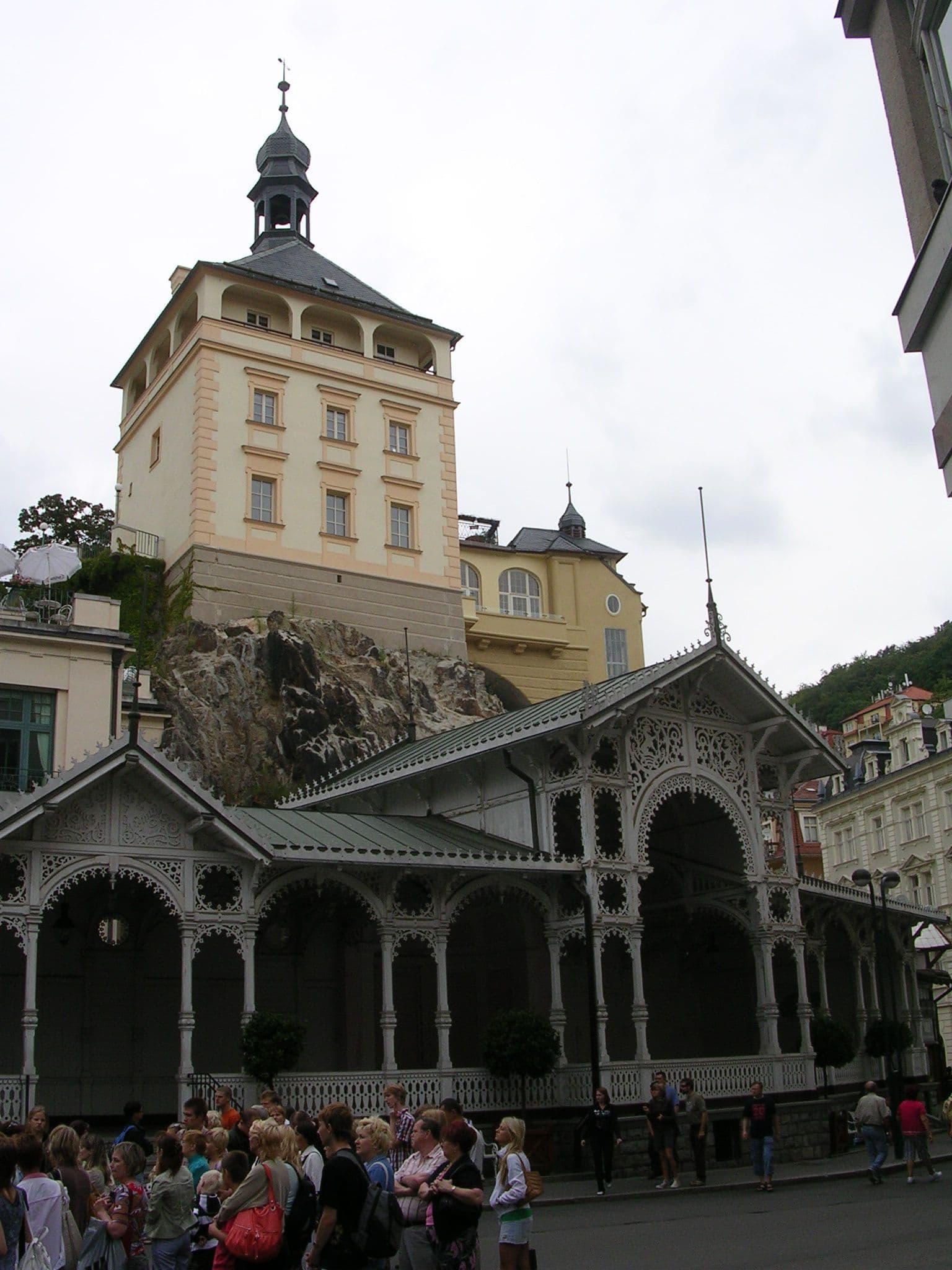 The Castle TowerA stone tower standing directly above the centre of Karlovy Vary, the only survi1 minute walk4.9
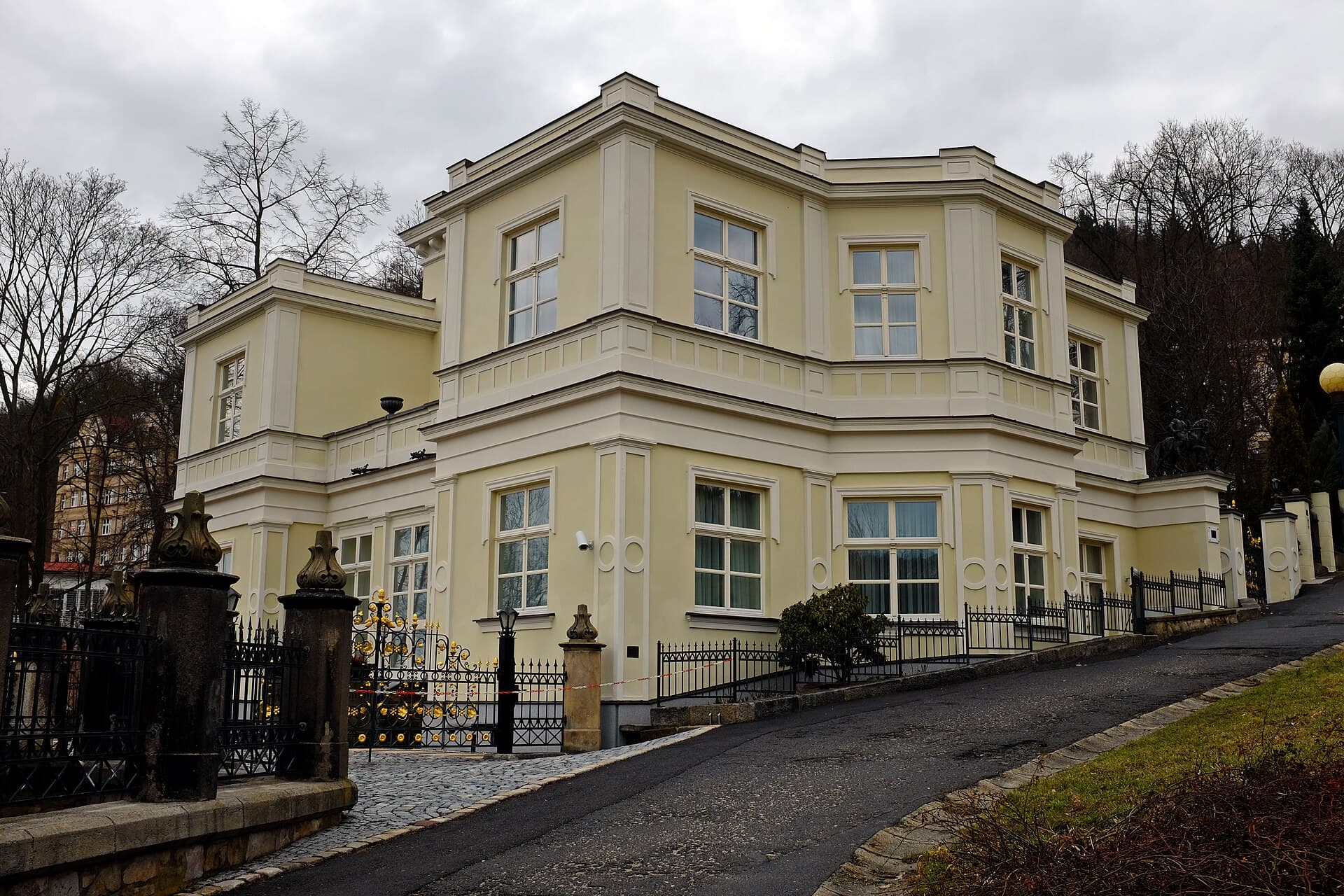 Lützow VillaA historic villa in Karlovy Vary from the town's boom period as a spa, and an ex2 minutes walk4.6
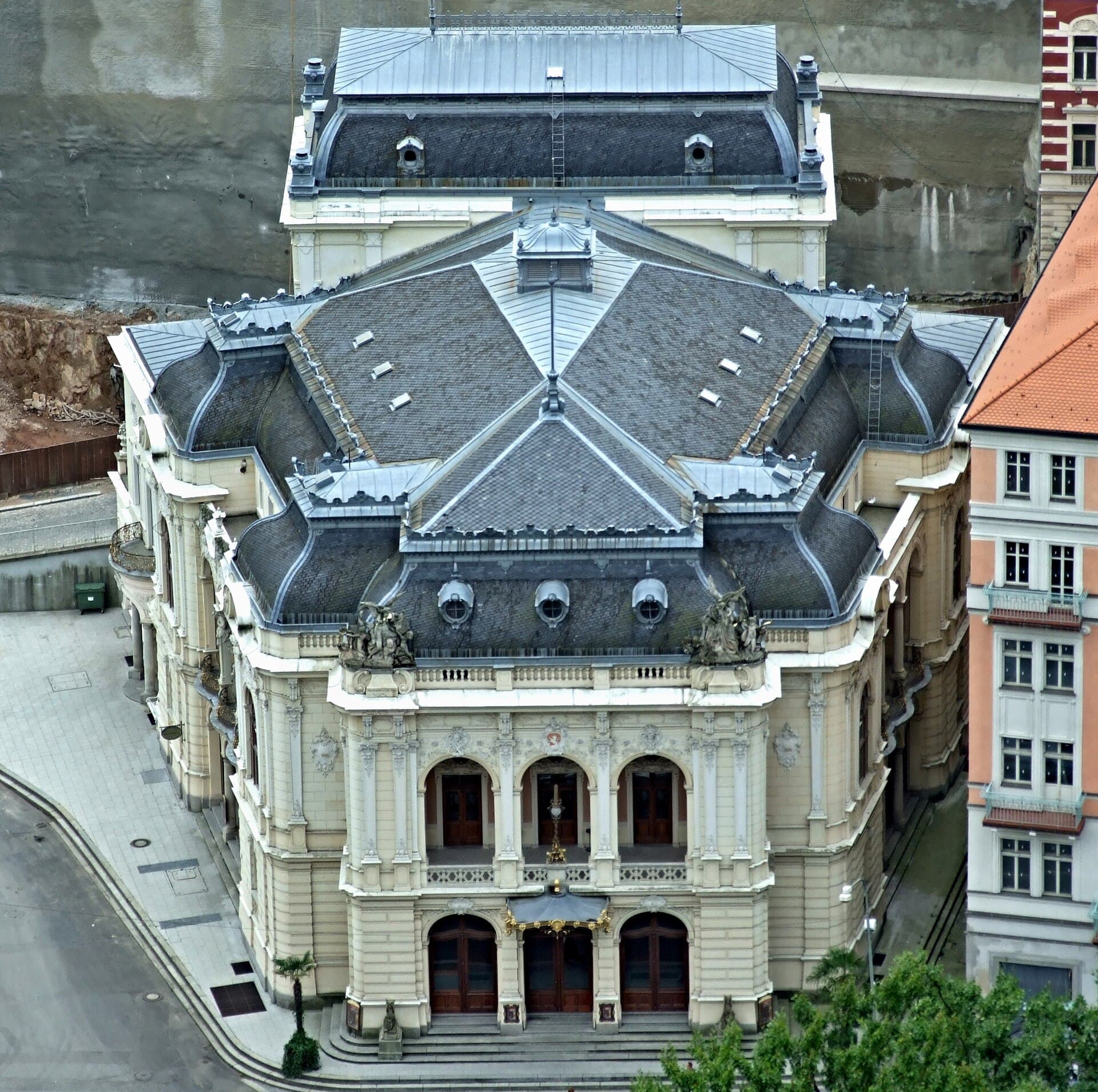 Karlovy Vary City TheatreA theatre of 1886 in central Karlovy Vary, built in the neo-Renaissance manner a3 minutes walk4.7
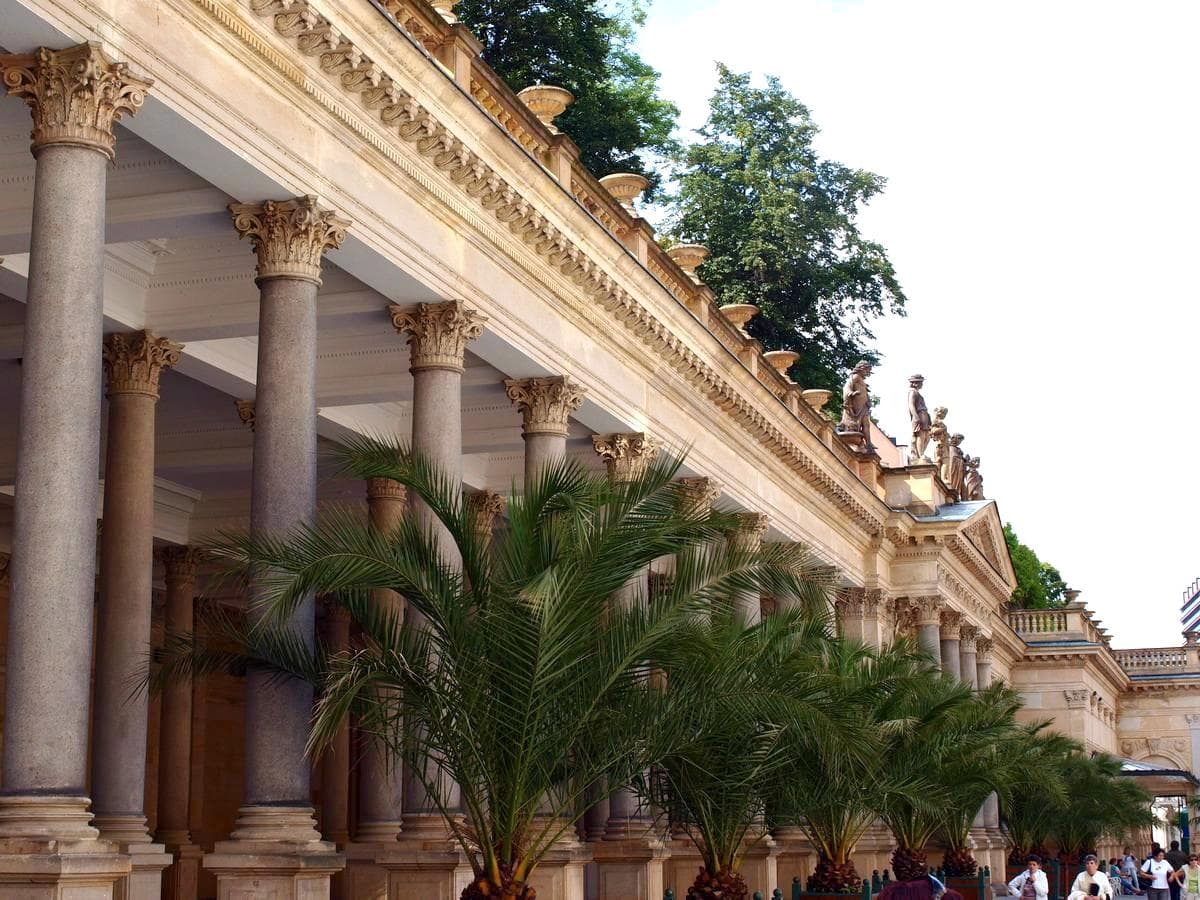 The Mill ColonnadeThe spa city's icon: a 132-metre Neo-Renaissance gallery of 124 columns on the T4 minutes walk4.8
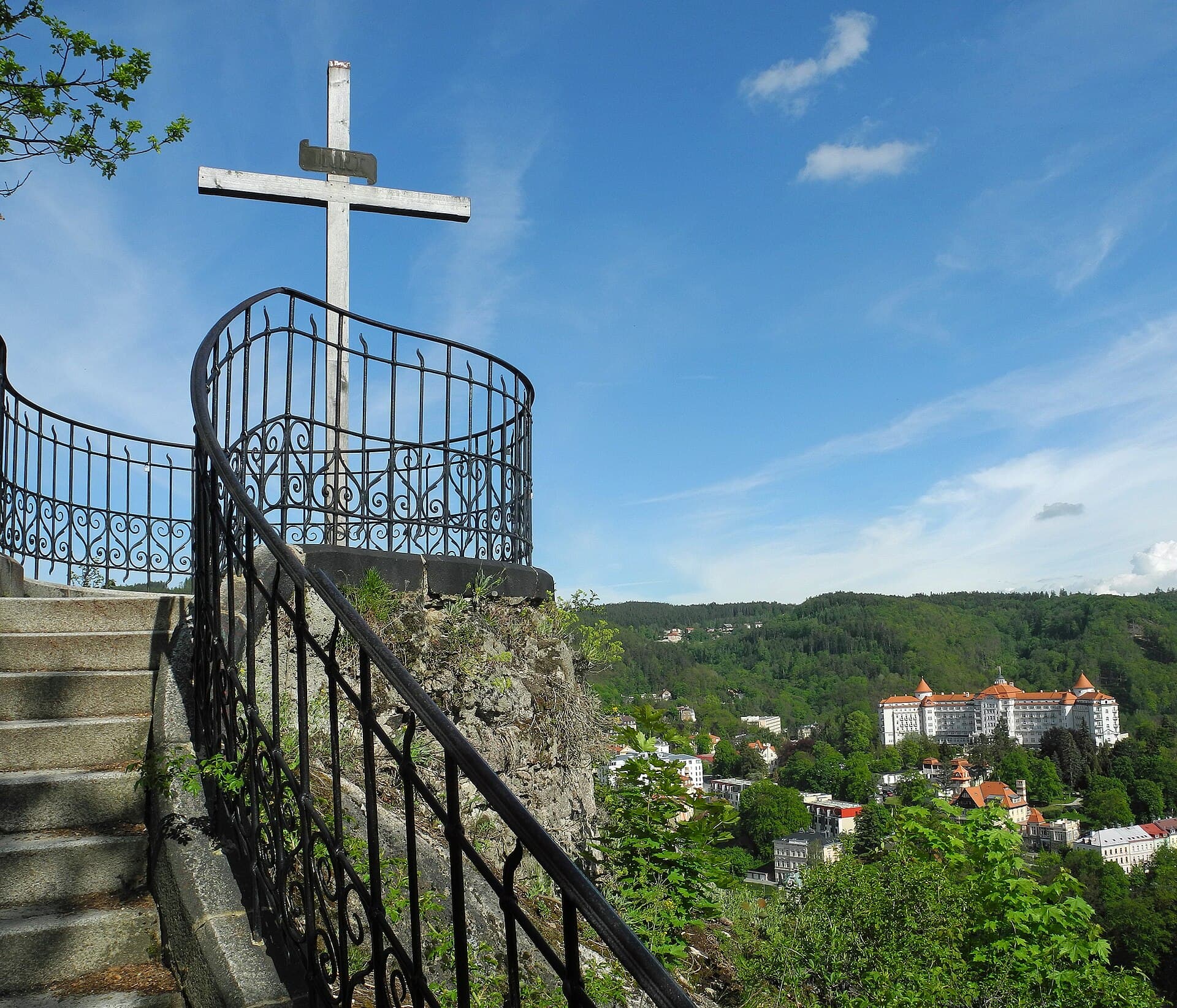 Peter the Great's LookoutA viewpoint on a rock in the spa woods above Karlovy Vary, carrying a bust of th4 minutes walk4.7
The acid steam ate its ancestors in turn: wood, stone, grand imperial iron (the museum's photos of the old halls induce mourning) — so the seventies built serviceable glass. Debate on a worthier replacement never ends — the spring indifferent, beating whichever roof stands.
Pleasant, short, not essential: passages beneath the hall showing aragonite-scaled pipes, the rose-petrifying basins, geology cross-sections — twenty minutes delighting the curious and children. Its seasonal timetable is patchy: an open door deserves entering, a plan deserves not resting on it.