
A tsar on horseback
The story says he rode up the rock — a doubtful claim.
SchiDD — CC BY-SA 4.0 · Zorka Sojka — CC BY-SA 4.0 · SchiDD — CC BY-SA 4.0
A viewpoint on a rock in the spa woods above Karlovy Vary, carrying a bust of the Russian tsar Peter the Great. The name comes from an inherited story: Peter the Great visited Karlovy Vary in 1711 and 1712 to take the waters, and is said to have ridden up to this rock on horseback — a claim hard to credit given the steepness of the path, but one that stayed in local memory, and the bust was raised to commemorate it. Peter's visits themselves are real and documented, and were part of a wave that made Karlovy Vary the destination of the European and Russian elite. Goethe, Beethoven, Chopin, Metternich, Karl Marx and many others followed over the centuries. The Russian presence in the town continues today in its signage, property and visitors, and is among the first things a visitor notices. The approach is an uphill walk of about twenty minutes from the colonnades on marked forest paths. Always open and free to see.
The story says he rode up the rock — a doubtful claim.
Goethe, Beethoven, Chopin and Metternich followed him to the town.
Visible today in signage, property and visitors.
The spa woods above the town
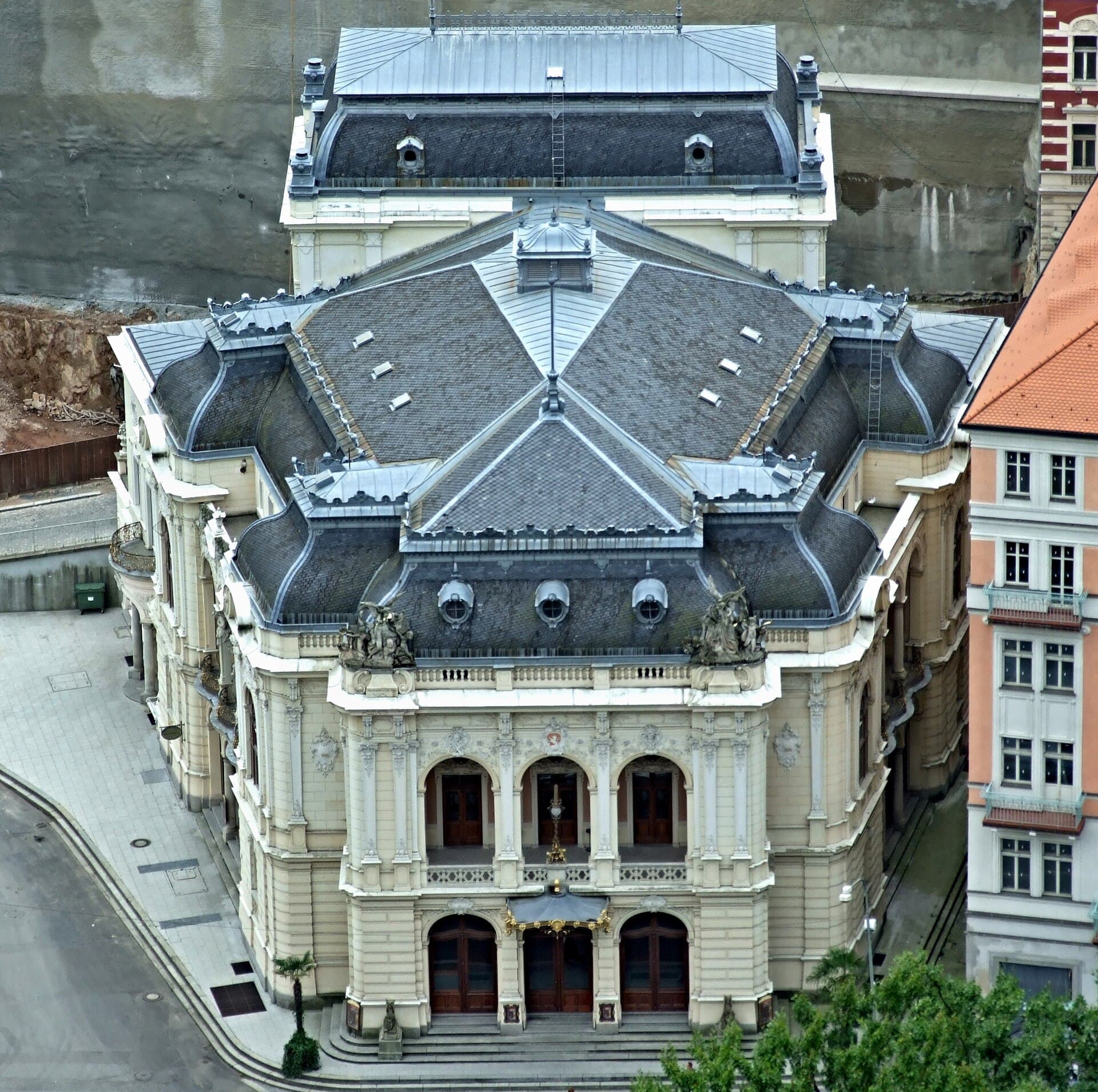 Karlovy Vary City TheatreA theatre of 1886 in central Karlovy Vary, built in the neo-Renaissance manner a3 minutes walk4.7
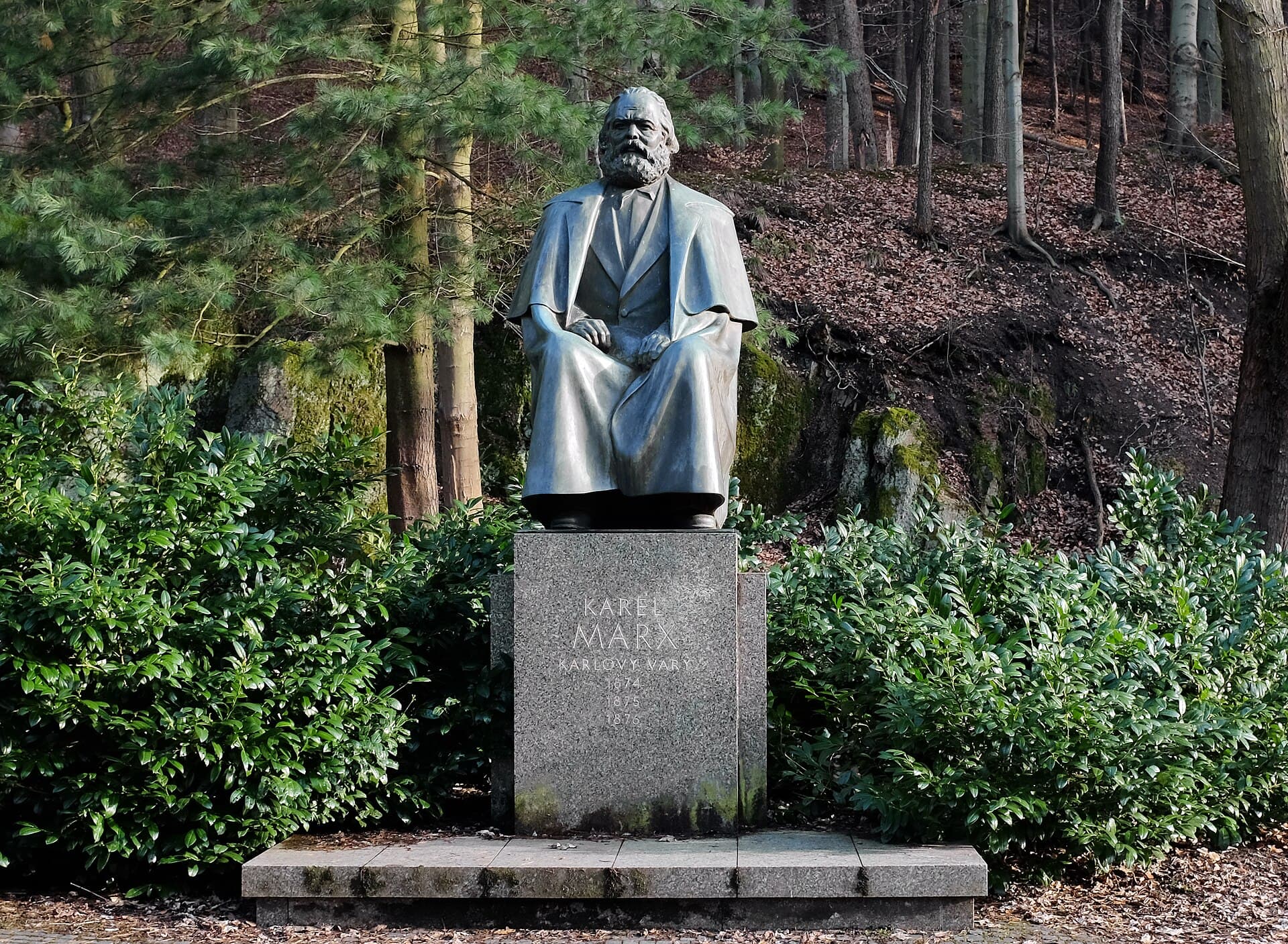 The Karl Marx StatueA bronze statue of Karl Marx on Petra Velikého street in Karlovy Vary, and the r3 minutes walk4.1
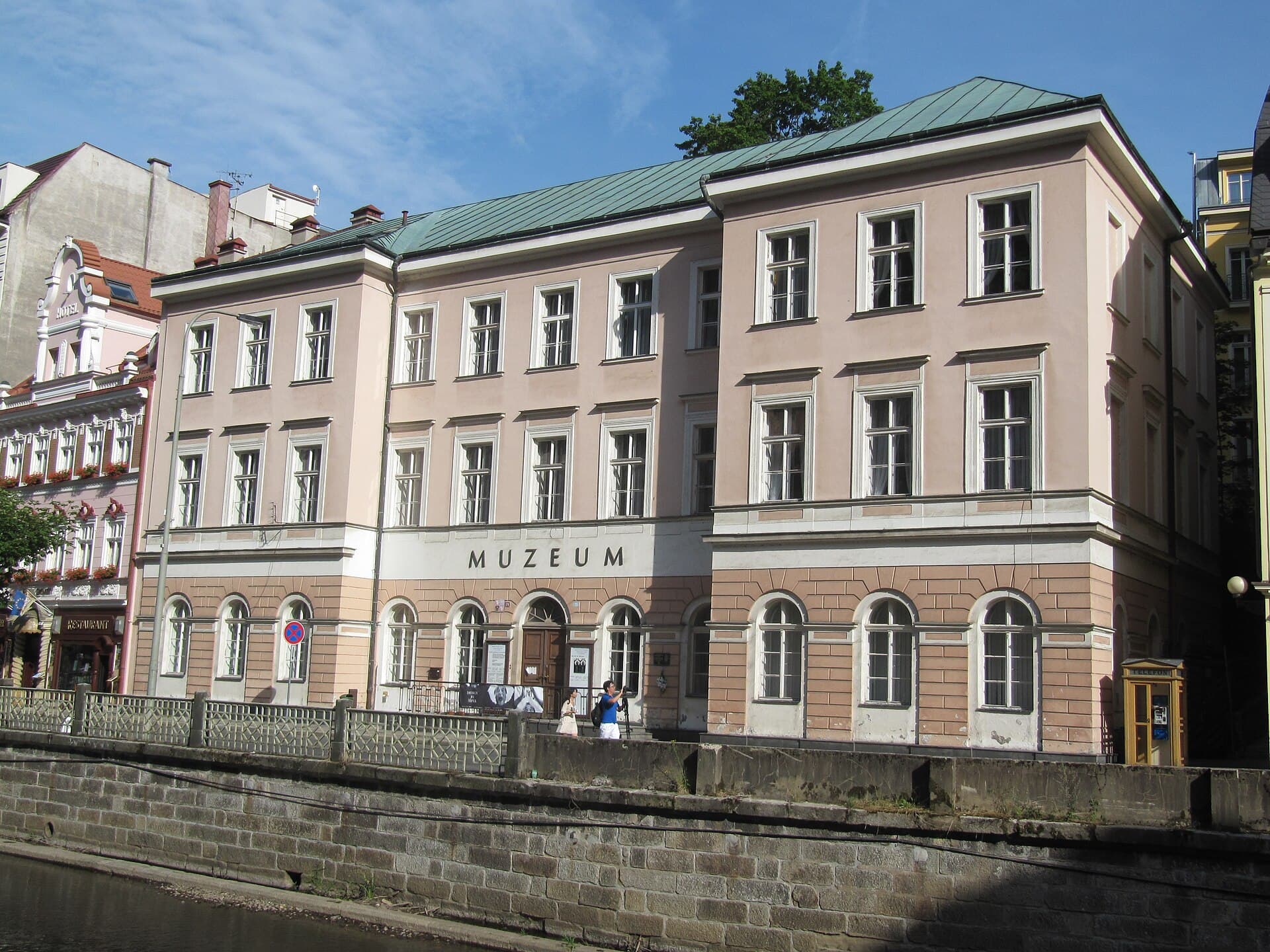 The Karlovy Vary MuseumThe mineral city's story in order: the regional museum on the Nová louka bank, i4 minutes walk4.9
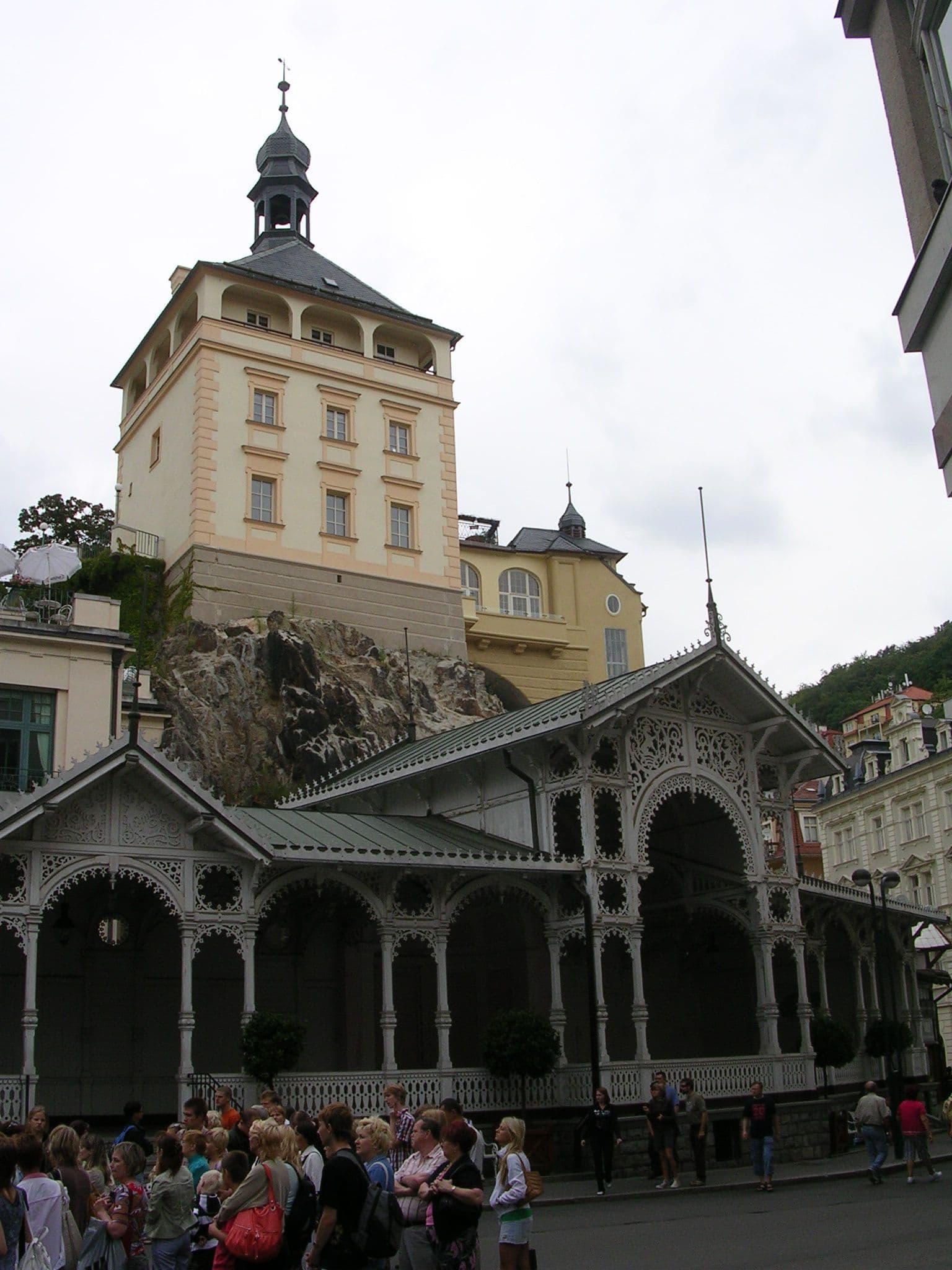 The Castle TowerA stone tower standing directly above the centre of Karlovy Vary, the only survi4 minutes walk4.9
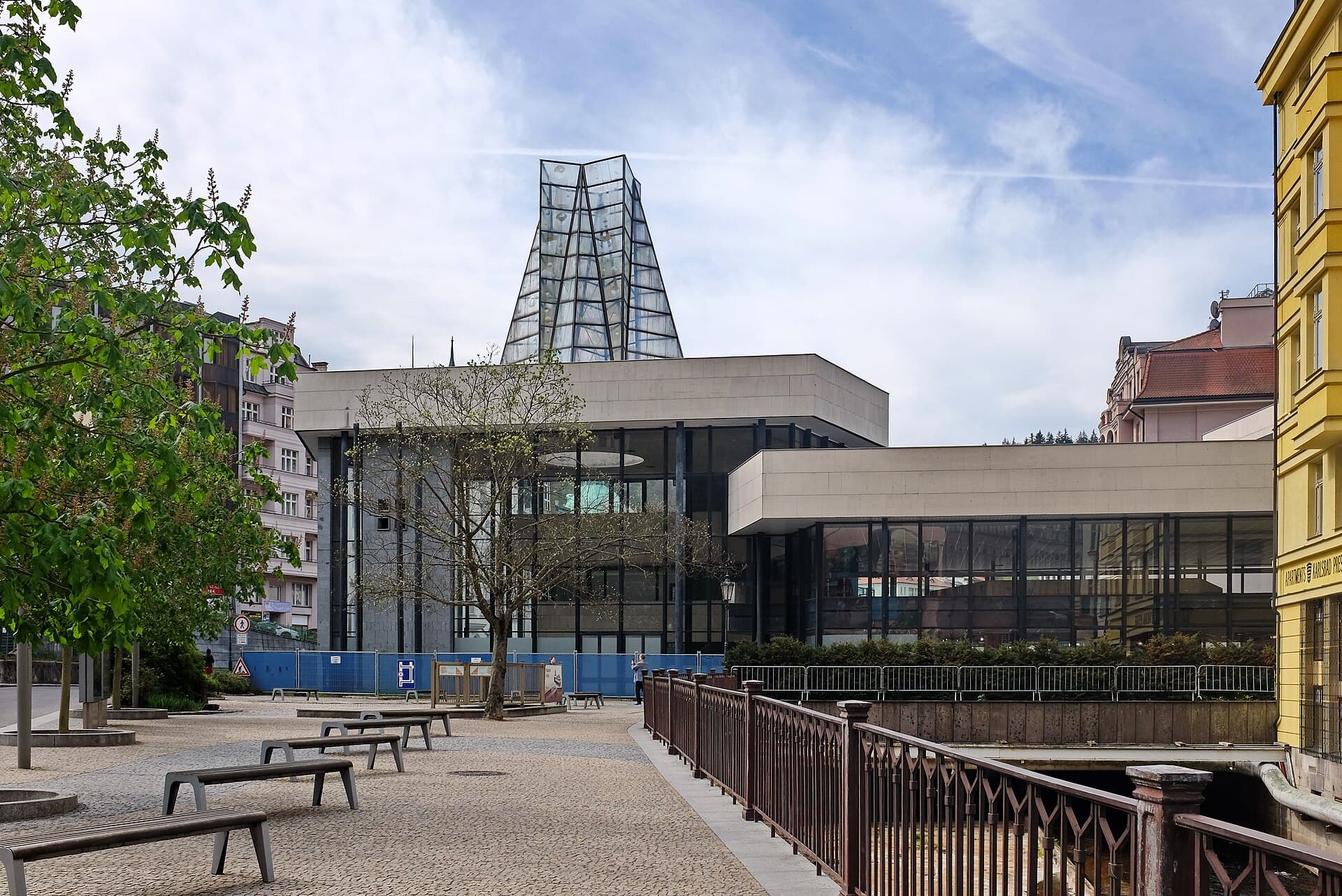 The Hot Spring ColonnadeThe city's literally beating heart: the Vřídlo mother-spring hurls its 72-degree4 minutes walk4.5
A wide network of marked trails through the hills around Karlovy Vary, more than a hundred and thirty kilometres in total. They were laid out in the nineteenth century as part of the treatment itself: doctors prescribed regular walking alongside drinking the mineral waters. The paths are designed with graduated gradients, benches and pavilions at the viewpoints. Today they are among the best things in the town and entirely free.
Diana is the best known, reached by a funicular from near the colonnade, with an observation tower, a butterfly house and a restaurant. The Three Crosses stand on a rocky hill with a wide outlook. Goethe's Lookout has its wooden tower. And the Castle Tower in the centre is reached by a lift. All four give different angles and two can be combined in half a day.