
A rebuilt town
Fires and floods removed what came before the nineteenth century.
Lubor Ferenc — CC BY-SA 4.0 · Lubor Ferenc — CC BY-SA 4.0 · Lubor Ferenc — CC BY-SA 4.0 · Lubor Ferenc — CC BY-SA 4.0
A historic villa in Karlovy Vary from the town's boom period as a spa, and an example of the residential style that actually forms the town's appearance. That is what rewards attention: Karlovy Vary is not an old town in the usual sense. Most of the buildings you see date from the second half of the nineteenth century and the early twentieth, when the whole valley was rebuilt with hotels, villas and treatment houses in historicist and Art Nouveau styles. Repeated fires and floods removed what came before. The result is a town unusually consistent visually: coloured facades with stucco ornament, projecting windows and small turrets, on the two slopes of a narrow valley. The villas on the slopes were seasonal homes for wealthy families or lodging houses for guests. A plain practical point: the building is private and not visitable inside. The visit means looking at it from the street on a walk through the town.
Fires and floods removed what came before the nineteenth century.
Coloured facades and stucco on the two slopes of a narrow valley.
Seasonal homes for wealthy families or lodging houses for guests.
Karlovy Vary
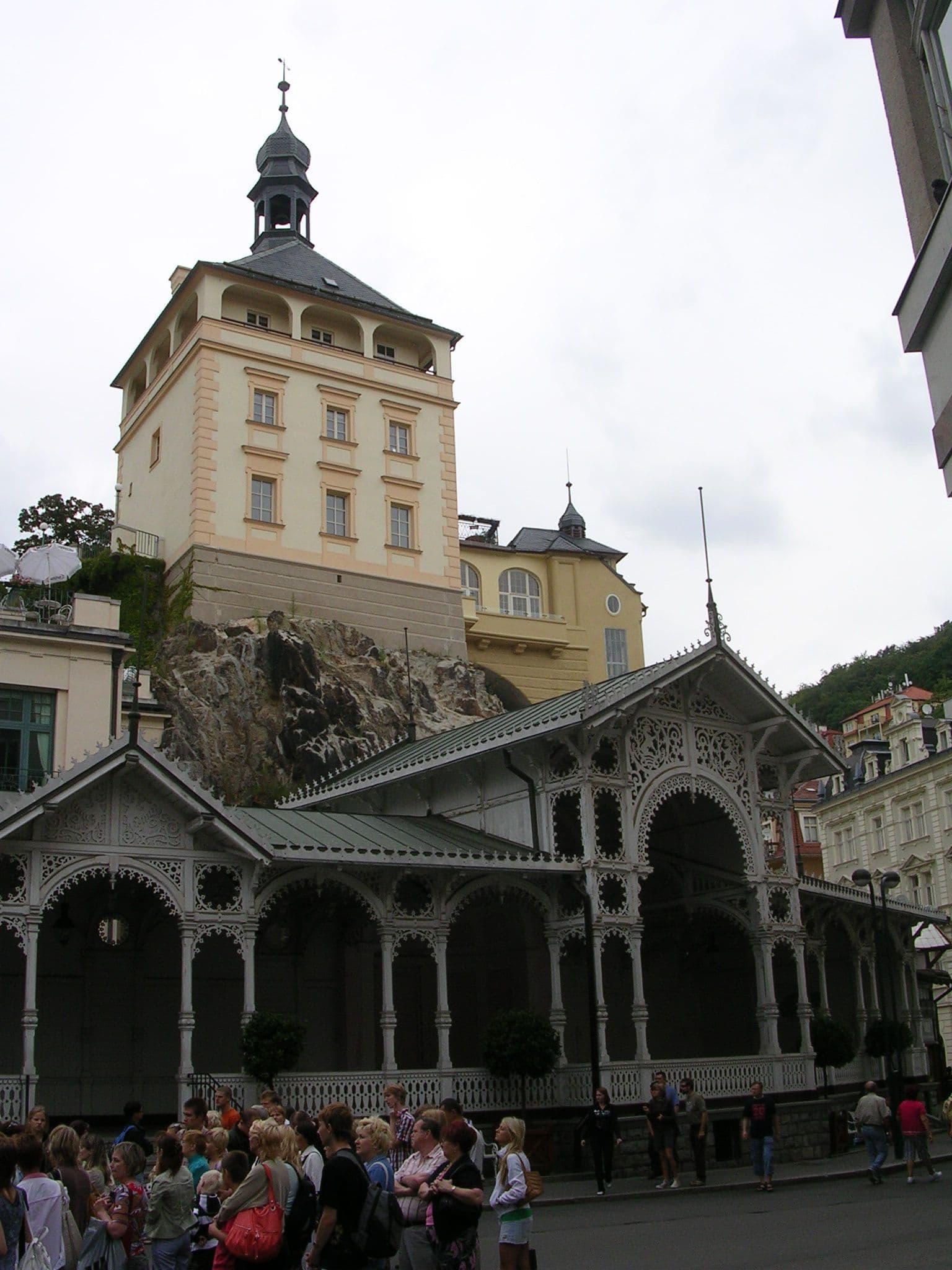 The Castle TowerA stone tower standing directly above the centre of Karlovy Vary, the only survi2 minutes walk4.9
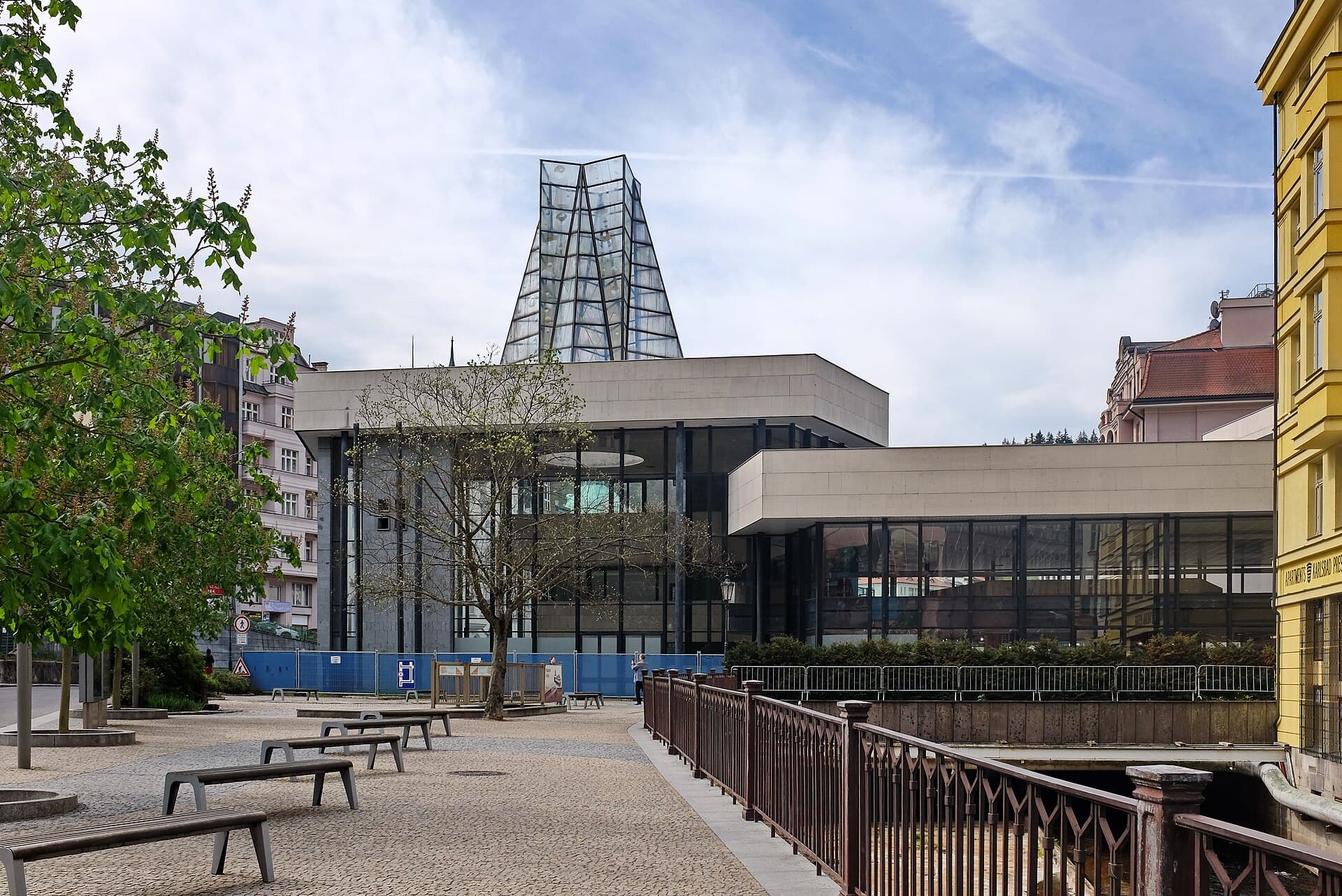 The Hot Spring ColonnadeThe city's literally beating heart: the Vřídlo mother-spring hurls its 72-degree2 minutes walk4.5
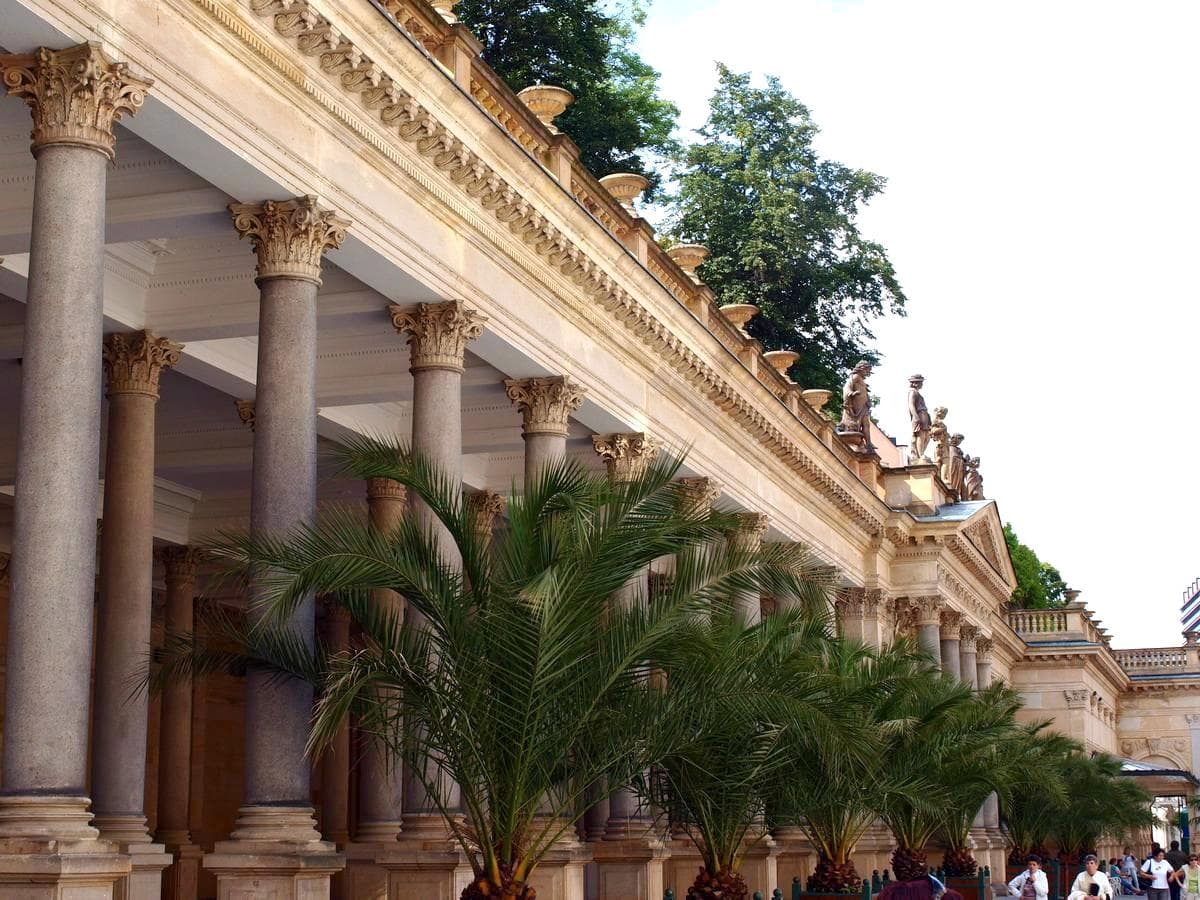 The Mill ColonnadeThe spa city's icon: a 132-metre Neo-Renaissance gallery of 124 columns on the T3 minutes walk4.8
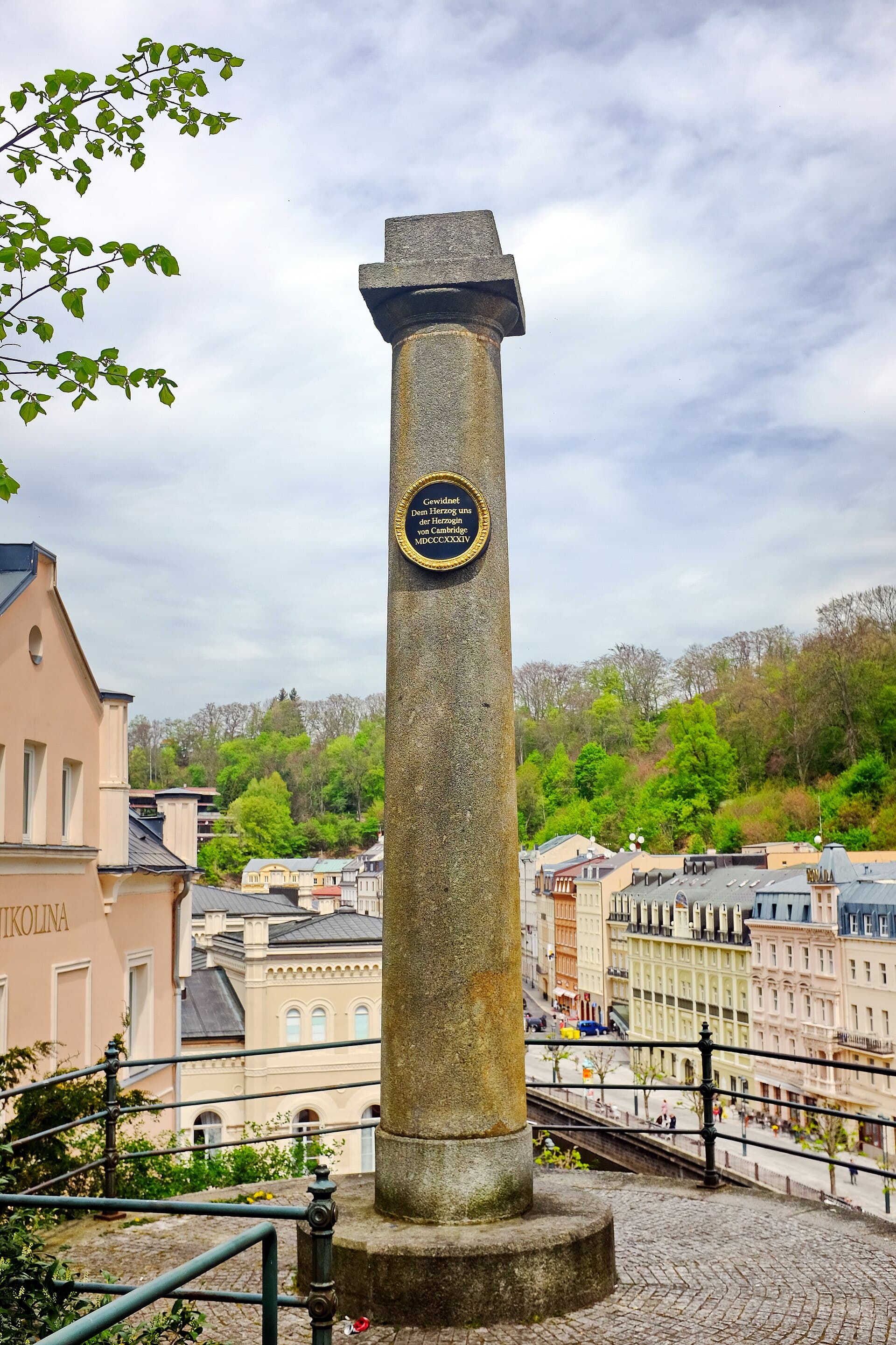 The Duke and Duchess of Cambridge ColumnA commemorative column in the forests of Karlovy Vary, raised in the nineteenth 4 minutes walk4.1
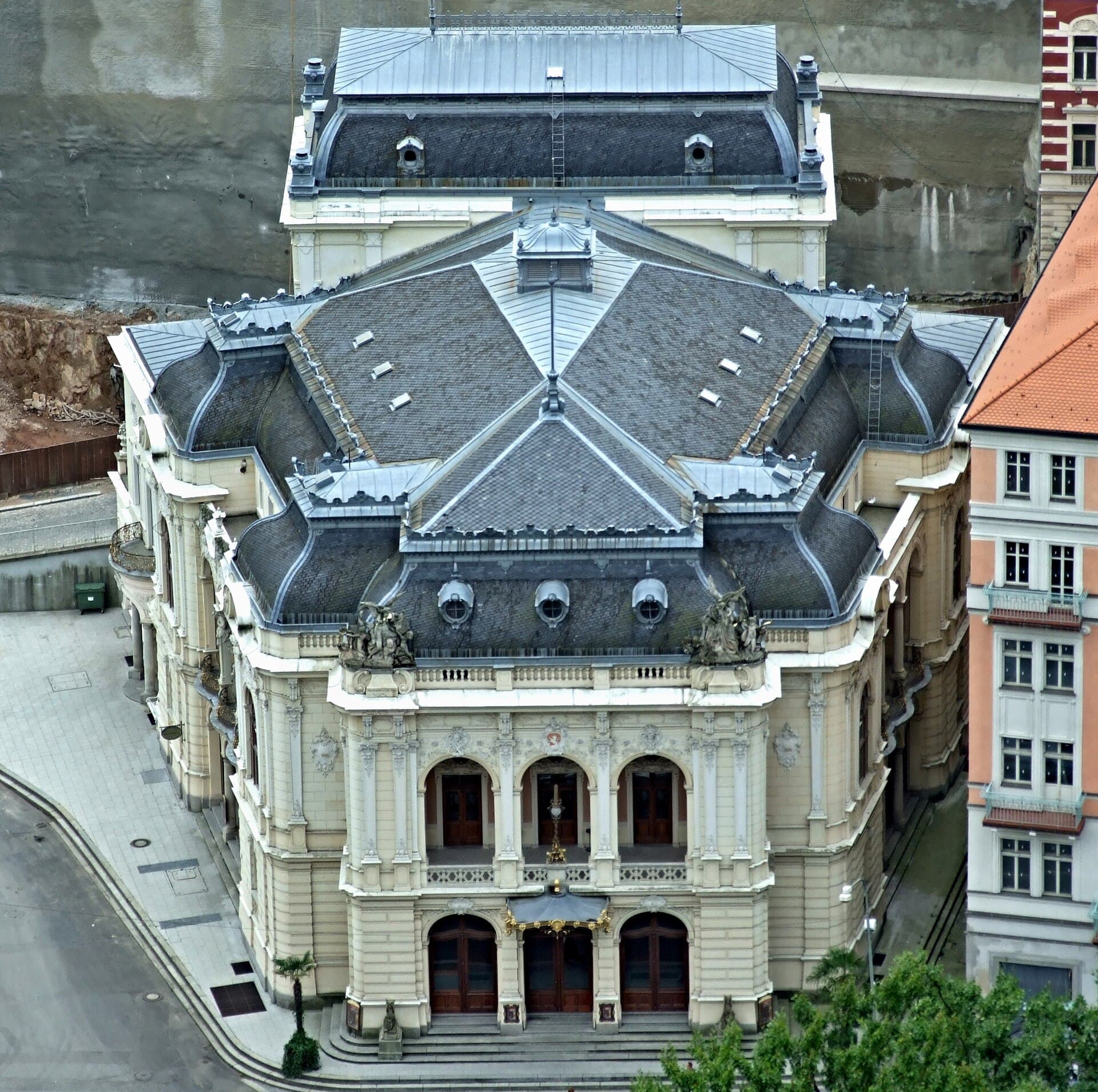 Karlovy Vary City TheatreA theatre of 1886 in central Karlovy Vary, built in the neo-Renaissance manner a5 minutes walk4.7
A mixture of historicism in the second half of the nineteenth century — neo-Baroque and neo-Renaissance — then Art Nouveau in the early twentieth. The best-known buildings, such as the Grandhotel Pupp and the town theatre, come from the same period. The architects Fellner and Helmer, who designed theatres across the Austro-Hungarian Empire, worked here too.
Walk both banks of the Teplá river from the colonnades to the Grandhotel Pupp, then climb one of the forest paths to see the valley from above. The view from above is what reveals the consistency: two rows of coloured facades on two slopes, with forest surrounding them on every side.