
How Bavaria became a nation
An entity assembled from different regions in 1806 that came to feel itself one.
Burkhard Mücke — CC BY-SA 4.0 · merzonfire — CC BY-SA 4.0 · Burkhard Mücke — CC BY-SA 4.0 · Alois Köppl, Gleiritsch — CC BY-SA 4.0
A museum of Bavarian history from 1800 to the present, opened in 2019 in a modern building on the Danube bank in Regensburg. The starting point is deliberate: in 1806 Bavaria became a kingdom by Napoleon's decision, and doubled in size by absorbing Franconia and Swabia. The museum begins at that moment and traces how an entity assembled from different regions came to feel itself a nation. The narrative covers the monarchy, industrialisation, King Ludwig II and his castles, the First World War, the rise of Nazism which was born in Munich, the war, reconstruction, and then modern Bavaria with its technology industry. The display is modern and multimedia, resting on everyday objects, sound and film. What makes the trip worthwhile is Regensburg itself: its old town is UNESCO-listed and survived the war almost intact — rare in Germany. It holds a twelfth-century stone bridge and Italian-style merchants' towers.
An entity assembled from different regions in 1806 that came to feel itself one.
Regensburg's twelfth-century bridge, an engineering wonder in its day.
Italian-style residential towers built by the city's merchants for display.
On the Danube bank, Regensburg
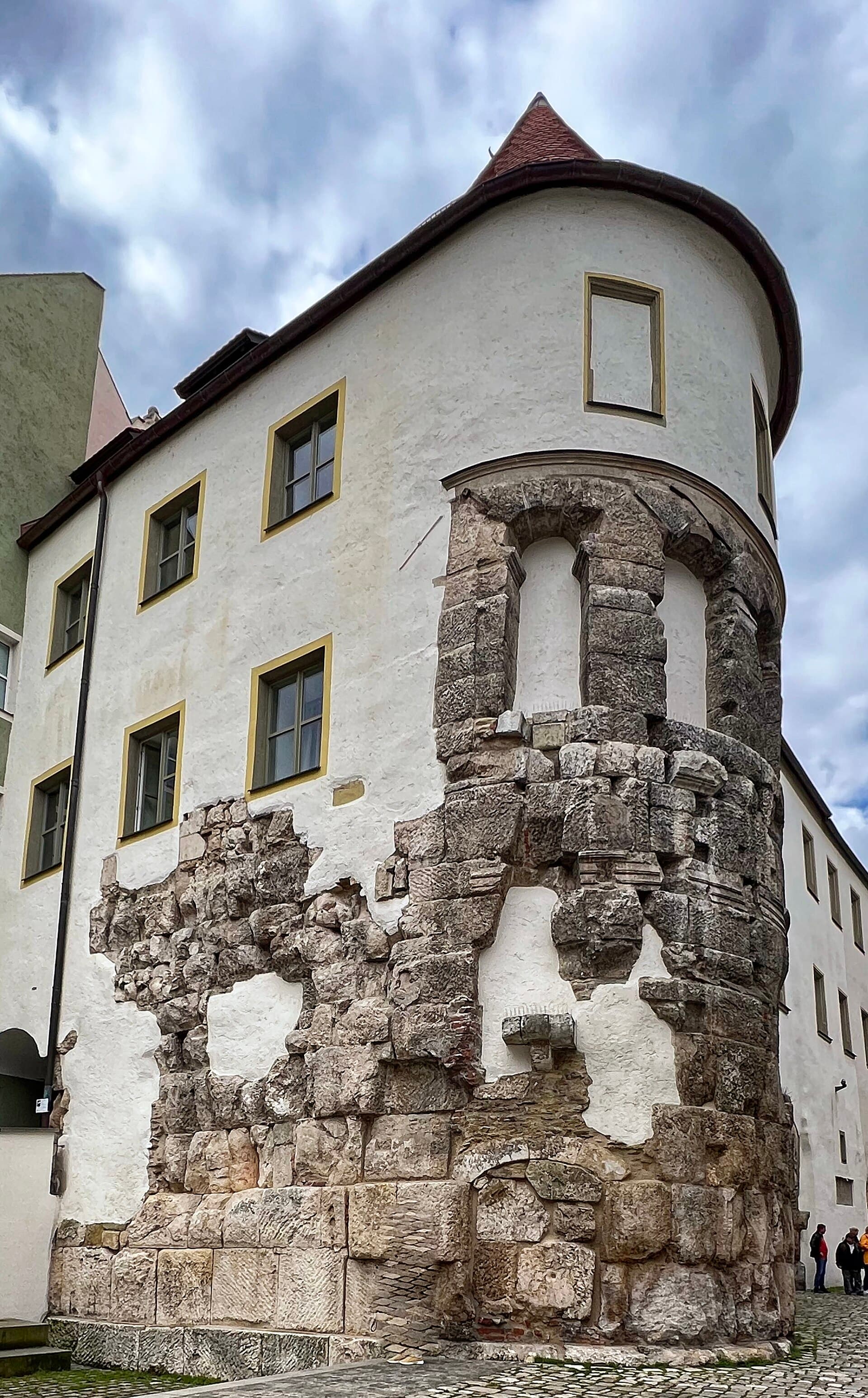 Porta Praetoria**The northern gate of the Roman camp** from which Regensburg grew, and one of t3 minutes walk4.4
 Regensburg Cathedral**The most important Gothic church in southern Germany**, and its twin towers (14 minutes walk4.8
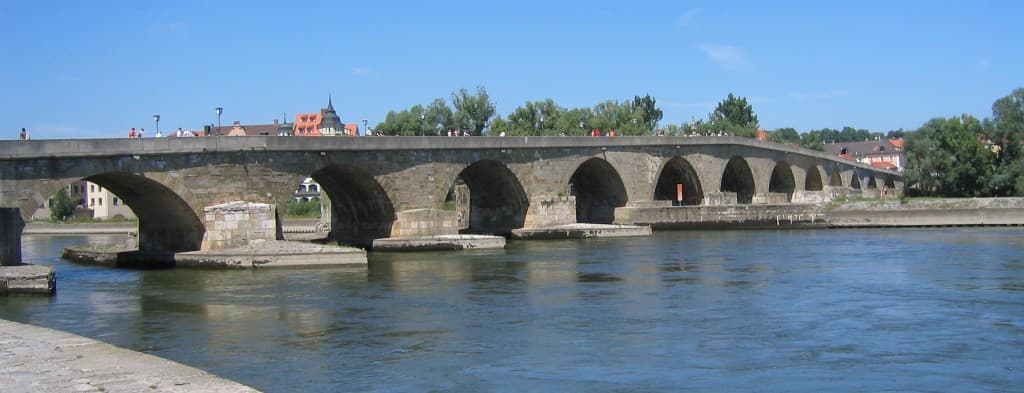 The Stone BridgeA **310-metre** bridge across the Danube, built between **1135 and 1146** — **th6 minutes walk4.8
Because it was not a major industrial centre or a main rail junction, so it was not a priority target. It suffered raids on an aircraft plant and a station on its edges, but the old town survived. The result is that Regensburg is among the few large German cities where you walk on original streets rather than rebuilt ones.
A train from Nuremberg of about an hour. The museum in the morning for context, then the old town in the afternoon: the Gothic cathedral, the Stone Bridge, the merchants' towers, and the old sausage kitchen by the bridge said to have been working for centuries. A comfortable full day.