
The view from midway
The old town and the cathedral''s towers across the water.
Hytrion at German Wikipedia — CC BY-SA 3.0 · Alois Köppl, Gleiritsch — CC BY 3.0 · Alois Köppl, Gleiritsch — CC BY 3.0 · Granada — CC BY-SA 4.0
A **310-metre** bridge across the Danube, built between **1135 and 1146** — **the first stone bridge across the Danube** anywhere, and the only one for some **eight hundred years**. At the time it was an unprecedented engineering achievement north of the Alps, and it was completed in **just eleven years** — an astonishing pace for the period, which is why so many legends attached themselves to it. Its importance was not local: with the bridge, Regensburg became **the trading junction** between northern Europe, Italy and the east, and the city''s entire wealth came from that traffic. The **Second and Third Crusades** crossed it on their way east. It became **a model**: Prague''s Charles Bridge and other central European bridges were built after its example. Note: it is now **pedestrian only** — closed to traffic in 1997 after the weight damaged it. Note: it gives the best view of the old town and the cathedral''s two towers. Note: at its end stands the **historic sausage kitchen** that fed the bridge''s builders and has been working ever since.
The old town and the cathedral''s towers across the water.
At its end, feeding the bridge''s builders and working ever since.
Twelfth-century construction, still carrying foot traffic.
Steinerne Brücke, Regensburg
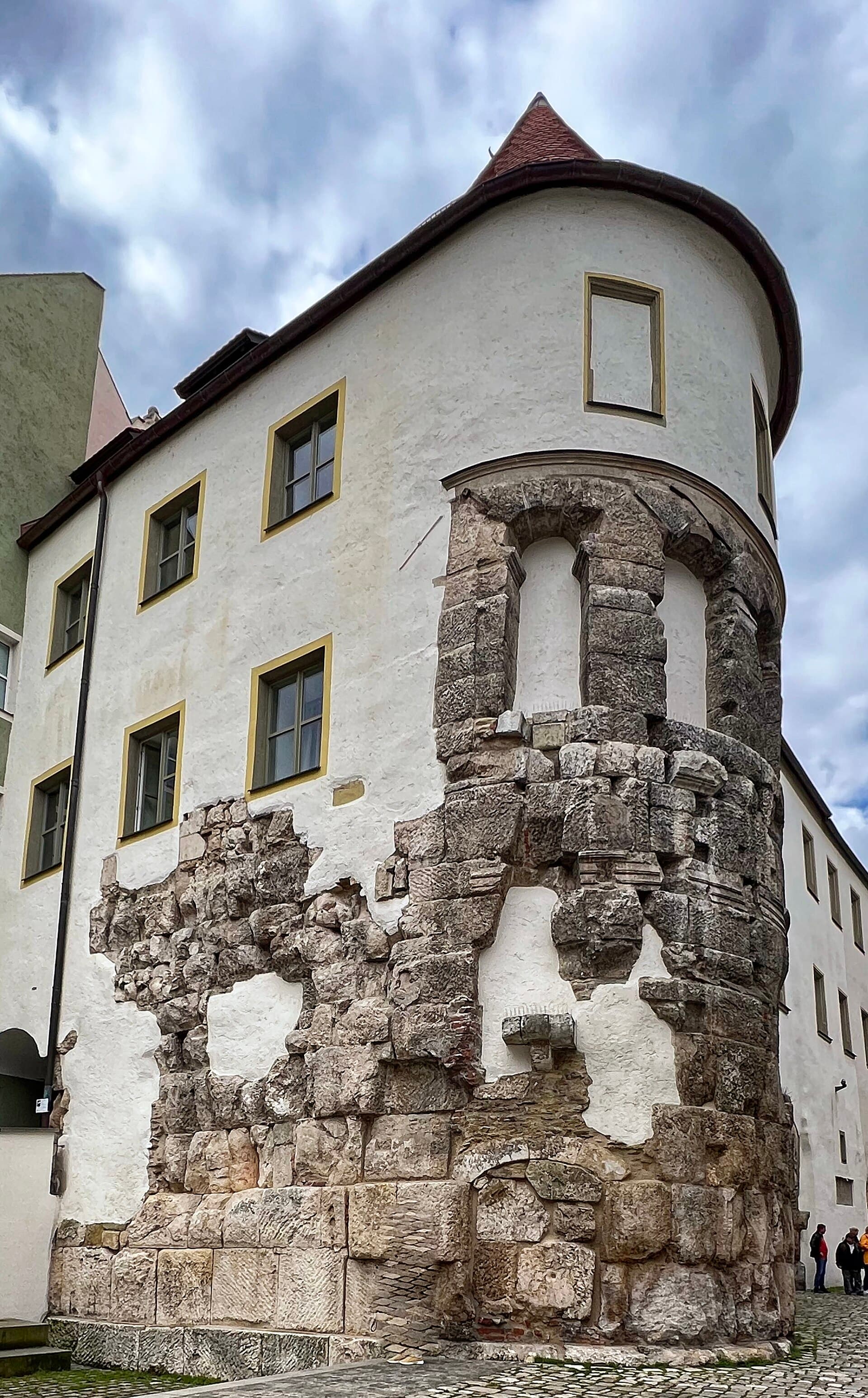 Porta Praetoria**The northern gate of the Roman camp** from which Regensburg grew, and one of t4 minutes walk4.4
 Regensburg Cathedral**The most important Gothic church in southern Germany**, and its twin towers (15 minutes walk4.8
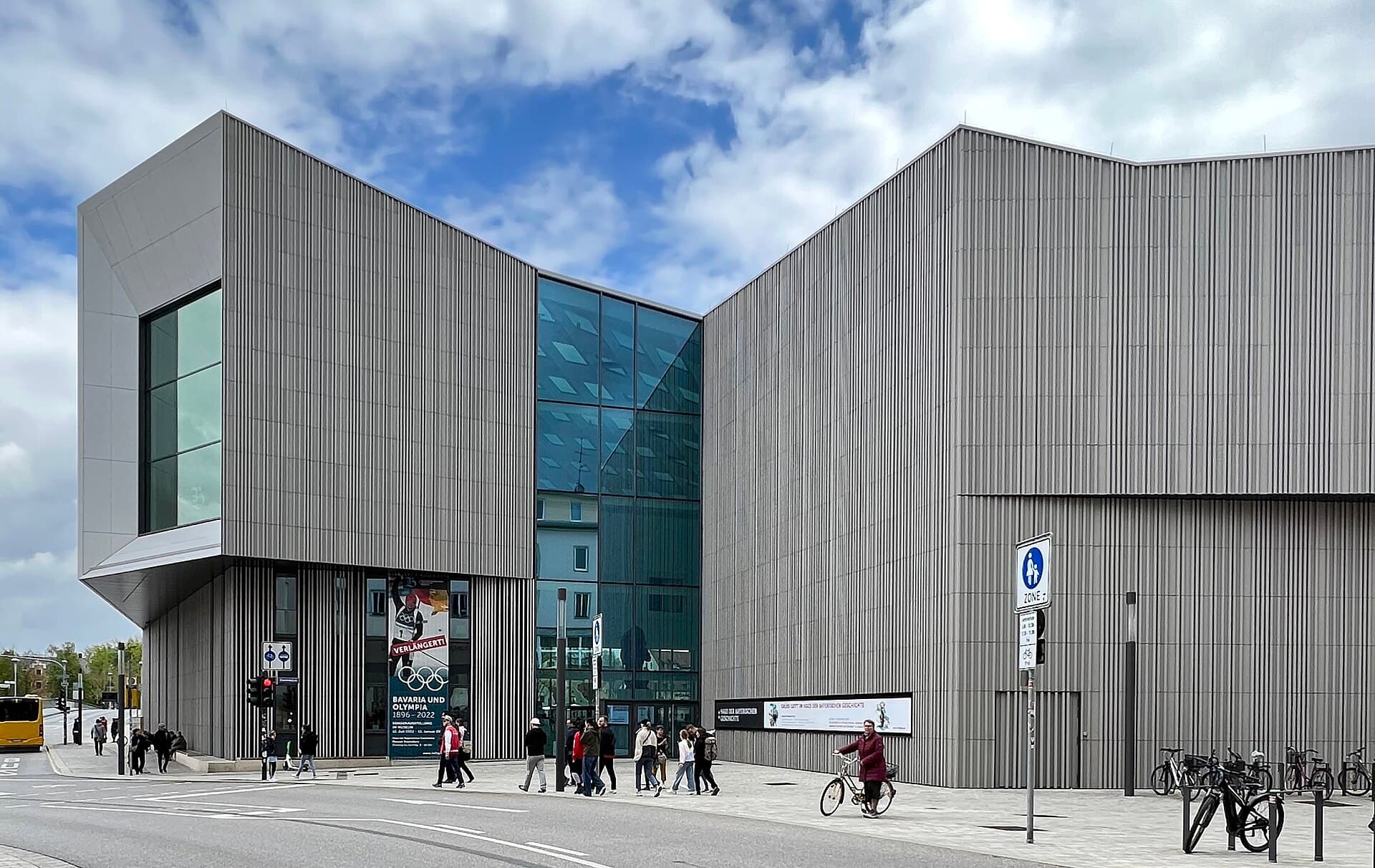 House of Bavarian HistoryA museum of Bavarian history from 1800 to the present, opened in 2019 in a moder6 minutes walk4.5
**It was not bombed, not demolished, and never impoverished.** Regensburg came through the Second World War with limited damage, so its centre retains some **1,500 listed buildings** — **the largest preserved medieval centre in Germany**, many times the size of Rothenburg and more genuine than most. But the more important difference is **in kind**: where Rothenburg was a small merchants'' town, Regensburg was a **wealthy imperial city** and the seat of the **Perpetual Imperial Diet** between 1663 and 1806 — effectively the parliament of the Holy Roman Empire. Out of that wealth its merchant families built **residential towers** in the Italian manner, a rarity north of the Alps. ⚠ And it is nevertheless **far less crowded** than Rothenburg — a contradiction that works in a visitor''s favour.