
The Dormition church
Old Byzantine, with a rare central marble ambo and reused columns.
Mzmona — CC BY-SA 3.0 · Berthold Werner — CC BY-SA 3.0 · Falk2 — CC BY-SA 4.0 · Falk2 — CC BY-SA 4.0
**The town at the foot of Meteora** — and the practical base for anyone visiting the monasteries: the railway station, the hotels, the restaurants and the pharmacies are here, and the rocks rise directly above it. It is frankly **an ordinary town** rather than a preserved historic one — because the Germans **burned it in 1943** in reprisal, so little of its old fabric survived, and what you see today is post-war building. But what did survive the fire is its most valuable thing: the Byzantine **Church of the Dormition of the Virgin** at the upper edge — among the oldest churches in Greece, standing on the foundation of an older basilica, with a rare **central marble ambo** in the middle of the nave (a form of which very little survives), frescoes, and columns reused from ancient buildings. ✅ And the town's best practical quality: **the restaurants are cheaper and more plentiful than in Kastraki**, and the view of the rocks from its upper squares is free and excellent at sunset.
Old Byzantine, with a rare central marble ambo and reused columns.
Lanes climbing towards the rock and the best free sunset viewpoint.
A direct line from Athens that makes Meteora easy without a car.
Kalabaka, 42200 Trikala, Greece
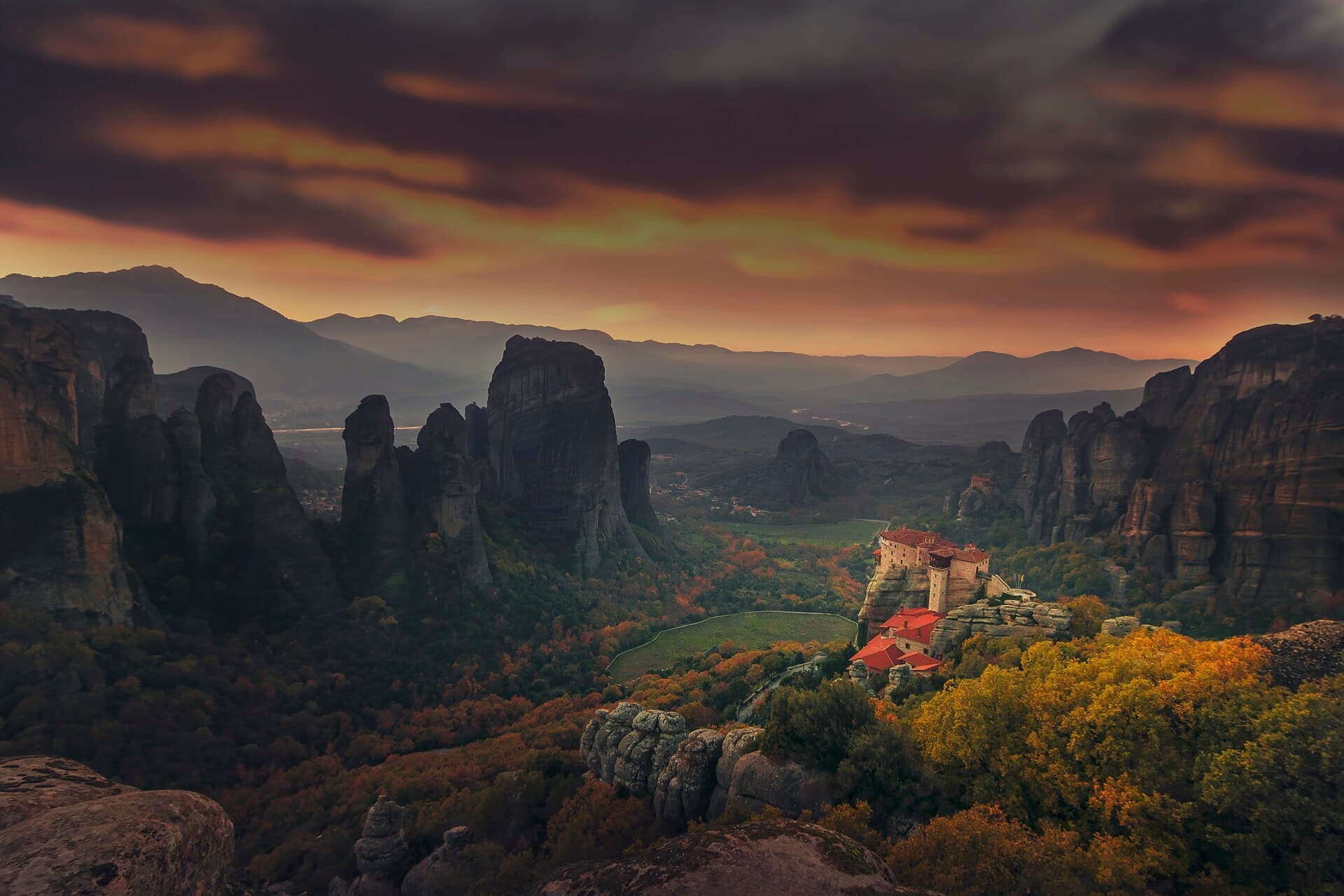 The Meteora MonasteriesMeteora is suspended in air literally and by name: giant sandstone towers geolog11 minutes walk4.8
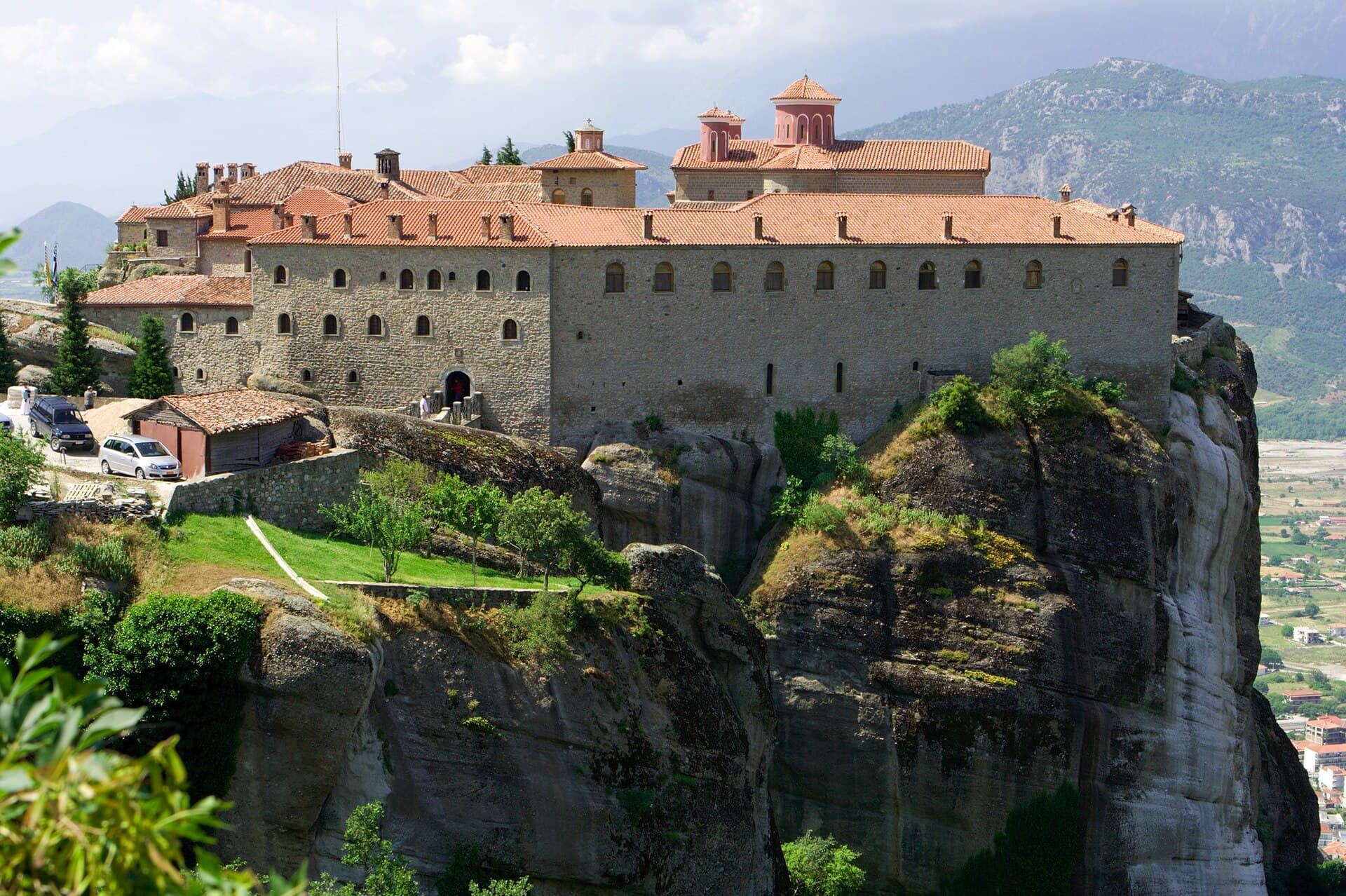 St Stephen's Monastery**The only monastery you enter without a climb** — reached over a **short level 14 minutes walk4.8
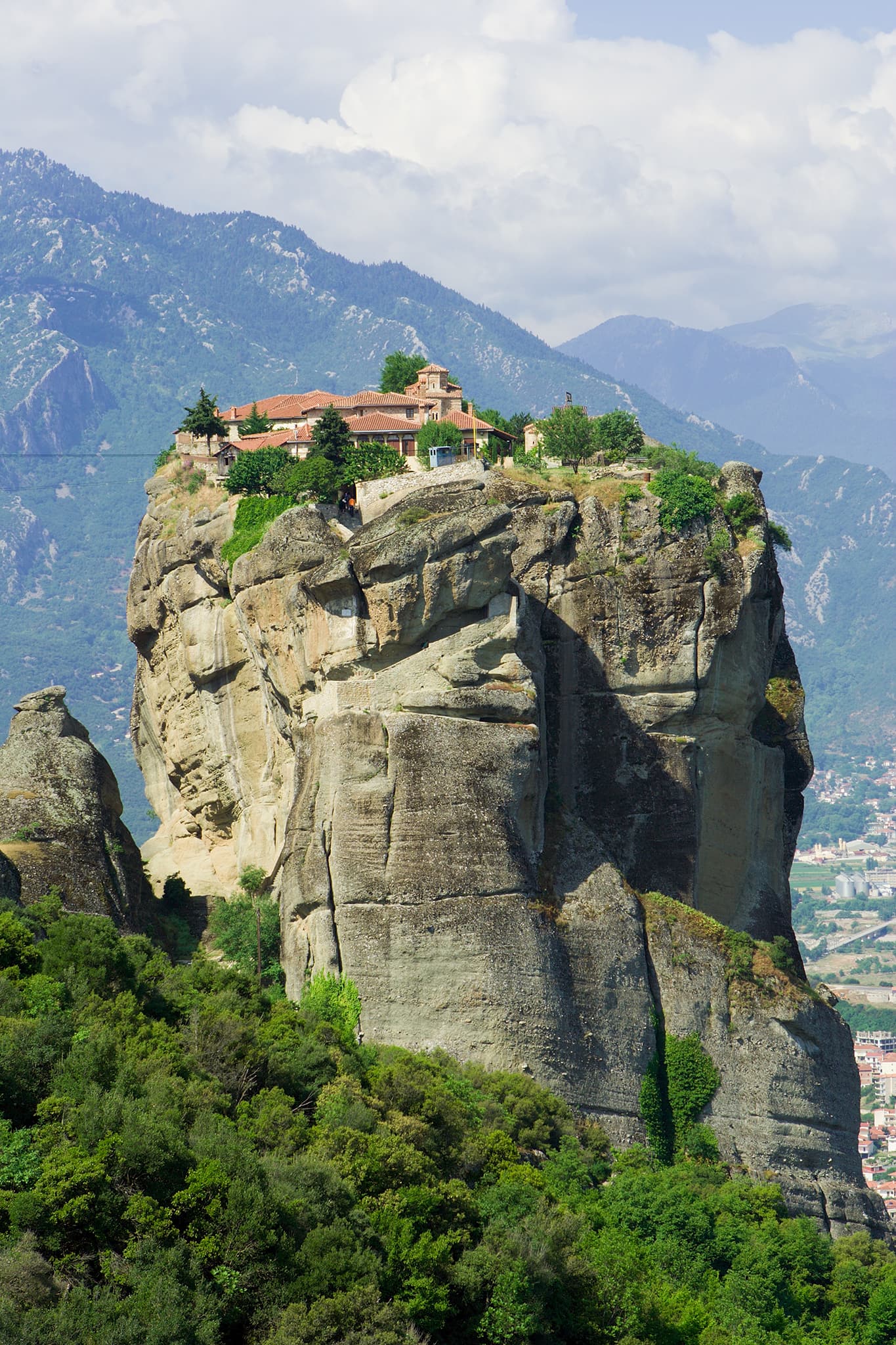 Holy Trinity Monastery**The most dramatically sited of the Meteora monasteries** — standing alone on a16 minutes walk4.7
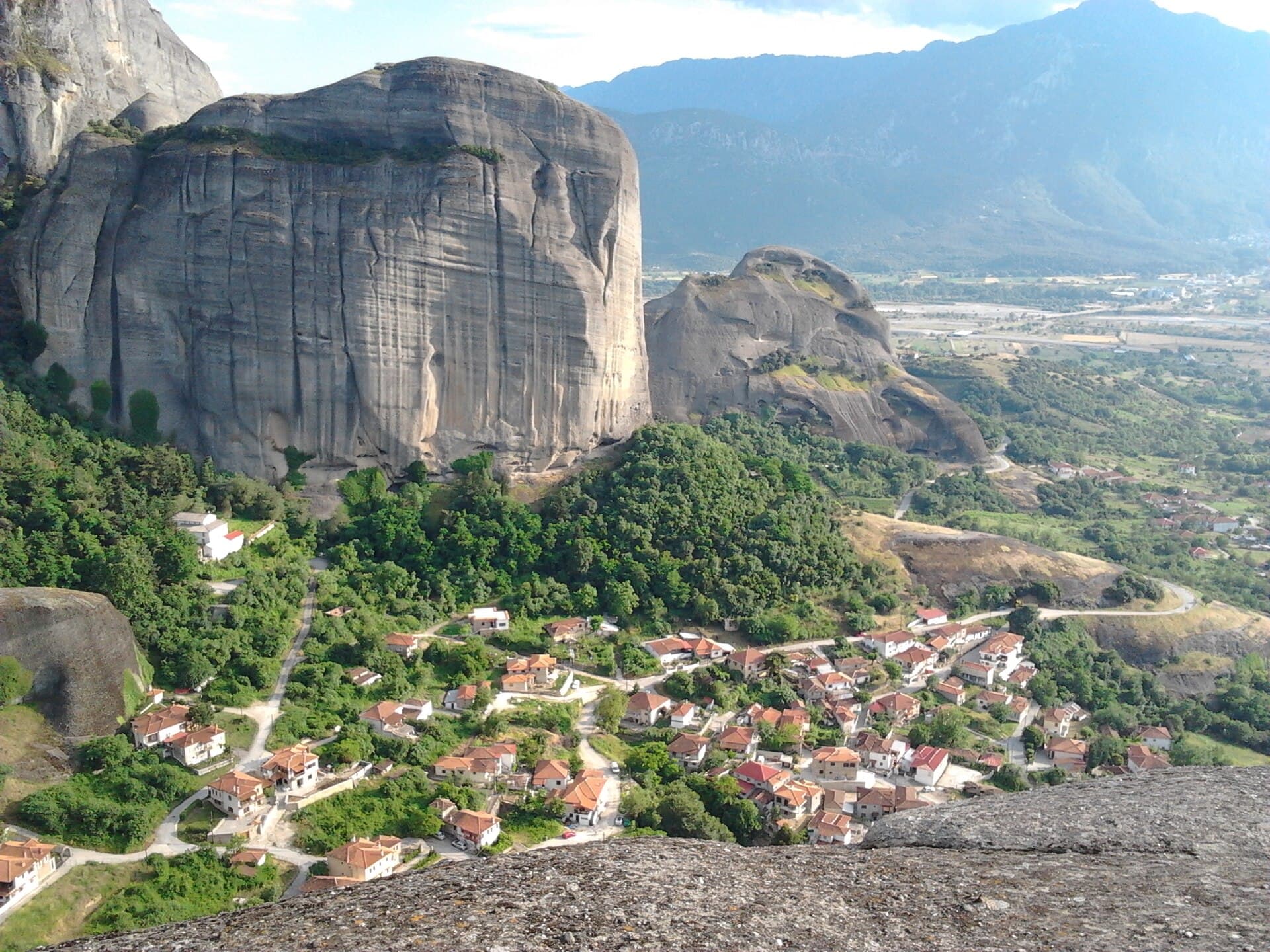 Kastraki**The village that sits directly beneath the rocks** — the nearest inhabited pla20 minutes walk
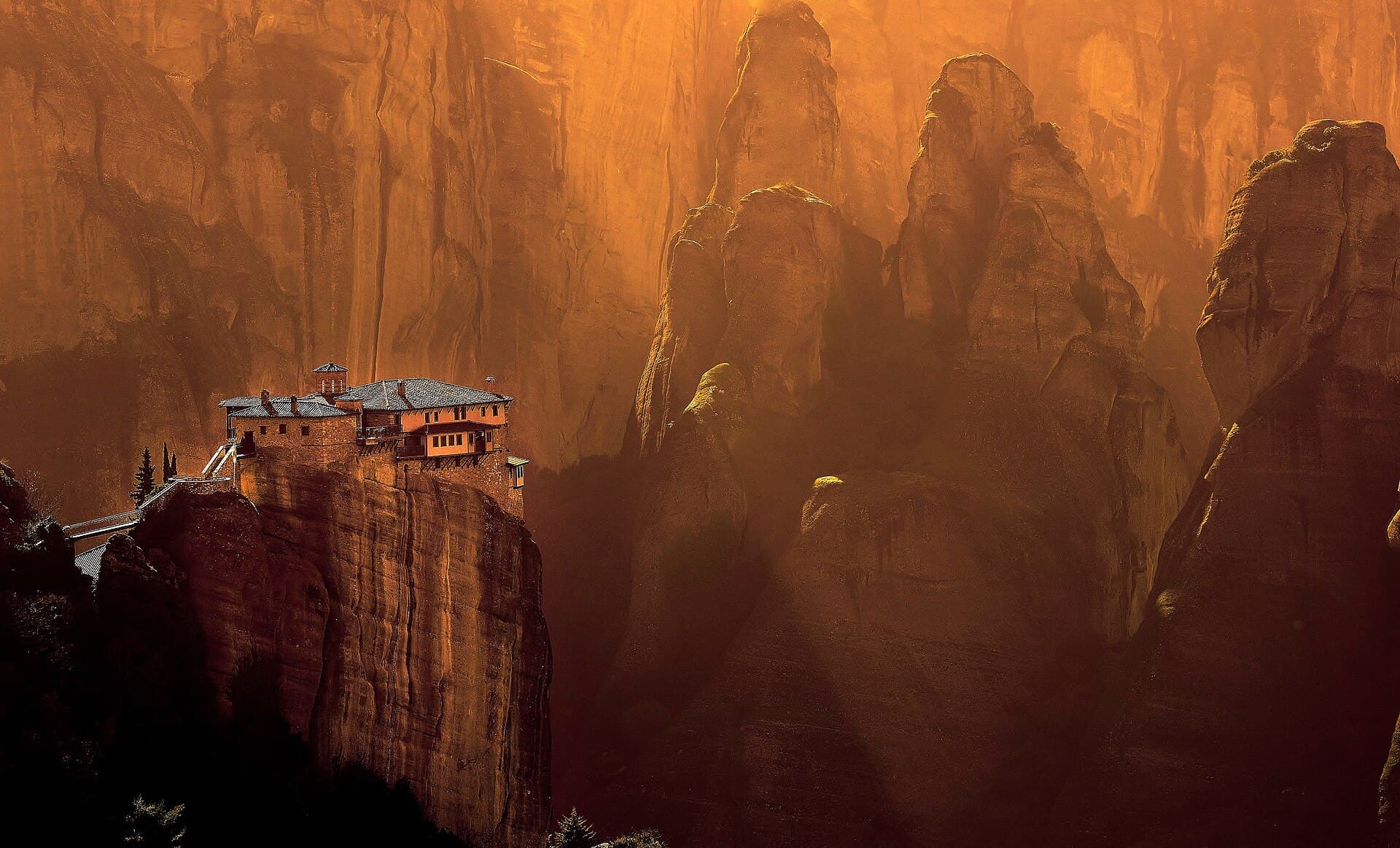 Roussanou Monastery**The monastery in every photograph of Meteora** — because it sits on a **narrow25 minutes walk4.7
**A German reprisal operation, and one of many in Greece.** In 1943 the Greek resistance was active in the mountains of Thessaly and the Pindus, and the occupation's policy was **collective punishment**: a village or town burned entire in answer to resistance activity around it. Kalambaka was burned in that context, and most of its late Ottoman and Byzantine fabric went with it. ⚠ So **do not look for an old town here** — you will not find one, and that is the result of a war rather than architectural neglect. ✅ **What survived** is the Church of the Dormition at the upper edge, and it alone gives you an idea of what was there. You see the same pattern at **Anogia in Crete** (burned in 1944) and in many villages — it is part of understanding modern Greece rather than a footnote to it.
**Yes, and it is one of the easiest destinations in Greece for that — provided you plan the day within Meteora.** ✅ **Getting there is easy**: a direct train or one change from Athens to Kalambaka in about **4–5 hours**, with the station **inside the town**, minutes on foot from the hotels. ⚠ **The problem starts after you arrive**: the monasteries are spread along kilometres of mountain road, and **the local bus runs very few services** — not enough for a visiting day. The three solutions: **(1) an organised half-day tour** from Kalambaka covering three monasteries — the simplest and most common; **(2) a taxi by the hour** waiting between monasteries — dearer but flexible; **(3) on foot along the old paths** — the finest and cheapest, but **a full day of mountain walking** that will not suit everyone. ✅ One tip: book the **late-afternoon tour** if you can — it ends at sunset, which is the best of the place.