
The two bridges
A short crossing from the facing rock instead of endless steps.
Αλεξανδρής Αλέξης — CC BY-SA 4.0 · RoubinakiM — CC BY-SA 4.0 · Jolovema — CC BY 4.0 · Falk2 — CC BY-SA 4.0
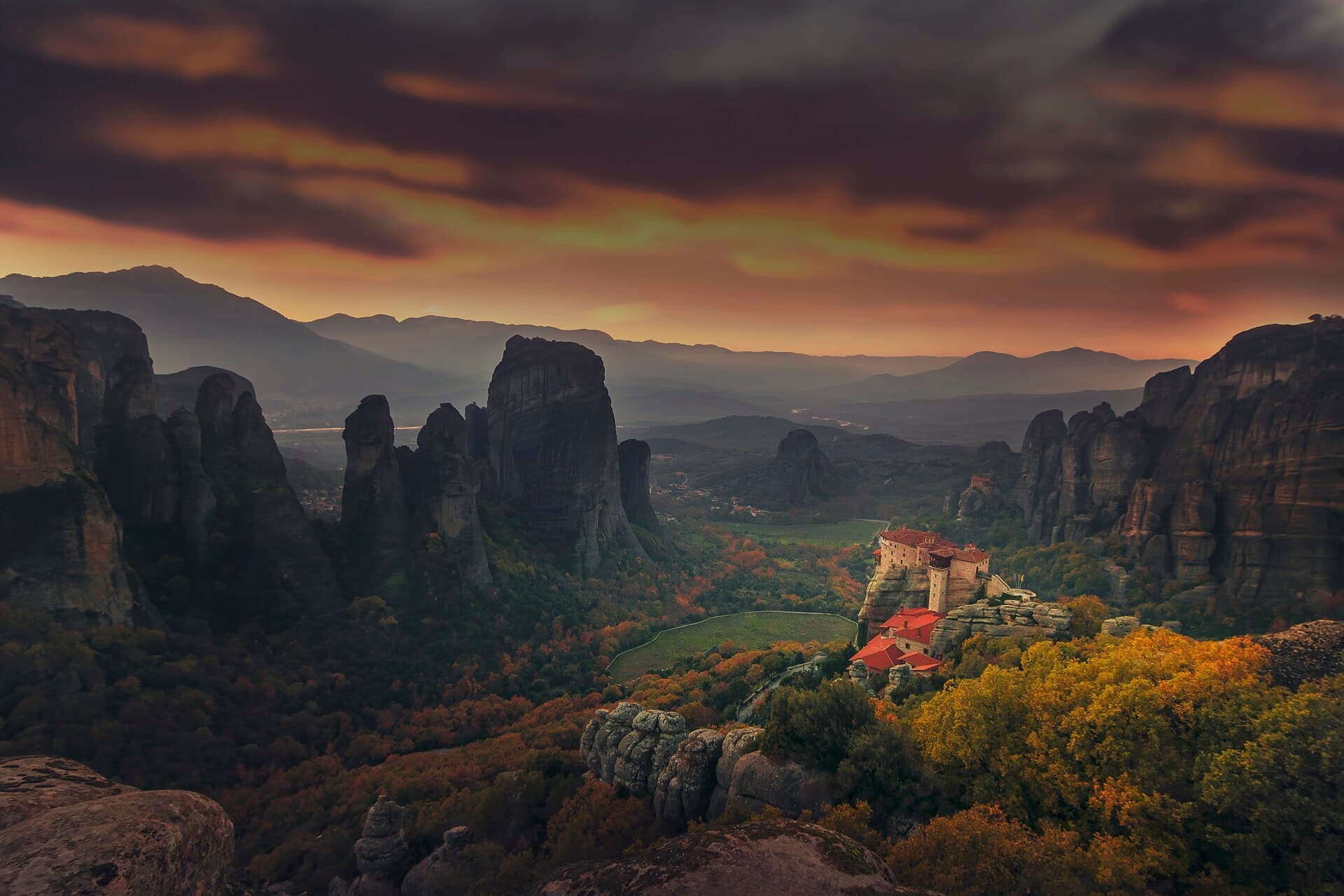
**The monastery in every photograph of Meteora** — because it sits on a **narrow pillar that the building fills completely**, edge to edge, so that it looks grown out of the rock rather than built on it. It is lower than its neighbours and is entered over **two short wooden bridges** from the facing rock instead of hundreds of steps — which has made it the easiest of the high monasteries and the busiest. It was founded in the **16th century** and is dedicated to **Saint Barbara**. Its frescoes date from **1560**, and they are fine but **direct and harsh** in their depiction of martyrdom — worth knowing with children. It is today a **convent** rather than a monastery, and the gardens and terraces are kept with visible care: pots and flowers right on an edge above a hundred-metre drop. ⚠ But it is **very small**: half an hour covers the inside — and its best views are from outside, from the road above it.
A short crossing from the facing rock instead of endless steps.
Pots and flowers on an edge above a hundred-metre drop.
The best photograph is taken from the road above, not inside.
Meteora, 42200 Kalabaka, Trikala, Greece
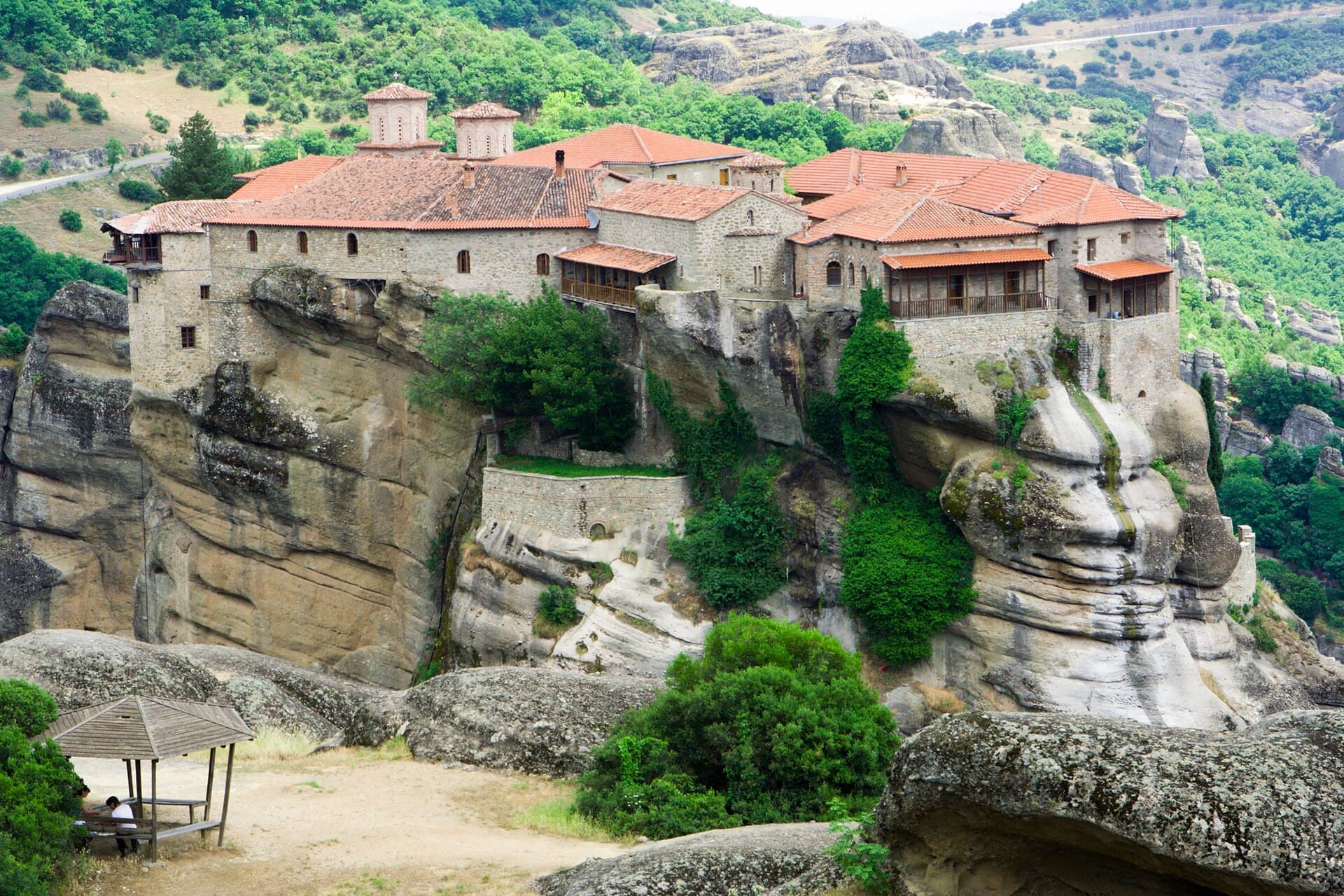 Varlaam Monastery**The second largest of the Meteora monasteries, and the best for frescoes** — a5 minutes walk4.9
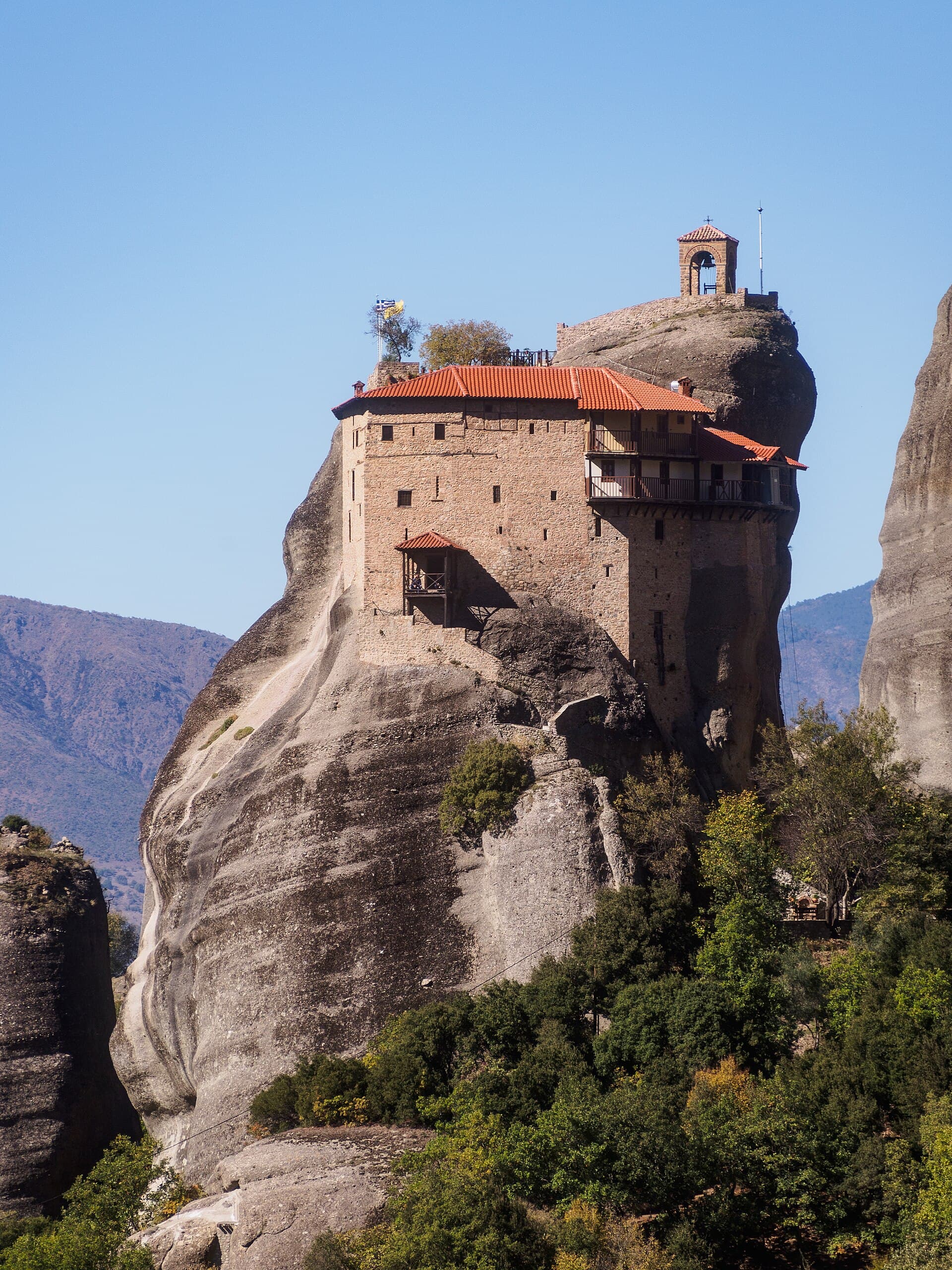 The Monastery of St Nicholas AnapafsasThe smallest of the Meteora monasteries and the first on the way up from the vil8 minutes walk4.6
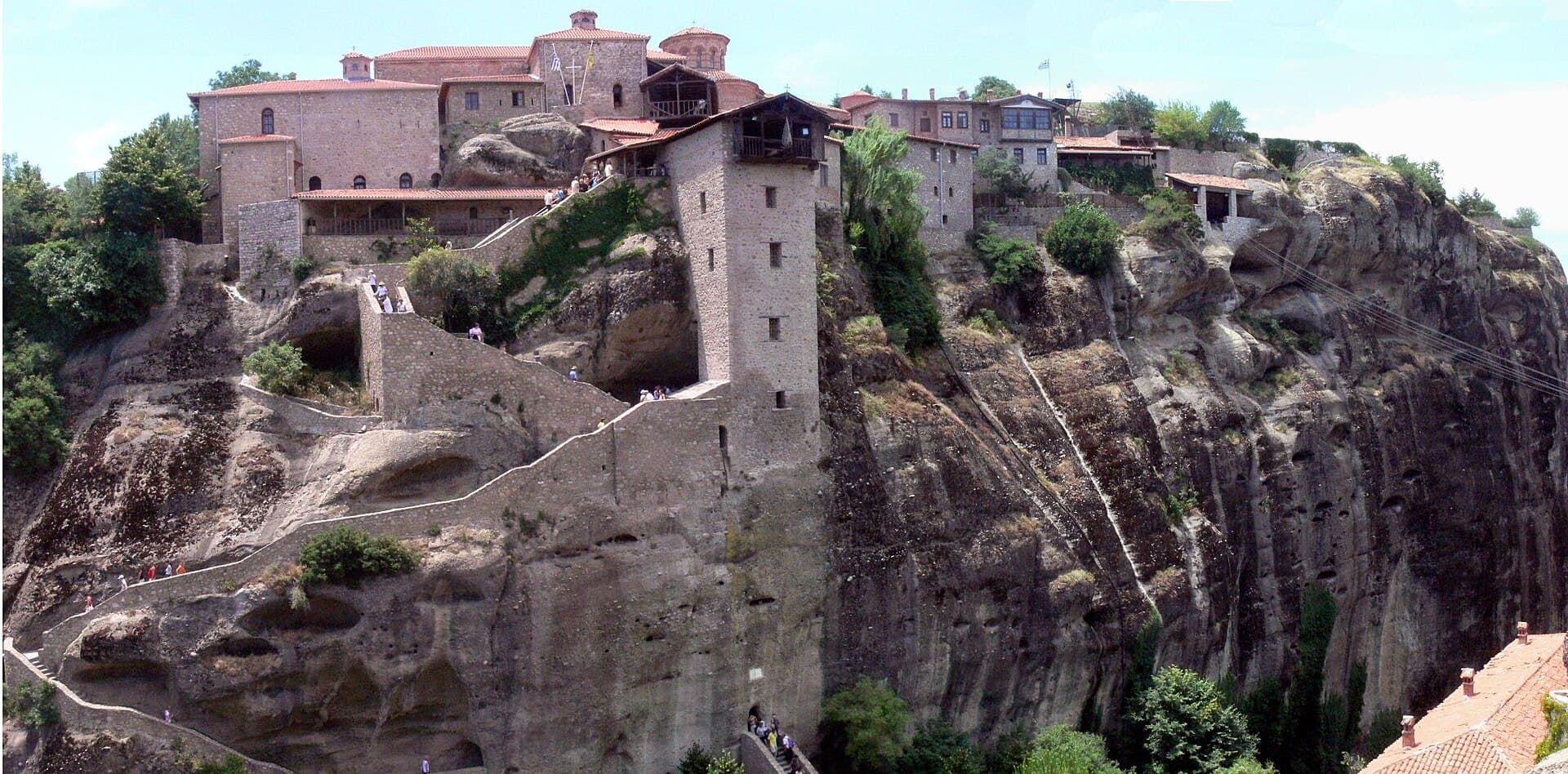 Great Meteoron Monastery**The largest, oldest and highest of the Meteora monasteries** — on a summit of 9 minutes walk4.7
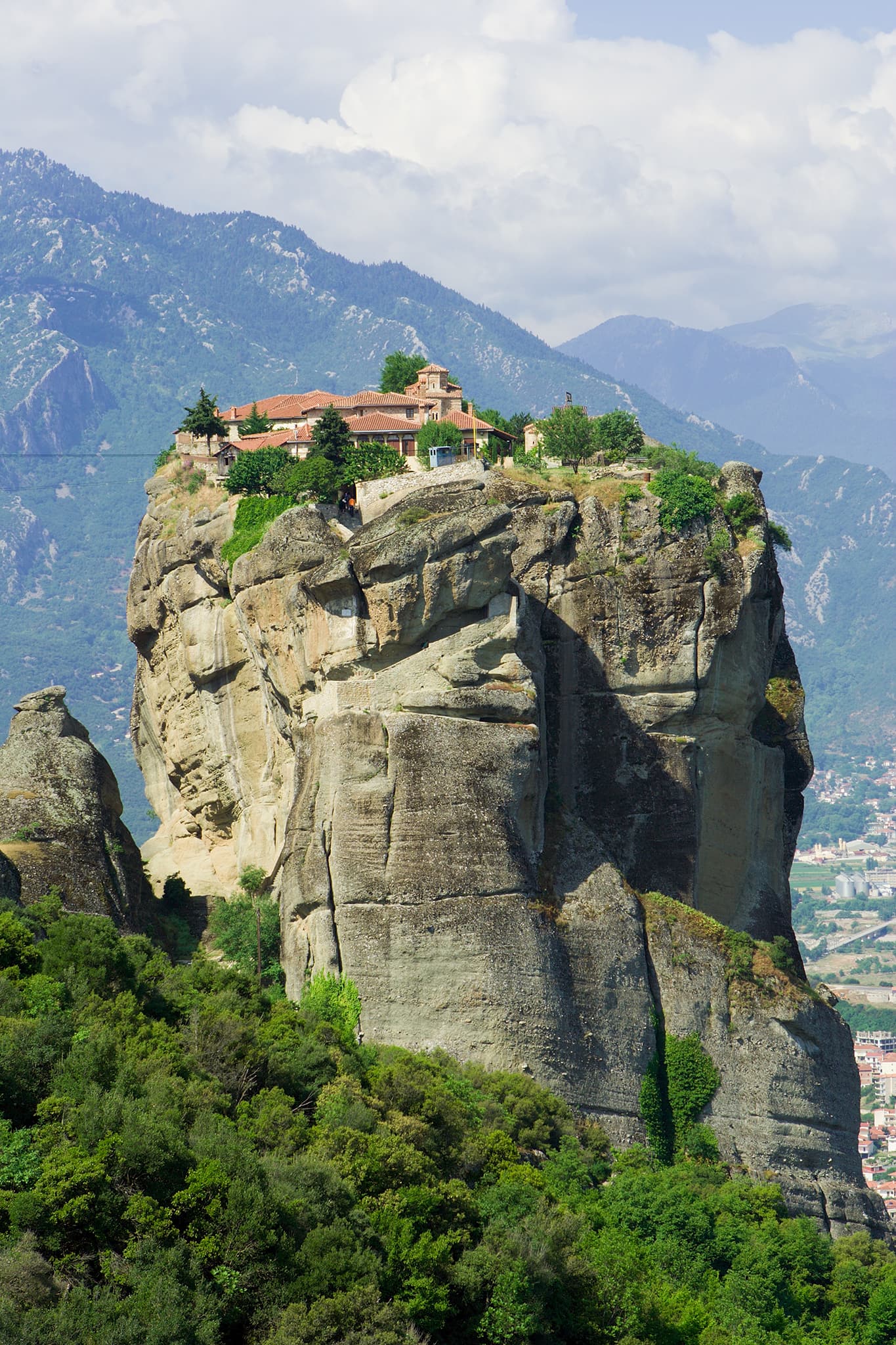 Holy Trinity Monastery**The most dramatically sited of the Meteora monasteries** — standing alone on a12 minutes walk4.7
 The Meteora MonasteriesMeteora is suspended in air literally and by name: giant sandstone towers geolog14 minutes walk4.8
**No — visit Great Meteoron, and photograph Roussanou from outside.** The paradox is that Roussanou is **the most famous sight in Meteora** and the least rewarding inside: the space is tight, there is little on display, the visit ends in half an hour, and the crowding is the worst of any because the passages cannot take it. **Great Meteoron**, by contrast, gives you the kitchen, the refectory, the museum, the rope net and the great church — an hour and a half of real content. ✅ **The best plan for one monastery's worth of time**: pay to go into Great Meteoron, then **stop at the free viewpoint above Roussanou** — that is where the photograph that made you come in the first place is taken, and it needs no ticket.
**The difference is practical rather than formal.** Three of the six working Meteora houses are **convents** — Roussanou and St Stephen's among them. What a visitor notices: **the dress code applied more precisely** (a below-knee skirt for women, strictly, covered shoulders, and long trousers for men), **visibly greater care over gardens, cleanliness and order** — the flowering terraces at Roussanou are the example — and **more expectation of quiet**. ⚠ What does not change: the ticket, the hours and the photography rules are the same. One piece of advice: **do not photograph the nuns** — as you would not photograph the monks — without explicit permission; they live here, and the place is their home as well as a monument.