
Doupiani rock
An imposing mass at the village edge with its small square.
grdereken — CC0 · Berthold Werner — CC BY-SA 3.0 · Falk2 — CC BY-SA 4.0 · Falk2 — CC BY-SA 4.0
**The village that sits directly beneath the rocks** — the nearest inhabited place to the Meteora pillars, and far quieter than Kalambaka. Its houses are stone with tiled roofs, its lanes narrow and climbing, and when you look up from any corner of it **the rock pillars fill the sky** right above you — a closeness the larger town cannot give you. It is the base for **rock climbers**: the Meteora walls are among the best-known climbing in Europe, and most people who come for that stay here. Its cafés hold a mixture of climbers, shepherds and visitors. At its edge stands the imposing **Doupiani rock**, and near it a small square where the village festivals are held. ⚠ It is **a village rather than a destination**: no museums and nothing to pay for — its value is in staying, walking and quiet. ✅ And the **old walking paths** to the monasteries start here, which is the finest way to see Meteora.
An imposing mass at the village edge with its small square.
Stone houses with tiled roofs and rock filling the sky above.
Old routes climbing between the pillars to the monasteries on foot.
Kastraki, 42200 Kalabaka, Trikala, Greece
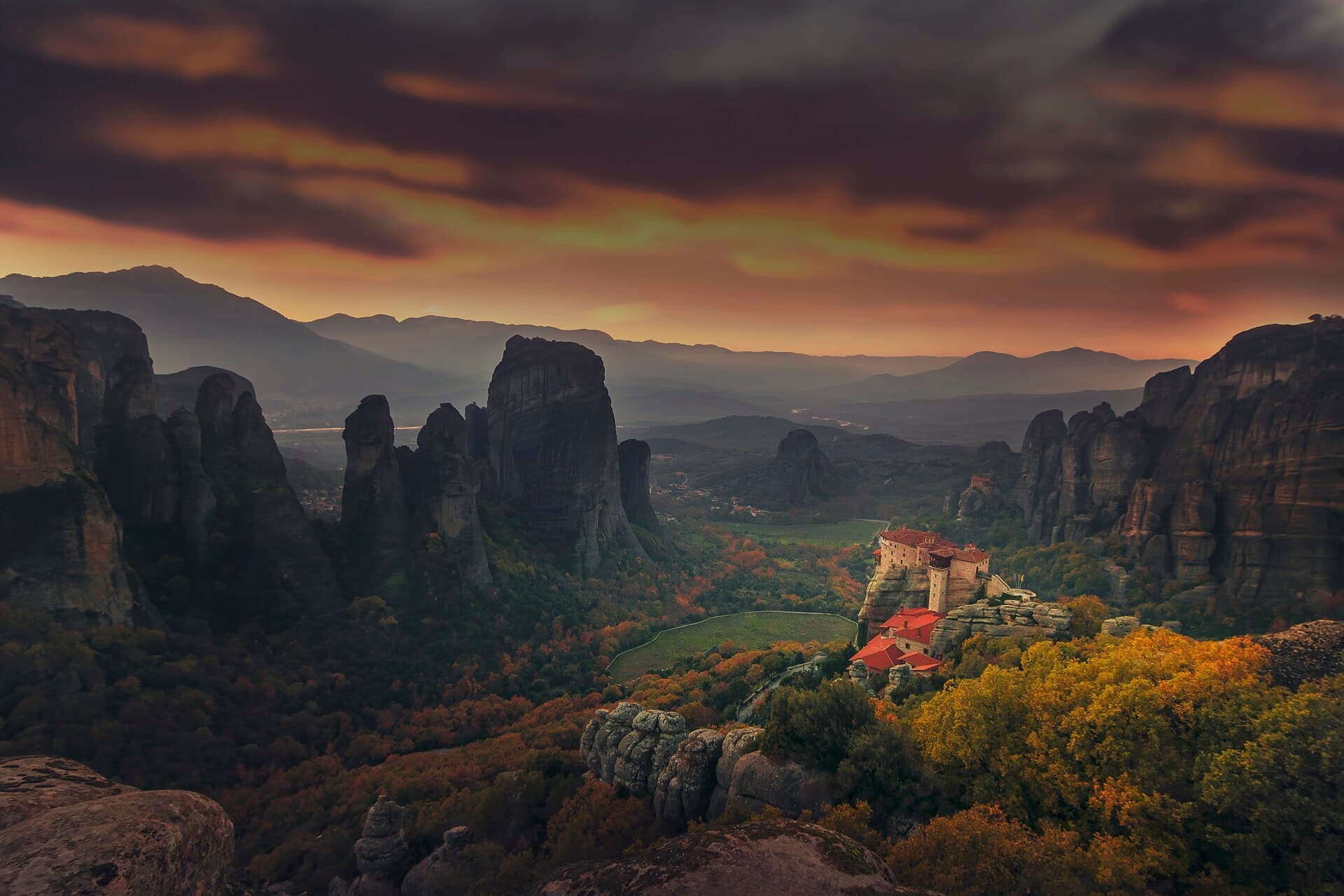 The Meteora MonasteriesMeteora is suspended in air literally and by name: giant sandstone towers geolog11 minutes walk4.8
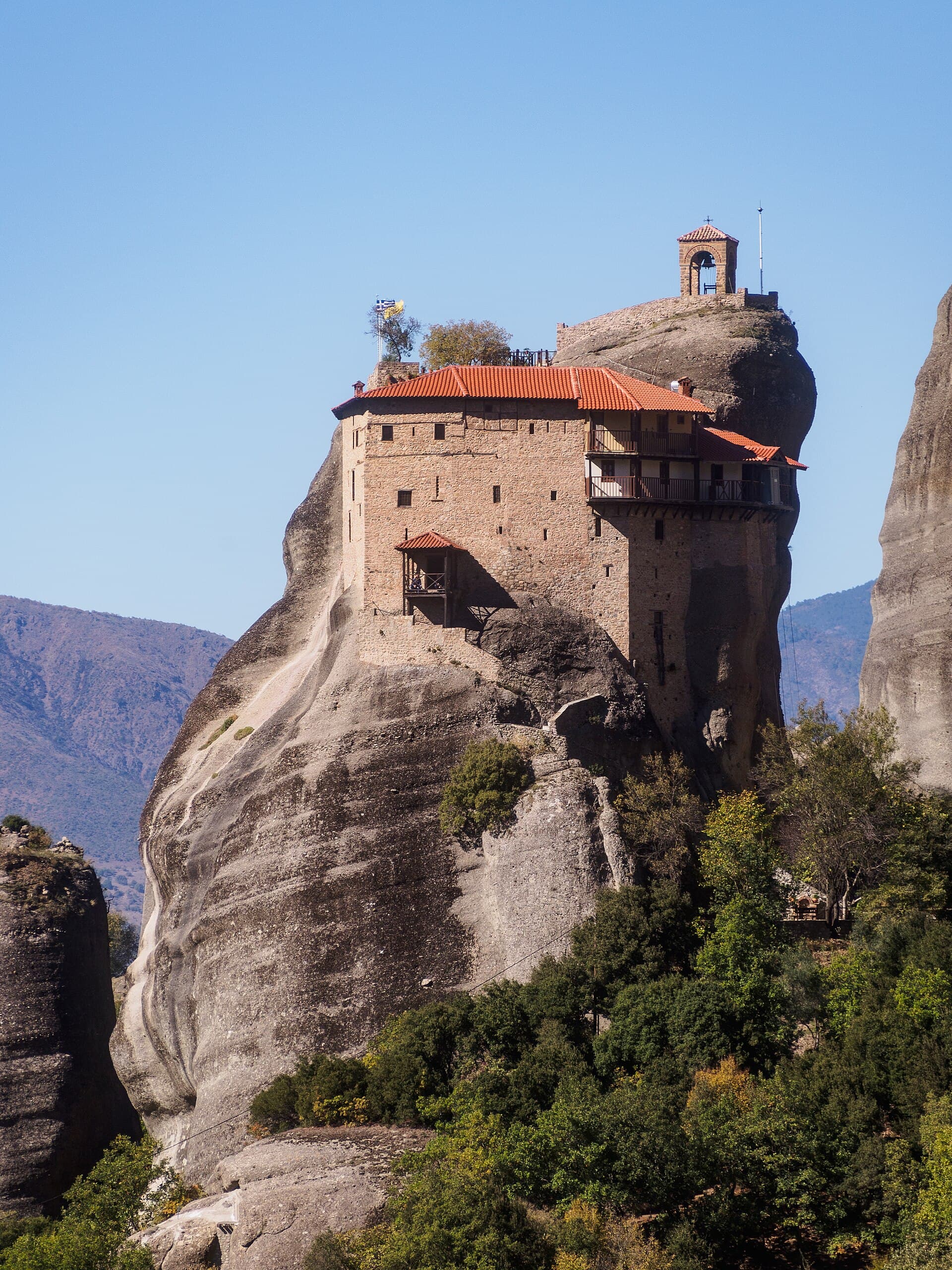 The Monastery of St Nicholas AnapafsasThe smallest of the Meteora monasteries and the first on the way up from the vil12 minutes walk4.6
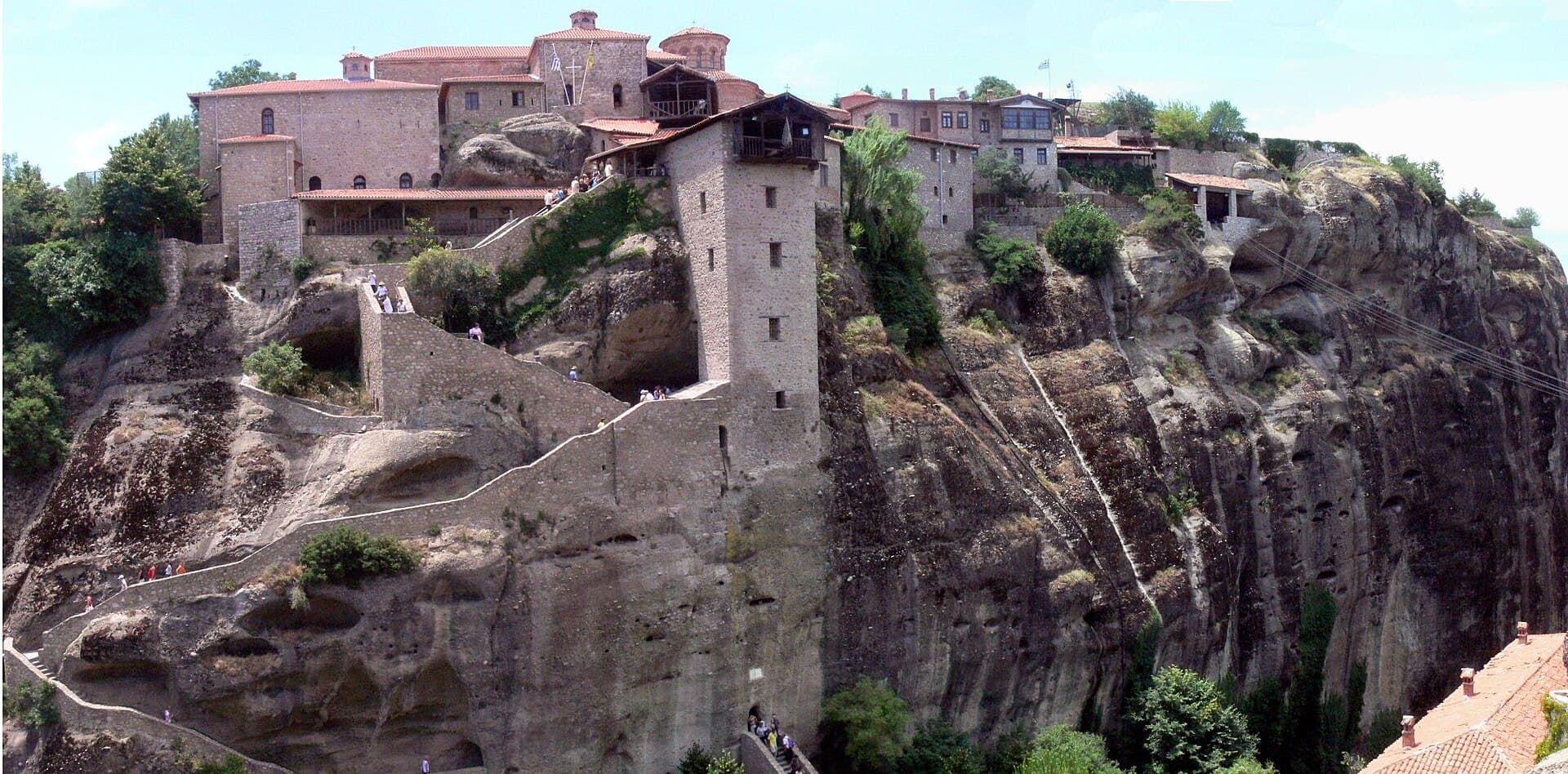 Great Meteoron Monastery**The largest, oldest and highest of the Meteora monasteries** — on a summit of 15 minutes walk4.7
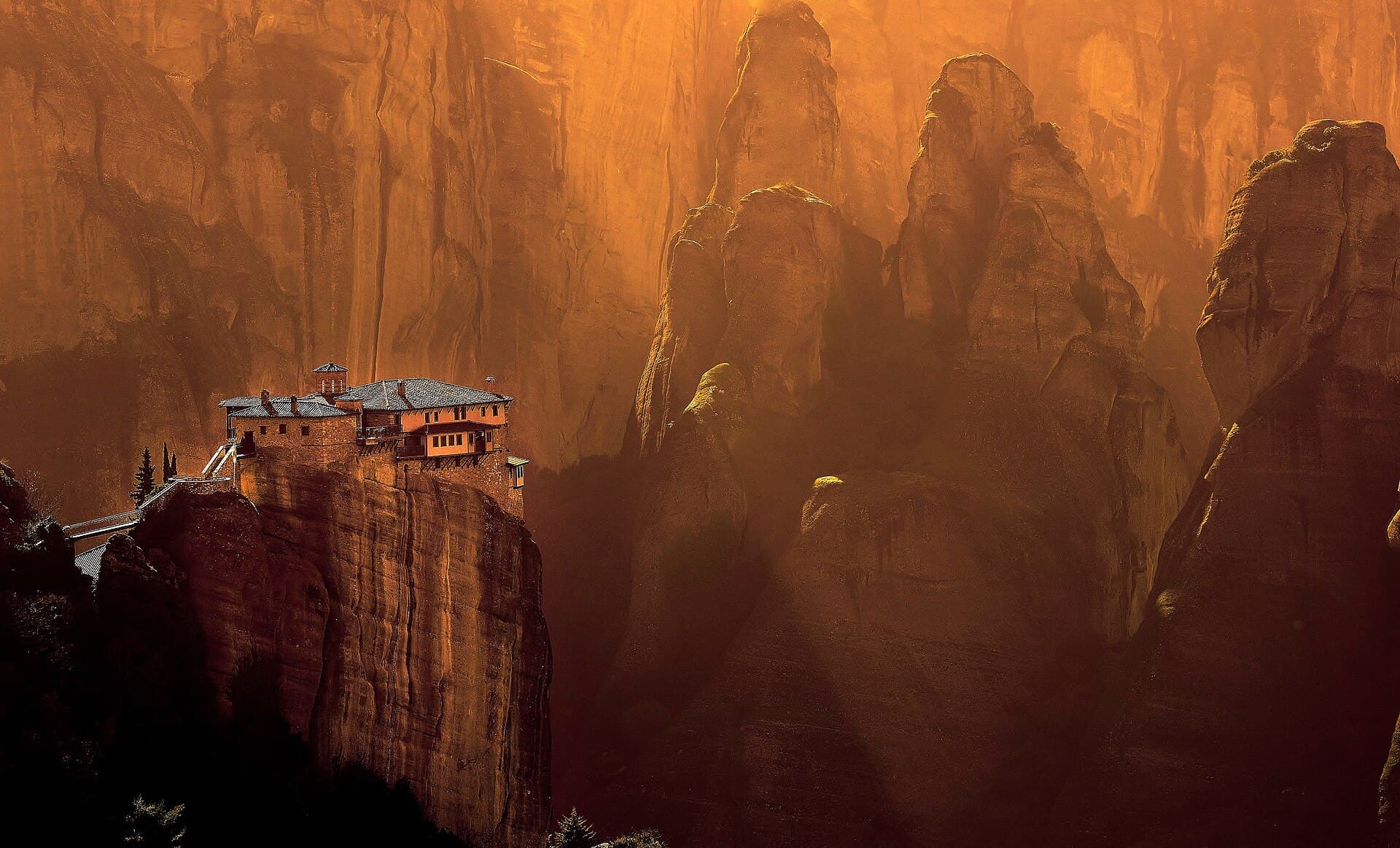 Roussanou Monastery**The monastery in every photograph of Meteora** — because it sits on a **narrow16 minutes walk4.7
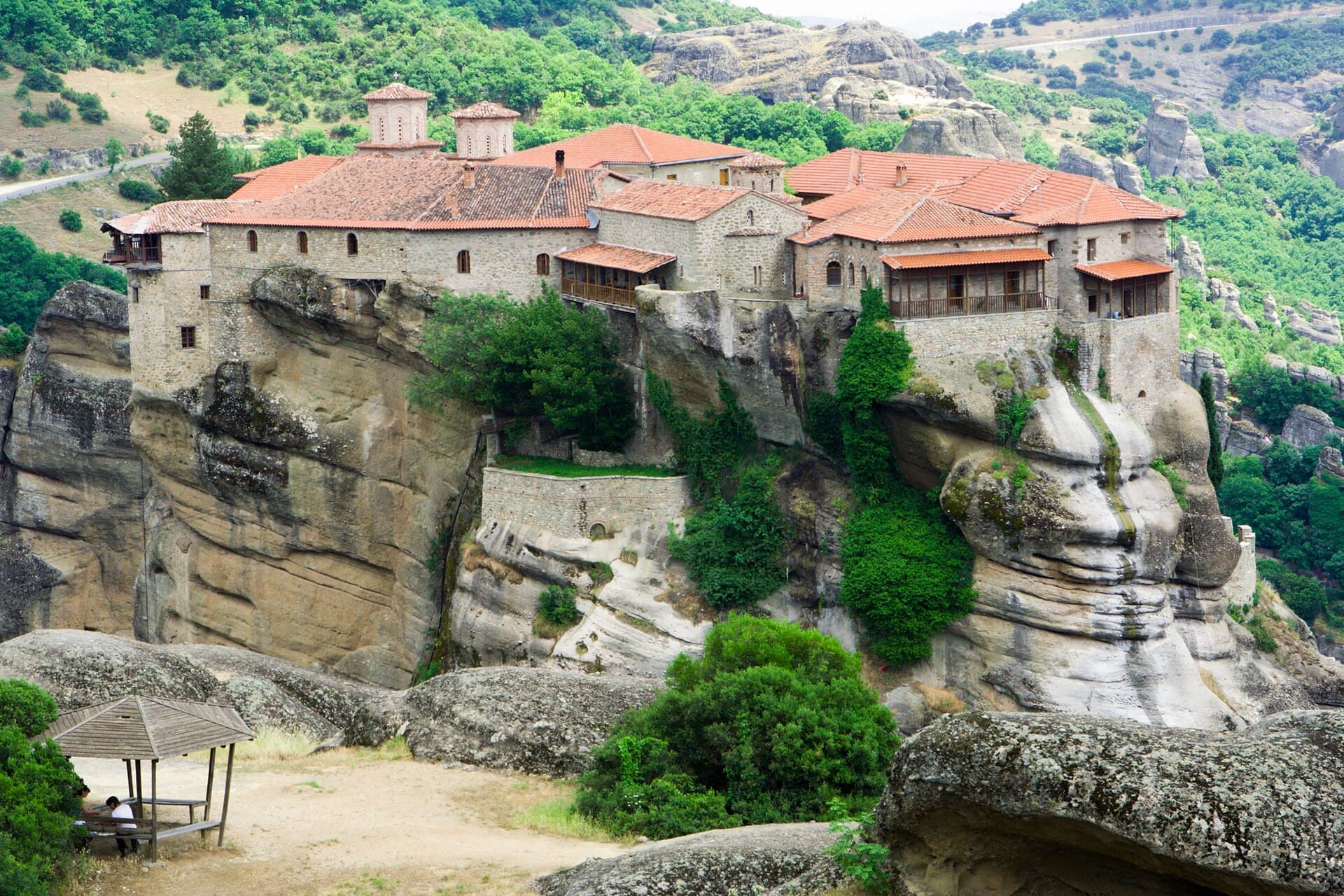 Varlaam Monastery**The second largest of the Meteora monasteries, and the best for frescoes** — a17 minutes walk4.9
**Kastraki for atmosphere, Kalambaka for services — and the choice depends on whether you have a car.** ✅ **Kastraki** is far closer to the rocks, quieter, better-looking, its guesthouses are family-run and usually cheaper, and the walking paths start at its door. ⚠ But it is **small**: few restaurants, no ATM, limited options if you have no car. ✅ **Kalambaka** is a full town: a **railway station** (decisive for anyone coming from Athens without a car), pharmacies, cash machines, supermarkets, plenty of restaurants and larger hotels. ⚠ But it is slightly further from the rocks and noisier. **The practical rule:** with a car → Kastraki. Without a car, arriving by train → Kalambaka. They are **only two kilometres apart**, so whichever you choose you do not lose the other.
**Yes — if you walk regularly, it is the best way to see Meteora.** The paths you take today are the **old routes** used before the road was cut, running between the pillars, under the rock walls and through pine woods — giving you the place from an angle nobody sees through a car window, and in complete quiet. ✅ The best of them: **from Kastraki up to the Great Meteoron and Varlaam area**, then the two monasteries, then **down** to Kalambaka on the Holy Trinity path. ⚠ But be realistic: a day like that is **four to six hours of mountain walking** with sustained climbing, ⚠ **no shade in sections** and ⚠ **no water on the paths**. ⚠ Waymarking is **unclear in places** — take a map or a trail app, and do not start in the afternoon.