
The double arcade
Two tiers of arches stacked at the highest point.
Edal Anton Lefterov — CC BY-SA 4.0 · Neptuul — CC BY-SA 4.0 · Hajotthu — CC BY-SA 3.0 · Hajotthu — CC BY-SA 3.0
**A 16th-century aqueduct crossing the middle of the modern city on double arches** — about 280 metres long and close to 25 metres high at its tallest point. It was built under **Sultan Suleiman the Magnificent** to carry water from the mountain to the fortified **Panagia quarter** on the peninsula, on an older Byzantine or Roman foundation. ⚠ **What makes it remarkable is its position rather than its form**: ancient aqueducts usually stand in the suburbs or across fields. **This one crosses a living street in a working city** — cars pass beneath its arches, cafés sit in its shade, and apartment buildings flank it. ✅ **Its name, "Kamares"**, means **"the arches"** in colloquial Greek. ✅ It is **lit at night** and is the city's emblem in every photograph. ✅ And seeing it is free, at any hour.
Two tiers of arches stacked at the highest point.
Stone lit after dark above a living street.
Cars, cafés and pedestrians under a five-century-old structure.
Kavala, 65302 Kavala, Greece
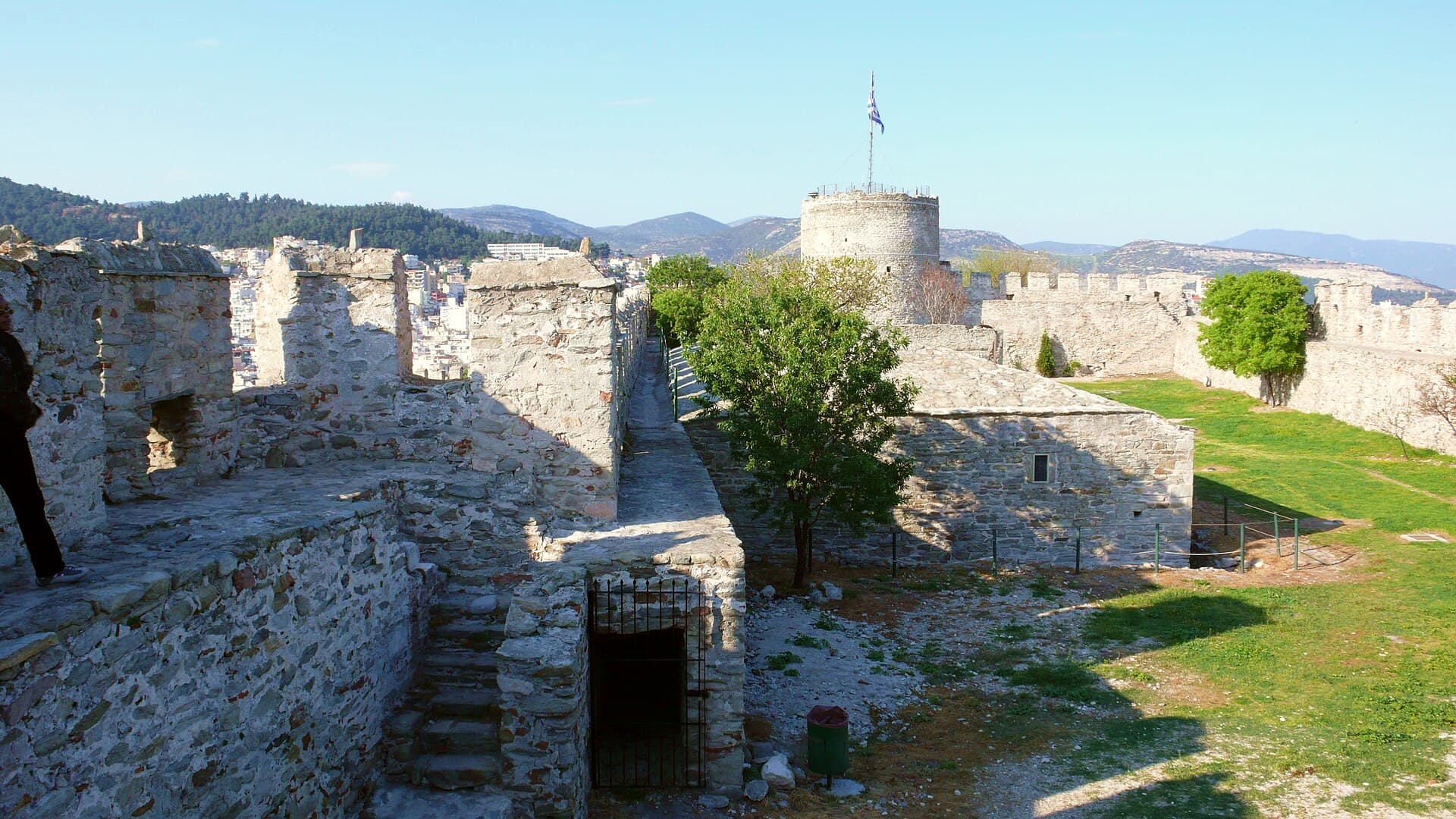 Kavala Fortress**A fortress on the summit of the Panagia peninsula, with the best view in north4 minutes walk4.5
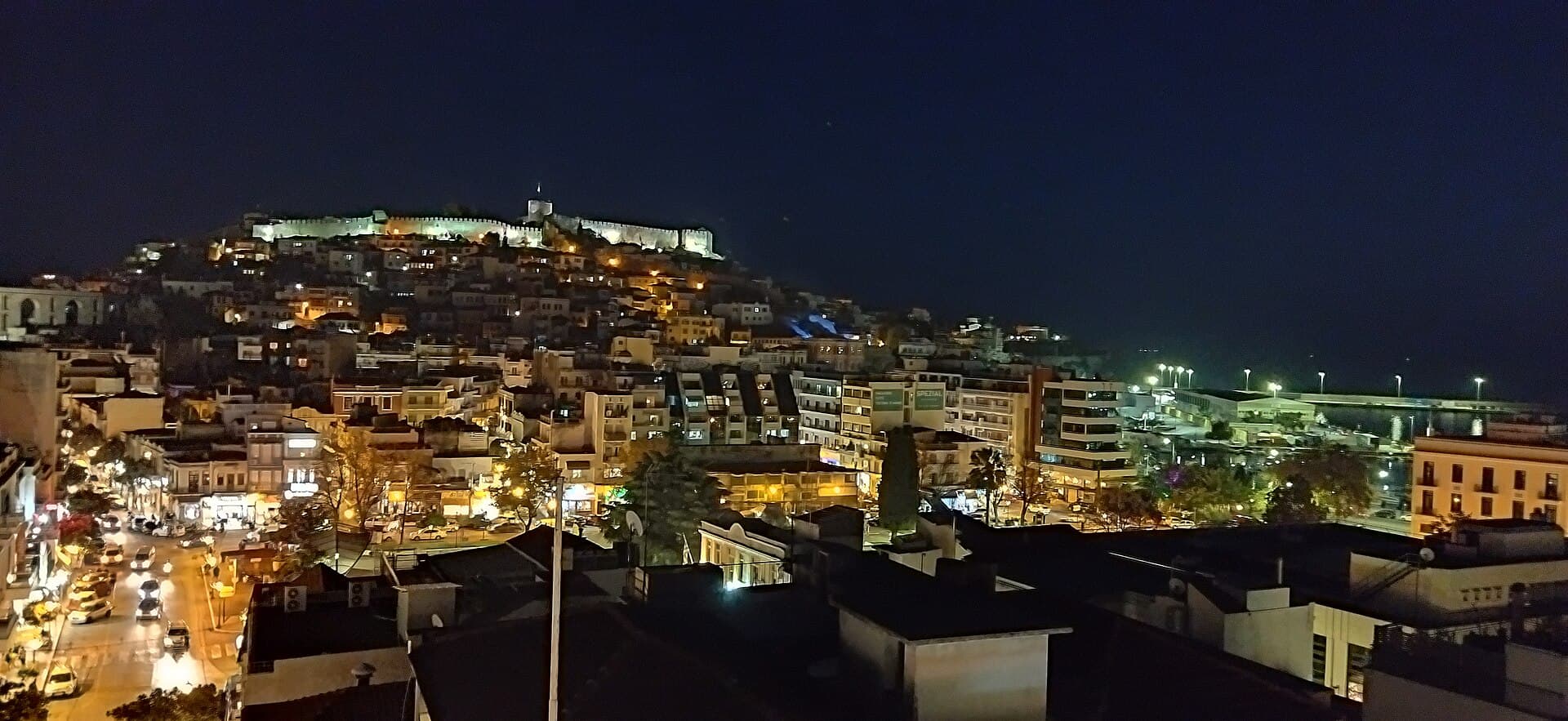 Kavala**A port city on a natural amphitheatre, crowned by an old Ottoman quarter insid10 minutes walk4.8
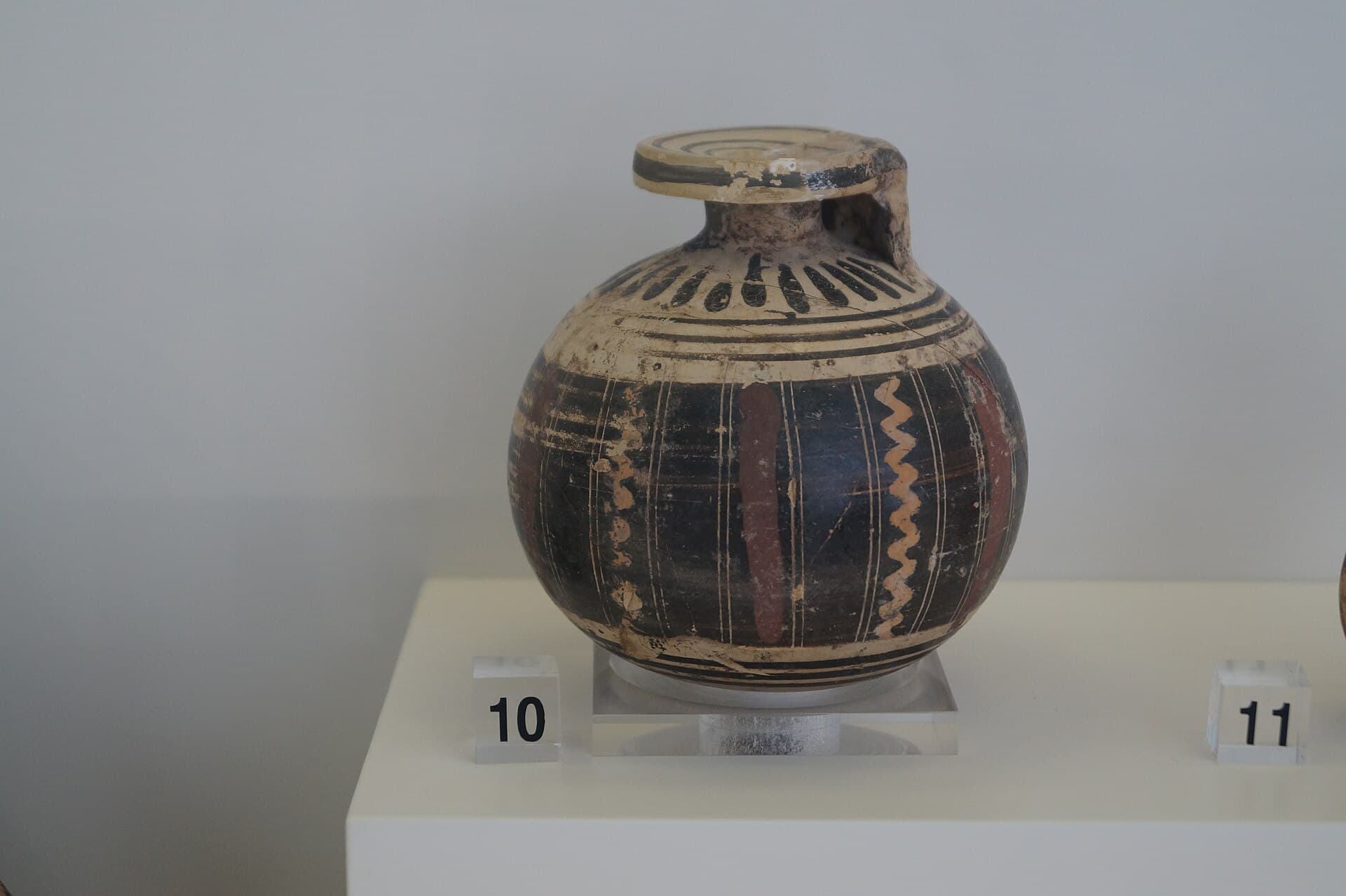 Archaeological Museum of Kavala**The museum of eastern Macedonia and Thrace, holding gold from the tombs of Amp12 minutes walk4.3
**Ottoman in its present form, on an older foundation — and the confusion is understandable.** ✅ **What is certain**: **the structure standing today is Ottoman**, from the reign of **Suleiman the Magnificent** in the **16th century**, built to carry water to the fortified Panagia quarter. ✅ **What is probable**: that it followed the line of an **older aqueduct** — Byzantine or Roman — because the city (Neapolis, later Christoupolis) had been inhabited and fortified since antiquity **and needed the same water from the same source**. ✅ **Why people assume Roman**: **the double-arcade form** resembles the famous Roman aqueducts (Segovia, for instance) — ⚠ **but the Ottomans inherited that engineering** and used it skilfully, **and many of Istanbul's aqueducts** follow the same pattern. ✅ **The technical tell**: **slightly pointed arches** in places — an Islamic/Ottoman marker, not a Roman one. ✅ **The practical upshot for a visitor**: **a 16th-century Ottoman structure** standing on an older tradition — which is all of Kavala in a single example.