
The gold wreath
Laurel leaves in thin gold from a Macedonian tomb.
Schuppi — CC BY-SA 4.0 · Schuppi — CC BY-SA 4.0 · Schuppi — CC BY-SA 4.0 · Schuppi — CC BY-SA 4.0
**The museum of eastern Macedonia and Thrace, holding gold from the tombs of Amphipolis and Abdera** — near the seafront in Kavala. It is the region's museum, **so it gathers what was found across the whole northeast of Greece** rather than in Kavala alone: **Amphipolis**, **Abdera**, **Neapolis** (ancient Kavala) and **mainland Thasos**. ✅ Its best-known holdings are the **gold**: a **gold wreath** of laurel leaves, jewellery, masks and funerary pieces from Macedonian tombs — **the same period as Vergina**, but from less famous sites. ✅ There are also a complete **painted tomb** from Amphipolis, **sculpture** from the Parian temple on Thasos, and **mosaics**. ⚠ The museum is **small and modestly presented** — not comparable to Thessaloniki. ✅ But it is air-conditioned, cheap and close by.
Laurel leaves in thin gold from a Macedonian tomb.
A complete tomb from Amphipolis moved with its paintings.
Marble from the Parian temple on the Thracian coast.
Kavala, 65302 Kavala, Greece
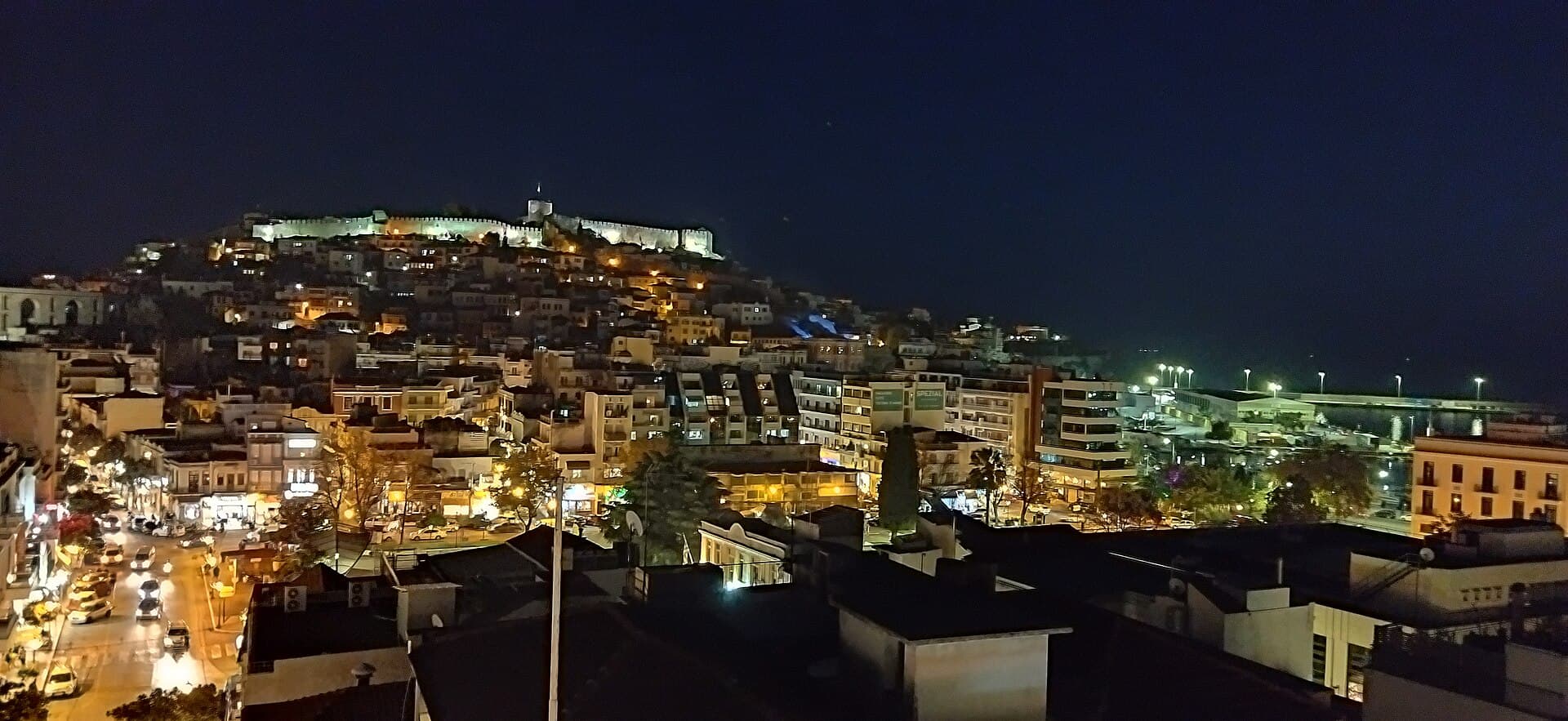 Kavala**A port city on a natural amphitheatre, crowned by an old Ottoman quarter insid6 minutes walk4.8
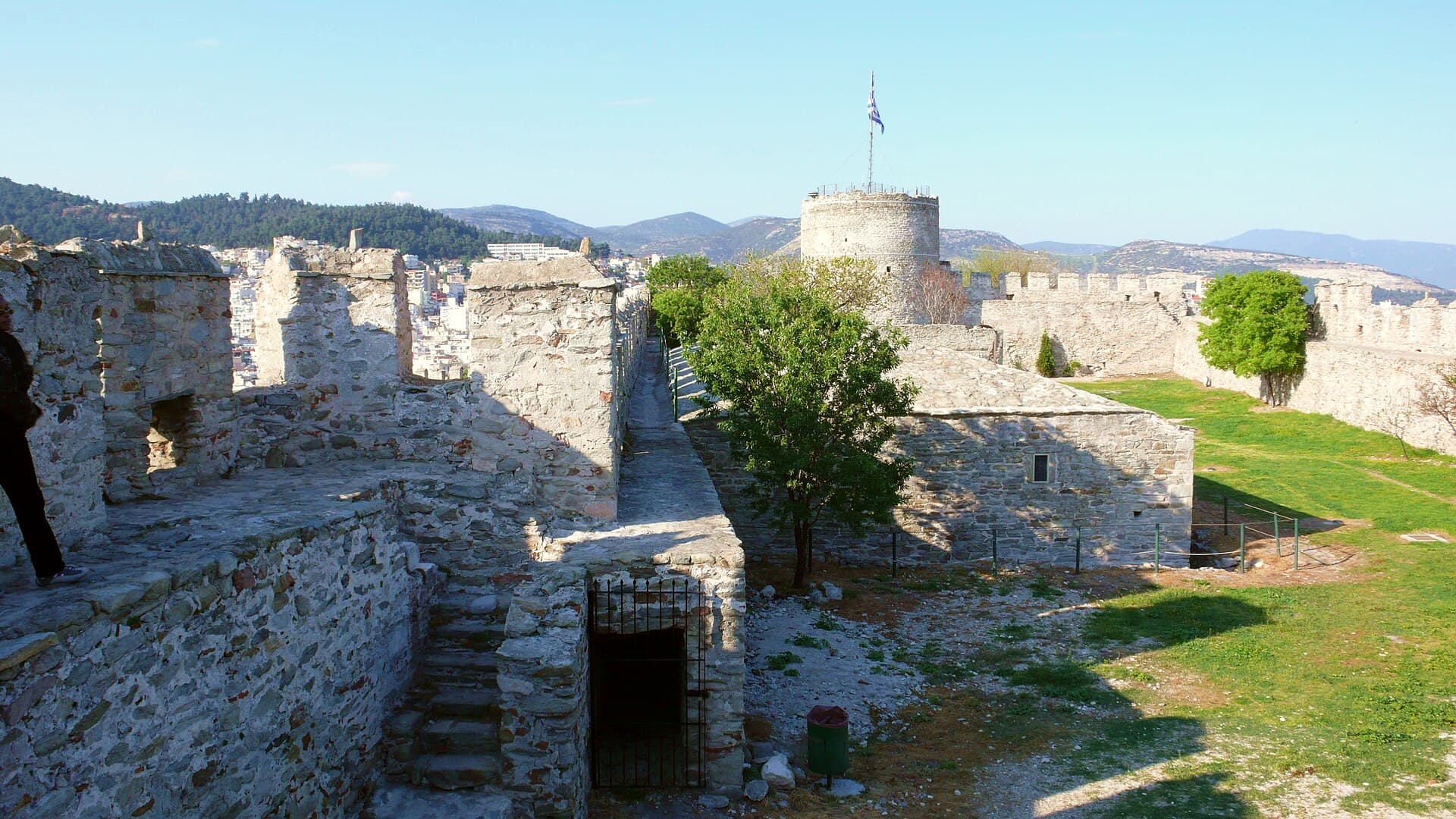 Kavala Fortress**A fortress on the summit of the Panagia peninsula, with the best view in north12 minutes walk4.5
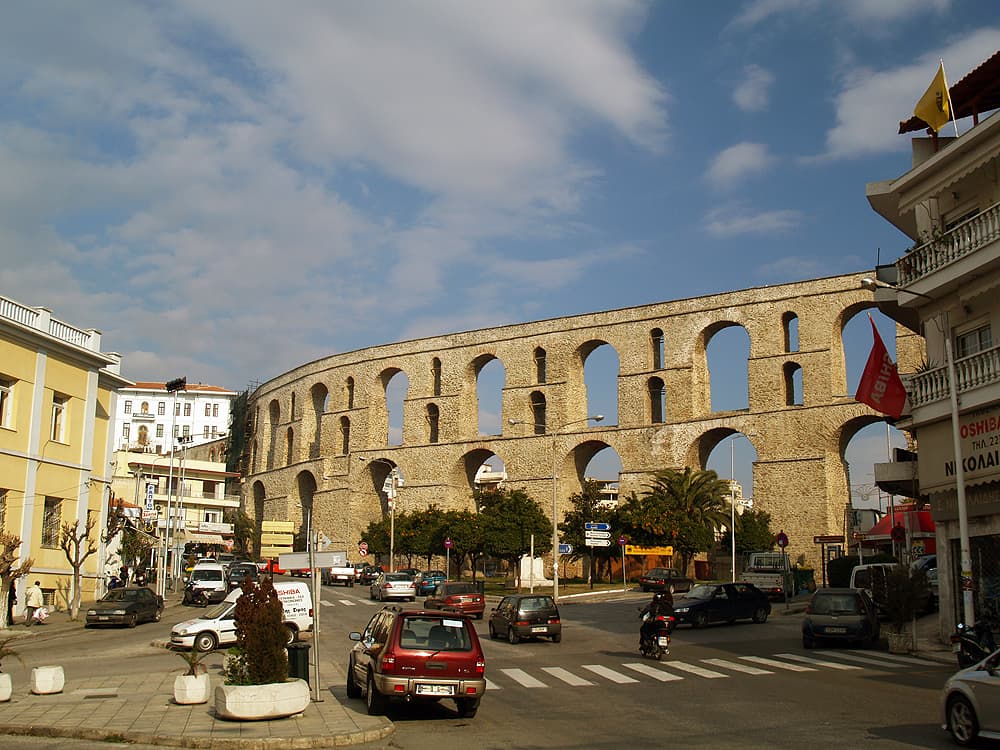 Kamares Aqueduct**A 16th-century aqueduct crossing the middle of the modern city on double arche12 minutes walk
**Noble tombs of the age of Philip and Alexander — and the gold is there because Macedonia owned the mines.** ✅ **The wealth**: in the 4th century BC Macedonia **controlled gold and silver mines** at **Pangaion** near Philippi and across Thrace — **and those mines financed Philip's army and Alexander's campaigns**. **So the gold was not imported but local and abundant.** ✅ **The funerary custom**: Macedonian nobles were buried in **vaulted tombs beneath earth mounds** (tumuli) — **with their weapons, vessels and gold wreaths**, and sometimes with furniture and wall paintings. **The gold wreath** in particular was a marker of status, worked with a precision that imitates real foliage. ✅ **Why they survived**: **the earth mounds concealed the entrances** — **so many escaped looting** until modern times; **which is why Macedonian museums are so rich**. ✅ **The famous example is Vergina** (the tomb of Philip II), ✅ **but Amphipolis, Abdera and others yielded a great deal too** — **and that is what you see here**.