The flowering
Tens of thousands of carmine blooms at once.
Linear77 — CC0 · Thorsten Heisig — Public domain · Brigitt Sigel — CC BY-SA 4.0 · Brigitt Sigel — CC BY-SA 4.0
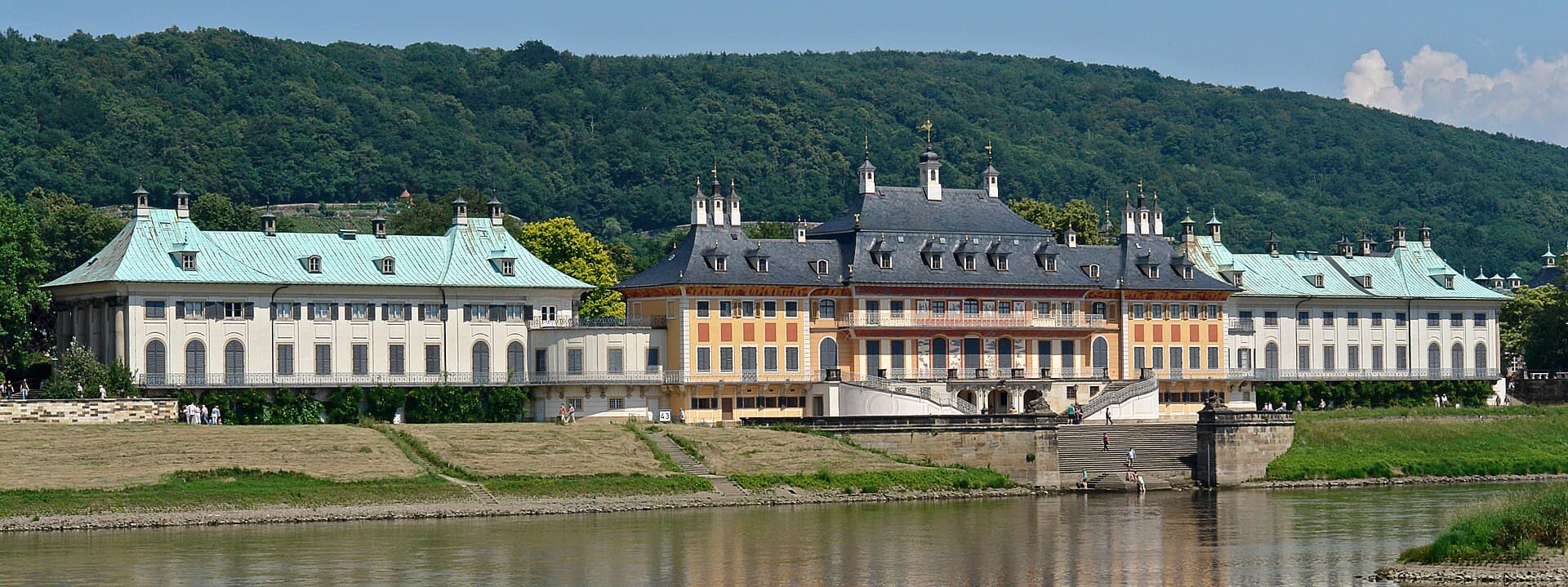
In the garden of Pillnitz Palace stands a single camellia more than two hundred years old, with a glasshouse built specifically around it — one of the odder things Europe offers as a sight: one plant with its own building and its own team of keepers. The tree was planted here at the start of the nineteenth century and is thought to be among the first camellias to reach Europe from East Asia in the eighteenth. It has grown to about nine metres tall with a crown some eleven metres across, and flowers between mid-February and early April with tens of thousands of carmine blooms at once. The engineering solution is what impresses: rather than move the tree, a movable glasshouse was built for it on rails, heated and climate-controlled, rolled over it in autumn and pushed aside in May so it stands in the open all summer. The visit is short and combines naturally with Pillnitz Palace and its gardens.
Tens of thousands of carmine blooms at once.
The building moves rather than the tree.
Pillnitz Palace garden, August-Bockstiegel-Strasse 2, 01326 Dresden
Honestly not as a destination in itself — out of season you see a large tree without flowers, and the glasshouse itself is parked aside. But the tree sits inside the Pillnitz palace garden, which rewards a visit any time from spring to autumn. Treat it as an addition to the palace rather than a reason for the trip, except in March, when that reverses.