
A façade of iron
Portal, balcony and railings cast rather than carved — a showroom for the family's works.
Harold — CC BY-SA 4.0 · Martin Strachoň — CC BY-SA 4.0 · Ben Skála — CC BY-SA 4.0 · Ben Skála — CC BY-SA 4.0
A mid-nineteenth-century palace on Náměstí Svobody, Brno's main square, built by the Klein brothers, among the great iron industrialists and railway builders of the Austrian empire. What makes it distinctive is that the façade is an advertisement for its owners' trade: the portal, the balcony and the railings are cast iron rather than stone — the product that made the family's fortune. Using your own house as a showroom for your factory is a purely nineteenth-century industrial idea. That makes the palace a document of the moment when Brno was a rising industrial city nicknamed the Manchester of Moravia, and iron was a symbol of modernity rather than an ordinary building material. The building today holds offices and shops and is not visited inside. The stop is a few minutes spent looking at the ironwork. It stands directly on Náměstí Svobody, a point every visitor to Brno passes, so it needs no planning.
Portal, balcony and railings cast rather than carved — a showroom for the family's works.
Brno was a rising industrial city where iron stood for modernity.
It needs no planning — you stand in front of it on any walk in the centre.
Náměstí Svobody, central Brno
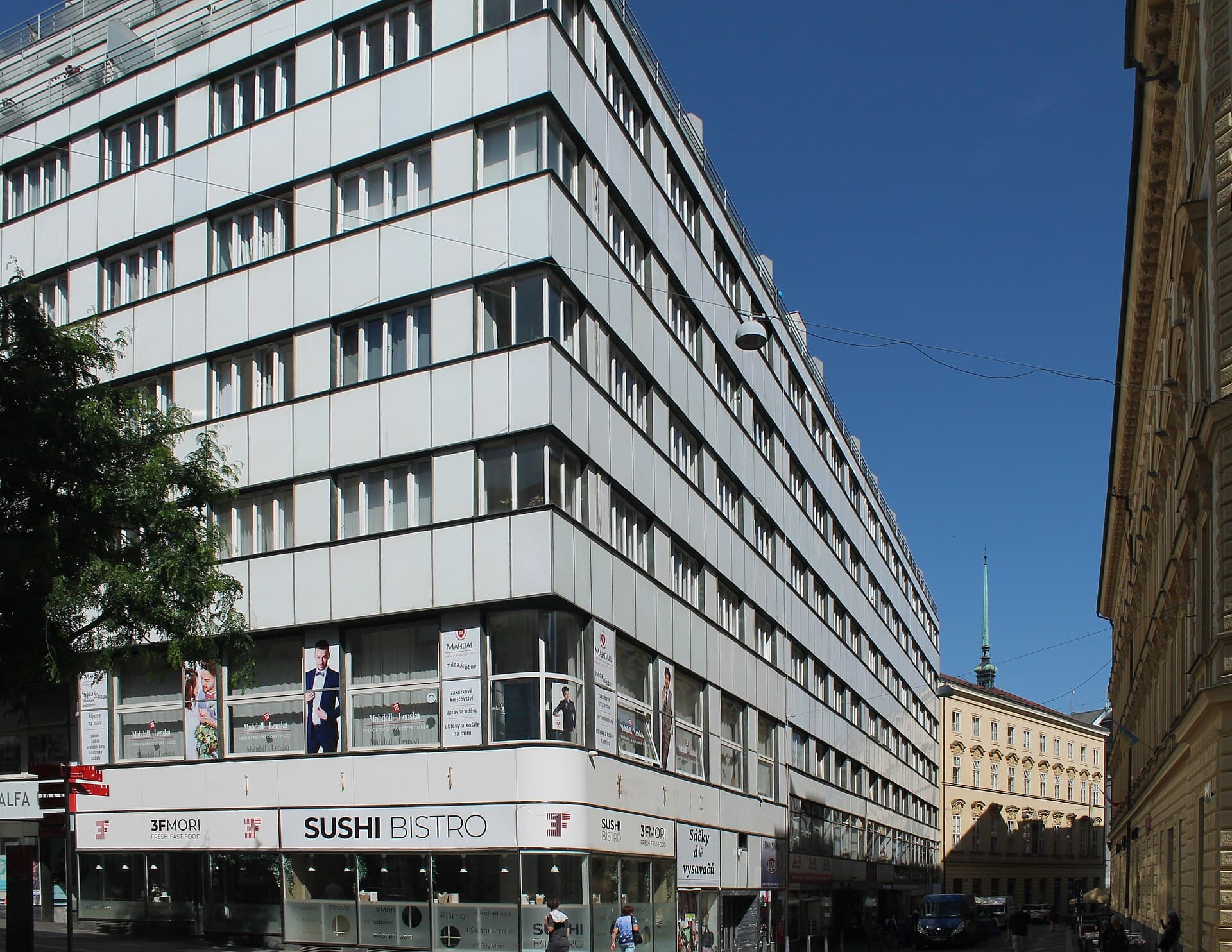 Alfa PalaceA functionalist building of the 1930s in central Brno, containing a covered shop1 minute walk4.1
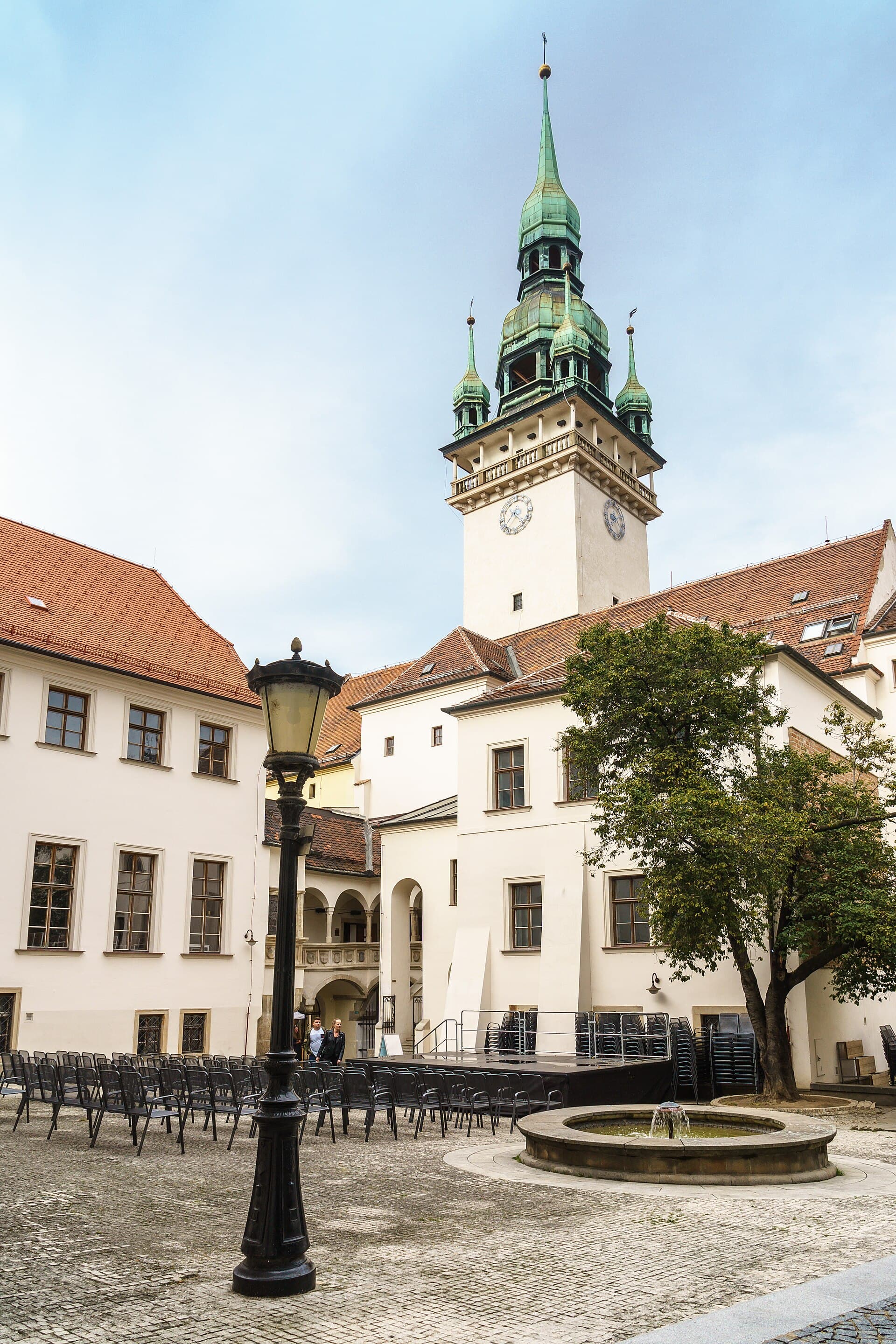 The Old Town HallThe oldest secular building in Brno, dating from the thirteenth century, and the2 minutes walk4.8
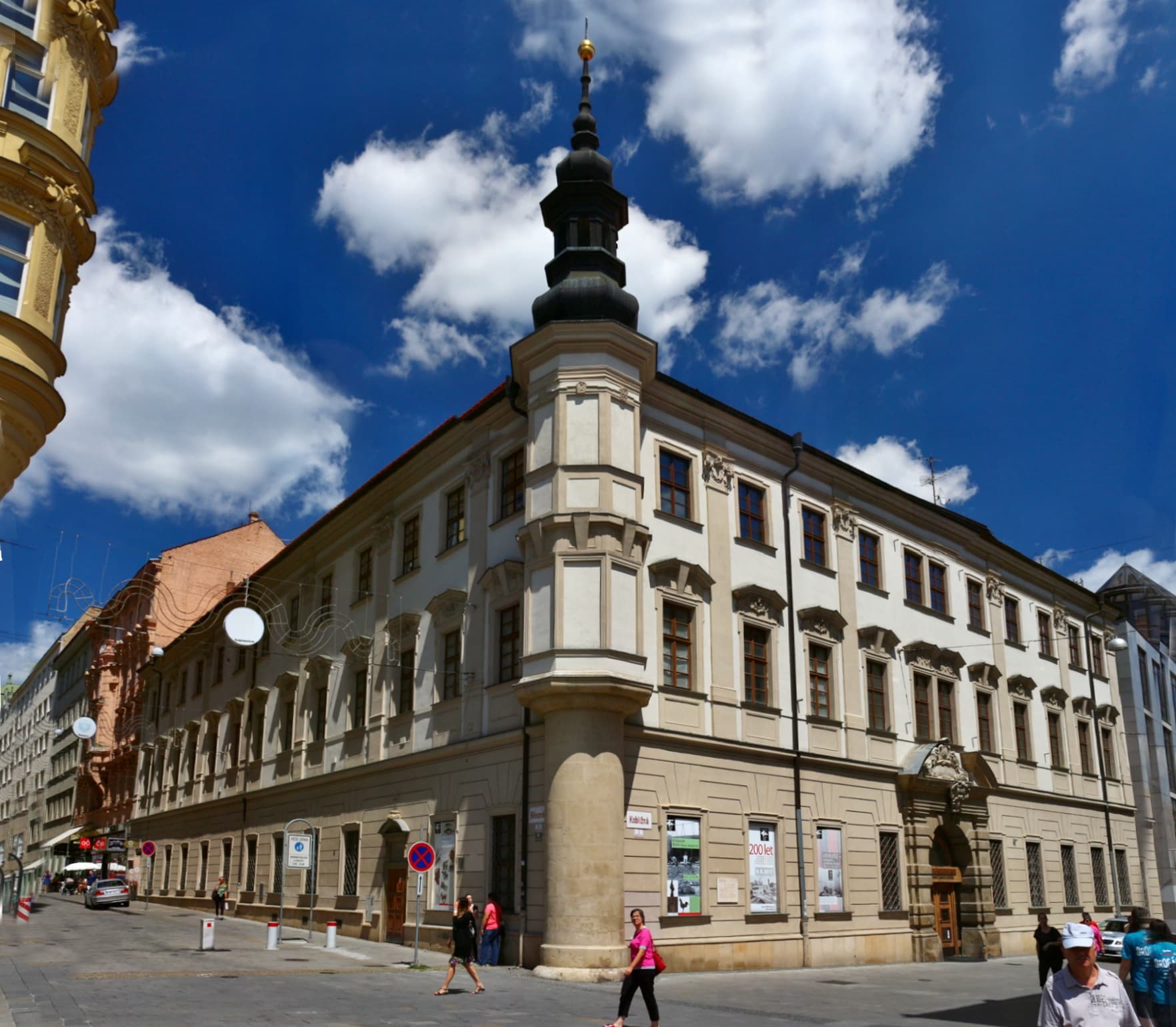 The Palace of the Noble LadiesA Baroque palace in central Brno, built in the seventeenth century to house the 2 minutes walk4.6
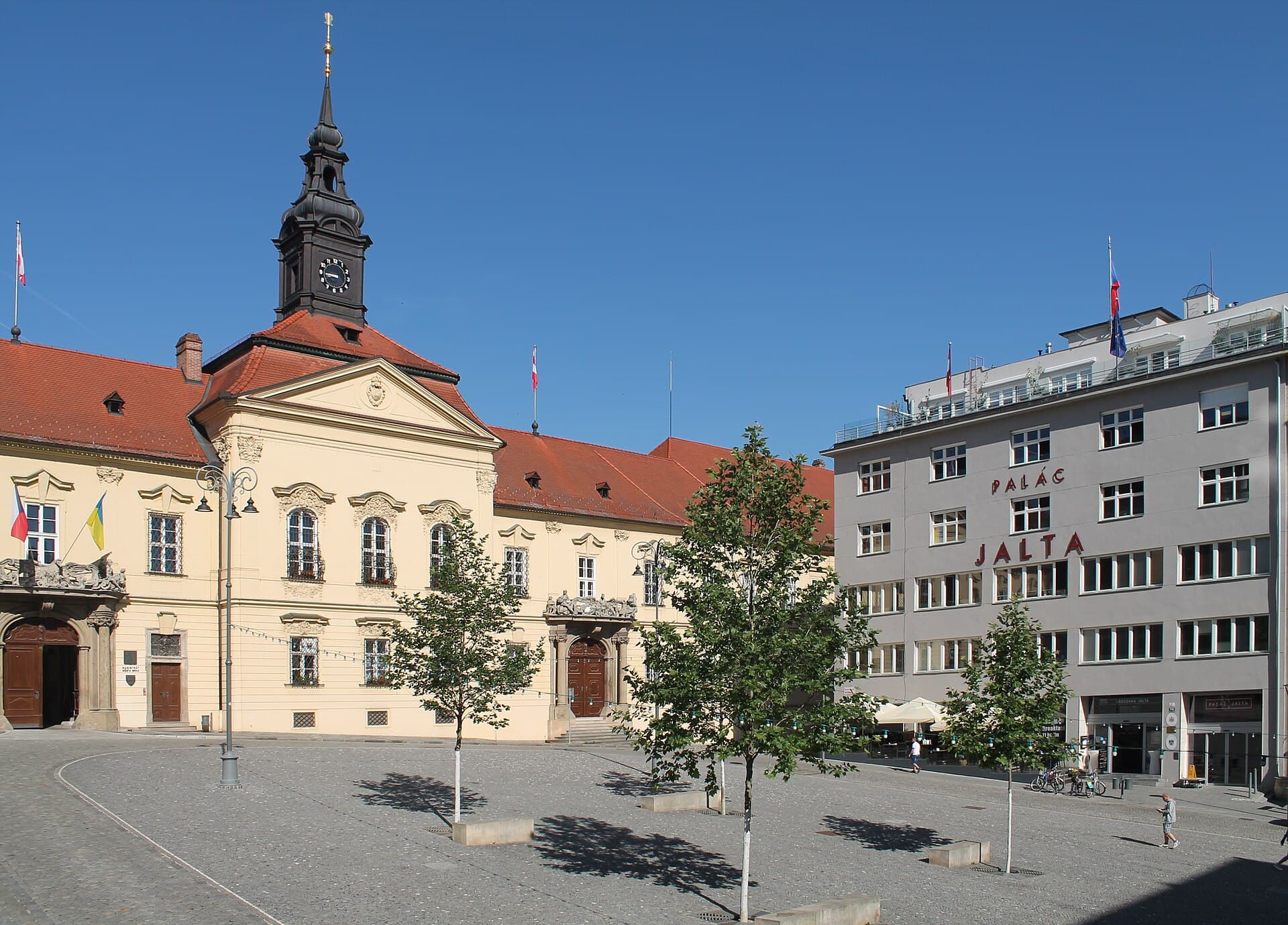 Dominican SquareA square in old central Brno holding the New Town Hall, the Dominican monastery 2 minutes walk4.8
 The Labyrinth under the Vegetable MarketA city beneath the city: the Vegetable Market, trading since the thirteenth cent2 minutes walk4.3
The square itself is Brno's heart, with a plague column and a strange black astronomical clock that releases a marble every day at noon. Buildings from different layers surround it, the Klein Palace among them, and the streets off it lead to the cathedral and the Špilberk fortress.
Two minutes, yes. It is not a reason to come, but it explains something about Brno to an attentive visitor: a city built on industry rather than a royal court, and a façade made from its owners' product is the clearest evidence of that.