
Kurnysh Khan iwan
Blue tiles.
Gregor Rom — CC BY-SA 4.0 · Jean Housen — CC BY-SA 4.0 · Panpanchik — CC BY-SA 4.0 · upyernoz from Haverford, USA — CC BY 2.0 · LBM1948 — CC BY-SA 4.0 · Panpanchik — CC BY-SA 4.0 · upyernoz from Haverford, USA — CC BY 2.0 · upyernoz from Haverford, USA — CC BY 2.0
The citadel of the khans of Khiva inside Itchan Kala; its name means «old fortress». Khan Muhammad Erenke built it in the 17th century as the khanate's seat of government, and within a hundred years it held the khan's mosque and residence, the supreme court, the reception hall, a gunpowder works, an arsenal, the mint, the harem, kitchens and stables. You enter through a massive gate flanked by two towers decorated with blue tiles. Inside is the Kurnysh Khan, the reception hall built under Iltuzar Khan (1804-1806), with a courtyard where a yurt stood in summer and an iwan clad in blue and white tiles on two wooden columns. Next to it is the throne room, with a replica of the original throne made in 1816 and covered in silver leaf, which was taken to Moscow in 1873 after the Russian conquest and is now in the Kremlin. The Ak Sheikh Bobo watchtower gives views over Khiva's domes and minarets, best just before sunset. The citadel is covered by the two-day Itchan Kala ticket (about 250,000 som); the watchtower costs extra, per visitor guides.
Blue tiles.
At sunset.
And its replica.
West side of Itchan Kala, Khiva
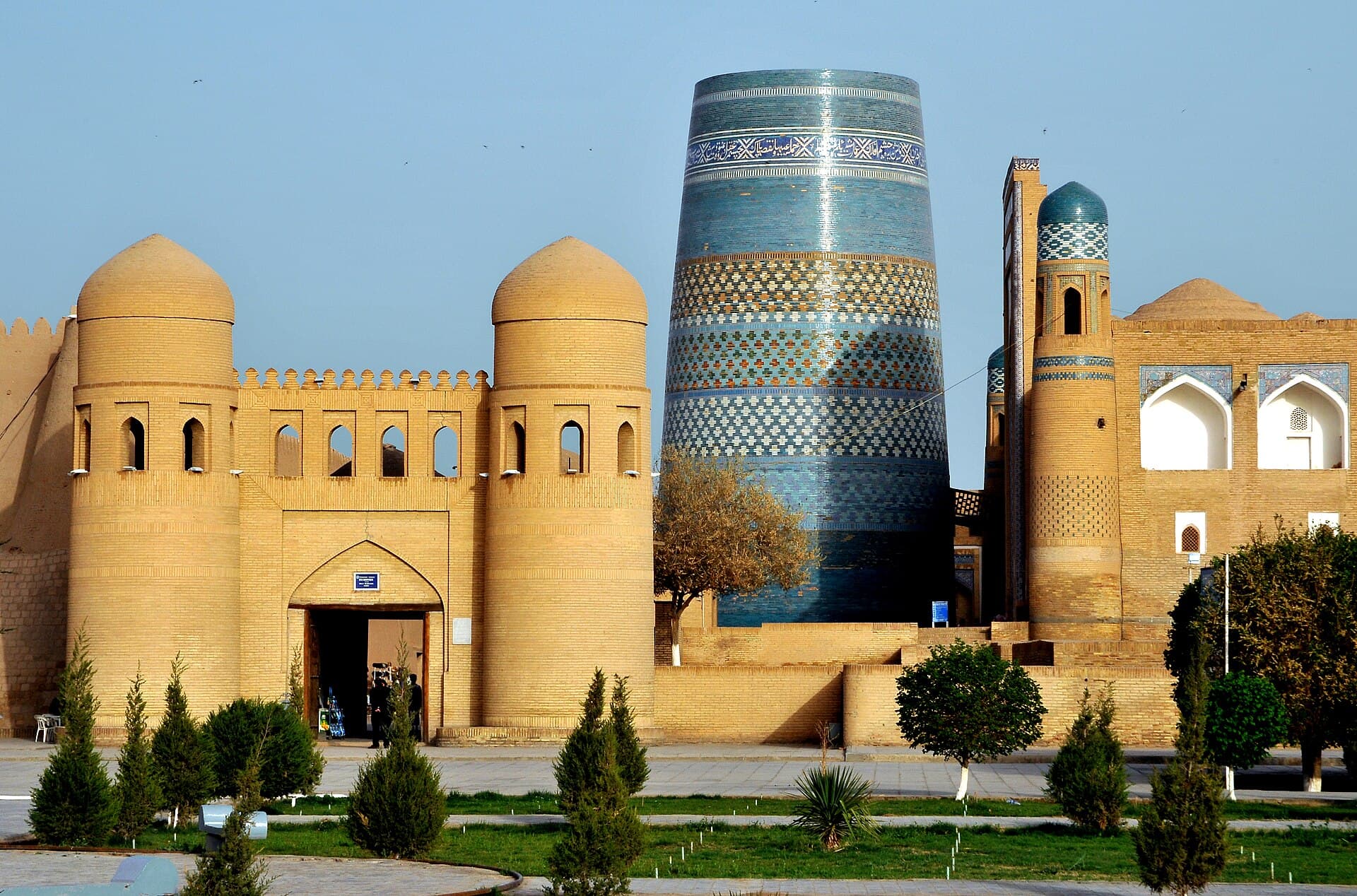 Kalta Minor minaretAn unfinished minaret in Khiva's Itchan Kala, in front of the Muhammad Amin Khan1 minute walk4.9
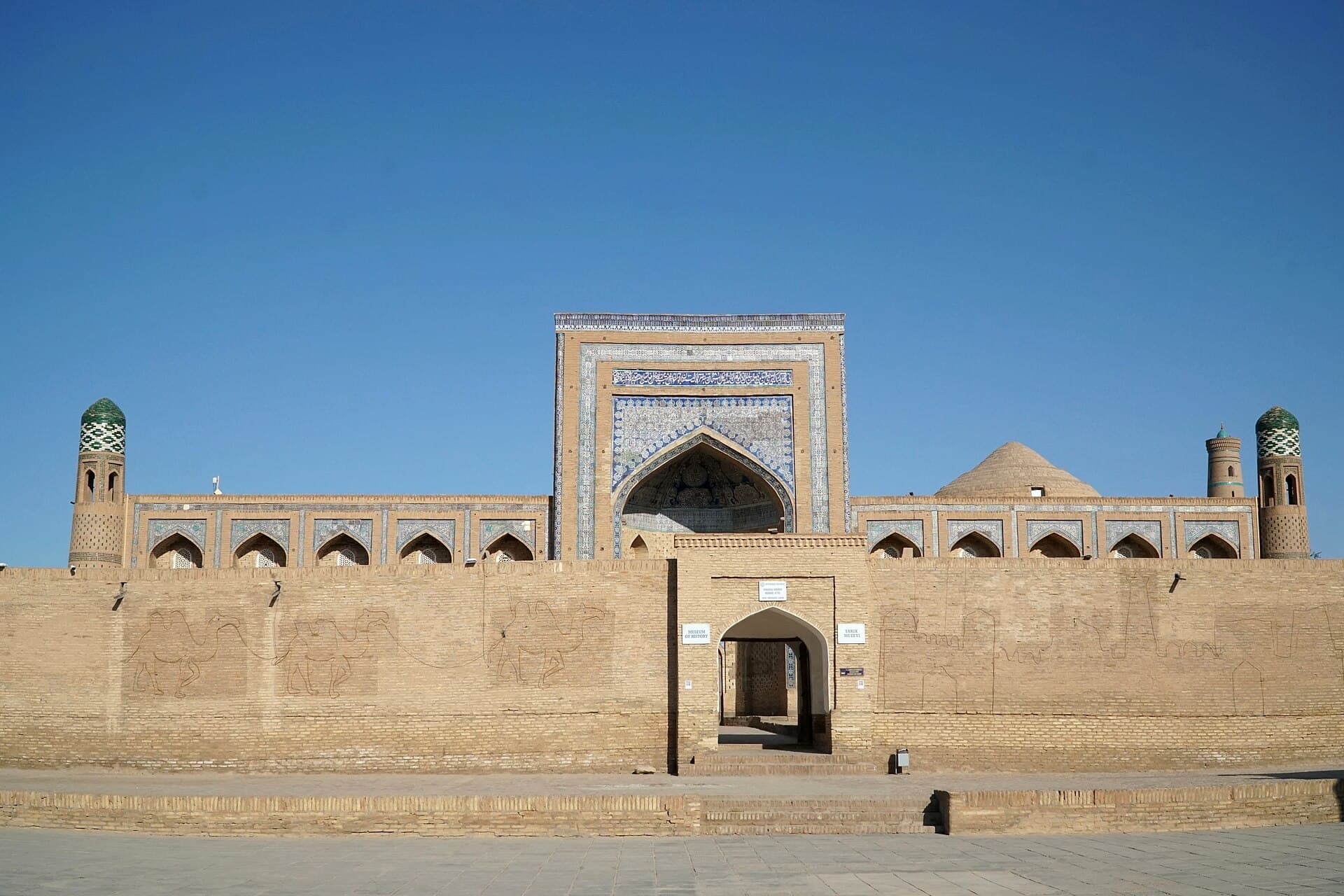 Muhammad Rahim Khan MadrasaOne of Khiva's largest madrasas, facing the Kunya Ark citadel inside Itchan Kala2 minutes walk4.7
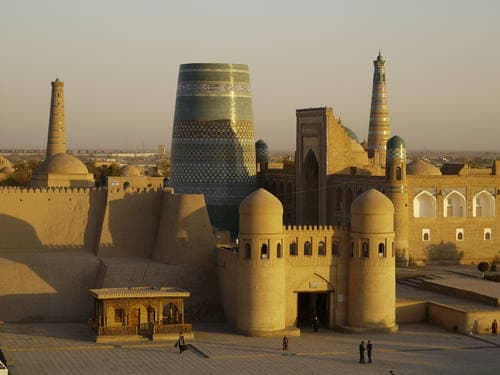 Itchan Kala, Khiva's walled cityThe walled inner town of Khiva, a World Heritage Site since 1990. It holds more 2 minutes walk4.8
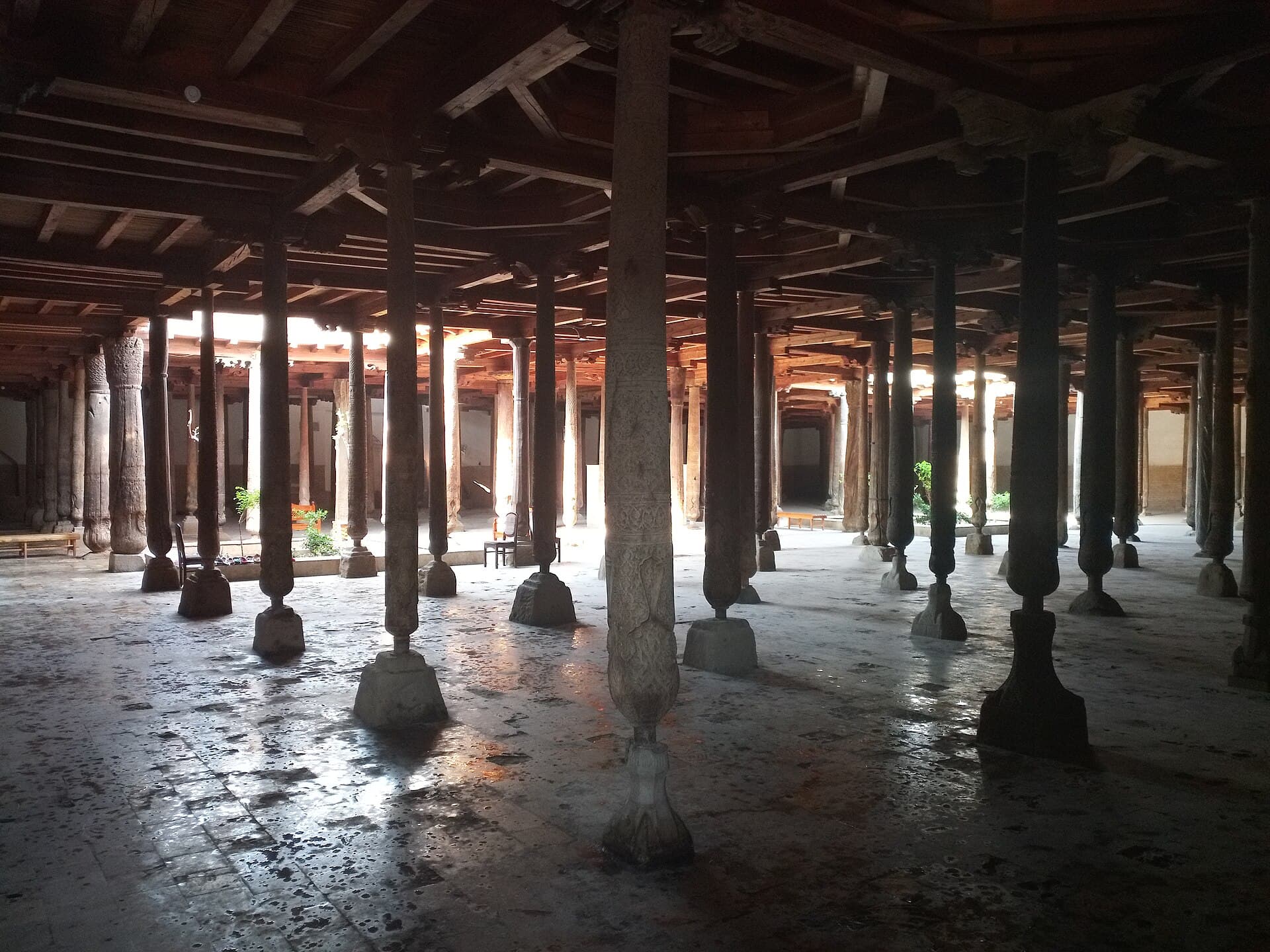 Juma Mosque, KhivaOne of Itchan Kala's principal monuments, in its middle on the road between the 3 minutes walk4.6
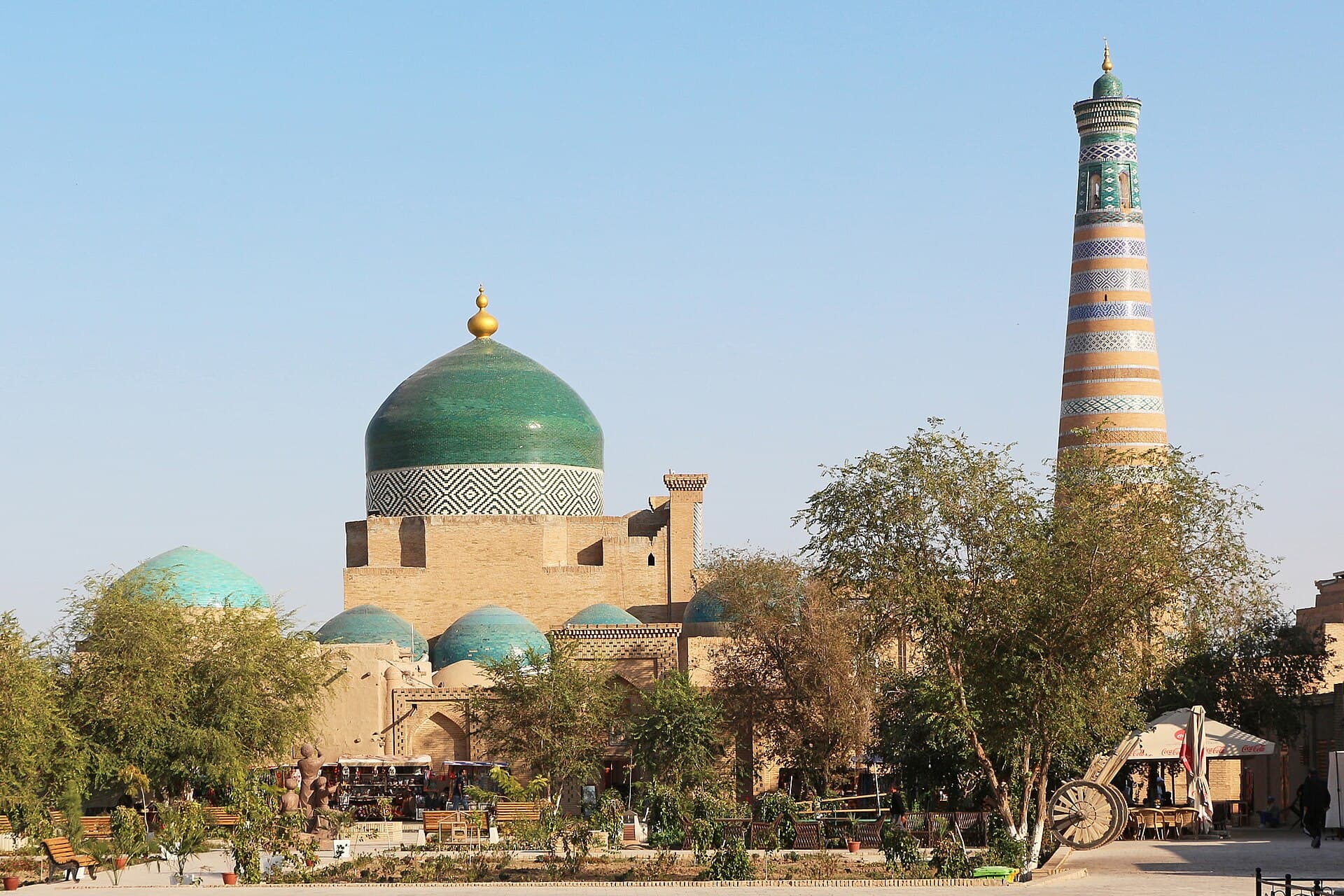 Pahlavan Mahmud MausoleumThe tomb of Khiva's patron saint and its most sacred place for locals: Pahlavan 4 minutes walk4.6
In the Moscow Kremlin, taken there in 1873 after the Russian conquest; the Kunya Ark throne room holds a replica.