
The glazed tombstone
Branches and flowers in relief on blue.
Davide Mauro — CC BY-SA 4.0 · Jean-Pierre Dalbéra from Paris, France — CC BY 2.0 · Oybarchin0302 — CC0 · Jean-Pierre Dalbéra from Paris, France — CC BY 2.0 · Faqscl — CC BY-SA 3.0
The mausoleum of Sayid Allauddin, a Sufi sheikh of Khorezm who died in 1303, is among the oldest buildings in Khiva's World Heritage-listed Itchan Kala. Its small domed tomb chamber dates from the 14th century, with a larger pilgrims' hall to its west; together they measure about 13 by 10 m. Centuries of burials around it raised the ground, leaving it sunk below its surroundings. Persian verses on the hall's wall credit the domed tomb to Amir Kulal, the Sufi master who taught Bahauddin Naqshband, though no record places him in Khorezm. They also record a thorough repair under Allakuli Khan in 1825, when the collapsed portal was rebuilt and the domes and tombstone were mended. Against plain walls and domes, the tombstone stands out: a brick platform on a stepped base, about 2 m long, with small corner columns, clad in tiles where green-white branches, leaves and flowers rise in relief from a blue ground. Two small cenotaphs on top bear Arabic inscriptions giving the sheikh's name and date of death. Tiles like these are found nowhere else in Khiva; their closest kin are at Najm al-Din Kubra's tomb in Konye-Urgench and the Shah-i-Zinda necropolis in Samarkand. It backs onto the Matniyaz Divanbegi Madrasa. As the crow flies, it is 70 m south-east of the Kalta Minor, about 150 m from the West Gate and about 120 m from the Juma Mosque and the Pahlavan Mahmud Mausoleum. The Itchan Kala ticket does not cover it. People still come to pray at the tomb; allow 15 to 30 minutes.
Branches and flowers in relief on blue.
Arabic inscriptions with the sheikh's name and death date.
Persian verses recording the 1825 repair.
Beside the Matniyaz Divanbegi Madrasa, near the West Gate, Itchan Kala, Khiva
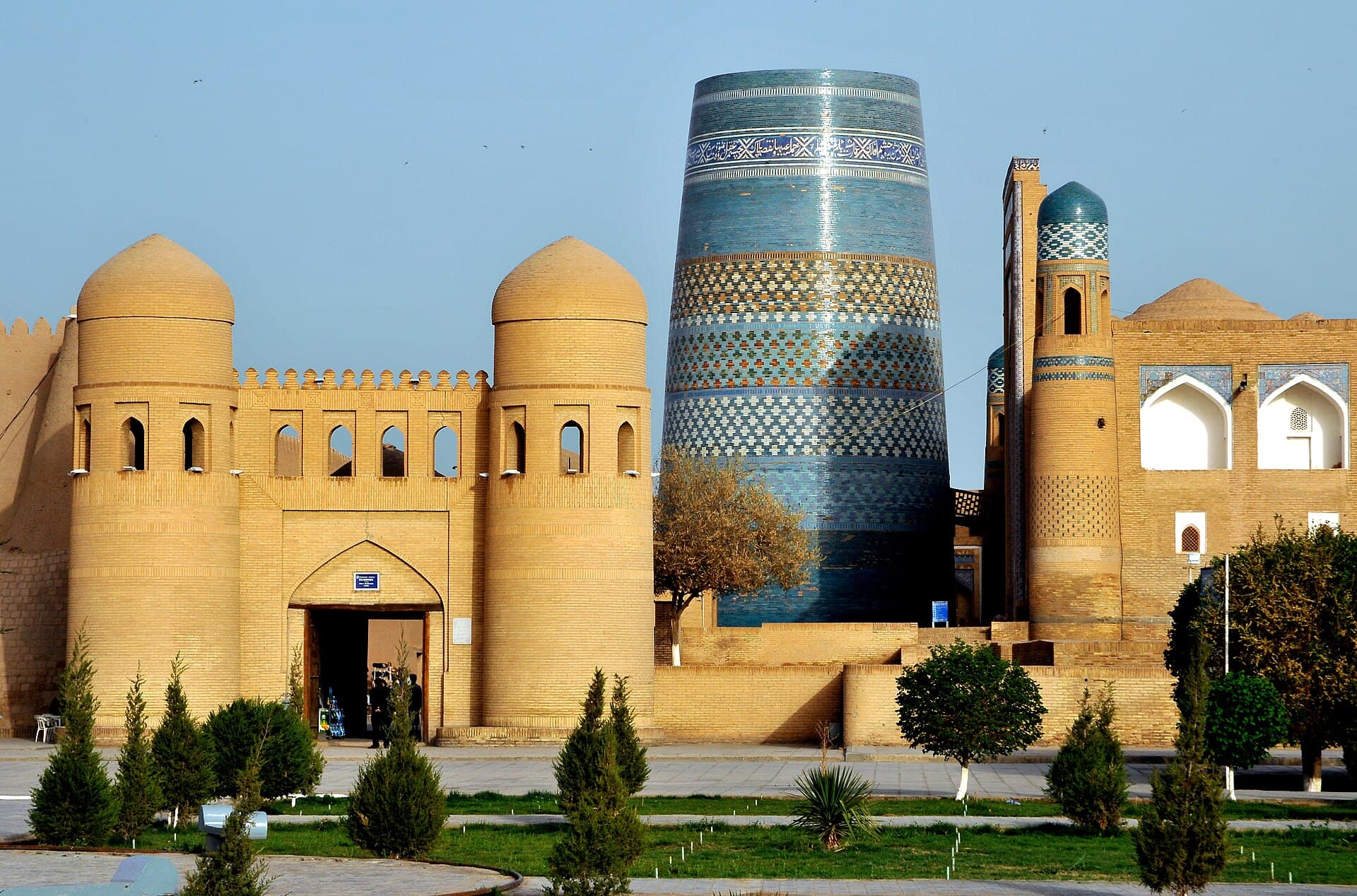 Kalta Minor minaretAn unfinished minaret in Khiva's Itchan Kala, in front of the Muhammad Amin Khan1 minute walk4.9
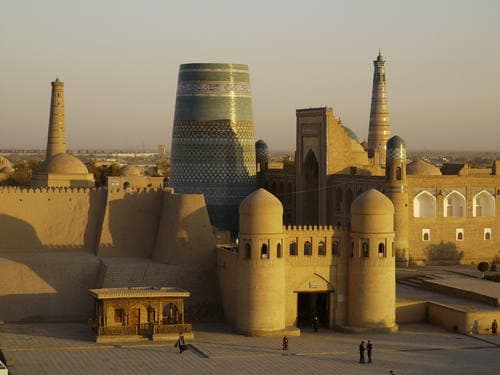 Itchan Kala, Khiva's walled cityThe walled inner town of Khiva, a World Heritage Site since 1990. It holds more 1 minute walk4.8
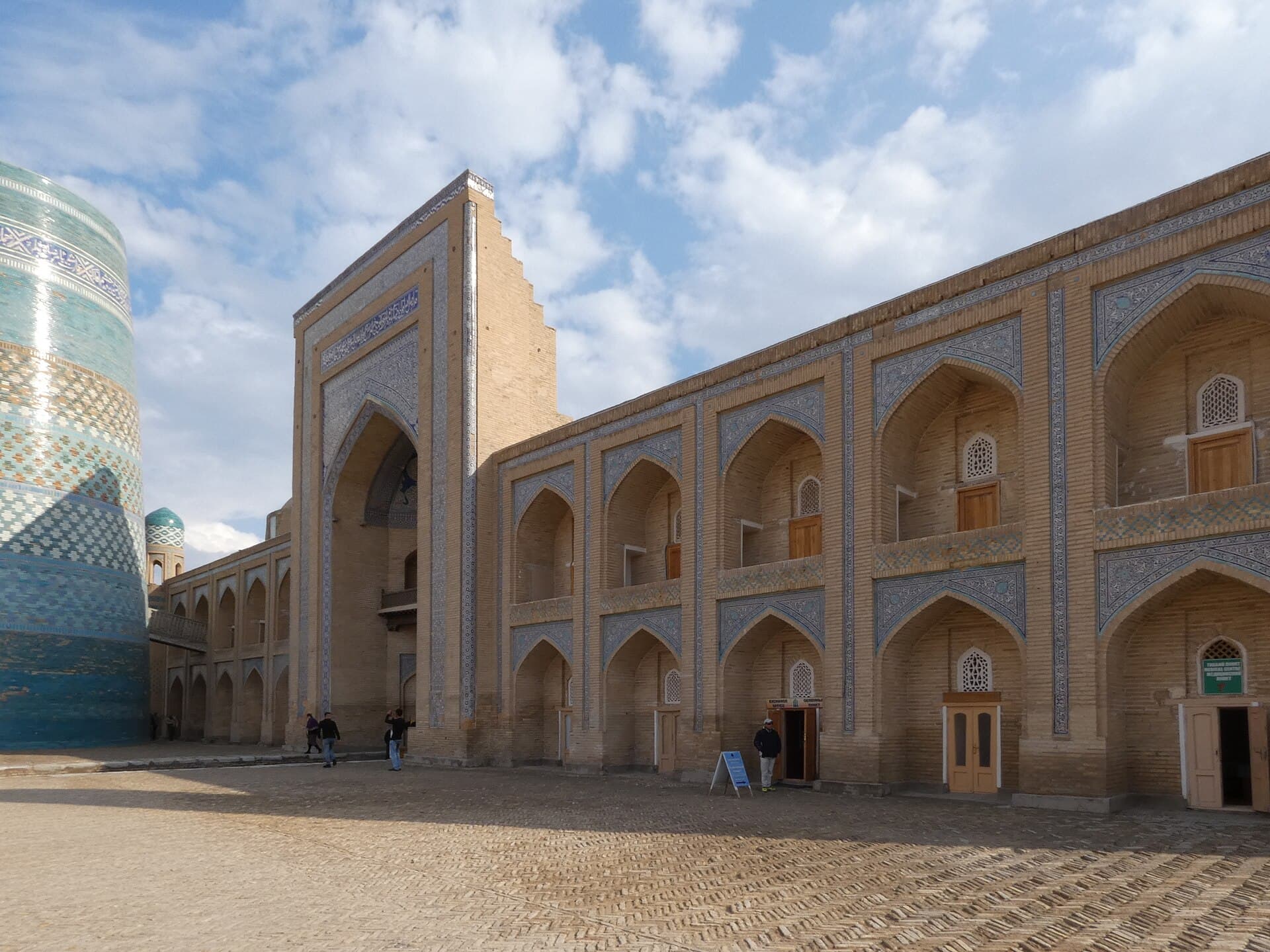 Muhammad Amin Khan Madrasa (Khiva)Khiva's largest madrasa, and its most richly tiled, stands just inside the West 1 minute walk
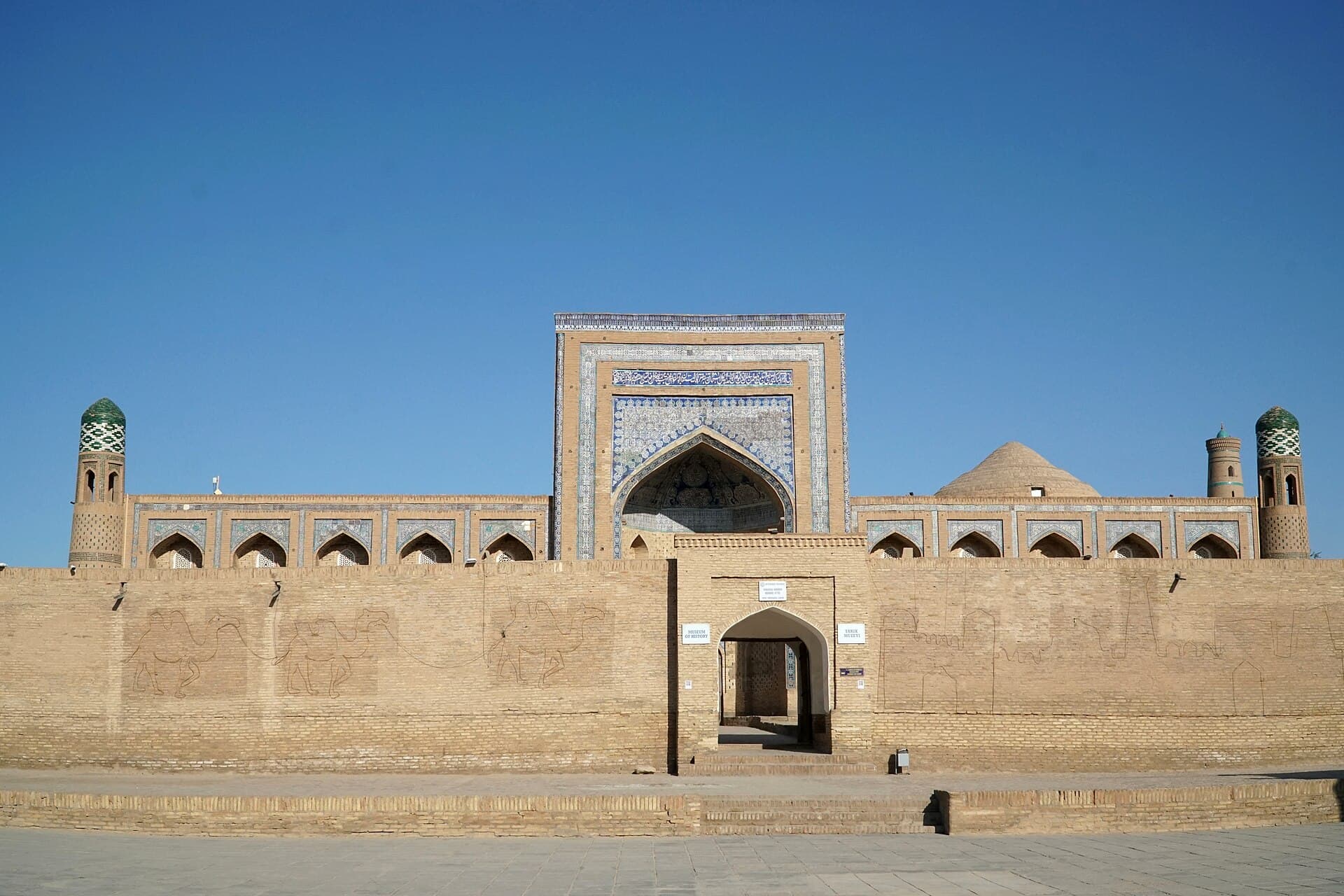 Muhammad Rahim Khan MadrasaOne of Khiva's largest madrasas, facing the Kunya Ark citadel inside Itchan Kala1 minute walk4.7
 Pahlavan Mahmud MausoleumThe tomb of Khiva's patron saint and its most sacred place for locals: Pahlavan 1 minute walk4.6
A Sufi sheikh of Khorezm whose tombstone dates his death to the Hijri year 702, or 1303. Verses in the hall say he lived for a time in Mecca before settling here, and a manuscript on Khorezm's saints makes him the schoolteacher of Pahlavan Mahmud, Khiva's patron saint, though that is tradition rather than record.
Most studies date its tiles to the 14th century, when glazed relief tilework was at its height in Khorezm. Some guidebooks, though, call it 19th-century work in the old style, so its age is still debated.