
Four iwans
Blue tile.
Adam Harangozó — CC BY-SA 4.0 · Gregor Rom — CC BY-SA 4.0 · upyernoz from Haverford, USA — CC BY 2.0 · Jean Housen — CC BY-SA 4.0 · LBM1948 — CC BY-SA 4.0 · Faqscl — CC BY-SA 3.0 · Faqscl — CC BY-SA 3.0 · Faqscl — CC BY-SA 3.0
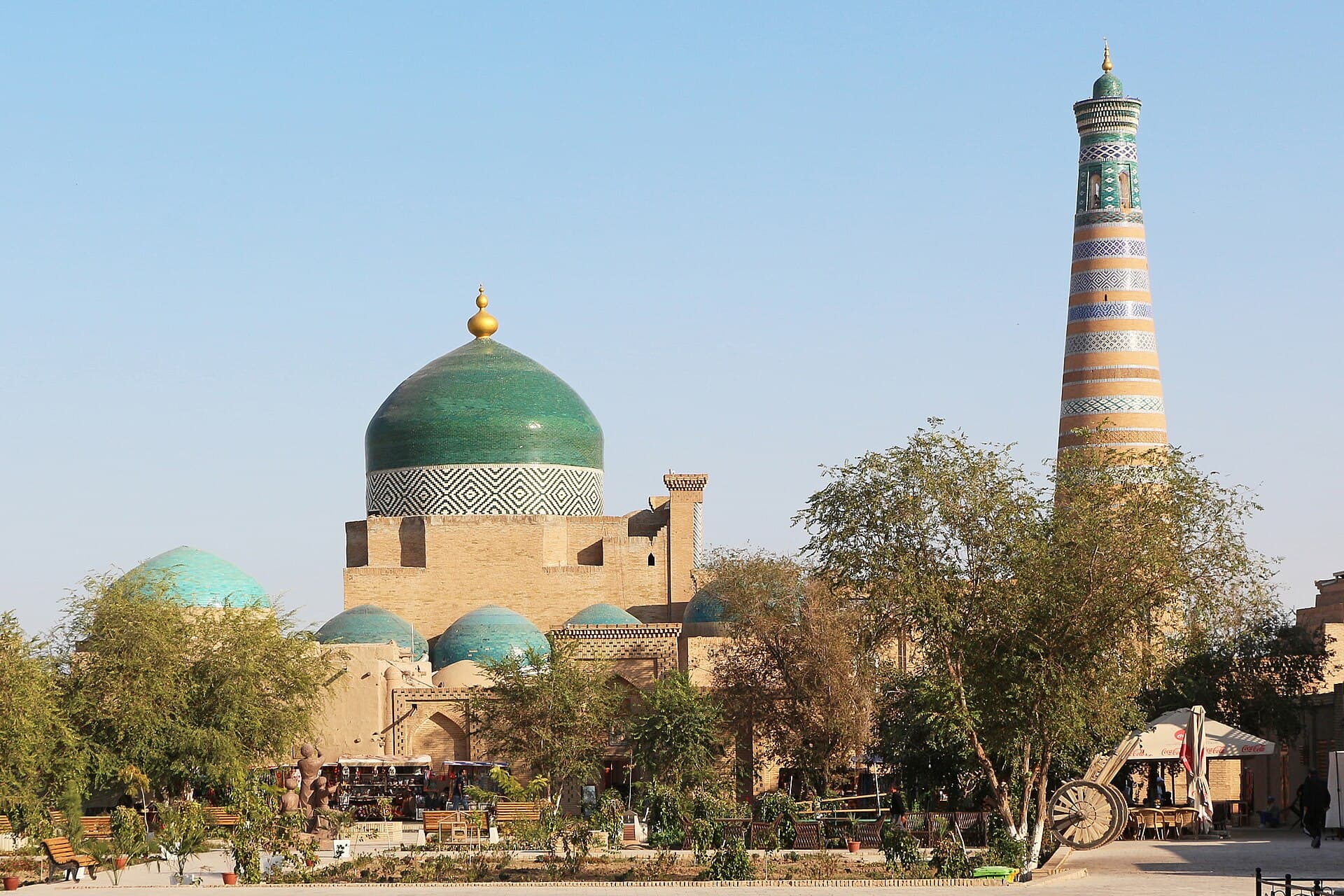
One of Khiva's largest madrasas, facing the Kunya Ark citadel inside Itchan Kala and measuring 62 by 50 m. It was built in 1871 for Khan Sayyid Muhammad Rahim II (reigned 1863-1910), also a well-known poet under the pen name Feruz Shah, and was the last of the city's great madrasas. The rectangular building has a courtyard with four iwans and small corner towers topped by domes in green and white tile. Its large portal leads into a complex vestibule with a five-arched arcade, and its façades and iwans are faced with finely patterned blue tiles. The student cells are roofed with Balkhi-style domes, alongside service rooms and a domed mosque in the south wing. The building now houses a museum, and from the roof of the Kunya Ark opposite you can see the whole madrasa with the Juma Mosque minaret behind it. It is covered by the two-day Itchan Kala ticket, per visitor guides. The best photos are from the Kunya Ark roof just before sunset.
Blue tile.
Green and white.
Before sunset.
Facing the Kunya Ark, Itchan Kala, Khiva
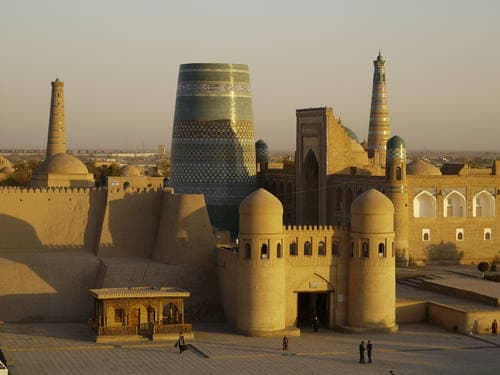 Itchan Kala, Khiva's walled cityThe walled inner town of Khiva, a World Heritage Site since 1990. It holds more 1 minute walk4.8
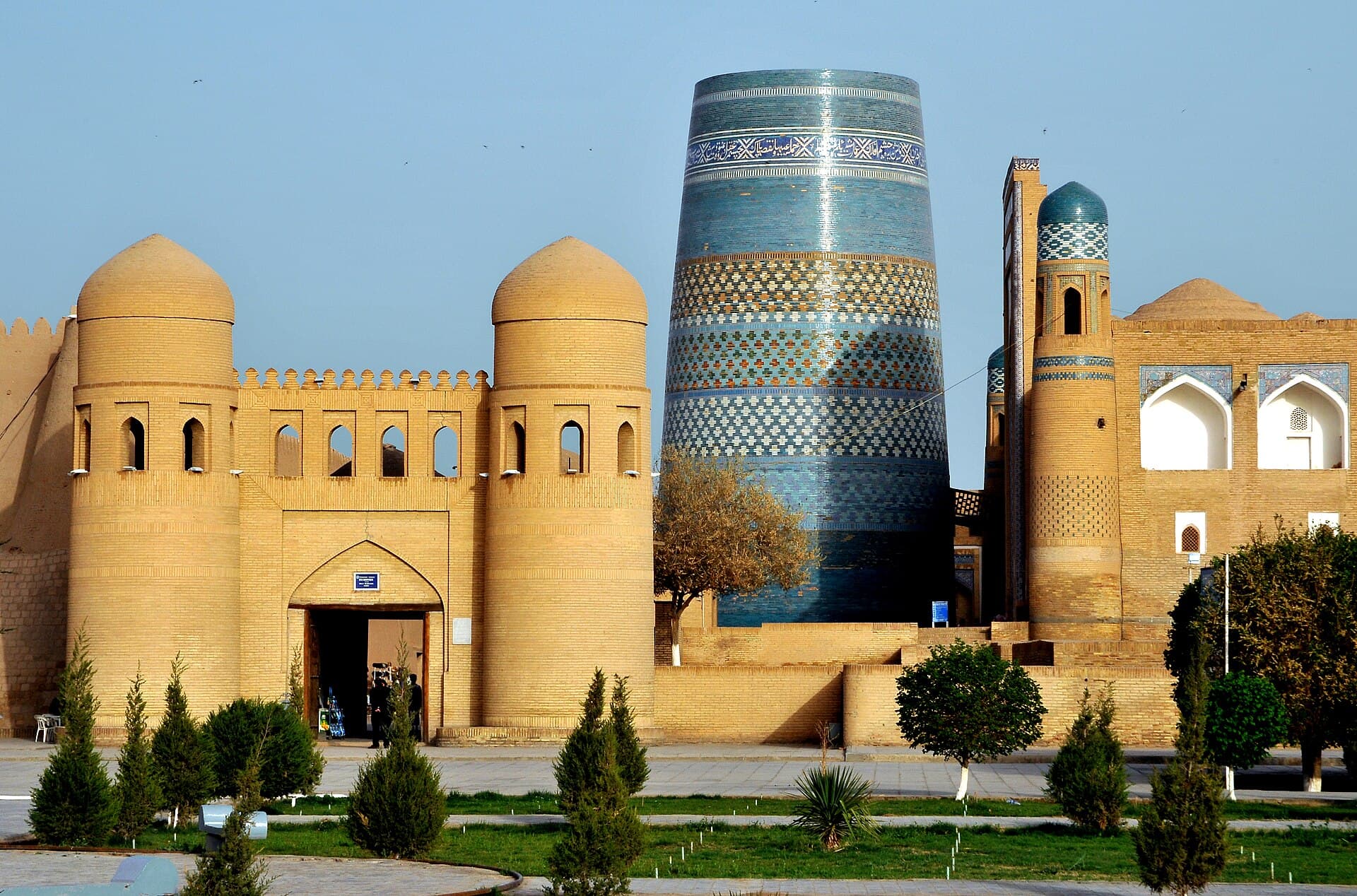 Kalta Minor minaretAn unfinished minaret in Khiva's Itchan Kala, in front of the Muhammad Amin Khan1 minute walk4.9
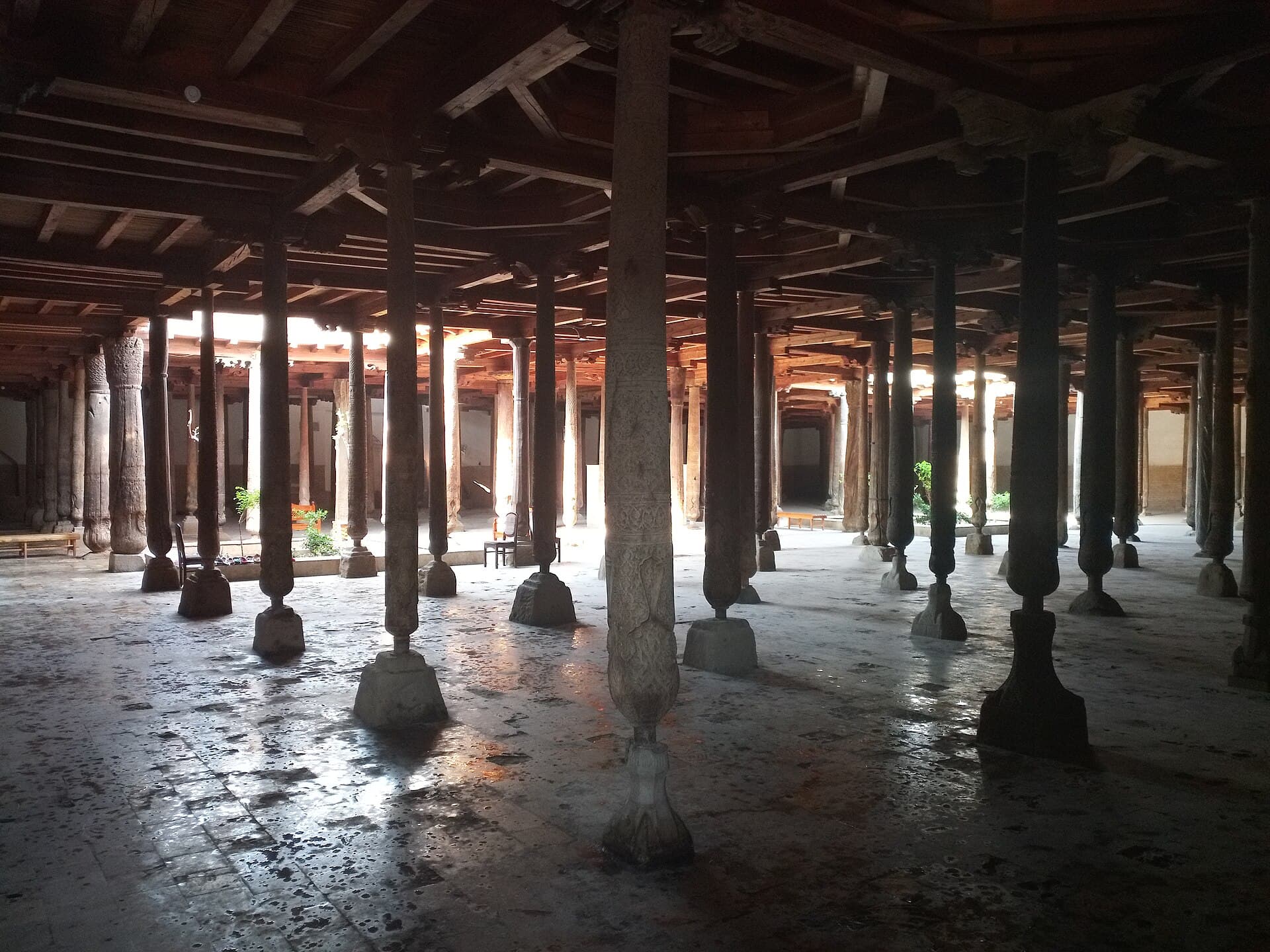 Juma Mosque, KhivaOne of Itchan Kala's principal monuments, in its middle on the road between the 2 minutes walk4.6
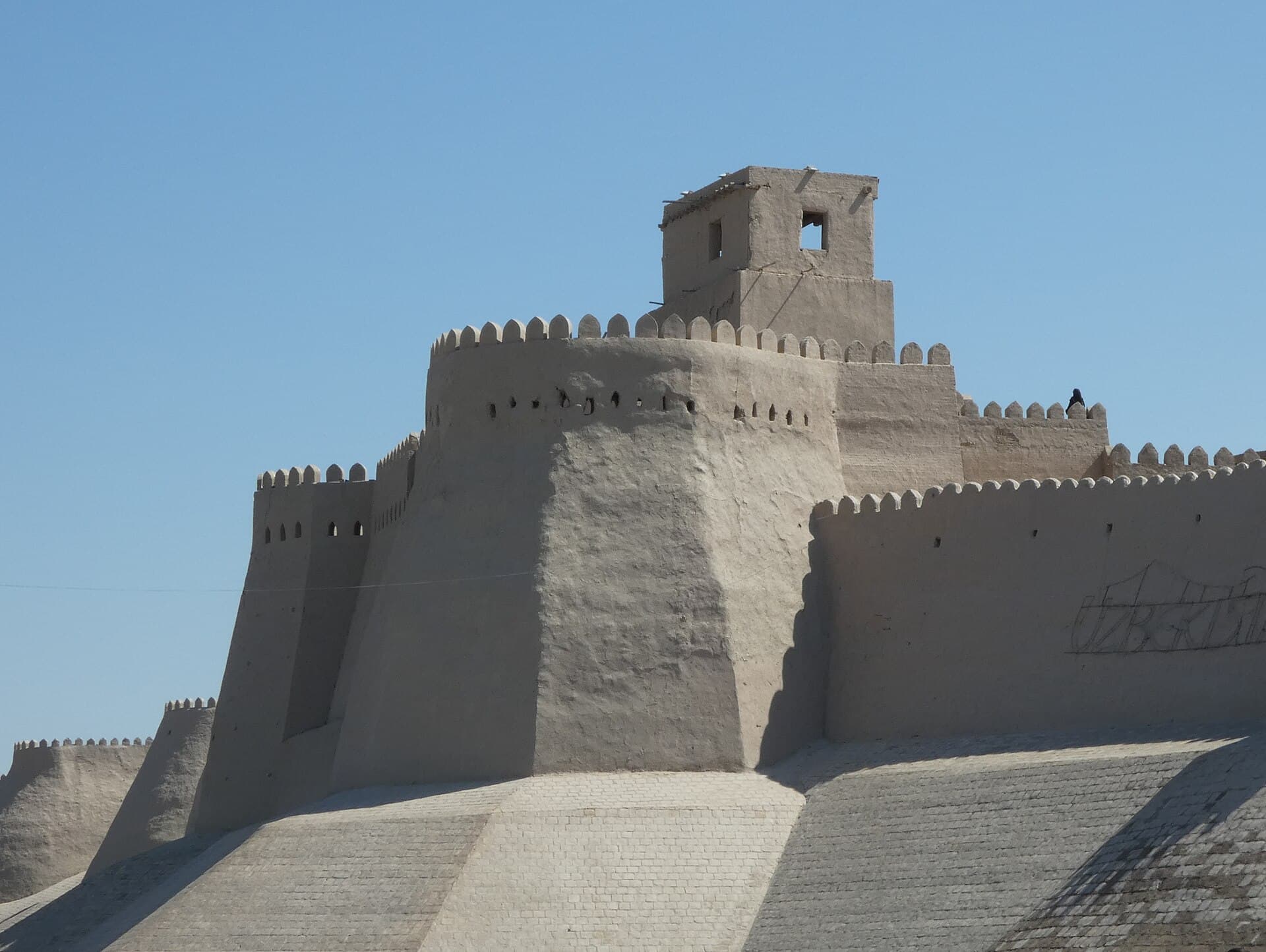 Kunya Ark, KhivaThe citadel of the khans of Khiva inside Itchan Kala; its name means «old fortre2 minutes walk4.7
 Pahlavan Mahmud MausoleumThe tomb of Khiva's patron saint and its most sacred place for locals: Pahlavan 2 minutes walk4.6
Khan of Khiva from 1863 to 1910 and a poet known as Feruz Shah; the madrasa was built in his name in 1871.