The numbered beds
Arranged on Linnaeus's system, not the modern one.
ArildV — CC BY-SA 4.0 · Jacob Shaw — CC BY-SA 4.0 · Guillaume Baviere from Copenhagen, Denmark — CC BY-SA 2.0 · mia! — CC BY-SA 2.0
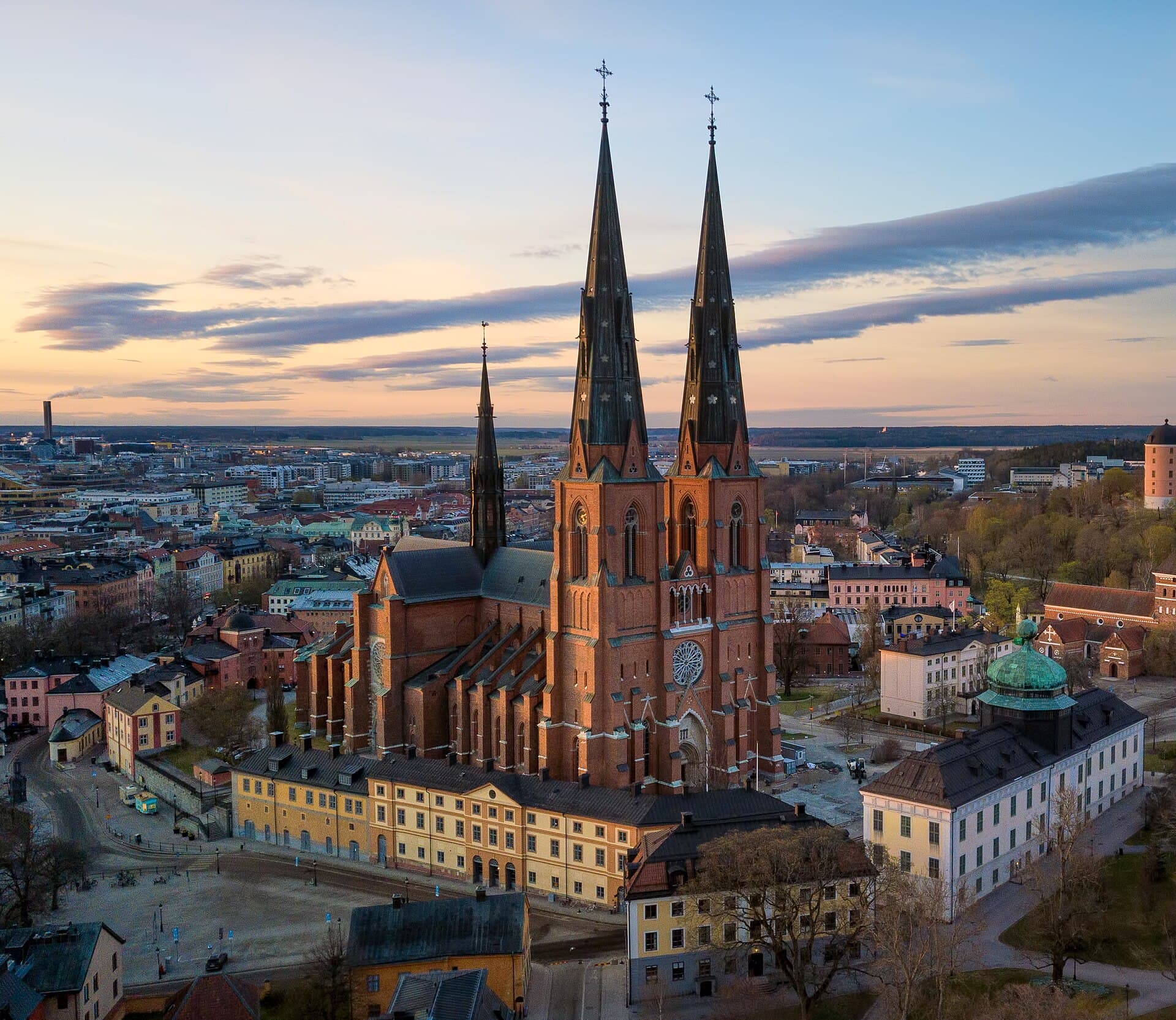
The Linnaean Garden in Uppsala is **Carl Linnaeus's own garden**, restored to the plan he drew for it in 1745 — and the oldest botanical garden in Sweden, first laid out in 1655. Linnaeus devised **binomial nomenclature**: that every living thing be known by two names, genus then species — Homo sapiens, Felis catus. Before him, organisms were described in long Latin sentences that differed from book to book. That system is the foundation of biological classification worldwide to this day, and his name is still abbreviated after the thousands of species he named. The garden is arranged on his system rather than the modern one, with about thirteen hundred species in numbered beds as he drew them. Beside it is **his house**, preserved with its furniture, study and collections. The visit is small and quiet — an hour is enough — **and the season is May to September**; outside it the garden means nothing.
Arranged on Linnaeus's system, not the modern one.
Preserved with his furniture, study and collections.
Svartbäcksgatan 27, Uppsala
The exchange runs further than people assume. His classification was built on a European tradition of describing plants that had drawn on Latin translations of Arabic works — **Ibn Sina's** Canon and **Ibn al-Baytar's** compendium of simple drugs and foods, which described more than fourteen hundred plant remedies and remained a reference in Europe for centuries. In the other direction, many plant names in Linnaeus's own system are Arabic in origin: alcohol, cotton, sesame, saffron and lupin all appear in scientific names in Latinised forms. The bridge between the two traditions is in the names themselves.