Gustav Vasa's tomb
The founder of the modern Swedish state and his three wives.
Kateryna Baiduzha — CC BY-SA 4.0 · Davidpannkaka — CC0 · Davidpannkaka — CC0 · Okänd — Public domain
Uppsala Cathedral is **the largest church in Scandinavia** and the most important: its towers reach a hundred and eighteen metres, which is also the length of the building — a deliberate proportion. It was built between 1270 and 1435 in brick in the French Gothic manner, and is the seat of the **Archbishop of Sweden** and historically the place where its kings were crowned. Its front was reshaped in the nineteenth century by the architect Helgo Zettervall, which explains the sharp look of the towers. It holds the graves of people every Swede knows: **Gustav Vasa**, founder of the modern state, with his three wives in an ornamented tomb; **Carl Linnaeus**, who devised the system for naming living things; **Emanuel Swedenborg**; and Saint **Erik**, patron of Sweden, whose silver reliquary is still carried in an annual procession. The treasury museum upstairs holds medieval objects and coronation robes. **Entry to the cathedral is free**; the museum is ticketed. Uppsala is forty minutes by train from Stockholm.
The founder of the modern Swedish state and his three wives.
Silver, still carried in an annual procession.
Domkyrkoplan, Uppsala
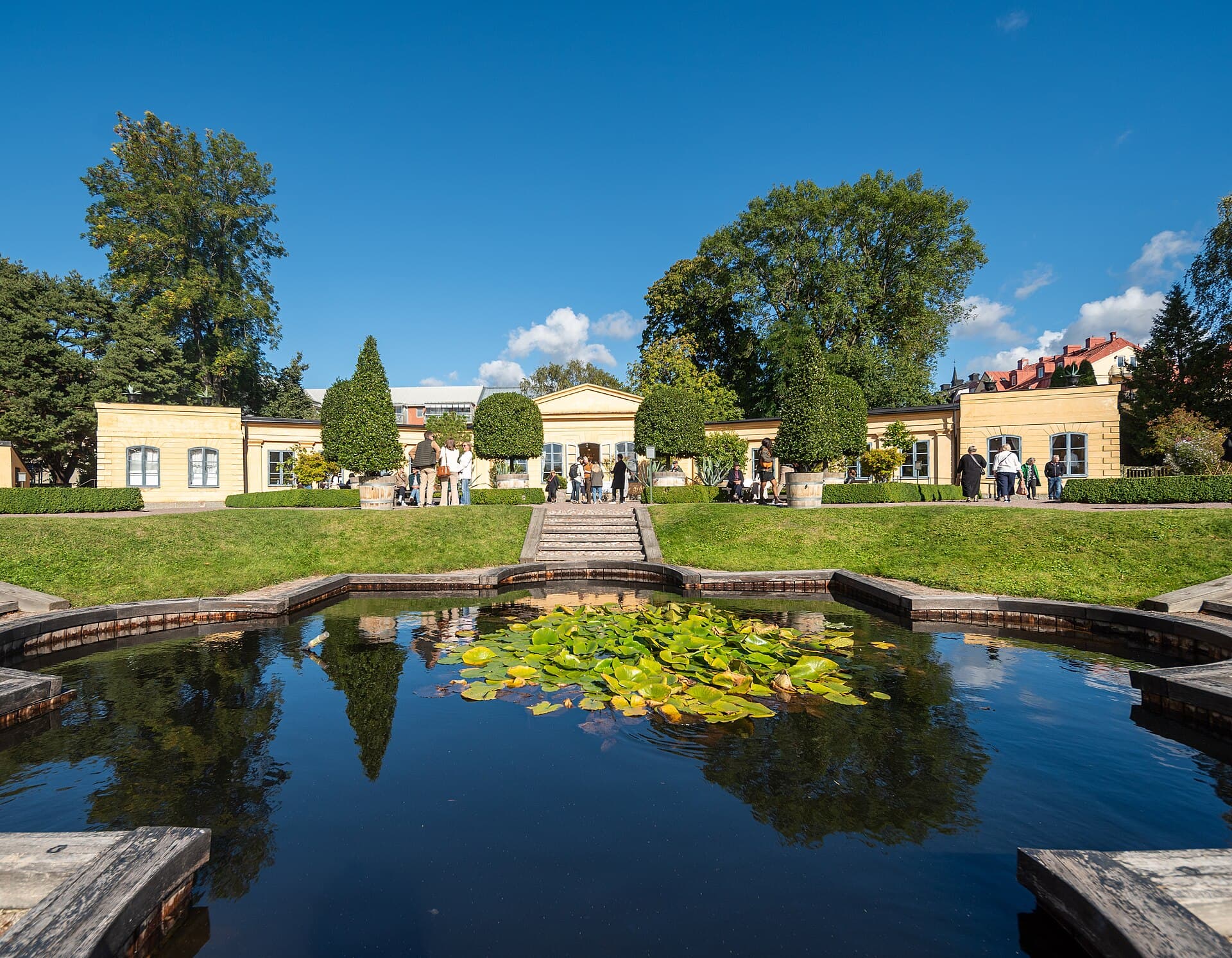
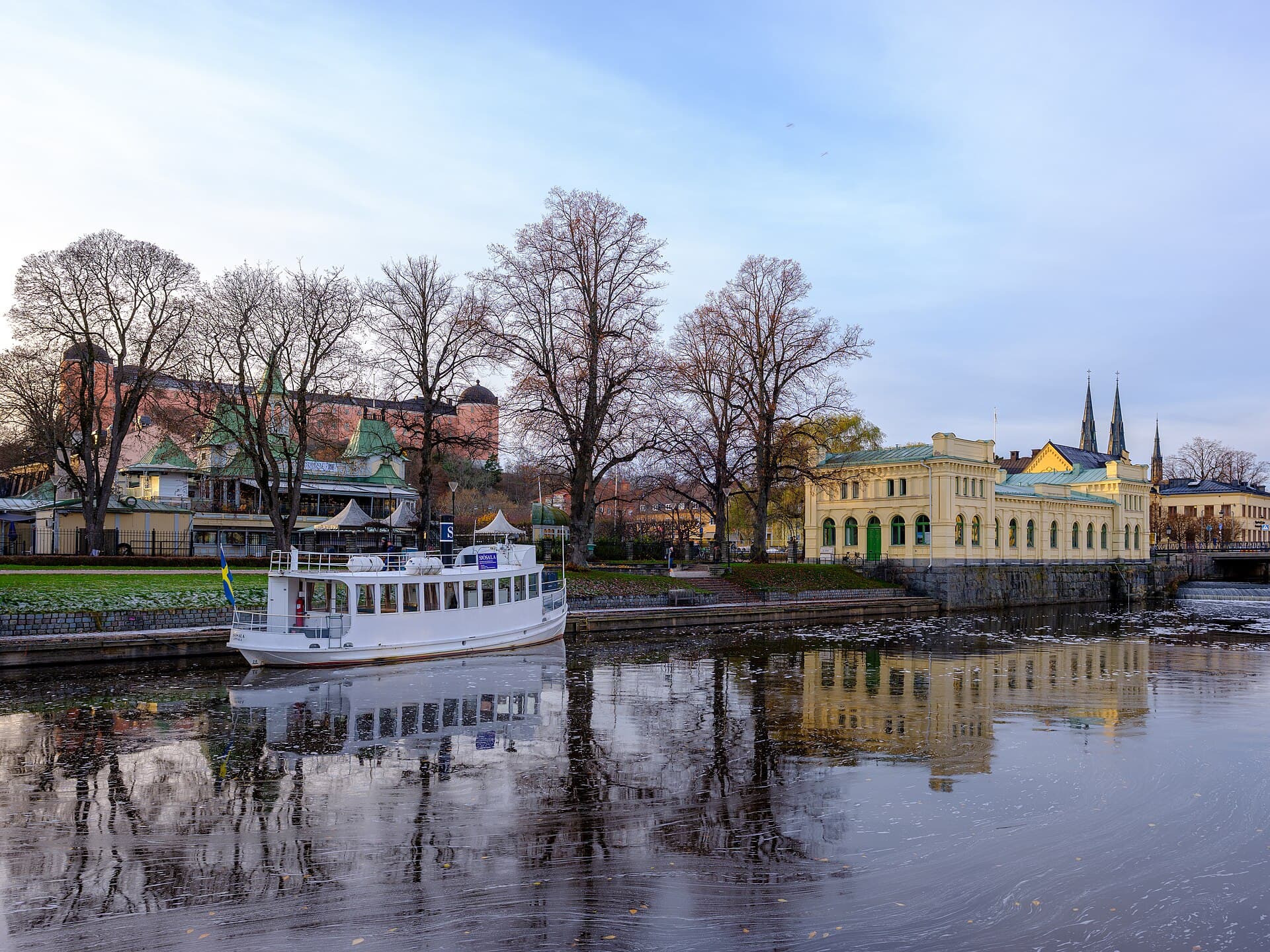
Uppsala is forty minutes by train and walks entirely. The **cathedral** first, then the red **Uppsala Castle** on the hill opposite with its view over the town, then the **Linnaean Garden** — the botanist's house and garden as he arranged them — then the **Carolina Rediviva** university library, which holds the Silver Bible, a sixth-century Gothic gospel written in silver and gold on purple vellum and among the most valuable manuscripts in the world. With extra time: **Gamla Uppsala**, five kilometres out, three royal burial mounds of the sixth century and the old centre of Scandinavian paganism.