The castle park
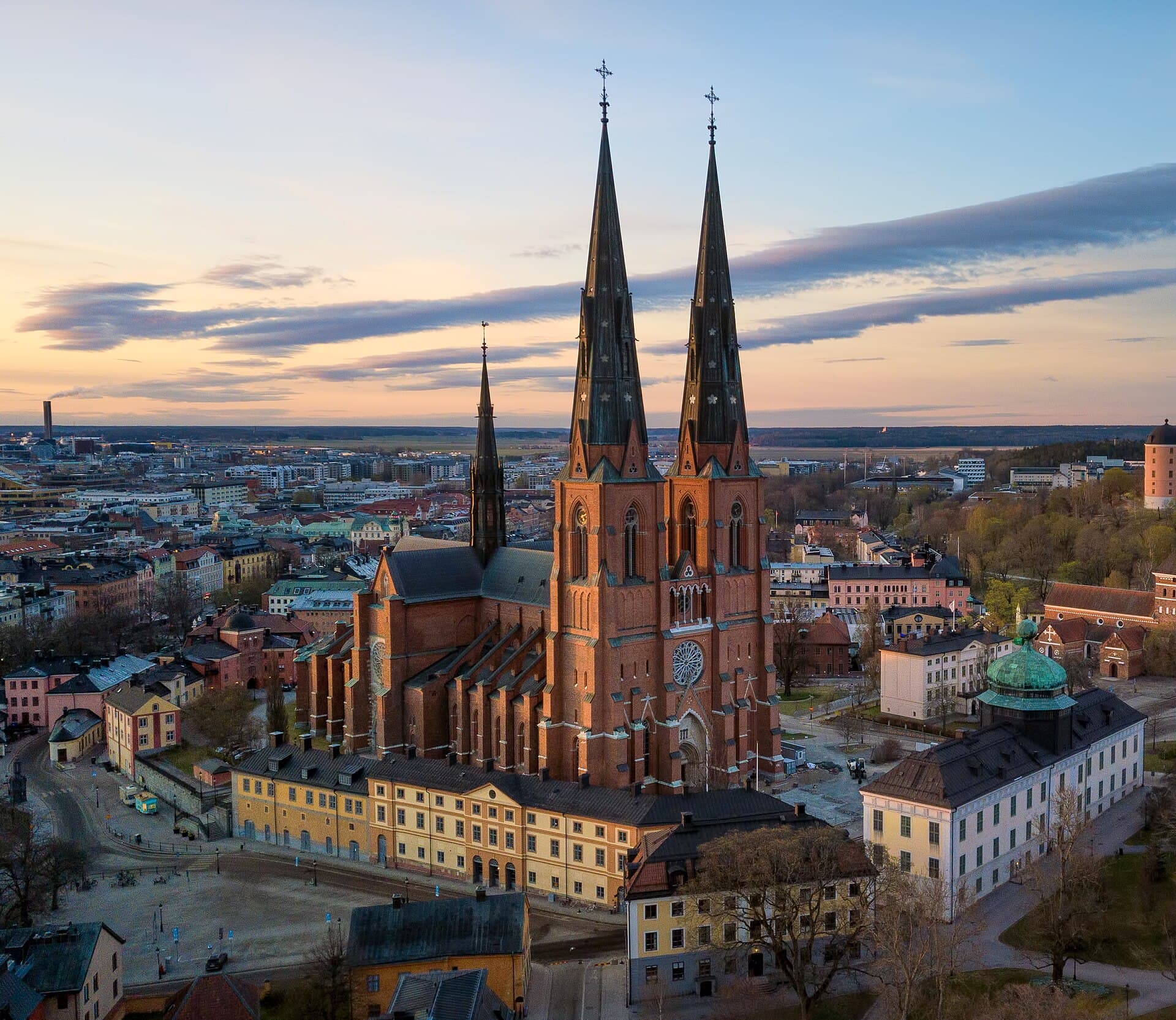
The best view of the cathedral and town, and free.
ArildV — CC BY-SA 4.0 · Jules Verne Times Two — CC BY-SA 4.0 · Guillaume Baviere from Uppsala, Sweden — CC BY-SA 2.0
Uppsala Castle is a massive red block on a hill overlooking the town and the cathedral, and its position above it is deliberate: **Gustav Vasa** built it from 1549 so that its guns faced the cathedral towers directly — a political statement that the king's authority stood above the church's after the Reformation. Things happened in its halls that every Swedish school knows: the **Sture Murders** of 1567, when King Erik XIV killed a number of nobles with his own hand in a fit of madness, and **Queen Christina's abdication** in 1654 — she converted to Catholicism and left Sweden for Rome, a decision that startled Europe. The castle burned in 1702 and was never fully rebuilt, so what you see is part of what stood. It holds the **Uppsala Art Museum**, a state hall exhibition, and seasonal historical tours. In front of it the **castle park** is open and free, and gives the best view of the cathedral and the town — reason enough on its own to climb up.
The best view of the cathedral and town, and free.
The castle's distinctive colour above Uppsala's roofs.
Slottet, Uppsala
Queen of Sweden from 1632 to 1654, who came to the throne at six after her father Gustavus Adolphus was killed in the Thirty Years' War. She was better educated than most monarchs of her age and brought Descartes to her court — where he died of the Stockholm winter. In 1654 she abdicated in this castle, converted to Catholicism first secretly and then openly — illegal in Lutheran Sweden at the time — and left for Rome, where she lived the rest of her life as a patron of the arts. She is buried in St Peter's, one of only three women there.