
Chosen because it was practical
A warehouse on a railway by the harbour — space and a direct link.
Magere Hein — CC BY-SA 4.0 · M. Appelman — CC BY-SA 2.0 · Sjoerd22 — CC BY-SA 3.0 nl · Sjoerd22 — CC BY-SA 3.0 nl
A memorial in Rotterdam on the site of a dockside warehouse used in 1942 as the assembly point for deporting the city's Jews to Nazi camps. The site was chosen for a coldly practical reason: a warehouse on a railway beside the harbour, with room to hold thousands of people and a direct connection to the network. About twelve thousand people were gathered there and sent to Westerbork, and from there to Auschwitz and Sobibor. Few survived. The memorial works in a particular way: it carries the names of Jewish children from Rotterdam who were killed, arranged by their ages. It is not an abstract monument or a total figure — it is a list of names and ages, and that is a deliberate choice, because large numbers numb and names do not. Rotterdam lost about eighty per cent of its Jewish population, among the highest proportions in western Europe. The warehouse itself was demolished in 1965; the site and the name remained. Practical points: a memorial in a public space, always open and free. The site is in an industrial area south of the centre and not on any visitor route — it takes deliberate effort to reach. Take time to read the names.
A warehouse on a railway by the harbour — space and a direct link.
Large figures numb; names and ages do not — and that is deliberate.
The share of Rotterdam's Jews murdered, among western Europe's highest.
Loods 24 plein, Rotterdam
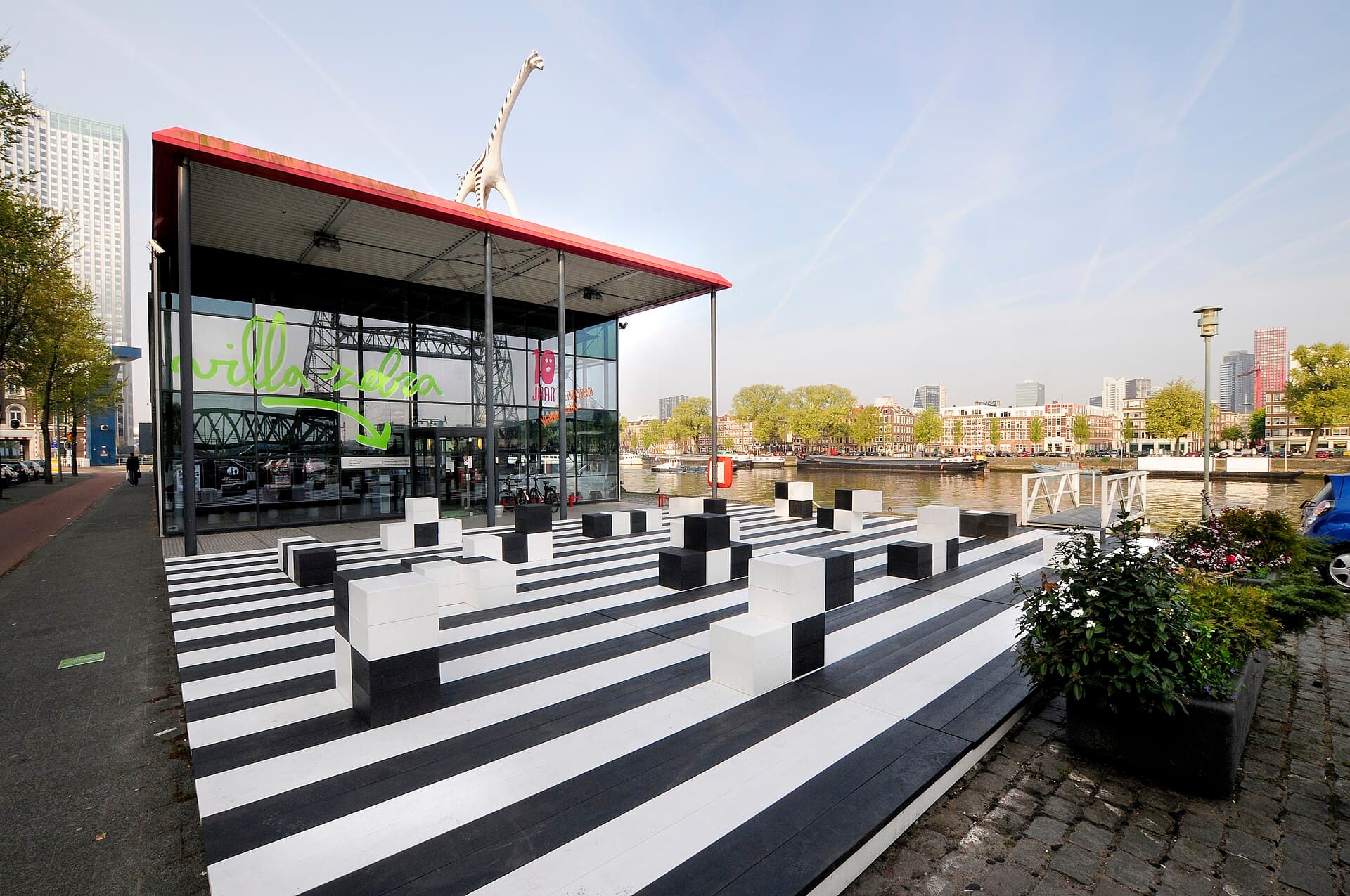 Villa ZebraVilla Zebra is an art museum for children in the Kop van Zuid district south of 3 minutes walk4.1
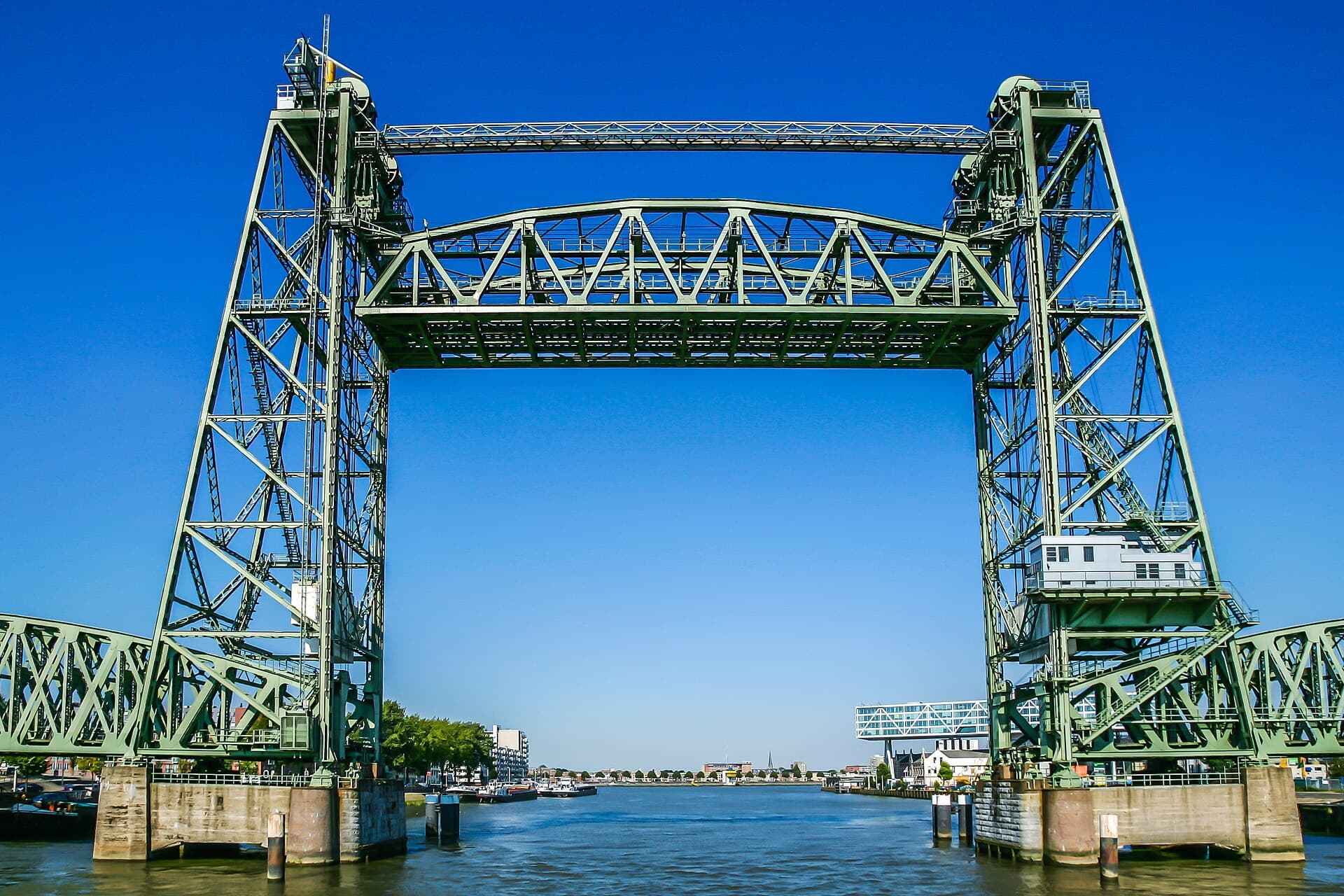 De Hef Lift BridgeDe Hef is a railway lift bridge over the Koningshaven built in 1927, and its mec6 minutes walk4.7
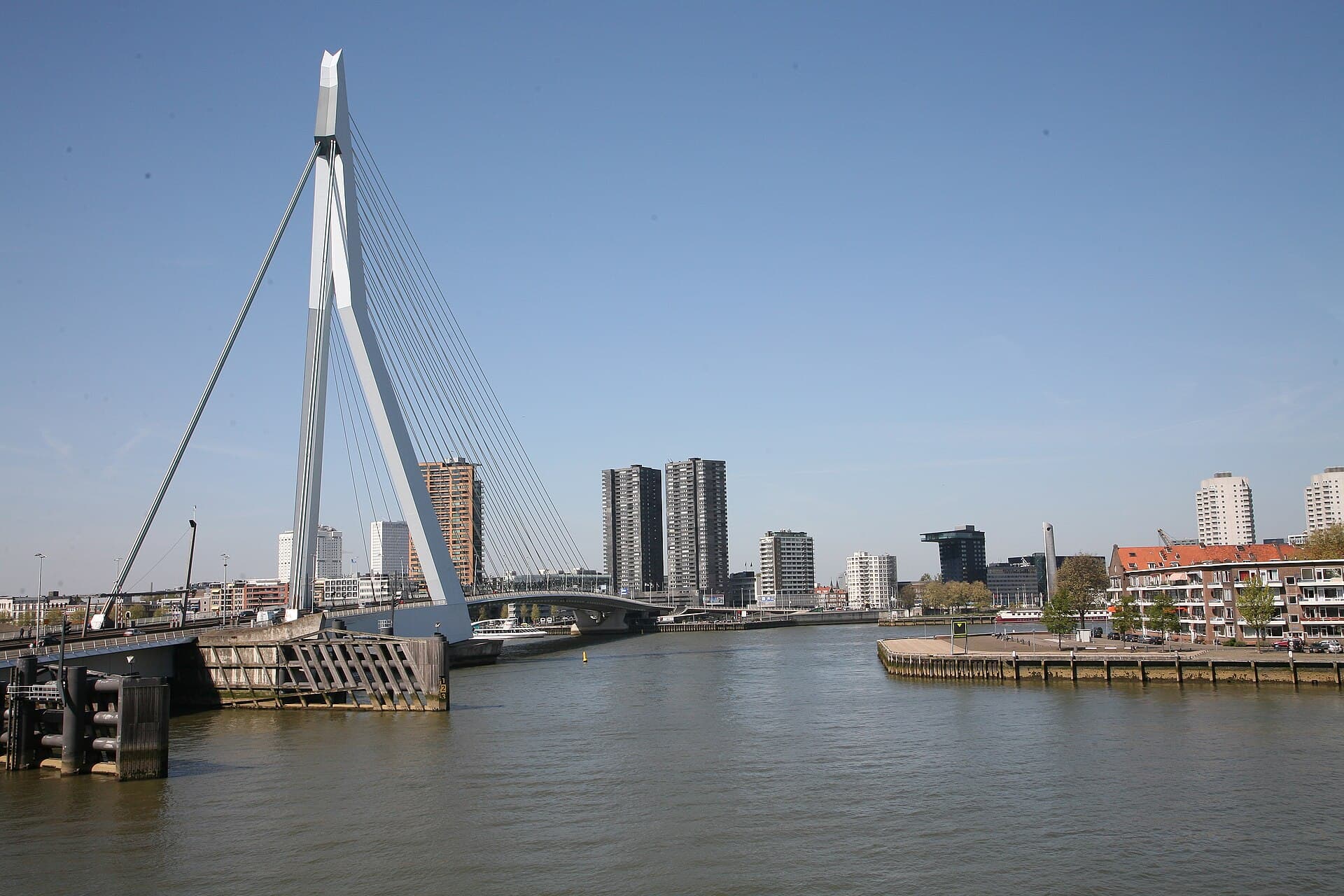 Erasmus BridgeThe Erasmus Bridge is Rotterdam's modern icon, its symbol on every postcard: an 9 minutes walk4.8
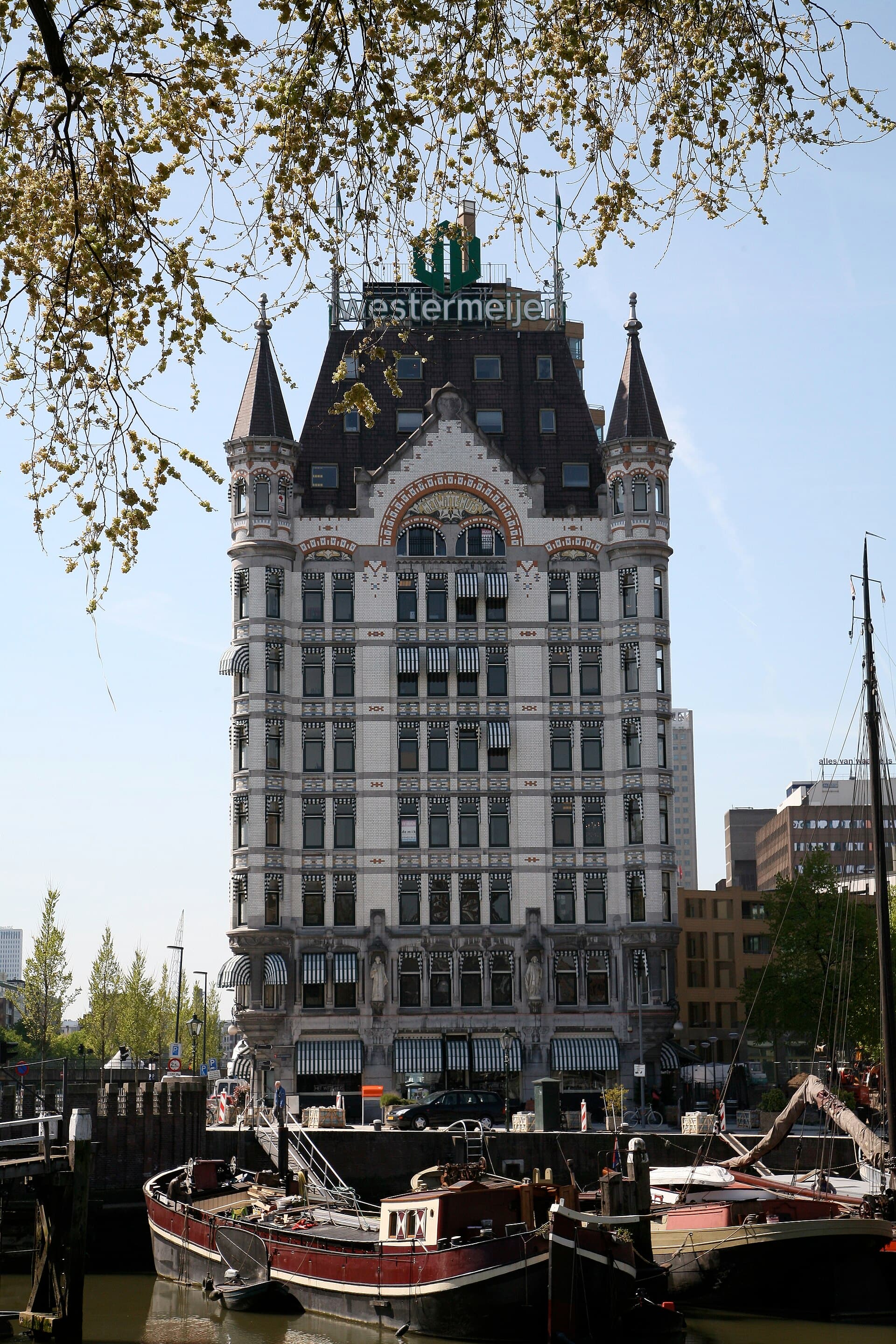 The White HouseThe Witte Huis is an office building of 1898, eleven storeys and about forty-thr14 minutes walk4.6
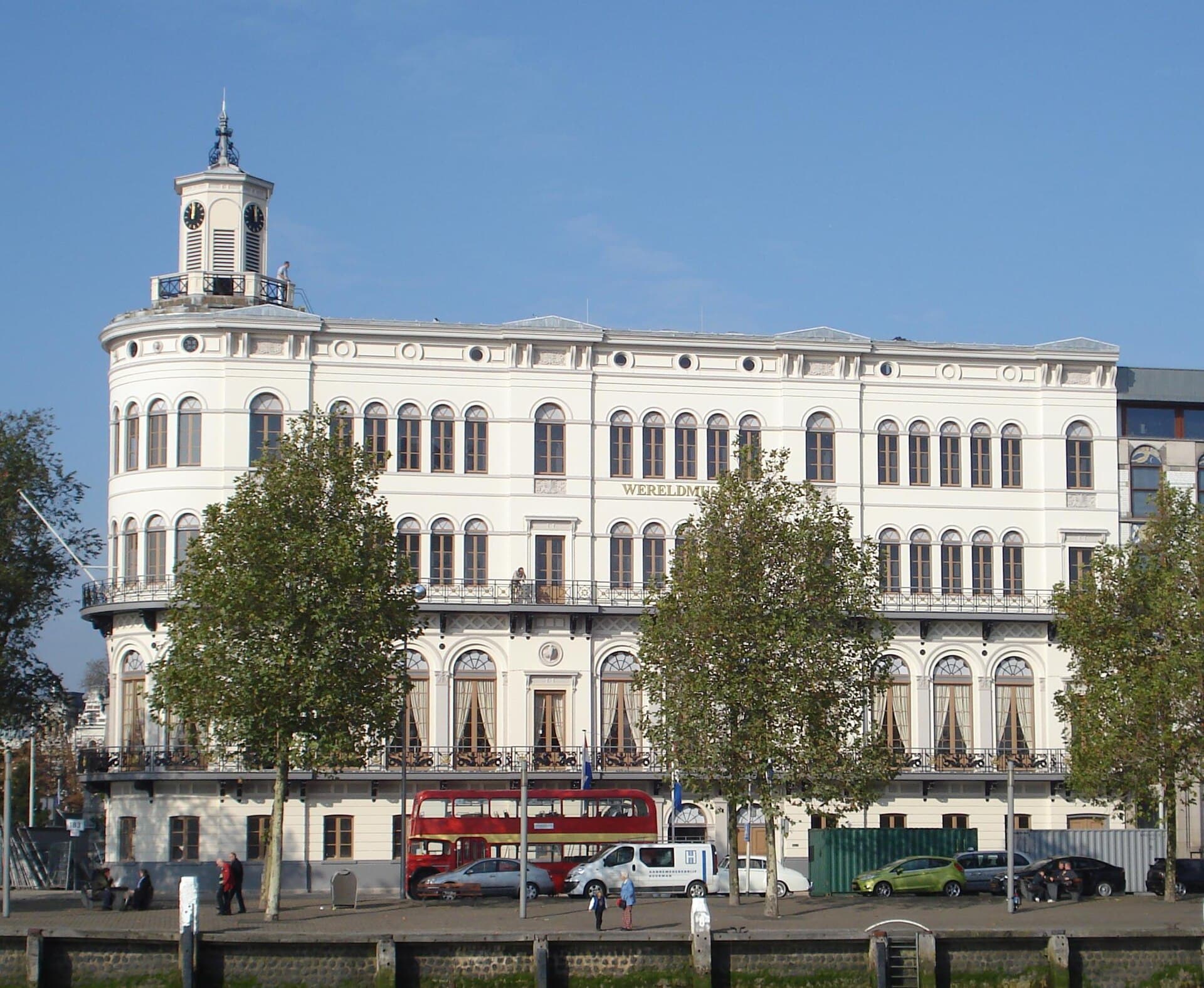 WereldmuseumA museum of world cultures in the Royal Yacht Club's building: founded in 1885 f15 minutes walk4.2
A transit camp in the north-east of the Netherlands, set up in 1939 to receive Jewish refugees from Germany, then used by the Nazi occupation as the assembly point for deporting Dutch Jews to the extermination camps in the east. More than a hundred thousand people passed through it, Anne Frank among them. It is a memorial site and museum today, and visiting it completes what begins here.
Stolpersteine — stumbling stones — are set in pavements across the city outside victims' homes, each carrying the name of someone who lived there and the date of their deportation. And Zadkine's sculpture The Destroyed City in the centre commemorates the 1940 bombing that erased the city centre — which is why Rotterdam looks entirely modern, unlike the rest of the Netherlands.